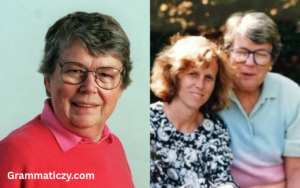
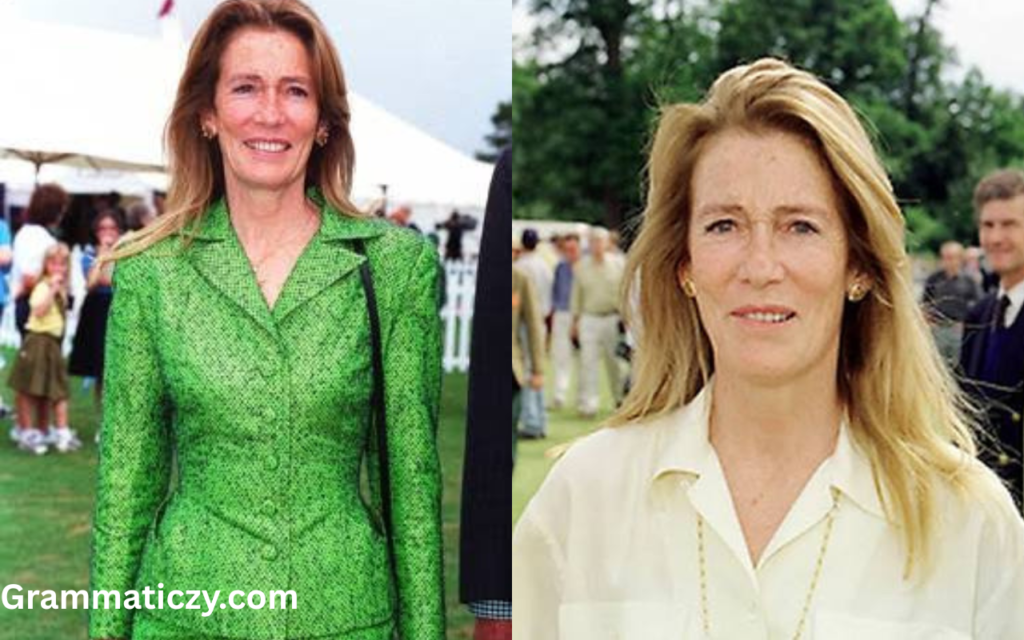
Susan Barrantes was a woman whose life crossed continents, social worlds and cultures in a way few biographies can easily capture. Born Susan Mary Wright in England in 1937, she grew up within a well-connected British family, married Major Ronald Ferguson, became the mother of Sarah Ferguson, and eventually left Britain for Argentina after falling in love with Argentine polo player Héctor Barrantes. Her decision changed everything. Argentina became the country where she built a second life, managed a rural estate, immersed herself in polo, produced films and eventually published a book about the sport she had come to know from the inside.
For many people, Susan Barrantes is remembered primarily as the mother of Sarah Ferguson, the former Duchess of York. But that description tells only a fraction of her story. Susan developed an identity of her own in Argentina, where she became closely associated with horses, polo ponies, ranch life and the international polo community. Her 1997 book Polo presented an insider’s view of the sport, covering its international traditions, players, horses and breeding practices.
Her life also contained considerable hardship. She experienced the breakdown of her first marriage, separation from her daughters when she moved to Argentina, the death of her second husband Héctor in 1990 and financial difficulties surrounding the estate they had developed together. Yet she continued working and looking for new opportunities, including documentary production and television projects. Her life ended suddenly on September 19, 1998, when she was killed in a road accident near Tres Lomas, Argentina, at the age of 61.
Susan Barrantes Facts at a Glance
| Fact | Details |
|---|---|
| Full name | Susan Mary Wright |
| Known as | Susan Barrantes |
| Born | June 9, 1937 |
| Birthplace | Bramcote, Nottinghamshire, England |
| Died | September 19, 1998 |
| Age at death | 61 |
| Nationality | British |
| Parents | FitzHerbert Wright and Hon. Doreen Wingfield |
| Sister | Jane Louisa Ferguson |
| First husband | Major Ronald Ivor Ferguson |
| Second husband | Héctor Eduardo Barrantes |
| Children | Jane Ferguson and Sarah Ferguson |
| Famous daughter | Sarah Ferguson, former Duchess of York |
| Profession | Documentary filmmaker, writer and polo/ranch figure |
| Best-known book | Polo (1997) |
| Main residence in later life | El Pucará, Argentina |
| Known for | Polo, horses, filmmaking, ranch life and royal family connections |
| Estimated net worth | No reliable public figure is available |
| None known; she died before the social-media era | |
| Twitter/X | None |
| None |
Early Life and Family Background
Susan Mary Wright was born on June 9, 1937, in Bramcote, Nottinghamshire, England. She was the daughter of FitzHerbert Wright and the Hon. Doreen Wingfield, placing her within a socially prominent British family. Genealogical records identify her parents and record her later marriages and children, while biographical sources consistently place her birth in Nottinghamshire.
Growing up in this environment meant that Susan was familiar with the traditions and expectations associated with Britain’s established social circles. Country life, horses, sporting interests and connections between influential families formed part of the world around her. Those early surroundings would later become surprisingly relevant when her life became deeply connected with polo, a sport historically associated with both British country society and international elite culture.
There is comparatively little reliable public information about Susan’s formal schooling or her day-to-day childhood, and it is better to acknowledge that gap than to fill it with unsupported claims. What is well documented is the family environment into which she was born and the way her adult life eventually connected British social circles with Argentina’s famous polo culture. Her biography is therefore less a conventional story of an entertainer or politician and more a story of a woman whose personal decisions gradually created an unusual international life.
Marriage to Major Ronald Ferguson
Susan married Major Ronald Ivor Ferguson in January 1956 at St. Margaret’s Church, Westminster. Their marriage connected her to another important polo family because Ronald Ferguson was closely associated with the sport and later became known for his work within the polo world. Genealogical records confirm that the couple had two daughters, Jane Louisa Ferguson and Sarah Margaret Ferguson.
Their younger daughter, Sarah, would eventually become internationally famous after marrying Prince Andrew in 1986 and becoming Duchess of York. That royal connection made Susan Barrantes a figure of interest to the British press, but it came many years after Susan had already begun creating a life of her own. Her marriage to Ronald Ferguson was important not only because it produced her family but also because polo was already part of the family’s wider social environment.
The marriage lasted approximately eighteen years before the couple divorced in 1974. The end of the relationship marked a major turning point in Susan’s life. Rather than remaining in the familiar British environment, she made a decision that would have enormous consequences for her family: she chose a new life in Argentina. That decision eventually led her away from her daughters for a period of their childhood, a choice that later became one of the more complicated aspects of her relationship with Sarah Ferguson.
Moving to Argentina and Meeting Héctor Barrantes
Susan’s connection with Argentina began before her second marriage. El País reported that she first visited the country in 1966 and later described herself as having fallen in love with Argentina almost immediately. Her relationship with Argentine polo player Héctor Barrantes eventually became the foundation of her permanent connection with the country. The pair married in 1975.
Héctor Barrantes was himself an accomplished polo player and horse breeder. He had begun playing polo as a teenager and later became involved in breeding polo ponies on an Argentine ranch. His sporting background meant that Susan was entering a world in which horses and polo were not simply leisure pursuits but an entire way of life involving breeding, training, competition, land management and international relationships.
Their marriage took Susan into the heart of Argentina’s rural polo culture. Together they were associated with the El Pucará estate in the Buenos Aires Province area near Tres Lomas. The property became central to their life and eventually became Susan’s permanent home and final resting place. Her move to Argentina therefore represented much more than a romantic relocation: it became the foundation of the second major chapter of her identity.
Life at El Pucará and Her Passion for Polo
At El Pucará, Susan became involved in the practical side of rural life. Contemporary reporting described her as having fields and an estancia where polo horses were raised, while later accounts describe her involvement in the management of the property and the breeding of horses and cattle.
Her experience gave her an unusually close perspective on polo. The glamorous image of the sport often centers on famous players, major tournaments and wealthy spectators, but behind every successful polo program are horses, breeders, trainers, grooms, farm workers and years of careful preparation. Susan’s later writing demonstrated that she understood this broader ecosystem rather than viewing polo simply as a social pastime.
The environment also allowed her to combine interests from her British upbringing with her adopted Argentine identity. She could move between the international social world associated with polo and the everyday realities of an estancia. This ability to cross boundaries became one of the defining features of her personality. Later descriptions portrayed her as someone comfortable around both highly influential people and ordinary workers on the ranch, a contrast that helped make her story so distinctive.
Career as a Writer and Documentary Producer
Susan Barrantes eventually transformed her knowledge of polo into professional creative work. Following the death of Héctor Barrantes, she established a television production company in Buenos Aires and became involved in films and documentary projects focused on horses and polo. Sources indicate that this work provided an additional source of income while allowing her to remain connected to the world she understood best.
Her most important published work was Polo, released by Ediciones Larivière in 1997. The illustrated book contains 207 pages and examines the international world of polo, including its history, players, horses and breeding traditions. The publisher’s description presents it as a tour through polo communities across regions including England, Nigeria, India and Argentina.
The book is particularly significant because Susan was not approaching polo as an outsider. Her years alongside Héctor and her own involvement with horses and the estancia gave her direct experience of the sport’s culture. The book also included photographs from her personal albums, adding another layer of firsthand material. It became the clearest lasting record of her professional interest in polo and demonstrated that she had developed genuine expertise in the subject.
Polo and Her Connection With Prince Charles
One of the most notable details surrounding Susan’s book is its connection with the British royal family. Polo included a foreword by the then Prince of Wales, later King Charles III, while Argentine polo figure Juan Carlos Harriott contributed an introduction. The combination of Susan’s Argentine polo experience and her continuing British royal connections made the publication particularly distinctive.
The royal connection was not simply a publicity device. Susan was reported to have remained friends with Prince Charles, and her family had long-standing connections with the royal household through polo and her daughter Sarah. Her book therefore brought together several parts of her life: her British background, her Argentine home, her knowledge of horses and her relationship with people within the international polo community.
The book also represented a remarkable professional achievement for a woman who had entered her sixties. At a time when she was dealing with financial pressures and rebuilding her life after her husband’s death, she produced a substantial illustrated volume on a specialist subject. Its publication showed that her identity was not limited to being Sarah Ferguson’s mother; she had developed a body of knowledge that could stand independently.
Financial Challenges After Héctor Barrantes’ Death
Héctor Barrantes died from cancer in 1990 after fifteen years of marriage to Susan. His death left Susan with significant emotional and practical responsibilities. Accounts of the period describe financial difficulties connected with the estate and a business venture involving the breeding and export of polo horses.
According to later reporting, debts associated with the property became difficult for Susan to manage, eventually leading her to sell a substantial portion of the land to Australian polo player and media magnate Kerry Packer. She retained part of the estate and continued living in Argentina rather than returning permanently to Britain.
These circumstances provide important context for understanding Susan’s later career. Her move into documentary production was not merely a hobby pursued by someone with unlimited resources. She was attempting to create income while preserving her connection with the polo world and the home she had built with Héctor. Her willingness to start again after widowhood is one of the strongest themes running through her later life.
Relationship With Sarah Ferguson and Her Family
Susan’s relationship with her daughter Sarah Ferguson remains one of the most discussed elements of her biography. When Susan left Britain and moved toward a permanent life in Argentina, her daughters remained behind. Sarah was still young, and the separation had an emotional effect that was later reflected in accounts of her childhood and adult relationship with her mother.
Sarah’s own life later became extraordinary. Her marriage to Prince Andrew in 1986 made her Duchess of York and placed Susan within the wider British royal family. Susan consequently became the maternal grandmother of Princess Beatrice and Princess Eugenie. The royal connection brought enormous public attention to a woman whose own professional life had largely developed far away from Britain.
Yet Susan’s identity should not be reduced to her daughter’s title. Her life in Argentina had its own history, relationships and achievements. In fact, the contrast between the British royal world and her Argentine ranch life is precisely what makes her biography so compelling. She had lived close to royalty but also spent years surrounded by horses, cattle, farm workers and polo fields, creating a life that was unusually independent from the formal structures of British society.
Personal Life, Character and Interests
Susan’s strongest documented passion was clearly polo and horses. Her professional activities, her life at El Pucará and her book all demonstrate how deeply the sport influenced her. Her interest extended beyond competition to breeding, training and the people whose often-unseen work supported the international polo industry.
Later accounts describe a woman who could move comfortably between very different environments. She could participate in elite social occasions and maintain connections with members of the British establishment, while also living the practical life of an Argentine estancia. This mixture of sophistication and rural independence became an important part of the way people remembered her after her death.
There is less reliable documentation concerning her private routines, religious beliefs or everyday personal habits. Responsible biography therefore requires some restraint. What can be said with confidence is that Susan valued horses, polo, Argentina, family connections and creative work. Her decision to remain in Argentina after Héctor’s death also suggests how deeply the country and the life she had built there had become part of her identity.
Susan Barrantes Net Worth and Sources of Income
There is no reliable public record establishing Susan Barrantes’ exact net worth at the time of her death. Online biography websites sometimes provide precise financial estimates for historical figures without explaining where those numbers came from, but there is no strong evidence supporting a specific dollar amount for Susan. Her financial history was also complicated by the debts and property issues associated with El Pucará.
Her likely sources of income over different periods included interests connected with the estancia, horse and cattle activities, polo-related work, documentary production and publishing. The later sale of a large portion of the estate also changed her financial circumstances. Reporting indicates that she moved to Buenos Aires for a period and established a television production company as she sought new income after Héctor’s death.
For that reason, the most honest conclusion about Susan Barrantes’ net worth is that it is unknown. Her story is not one of consistently increasing wealth. Instead, it includes property ownership, financial pressure, professional reinvention and the practical challenges of maintaining an Argentine estate. That complexity makes unsupported celebrity-style net-worth figures particularly inappropriate in her case.
Social Media and Public Presence
Susan Barrantes did not have Instagram, Twitter/X or LinkedIn accounts. She died in 1998, before Facebook and the modern social-media industry existed. Consequently, websites or profiles claiming to be her official social-media accounts should not be treated as authentic unless they are clearly archival projects operated by a verified institution or family representative.
Her public communication belonged to a completely different era. Newspapers, books, television, documentary films, photographs and personal appearances were the channels through which people learned about public figures. Susan’s 1997 book Polo remains one of the most substantial surviving examples of her own voice and professional perspective.
Today, her online presence is therefore largely indirect. Search results tend to focus on her relationship with Sarah Ferguson, her marriage to Héctor Barrantes, her life at El Pucará, her book and the circumstances of her death. This makes archival journalism and bibliographic sources particularly important for separating documented facts from later internet speculation.
Final Years and Tragic Death
Susan remained involved with Argentina and her polo interests during the final years of her life. Even after Héctor’s death and the financial problems surrounding the estate, she continued looking for professional opportunities. El País reported in 1998 that she was working on improving her Spanish and was considering a television program connected with polo horses, while also managing her property.
Her plans were cut short on September 19, 1998. Susan was driving near Tres Lomas when her vehicle collided head-on with a van on a rural road. The Los Angeles Times reported that she was 61 and died instantly in the crash, while her nephew and the other driver survived with injuries.
The news was especially devastating for Sarah Ferguson, who was abroad when she received the news and traveled to Argentina for her mother’s funeral. Contemporary reports noted that the death came only about a year after the death of Diana, Princess of Wales, another woman closely connected with Sarah’s life. Susan was buried at El Pucará beside Héctor, the estate that had represented the center of her Argentine life.
Susan Barrantes’ Legacy
Susan Barrantes left behind a legacy that extends well beyond her connection to the British royal family. Her life represented an unusual combination of British heritage, international relationships, Argentine rural culture and professional involvement in polo. She moved from one country to another, built a second marriage and household, learned to operate within a different culture and eventually turned her experience into creative work.
Her book Polo remains particularly important because it preserves her perspective on a sport she understood from personal experience. Published in 1997, it explored the international polo scene and included material from her personal photographic collection. In that sense, the book is more than a celebrity curiosity; it is a record of the sporting world she inhabited and the knowledge she accumulated during years around horses and polo.
Her family legacy is equally enduring. Through Sarah Ferguson, Susan became part of the family history of the British royal household and the maternal grandmother of Princess Beatrice and Princess Eugenie. But perhaps the most interesting lesson from Susan’s story is that her identity was never entirely dependent on those royal connections. She created a life in Argentina that had its own challenges, ambitions, relationships and achievements.
Conclusion
Susan Barrantes’ story is ultimately a story of reinvention. She began life as Susan Mary Wright in Nottinghamshire, married into a family connected with British polo, became the mother of Sarah Ferguson, and then made the extraordinary decision to leave Britain for Argentina. There, alongside Héctor Barrantes, she entered the demanding world of the Argentine estancia and developed a deep connection with polo, horses and rural life.
Her later years demonstrate both resilience and determination. After losing her husband, facing financial difficulties and adapting to a changing professional landscape, she continued working through documentary projects and writing. Her book Polo became a lasting expression of her knowledge and passion, and its publication showed that she had developed an identity as an author and polo authority rather than remaining known only through her famous daughter.
Susan’s life ended tragically and unexpectedly at 61, but the story she left behind remains remarkably vivid. Her journey from England to Argentina, from aristocratic society to ranch life, and from family connections to independent creative work offers a powerful reminder that a meaningful life is rarely defined by a single role. Susan Barrantes continues to be remembered not only as Sarah Ferguson’s mother, but as a woman who followed love, embraced a new country, pursued her passion for horses and polo, and built a distinctive legacy across two very different worlds.