
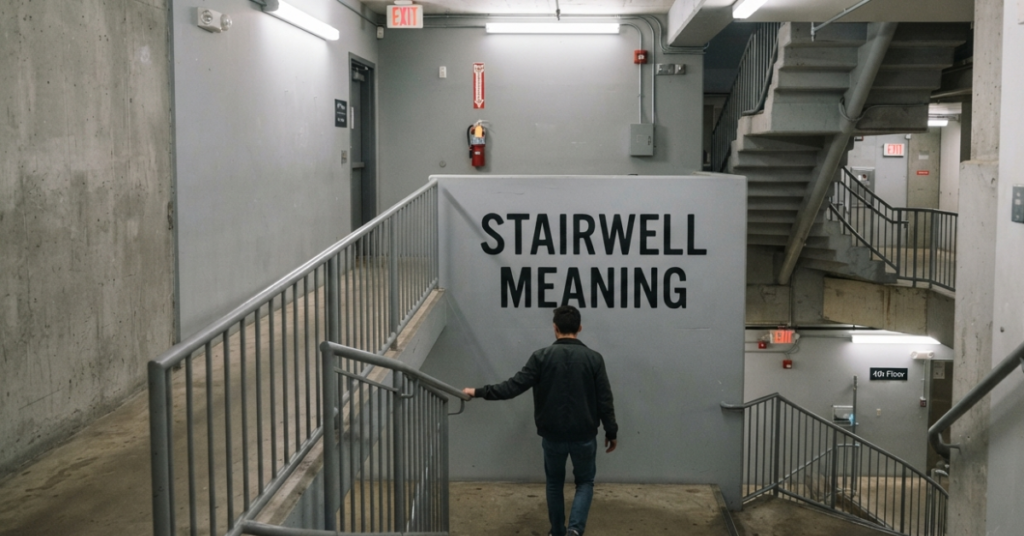
If you’ve ever been inside a multi-story building, you’ve probably walked through a stairwell without giving it much thought. Yet many people wonder about the stairwell meaning and how it differs from a staircase. Although the two terms are closely related, they aren’t exactly the same.
This guide explains the stairwell definition, compares a stairwell vs staircase, and explores where the term is commonly used. Whether you’re reading building plans, learning English, or simply curious about architectural vocabulary, you’ll find clear answers here.
What Is the Stairwell Meaning?
The stairwell meaning refers to the enclosed vertical space in a building that contains one or more flights of stairs connecting different floors.
In simple terms, a stairwell is the entire shaft or enclosed area where the staircase is located. It includes more than just the steps—it also encompasses the surrounding walls, landings, railings, and the open space that extends between floors.
You’ll commonly find stairwells in:
- Apartment buildings
- Office complexes
- Schools
- Hospitals
- Hotels
- Shopping malls
- Parking garages
Their primary purpose is to provide safe and efficient movement between floors.
Stairwell Definition
The standard stairwell definition is:
A vertical passage or enclosed space within a building that houses a staircase and provides access between different levels.
Many stairwells are enclosed by fire-resistant walls and doors to improve safety during emergencies.
Stairwell vs Staircase: What’s the Difference?
One of the most common questions is the difference between stairwell vs staircase.
Although people often use the terms interchangeably, they describe different parts of a building.
| Stairwell | Staircase |
| The enclosed space that contains the stairs | The actual steps used for climbing between floors |
| Includes walls, landings, railings, and vertical shaft | Refers mainly to the stairs themselves |
| Often designed for fire safety and emergency exits | Primarily designed for walking between levels |
| Common in larger buildings | Found in both homes and commercial buildings |
A simple way to remember it is:
- Staircase = the stairs
- Stairwell = the space around the stairs
Why Are Stairwells Important?
Stairwells serve several essential functions in modern buildings.
Safe Movement Between Floors
They provide an alternative to elevators, allowing people to travel between levels quickly.
Emergency Evacuation
During emergencies such as fires or power outages, stairwells become the safest route for evacuation.
Fire Protection
Many commercial buildings feature enclosed stairwells designed to slow the spread of smoke and fire.
Accessibility for Maintenance
Maintenance workers often use stairwells to reach different parts of a building when elevators are unavailable.
Common Features of a Stairwell
Most stairwells include several structural components.
These may include:
- Flights of stairs
- Landings
- Handrails
- Guardrails
- Fire-rated walls
- Emergency lighting
- Exit signs
- Fire doors
- Ventilation systems
Commercial buildings often have additional safety equipment installed inside stairwells.
Different Types of Stairwells
Not every stairwell looks the same. Architects choose different designs depending on the building’s size and purpose.
Residential Stairwell
Typically found in houses and apartment buildings, these are smaller and designed for daily use.
Emergency Stairwell
Designed primarily for evacuation during emergencies, these stairwells often have fire-resistant construction.
Open Stairwell
Some buildings feature open stairwells that connect multiple floors visually without full enclosure.
Enclosed Stairwell
These are completely surrounded by walls and are common in offices, schools, and hospitals.
Examples of Stairwell in a Sentence
Understanding the word becomes easier when you see it used in context.
Examples include:
- “Please use the stairwell during the fire drill.”
- “The emergency exit leads directly into the stairwell.”
- “Workers repainted the walls inside the stairwell.”
- “The stairwell connects all six floors of the building.”
- “She met her friend near the apartment stairwell.”
These examples show that the term refers to the entire enclosed area rather than only the stairs.
Stairwell Safety Tips
Because stairwells are important escape routes, keeping them safe is essential.
Here are some basic safety practices:
- Keep stairwells free of clutter.
- Never block emergency exits.
- Use handrails while climbing or descending.
- Ensure lighting remains functional.
- Report damaged steps or railings immediately.
- Follow posted evacuation instructions during emergencies.
Maintaining a clear stairwell can help prevent accidents and improve emergency preparedness.
Common Situations Where You’ll Hear the Word
The word “stairwell” frequently appears in conversations about:
- Building construction
- Architecture
- Fire safety
- Property management
- Emergency planning
- Apartment living
- Workplace safety
- Real estate listings
Knowing the term can make it easier to understand building instructions and safety guidelines.
Frequently Asked Questions
What is the stairwell meaning?
A stairwell is the enclosed vertical space in a building that contains a staircase and connects multiple floors.
What is the stairwell definition?
A stairwell is a structural space designed to house stairs and provide safe movement between different levels of a building.
What is the difference between a stairwell vs staircase?
A staircase refers only to the steps, while a stairwell includes the entire enclosed area surrounding the stairs, including walls, landings, and railings.
Is every staircase inside a stairwell?
Not necessarily. Some homes have open staircases that are not enclosed within a traditional stairwell.
Why are stairwells enclosed in commercial buildings?
Enclosed stairwells improve fire safety by slowing the spread of smoke and flames, making evacuation safer during emergencies.
Are stairwells considered emergency exits?
Many commercial and public buildings use stairwells as designated emergency exit routes, although building codes vary by location.
Conclusion
Understanding the stairwell meaning helps clarify an architectural term that many people hear but rarely define correctly. While a staircase refers to the physical steps, a stairwell includes the entire enclosed space that surrounds them. Knowing the distinction between a stairwell vs staircase is useful when reading building plans, following emergency procedures, or discussing architecture.
Whether you’re studying construction, improving your English vocabulary, or simply satisfying your curiosity, remembering this simple difference can make conversations about buildings much clearer. Explore more architectural terms and practical language guides to continue expanding your knowledge.