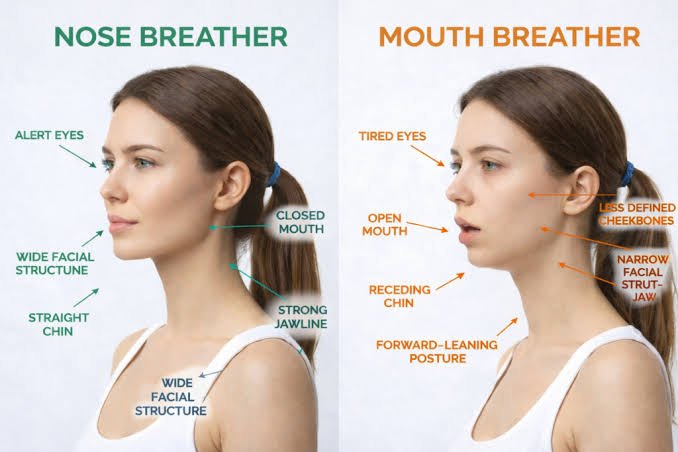
You may notice your mouth hanging open while reading, working at a computer, driving, or watching television. A brief episode during a cold or hard workout is different from a pattern that returns during quiet activities and sleep. Recurring mouth breathing deserves attention because it can overlap with oral comfort, sleep quality, and the way the muscles of the mouth and face function.
That does not mean an open mouth diagnoses a breathing disorder. It means the pattern, its timing, and the other signs around it may be worth recording and discussing with a qualified professional.
Temporary Episode or Recurring Pattern?
Context determines whether mouth breathing is a passing episode. A stuffy nose caused by a cold or seasonal allergies may lead someone to breathe through the mouth for a few days. The same thing can happen during vigorous exercise, when the body needs to move more air.
A recurring pattern looks different. An adult might notice an open mouth while answering email or sitting in traffic, even without obvious congestion. A parent might see a child watching television with parted lips most evenings, then notice the same posture after the child falls asleep.
Frequency, setting, and duration are more useful than a single snapshot. If the pattern appears across several quiet activities or continues over several days, those details create a better starting point for understanding the nighttime clues that may accompany it.
Nighttime Clues Work Best When Viewed Together
Nighttime clues become useful when several signs repeat together. One restless night after a late meal, stressful day, or allergy flare may not reveal much. Because symptomatology describes a collection of symptoms, a repeated pattern is usually more informative than one restless night.
Possible observations include the following:
- Mouth breathing after falling asleep
- Loud or frequent snoring
- Restless sleep or repeated waking
- Pauses followed by snorts, choking, or gasping
- Waking with a noticeably dry mouth
These signs deserve context rather than an instant label. Mouth breathing is listed among pediatric sleep-apnea symptoms, but the same source cautions that not every child who snores has sleep apnea. A professional evaluation is what separates a symptom pattern from a diagnosis.
Occasional snoring or an open mouth can have several explanations, including temporary congestion. In places with long allergy seasons, such as Houston and Austin, it helps to note whether the pattern settles when congestion improves or continues during otherwise comfortable breathing.
Daytime Effects May Appear in Ordinary Routines
Daytime comfort can reveal patterns that bedtime observation misses. Someone may wake with a dry mouth, sip water frequently, develop cracked lips, or notice morning throat discomfort. An open-mouth resting posture may also appear during homework, screen time, reading, or other quiet tasks, although none of these observations identifies a cause by itself.
Saliva keeps the mouth moist, helps with swallowing, and supports healthy teeth and gums. Persistent dry mouth can make speaking and swallowing difficult and may also increase the risk of tooth decay or oral infections. That makes ongoing dryness a useful detail to mention during a dental or medical visit.
Speech or swallowing changes are also observations, not home diagnoses. Note whether words seem less clear only when the mouth is dry, whether swallowing feels different at certain times, or whether discomfort appears after sleep. Timing helps a clinician distinguish a consistent pattern from something linked to an isolated illness, medication, or seasonal congestion.
A Simple Log Turns Impressions Into Useful Details
A brief written log makes recurring patterns easier to explain. It does not need to be complicated or require someone to watch throughout the night. Use four simple steps:
- Record the date and approximate time.
- Note what the person was doing or whether they were asleep.
- Describe exactly what you saw or heard without assigning a diagnosis.
- Add related details such as dryness, congestion, waking, or snoring.
A few representative entries are often more manageable than constant monitoring. Include normal days as well as days when you notice something, because the contrast may help clarify the pattern. A short log helps because written records are easier to search and compare when a pattern develops over several days.
Specific wording is more useful than a broad judgment. “Tuesday, 7:15 a.m.: woke with a dry mouth after snoring was heard twice” gives a clinician more context than “breathing was bad.”
Assessment Looks for Causes, Patterns, and Next Steps
Professional assessment separates observation from diagnosis and treatment planning. A dental or medical professional may ask about nasal breathing, sleep, snoring, congestion, medications, allergies, oral structures, and related daytime symptoms. For children, sleep-related breathing screening includes history and examination, followed by medical referral when obstructive sleep apnea is suspected.
The next step depends on what the assessment finds. After structural or medical barriers have been assessed, myofunctional therapy for nasal breathing habits may use targeted exercises to improve how the tongue, lips, and facial muscles work together. This is different from trying generic exercises without knowing why the breathing pattern is happening.
Care may involve more than one discipline when the findings call for it. Depending on the individual, a dentist may coordinate with a physician, ear, nose, and throat specialist, sleep professional, orthodontic provider, or appropriately trained therapist. That does not mean everyone needs every type of provider; it means the cause and functional effects guide the team.
Bring the observation log, relevant medication and allergy information, dental history, and a short list of questions. These details help the appointment focus on the pattern you actually observed rather than a conclusion reached in advance.
Avoid Conclusions That the Observations Cannot Support
Observation helps most when it does not become self-diagnosis. Mouth breathing alone does not establish sleep apnea, a blocked airway, a speech disorder, or the need for a particular therapy. Even a cluster of signs needs professional interpretation because several conditions and temporary circumstances can look similar at home.
Avoid starting mouth taping, oral exercises, appliances, or medication changes based only on an article or informal observations. A strategy that is reasonable for one person may be inappropriate when nasal obstruction, another medical issue, or a different functional pattern is present. Assessment should come before a treatment choice.
Breathing pauses followed by choking or gasping deserve prompt attention from an appropriate healthcare professional. Seek urgent help when breathing appears severely impaired or another immediate safety concern is present.
Conclusion
A single episode of mouth breathing is different from a pattern that returns across quiet daytime activities and sleep. Daytime comfort, nighttime sounds, congestion, and oral dryness all add useful context. Specific written observations are more helpful than diagnostic labels, and a qualified professional determines whether treatment is appropriate. Record what you notice, keep the description concrete, and bring those details to the appointment.