
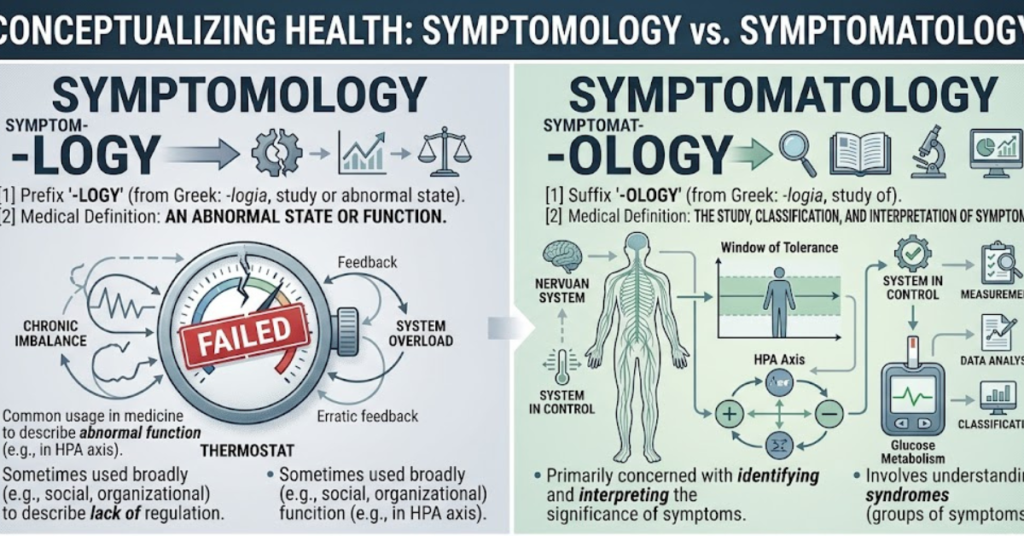
Medical terminology can be confusing, especially when two words look and sound almost identical. One common example is symptomology vs symptomatology. Many people use these terms interchangeably, but only one is considered the standard and technically correct form in medical and scientific writing.
Understanding the difference matters because accurate language improves communication, credibility, and clarity, especially in healthcare, psychology, research, and education. In this article, you’ll learn what each term means, why the confusion exists, which spelling professionals prefer, and how to use the correct word confidently in everyday writing.
What Does Symptomatology Mean?
Symptomatology is the formal medical term used to describe:
- The collection of symptoms associated with a disease or condition
- The study and analysis of symptoms
Healthcare professionals, researchers, and medical textbooks frequently use the word when discussing how illnesses present themselves in patients.
For example:
- The symptomatology of influenza includes fever, fatigue, and body aches.
- Researchers studied the symptomatology of anxiety disorders.
The term is widely accepted in medicine, psychiatry, psychology, and clinical research.
Is “Symptomology” a Real Word?
The word “symptomology” does appear in casual speech and informal writing. However, many medical professionals and language experts consider it a nonstandard or shortened variation of “symptomatology.”
While some dictionaries acknowledge its usage, “symptomatology” remains the preferred term in professional and academic settings.
In simple terms:
- Symptomatology = formally correct and widely accepted
- Symptomology = informal or less precise variation
Because of this distinction, most healthcare publications avoid using “symptomology.”
Why People Confuse the Two Terms
The confusion usually happens because English speakers naturally shorten long technical words over time.
There are several reasons why people say or write “symptomology” instead:
- It sounds simpler and shorter
- The ending “-ology” feels familiar
- Many scientific fields use similar word patterns
- Casual conversation often simplifies terminology
Even though the shorter version feels easier to pronounce, professional communication still favors the longer and more accurate form.
Breaking Down the Word Structure
Understanding the roots of the words makes the difference clearer.
The Meaning of “Symptom”
A symptom is a physical or psychological sign indicating a condition, illness, or disorder.
Examples include:
- Headache
- Fatigue
- Nausea
- Anxiety
- Fever
The Meaning of “-Logy”
The suffix “-logy” usually refers to the study of something.
Examples include:
- Biology
- Psychology
- Neurology
Why “Symptomatology” Exists
The word combines:
- Symptom
- Atology
- Logy
Historically, the structure evolved to describe the systematic study and classification of symptoms rather than simply “the study of symptoms.”
This is why medical terminology preserves the longer form.
How Symptomatology Is Used in Medicine
The term appears frequently in healthcare and scientific research because symptoms help professionals identify diseases and conditions.
Doctors often evaluate symptom patterns to:
- Diagnose illnesses
- Monitor disease progression
- Compare patient cases
- Assess treatment effectiveness
- Conduct medical research
For example, the symptomatology of depression may include low mood, sleep disturbances, and loss of interest in activities.
Symptomatology in Psychology and Mental Health
Mental health professionals commonly use the term when discussing emotional, behavioral, or cognitive symptoms.
Examples include:
- Anxiety symptomatology
- PTSD symptomatology
- ADHD symptomatology
- Depressive symptom patterns
In psychology, understanding symptom presentation helps clinicians make accurate assessments and treatment plans.
Why Correct Medical Terminology Matters
Using accurate terminology is important in professional communication.
Correct language helps:
- Improve clarity
- Reduce misunderstandings
- Strengthen academic writing
- Build professional credibility
- Maintain consistency in healthcare settings
Small wording differences can significantly affect how writing is perceived in clinical or educational environments.
Common Mistakes People Make
Many writers unintentionally misuse these terms.
Common mistakes include:
- Using “symptomology” in academic papers
- Assuming both terms are equally accepted
- Mixing casual and professional terminology
- Copying incorrect spellings from online sources
The safest option in formal writing is to use “symptomatology.”
Examples of Correct Usage
Here are some examples showing proper usage in sentences.
- Researchers examined the symptomatology of chronic fatigue syndrome.
- The symptomatology of the condition varies from person to person.
- Doctors continue studying neurological symptomatology in patients.
- Accurate symptomatology helps improve diagnosis and treatment.
These examples reflect how the term commonly appears in medical communication.
Is Symptomology Ever Acceptable?
In casual conversation, some people use “symptomology” without issue. Most listeners still understand the intended meaning.
However, it may sound less precise in:
- Academic writing
- Healthcare documentation
- Research papers
- Clinical discussions
- Medical publications
For professional accuracy, “symptomatology” remains the better choice.
Tips to Remember the Correct Term
A simple memory trick can help you avoid confusion.
Think about other medical terms:
- Dermatology
- Cardiology
- Pathology
Medical language often keeps complex historical structures instead of simplifying them completely.
When writing professionally, choose the full medical form: symptomatology.
FAQs
Which is correct: symptomology or symptomatology?
“Symptomatology” is the formally accepted and preferred term in medicine, psychology, and academic writing.
Is symptomology a real word?
It appears in informal usage, but many professionals consider it a shortened or nonstandard variation.
What does symptomatology mean?
It refers to the collection, study, and analysis of symptoms associated with a disease or condition.
Why do people say symptomology instead?
People often shorten long technical words in everyday speech because they feel easier to pronounce and remember.
Is symptomatology only used in medicine?
No. The term is also widely used in psychology, psychiatry, neuroscience, and health research.
Should I avoid using symptomology in formal writing?
Yes. In professional, medical, or academic contexts, “symptomatology” is the safer and more accurate choice.
Conclusion
Understanding the difference between symptomology vs symptomatology helps improve both language accuracy and professional communication. While the shorter version may appear in casual conversation, “symptomatology” is the correct and widely accepted term used in medicine, psychology, and scientific research.
Using the proper terminology strengthens clarity, credibility, and precision, especially in academic or healthcare-related writing. Even small language distinctions can make a meaningful difference in how information is understood and trusted.
If you want to improve your understanding of medical terminology further, exploring commonly confused healthcare terms can help sharpen both your writing and communication skills.








1 thought on “Symptomology vs Symptomatology: What’s the Difference?”