
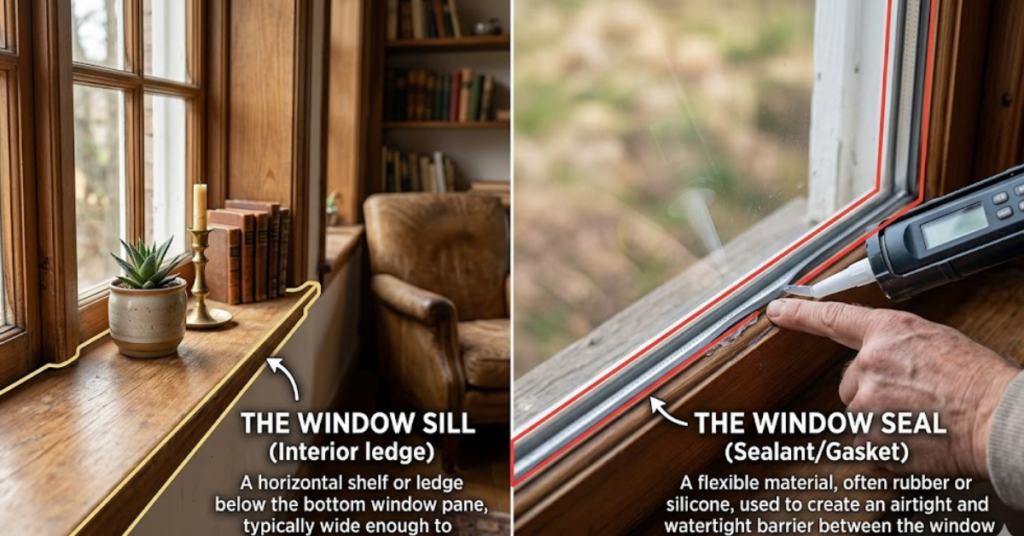
Many people hear the phrase “window sill” and mistakenly write or say “window seal” instead. Since the words sound similar when spoken aloud, it’s easy to mix them up. But while they may sound alike, they mean completely different things.
If you’ve ever wondered “window sill or window seal,” the correct term usually depends on what part of the window you’re talking about. A window sill is the horizontal ledge at the bottom of a window, while a window seal refers to the material that blocks air, water, or moisture from entering around the window frame.
Understanding the difference can help you communicate more clearly during home repairs, renovations, decorating projects, or conversations with contractors.
What Is a Window Sill?
A window sill is the flat horizontal surface located at the bottom of a window frame. It can be found inside, outside, or both, depending on the window design.
Window sills serve several purposes:
- support the window structure
- help direct rainwater away
- provide decorative value
- create space for plants or decorations
Inside the home, people often place:
- flower pots
- candles
- books
- picture frames
on a window sill.
What Is a Window Seal?
A window seal is completely different from a window sill.
The seal refers to the protective barrier around or inside the window that prevents:
- air leaks
- moisture intrusion
- drafts
- condensation problems
Window seals are commonly made from:
- rubber
- silicone
- vinyl
- specialized insulating materials
Modern double-pane and triple-pane windows rely heavily on proper seals for energy efficiency.
Window Sill or Window Seal: What’s the Main Difference?
The easiest way to remember the difference is this:
- A sill is a physical ledge.
- A seal is a protective barrier.
Think about function:
- The sill supports and finishes the window structure.
- The seal protects the home from outside air and moisture.
Although the terms sound similar, they describe entirely different window components.
Is It Window Sill or Window Seal?
When referring to the ledge at the bottom of the window, the correct term is “window sill.”
Example:
- I placed a plant on the window sill.
When talking about insulation or preventing leaks, the correct term is “window seal.”
Example:
- The window seal needs replacing because cold air is getting inside.
So if you’re asking “is it window sill or window seal,” the answer depends on what you mean.
Why People Confuse the Terms
The confusion mostly happens because:
- sill and seal sound alike
- both relate to windows
- pronunciation can blur together in conversation
Many people grow up hearing the phrase without ever seeing it written down, which leads to spelling mistakes later.
This type of language mix-up is common in English, especially with home improvement vocabulary.
Parts of a Window You Should Know
Understanding basic window terminology makes the difference easier to remember.
Window Sill
The bottom ledge or shelf-like surface beneath the window.
Window Seal
The insulating material that prevents leaks and improves efficiency.
Window Frame
The structural border that holds the window in place.
Window Pane
The actual sheet of glass inside the frame.
Window Trim
Decorative molding around the edges of the window.
Learning these terms can help during repairs or when speaking with installers.
Common Signs of a Damaged Window Seal
A broken window seal can create several household problems.
Look for signs like:
- foggy glass between panes
- drafts near windows
- higher energy bills
- moisture buildup
- reduced insulation
When seals fail, insulated windows lose effectiveness and may need repair or replacement.
Common Issues With Window Sills
Window sills can also develop problems over time.
Common issues include:
- water damage
- rotting wood
- peeling paint
- cracks
- mold growth
Exterior window sills especially face constant exposure to rain and sunlight.
Interior vs Exterior Window Sills
There are two main types of window sills.
Interior Window Sill
This is the visible ledge inside your home. It’s often decorative and functional.
Exterior Window Sill
The outside sill helps direct water away from the building to prevent damage.
Both types are important for protecting the structure of the home.
Materials Used for Window Sills
Window sills come in different materials depending on style and budget.
Popular options include:
- wood
- stone
- vinyl
- marble
- tile
- engineered wood
Each material offers different levels of durability and maintenance.
Why Window Seals Matter for Energy Efficiency
Window seals play a major role in keeping homes comfortable.
Proper seals help:
- reduce heating costs
- improve insulation
- block moisture
- maintain indoor temperatures
- increase energy efficiency
Even high-quality windows can perform poorly if the seals fail.
How to Remember the Difference
A simple memory trick can help.
Sill = Shelf
A window sill acts like a shelf or ledge.
Seal = Sealing Protection
A window seal closes gaps and blocks air or water.
This quick association makes the terms much easier to remember.
Common Mistakes People Make
Here are some mistakes people often make when discussing windows.
Calling the Ledge a Seal
Incorrect:
- “The flowers are sitting on the window seal.”
Correct:
- “The flowers are sitting on the window sill.”
Using “Sill” for Draft Problems
Incorrect:
- “The window sill is causing cold air leaks.”
Correct:
- “The window seal is causing cold air leaks.”
Using the correct term improves communication, especially during repairs.
Is “Window Seal” Ever Correct?
Yes, absolutely.
“Window seal” is the correct term when discussing:
- insulation
- leaks
- condensation
- energy efficiency
- weatherproofing
The issue is simply that many people accidentally use it when they really mean “window sill.”
FAQs
Is it window sill or window seal?
Both are correct terms, but they mean different things. A window sill is the ledge at the bottom of a window, while a window seal prevents air and moisture leaks.
What is a window sill?
A window sill is the horizontal surface or ledge beneath a window frame.
What does a window seal do?
A window seal helps insulate the window and blocks air, water, and moisture from entering.
Why do people confuse window sill and window seal?
The words sound very similar when spoken, which leads to common mix-ups.
Can a damaged window seal be repaired?
Sometimes. Minor seal problems may be repaired, but severe damage often requires window replacement.
What materials are window sills made from?
Common materials include wood, stone, vinyl, tile, and marble.
Is a window sill inside or outside?
A window can have both an interior and exterior sill.
Conclusion
Understanding the difference between window sill or window seal is simpler once you know what each term actually means. A window sill is the bottom ledge or shelf-like part of the window, while a window seal is the protective barrier that keeps out drafts and moisture.
Although the two phrases sound similar, they serve very different purposes in a home. Knowing the correct terminology can help you communicate more clearly during repairs, renovations, or home improvement projects.
If you’re interested in learning more about home maintenance terminology, window repair basics, or common construction vocabulary, exploring related guides can make future projects much easier.