English spelling can be surprisingly tricky. Some words sound completely different from how they look, while others seem logical but turn out to be incorrect. One common confusion people search for is “gnaw or knaw.” At first glance, both words may appear reasonable, especially because English contains many silent letters and unusual spelling patterns.
If you’ve ever wondered which version is correct, you’re in the right place. This guide explains the meaning, pronunciation, history, grammar rules, and proper usage of the word “gnaw.” We’ll also explore why “knaw” appears in searches even though it is not considered a standard English word.
Gnaw or Knaw: Which One Is Correct?
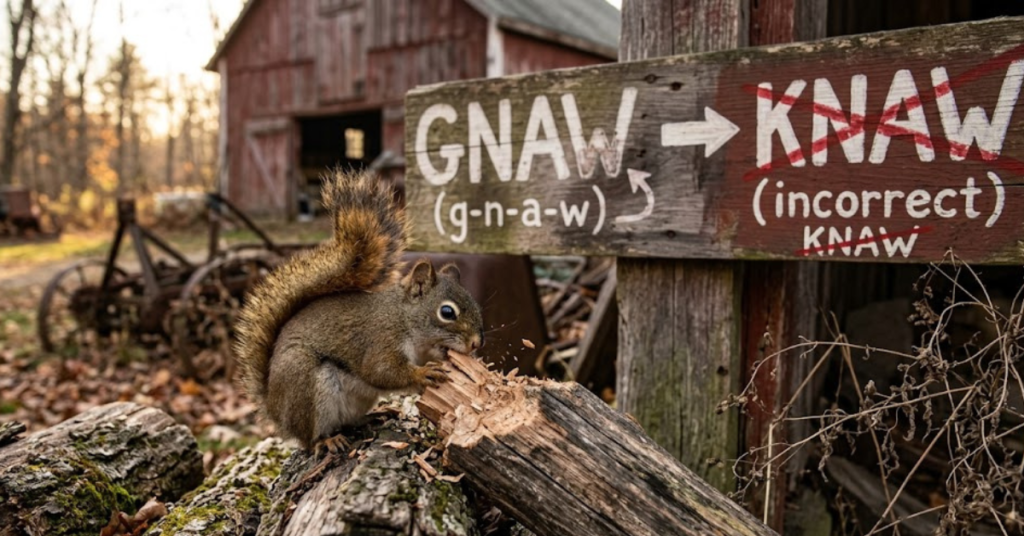
The correct spelling is “gnaw.”
The word “knaw” is incorrect in modern English and is considered a misspelling. While it may occasionally appear online due to typing errors or pronunciation confusion, dictionaries recognize only “gnaw” as the proper spelling.
So if you are debating “gnaw or knaw,” always choose “gnaw.”
What Does “Gnaw” Mean?
The verb “gnaw” means:
- To bite or chew something repeatedly
- To wear away gradually
- To cause ongoing worry or emotional discomfort
The word can describe both physical actions and emotional feelings.
Examples of Physical Use
- The dog continued to gnaw on the bone.
- Rats gnawed through the wooden box.
- He gnawed at the edge of his pencil while thinking.
Examples of Emotional Use
- Guilt began to gnaw at her mind.
- Anxiety gnawed at him all night.
- The uncertainty kept gnawing away at their confidence.
This figurative use is extremely common in everyday English.
Why Do People Write “Knaw”?
The confusion usually comes from pronunciation.
The word “gnaw” starts with a silent “g,” which makes it sound similar to words beginning with “n.” Because of this, some people assume the spelling should follow a more familiar pattern like:
- know
- knee
- knife
Since many English words begin with “kn,” people naturally guess that “knaw” could be correct. However, English spelling history works differently here.
How to Pronounce “Gnaw”
“Gnaw” is pronounced:
“Naw”
The “g” is completely silent.
This pronunciation is similar to:
- claw
- law
- saw
The silent “g” belongs to an older form of English pronunciation that remained in spelling even after speech patterns changed over time.
The Origin of the Word “Gnaw”
The word has deep roots in Old English and Germanic languages. Historically, the “g” sound was once pronounced, but over centuries it became silent while the spelling stayed the same.
English contains many words with silent letters because pronunciation evolved faster than spelling rules.
Other examples include:
- gnome
- gnash
- sign
- write
- comb
These historical spellings are one reason English learners often struggle with pronunciation and spelling consistency.
Common Uses of “Gnaw” in Everyday English
The word appears in several situations.
1. Animals Chewing Objects
This is the most literal meaning.
Examples:
- Puppies gnaw on shoes when teething.
- Beavers gnaw through tree trunks.
- Mice can gnaw through packaging materials.
2. Emotional Stress or Anxiety
This figurative meaning is especially common in books, journalism, and conversation.
Examples:
- Fear gnawed at her thoughts.
- Regret gnawed at him for years.
- Financial worries were gnawing away at their peace of mind.
3. Gradual Damage or Erosion
Sometimes “gnaw” describes slow destruction.
Examples:
- Rust gnawed at the metal fence.
- Time gnawed away at the old building.
Grammar and Word Forms
Here are the common forms of the word:
- Base verb: gnaw
- Past tense: gnawed
- Present participle: gnawing
- Noun form: gnawing
Example Sentences
- The rabbit gnawed the carrot.
- Something was gnawing at his conscience.
- They noticed gnawed wires behind the wall.
Easy Trick to Remember the Correct Spelling
A simple way to remember it:
“Gnaw begins with the same silent letters as gnome.”
Both words use a silent “g,” even though it is not pronounced.
Another memory trick:
- “Gnaw” relates to chewing.
- Animals like rodents “gnaw.”
Connecting the word to imagery often makes spelling easier to recall.
Common Mistakes Related to “Gnaw”
Here are some incorrect and correct examples.
Incorrect
- The dog likes to knaw bones.
- Stress continued to knaw at him.
- Mice can knaw through plastic.
Correct
- The dog likes to gnaw bones.
- Stress continued to gnaw at him.
- Mice can gnaw through plastic.
Using the correct spelling improves clarity and professionalism in writing.
Why Correct Spelling Matters
Misspelled words can affect:
- Academic writing
- Search engine rankings
- Business communication
- Reader trust
Even small spelling mistakes may distract readers or make content appear less polished. That is why understanding words like “gnaw” is valuable for students, writers, bloggers, and professionals alike.
Similar Words People Confuse
English contains many words with silent letters that create confusion.
Some common examples include:
- Know vs no
- Knight vs night
- Gnat vs nat
- Write vs right
These words demonstrate how pronunciation and spelling do not always match perfectly in English.
Is “Knaw” Ever Accepted?
No. Standard English dictionaries do not recognize “knaw” as a correct spelling.
However, you may still encounter it:
- In casual online posts
- In typing mistakes
- In phonetic spelling attempts
For formal or professional writing, always use “gnaw.”
FAQs
Is it gnaw or knaw?
The correct spelling is “gnaw.” “Knaw” is incorrect in standard English.
Why is the “g” silent in gnaw?
The silent “g” comes from older English pronunciation patterns that changed over time while the spelling remained the same.
What does gnaw mean?
“Gnaw” means to chew repeatedly or to cause persistent emotional discomfort or worry.
How do you pronounce gnaw?
It is pronounced “naw.”
Can gnaw be used figuratively?
Yes. People often use it to describe anxiety, guilt, stress, or worry that slowly affects someone emotionally.
Is knaw a real word?
No. “Knaw” is considered a misspelling and is not accepted in standard dictionaries.
What is the past tense of gnaw?
The past tense is “gnawed.”
Conclusion
The confusion around “gnaw or knaw” is understandable because English spelling often includes silent letters and historical quirks. Still, the correct spelling is always “gnaw.” The word can describe chewing, gradual damage, or emotional stress, making it a surprisingly versatile part of the English language.
Understanding the correct spelling not only improves your writing but also helps you communicate more confidently in both casual and professional settings. If you enjoy learning about tricky English words, exploring more grammar and vocabulary guides can sharpen your language skills even further.