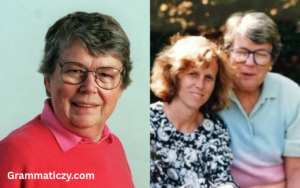
Wincey Willis Biography: The Life, Career and Legacy of ITV’s First Female Weather Presenter
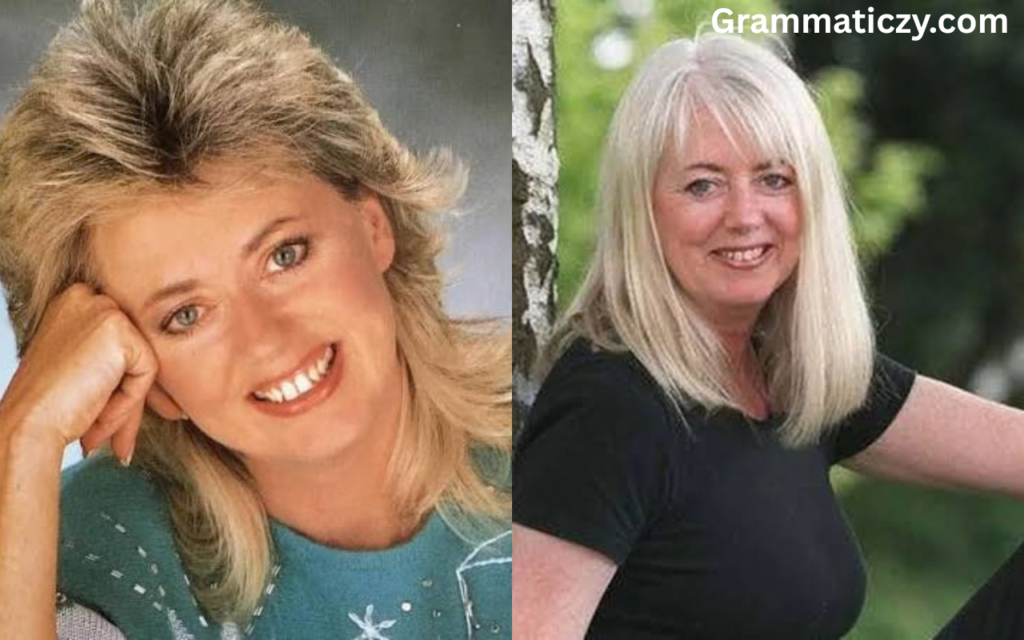
There are television personalities who become famous because they deliver the news, introduce programmes or report the weather, and then there are personalities who become part of the atmosphere of an entire era. Wincey Willis belonged to the second group. With her colourful jumpers, distinctive hairstyle, lively personality and unmistakably warm northern character, she became one of the most recognisable faces of British breakfast television during the 1980s. Her rise was particularly significant because she became the first woman to present the national weather on ITV, helping change the image of television weather presenting at a time when the role was overwhelmingly associated with men.
Born Florence Winsome Leighton in Gateshead in 1948, Willis did not follow a conventional route into broadcasting. She was adopted as a baby, raised in Hartlepool and initially dreamed of becoming a vet because of her extraordinary love of animals. Her journey eventually took her to France, Tunisia, radio, regional television and then national television, where she became a household name through TV-am’s Good Morning Britain. What makes her story especially fascinating is that her career did not end when her national television fame declined. Instead, she followed her passion for wildlife and conservation, later returning to radio and television in different capacities.
Wincey Willis died in December 2024 at the age of 76 following a long battle with dementia, with news of her death becoming public in June 2025. Her passing brought renewed attention to a career that stretched far beyond weather forecasts. From breakfast television and game shows to animal welfare, conservation work and radio broadcasting, Willis lived a remarkably varied life. Her story remains an interesting chapter in British television history and an example of how a person can reinvent themselves when one chapter of their career comes to an end.
Wincey Willis Facts at a Glance
| Category | Details |
|---|---|
| Full name | Florence Winsome Leighton |
| Professional name | Wincey Willis |
| Date of birth | 8 August 1948 |
| Place of birth | Gateshead, County Durham, England |
| Date of death | 19 December 2024 |
| Age at death | 76 |
| Profession | Television and radio broadcaster, weather presenter, wildlife presenter |
| Famous for | Good Morning Britain, Treasure Hunt, Wincey’s Pets |
| Historic achievement | ITV’s first national female weather presenter |
| Adoptive parents | Florence and Thomas Dimmock |
| Siblings | She was raised as an only child |
| Education | Hartlepool High School for Girls; Strasbourg University |
| Former husband | Malcolm Willis |
| Known interests | Animals, wildlife, conservation, environmental issues and diving |
| Books | It’s Raining Cats and Dogs, Greendays |
| Net worth | No reliable publicly verified figure |
| No reliably verified official account identified | |
| X/Twitter | No reliably verified official account identified |
| No reliably verified official profile identified |
Early Life and Family Background
Wincey Willis was born Florence Winsome Leighton on 8 August 1948 in Gateshead, County Durham. She was born to a single mother and was adopted as a baby by Florence and Thomas Dimmock. Her adoptive parents brought her up in Hartlepool, where she spent much of her childhood. Growing up in a strict household, she was exposed to a strong Christian environment, with church playing an important part in family life. Although her early circumstances were relatively conventional, the personality that would later make her famous was already developing through her independence and fascination with animals.
The name “Wincey” itself came from her middle name, Winsome. According to accounts of her childhood, schoolchildren began calling her Wincey after learning the nursery rhyme Incy Wincy Spider. The nickname remained with her and eventually became one of the most memorable names in British television. Instead of using a formal professional identity, Willis embraced the unusual nickname, helping create the friendly and slightly eccentric persona that audiences would later associate with her.
Animals were particularly important to Willis from an early age. She reportedly dreamed of becoming a vet, although she later said that she did not obtain the grades necessary to follow that career. That childhood ambition never completely disappeared. Even after becoming a television celebrity, she remained deeply involved with animals, eventually keeping a remarkable collection of pets and becoming involved in wildlife conservation. Her love of animals would eventually become almost as important to her public identity as her weather-presenting career.
Education, France and the Road to Broadcasting
Willis left Hartlepool High School for Girls at the age of 16 and took a route that was unusual for someone who would eventually become a television celebrity. She moved to France, where she studied and completed the baccalauréat, later attending Strasbourg University. Her time in France broadened her experience and gave her exposure to a different culture and language environment at a relatively young age. This period helped establish the adventurous character that would later become visible in her professional life.
After her education, Willis spent time working as a travel courier in Tunisia and North Africa. The job gave her practical experience dealing with people, travelling and communicating across different environments. She eventually returned to Britain and worked as a representative for DJM Records. None of these positions looked like an obvious route into television, but together they provided skills that would prove useful in broadcasting, particularly her confidence in dealing with people and her ability to communicate naturally.
Her broadcasting journey properly began when she joined Radio Tees in 1975, working in its record library and promotions department. She eventually moved in front of the microphone, making an on-air appearance as a co-presenter on a Saturday morning programme with disc jockey Les Ross. This was the beginning of a broadcasting career that would eventually take her from regional radio to Tyne Tees Television and, ultimately, national ITV television.
Wincey’s Pets and Her Early Television Career
Before she became famous across Britain, Willis established herself in regional television. In the early 1980s she worked with Tyne Tees Television, where she began presenting weather and other programmes. Her personality stood out because she did not behave like the stereotypical formal broadcaster of the period. She had an approachable manner, a distinctive appearance and an ability to communicate without sounding overly rehearsed. Those qualities would eventually become central to her national appeal.
Her passion for animals also found a place on television through Wincey’s Pets, a programme that focused on animals and offered advice about caring for them. The programme reflected something genuine about Willis rather than being simply a television persona. Animals were already a major part of her personal life, and she had become known for rescuing and caring for a wide variety of creatures. Her television work allowed her to combine broadcasting with one of her deepest personal interests.
Willis’s unusual home life also attracted media attention. She lived in a former railway station in the Barnard Castle area and kept a large collection of animals, with reports mentioning dogs, cats, rabbits, tortoises, birds, iguanas, fish and goats. Her home became almost an extension of her personality: unconventional, energetic and full of life. This love of animals would remain a defining feature throughout her career, even when she was appearing before millions of viewers as a weather presenter.
Becoming ITV’s First National Female Weather Presenter
The major breakthrough in Wincey Willis’s career came in 1983 when she joined TV-am’s Good Morning Britain. ITV’s breakfast television operation was struggling against the BBC at the time, and the programme was undergoing a major transformation. Willis was recruited after being noticed while working in the Tyne Tees region, and she joined the national programme in May 1983 as its weather presenter.
Her appointment was historically important because Willis became the first woman to present the national weather on ITV. Her approach was very different from the formal presentation style that audiences had traditionally associated with weather forecasts. She openly acknowledged that she was not a meteorologist but a presenter, focusing on translating the forecast into information that ordinary people could actually use in their daily lives.
That approach became part of her appeal. Willis famously emphasized that most viewers were less interested in complicated meteorological terminology than in knowing whether they needed an umbrella. Her colourful jumpers, relaxed delivery and distinctive personality fitted perfectly with the new style of breakfast television being developed at TV-am. According to TV-am’s own tribute, Willis became one of the programme’s most recognisable figures and was part of a team that helped the programme become highly successful in the ratings.
Good Morning Britain and National Fame
During her years on Good Morning Britain, Wincey Willis became much more than a weather presenter. Her personality fitted naturally into the informal atmosphere of breakfast television, where presenters were expected to entertain as well as inform. She appeared alongside some of the most recognisable television personalities of the period and became closely associated with the programme’s distinctive 1980s identity.
Willis’s appearance was also part of what made her memorable. Her colourful knitwear and distinctive hairstyle were frequently mentioned in contemporary coverage, while her enthusiasm and humour made her stand out among more traditional television presenters. She could move comfortably between straightforward weather forecasts and lighter entertainment segments, giving her a broader presence than a conventional specialist weather presenter.
Her television fame was also enhanced by her willingness to embrace unusual material. Her love of animals became part of her public image, while her work alongside characters such as Roland Rat added to the playful character of TV-am. Rather than presenting herself as a distant television professional, Willis projected the image of someone whose personality could extend naturally beyond the studio. That accessibility became one of the strongest elements of her public appeal.
Treasure Hunt and Other Television Work
In 1985, Willis expanded her television profile by becoming an adjudicator on Channel 4’s Treasure Hunt. The programme was an adventure game show associated with presenter Anneka Rice, and Willis appeared across five seasons. Her participation demonstrated that her television appeal was not limited to weather forecasting and that she could work successfully within entertainment programming as well.
During this period she also became involved in projects that reflected her growing public profile. One notable example was The Weather Game, a board game developed by Willis and released by Waddingtons. It was an unusual extension of a television presenter’s identity into the world of games and illustrated how recognizable her name had become during the peak of her popularity.
Willis eventually left TV-am in 1987 following a contract disagreement. Rather than attempting to remain permanently tied to the national television spotlight, she moved into other areas of work, including pantomime. Her departure marked the beginning of a new stage in her life, one in which wildlife, environmental issues and conservation would increasingly become more important than mainstream celebrity.
Wildlife Conservation and Environmental Work
One of the most remarkable aspects of Wincey Willis’s life was what happened after her national television career began to fade. Instead of treating television fame as the ultimate destination, she pursued her longstanding interest in animals and conservation. She became involved in wildlife projects and environmental causes, moving into an area that had interested her since childhood.
Her conservation work included a particularly demanding period in Greece, where she spent around six months living in a tent while helping monitor and protect endangered turtles. The work involved difficult circumstances and opposition from people connected to development around the nesting areas. Reports of the experience underline the extent to which Willis was prepared to leave behind the comforts associated with television fame to work directly with wildlife.
Her environmental interests also led to other unusual professional experiences. She worked with Wiggly Wigglers, a company associated with worm composting, while continuing to develop her broadcasting and conservation interests. Her books It’s Raining Cats and Dogs, published in 1986, and Greendays, published in 1990, further reflected her commitment to animals and environmental issues.
Return to Broadcasting and Radio Career
Willis eventually returned to television in 1993, this time working as a wildlife presenter on Tyne Tees Weekend. The role allowed her to reconnect with broadcasting while remaining close to the subject that had always mattered deeply to her. Instead of attempting to recreate her TV-am career, she used her experience and public profile in a way that aligned more closely with her interests in animals and conservation.
During the 2000s, Willis developed an important second broadcasting career in radio. She presented programmes for BBC Coventry & Warwickshire and BBC Hereford & Worcester, demonstrating that her ability to communicate with audiences remained strong long after her national television years. Radio also gave her a more conversational environment in which personality and storytelling could play a central role.
Between 2010 and 2012, she presented The Big Day Out on BBC Hereford & Worcester. She also appeared as a contestant on Celebrity Eggheads in 2011 and later participated in an Audience With Wincey Willis event in Hereford. Her final television appearance came in 2014 on Lorraine, during a programme celebrating Lorraine Kelly’s three decades in breakfast television.
Personal Life, Marriage and Love of Animals
Wincey Willis married Malcolm Willis and continued to use the Willis surname after their divorce. Her personal life was often intertwined with her extraordinary relationship with animals. Her home near Barnard Castle became particularly famous for its large collection of pets, making her domestic life almost as unusual as her television career.
Reports about her home describe a remarkable assortment of animals, including dogs, cats, rabbits, tortoises, birds, iguanas, fish and goats. Her collection sometimes attracted newspaper attention, but for Willis the animals were clearly more than a publicity feature. Caring for animals was a longstanding part of her identity and eventually became a central motivation for her conservation work.
Willis also had a strong interest in adventure and the natural world. She was an advanced scuba diver, adding another dimension to her lifelong fascination with wildlife and the environment. Her personal interests, professional broadcasting work and conservation activities repeatedly overlapped, creating a career that was unusually diverse for a television personality of her generation.
Wincey Willis’s Later Years and Death
In 2015, Willis was diagnosed with frontotemporal dementia. Following the diagnosis, she returned to the North East and lived in Sunderland during her later years. Her public presence became much quieter, and she largely stepped away from the broadcasting spotlight that had defined much of her earlier life.
Willis died on 19 December 2024 at the age of 76. Her death was not announced widely until June 2025, several months later, when former colleagues, television organisations and media outlets began publishing tributes to her life and career. TV-am’s own tribute described her as a trailblazer and highlighted her historic role as ITV’s first woman to present the national weather.
The response to her death also reflected how strongly she had remained in the memories of people who watched British television during the 1980s. Tributes remembered not only her role as a weather presenter but also her distinctive humour, colourful personality, love of animals and later commitment to conservation. Her career had moved far beyond the television studio, but the image of Wincey Willis delivering the weather remained one of the defining memories associated with early British breakfast television.
Wincey Willis Net Worth and Sources of Income
There is no authoritative public record establishing an exact Wincey Willis net worth. Although some celebrity and entertainment websites may publish estimated figures, those estimates are not supported by publicly available financial records. For that reason, assigning a specific monetary value to her wealth would create a false impression of certainty. A responsible biography should distinguish between documented career earnings and speculative online estimates.
Her professional income came from several areas over the course of her career. Television presenting was obviously an important source during her national broadcasting years, particularly through Good Morning Britain and Treasure Hunt. She also earned income through radio presenting, television appearances, publishing and other media-related work. Her long career across several broadcasting formats means that her financial history cannot reasonably be reduced to a single salary or television contract.
Her books and commercial projects also contributed to her professional portfolio. It’s Raining Cats and Dogs and Greendays were connected to her interests in animals and environmental issues, while The Weather Game extended her television identity into the board-game market. However, there is insufficient reliable information to calculate the exact amount she earned from these projects or to establish her total lifetime wealth.
Wincey Willis and Social Media
Wincey Willis belonged to a generation of broadcasters whose careers were established long before social media transformed the relationship between celebrities and audiences. Instagram, Facebook, X and LinkedIn did not exist during the period when she became famous, and there is no reliably verified official social-media presence that can confidently be attributed to her today.
Her digital legacy instead exists through television archives, newspaper articles, interviews, obituary features and historical broadcasting material. Her name continues to appear in online discussions about British breakfast television, ITV weather presenters and the development of women in broadcasting. The renewed media coverage following her death in 2025 has also introduced her career to audiences who may have been too young to remember her original television appearances.
This makes her story particularly interesting from a modern perspective. Today’s television personalities can communicate directly with millions of followers through social platforms, while Willis’s generation depended on television, radio, newspapers and personal appearances. Her popularity was therefore built through repeated appearances in viewers’ homes rather than through an online following. The enduring recognition she received decades later demonstrates the strength of that traditional broadcast connection.
Wincey Willis’s Legacy in British Television
Wincey Willis’s most important documented contribution to television history is her role as ITV’s first national female weather presenter. At a time when women remained underrepresented in prominent broadcasting roles, her appearance on national television was significant. Her success demonstrated that weather presenting could be approached as a form of accessible communication rather than simply a technical exercise.
Her style was particularly influential because it was personal and conversational. Willis did not try to make herself sound like a scientist when she was not one. Instead, she concentrated on giving viewers information they could understand and use. That approach became an important part of the new style of breakfast television being developed in the 1980s, where presenters were increasingly expected to entertain, inform and build a relationship with viewers.
Her legacy is also connected to her willingness to reinvent herself. She moved from travel work to radio, from regional broadcasting to national television, from weather presenting to entertainment programming, and eventually from television celebrity to conservation work and radio. Her career therefore represents much more than a successful period in the 1980s. It shows how professional identity can evolve when someone follows genuine interests rather than remaining permanently attached to their most famous achievement.
Final Thoughts on Wincey Willis
Wincey Willis’s life was an extraordinary mixture of broadcasting, adventure, animals and environmental activism. She began life as Florence Winsome Leighton, an adopted child from Gateshead who grew up in Hartlepool and dreamed of becoming a vet. Her route eventually carried her through France, Tunisia, radio and regional television before placing her in front of millions of viewers as ITV’s first national female weather presenter.
What makes her story particularly memorable is what she chose to do after becoming famous. Willis could have remained focused entirely on television, but her interests repeatedly pulled her toward animals and the natural world. Her conservation work in Greece, environmental projects, wildlife presenting and lifelong dedication to animals showed that her identity was never limited to the bright television studio where most viewers first encountered her.
Wincey Willis died in 2024, but her contribution remains part of British broadcasting history. She helped establish a new kind of female television personality, brought warmth and accessibility to weather presenting, entertained audiences through programmes such as Treasure Hunt, and later devoted considerable energy to conservation. Her journey is ultimately a story about reinvention: a reminder that success does not have to mean staying in one place forever, and that a person’s most meaningful legacy can sometimes be found in the passions they pursue after the spotlight has moved elsewhere