
Gordon Cowans Biography: The Aston Villa Legend Who Conquered England and Europe
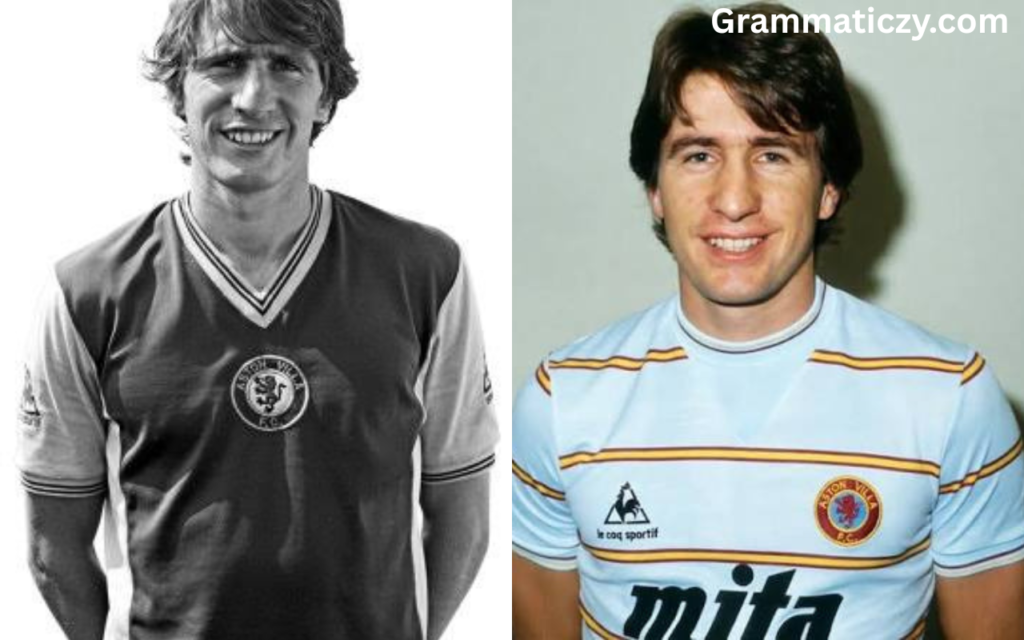
Gordon Cowans belongs to a generation of footballers whose reputations were built almost entirely on what happened between the white lines. Long before social media transformed footballers into global brands, Cowans earned admiration through his intelligence, passing, consistency and ability to perform on the biggest stages. Born in West Cornforth, County Durham, in 1958, he went on to become one of Aston Villa’s most important midfielders, helping the club win the First Division title, the European Cup and the European Super Cup. His career eventually took him to Italy, back to Villa Park, and through several English clubs before he moved into coaching.
What makes Gordon Cowans particularly interesting is the connection between his entire football life and Aston Villa. He joined the club as a youngster, developed into an England international, became a European Cup winner, returned to Villa after playing in Italy and eventually spent years helping develop younger players within the club’s academy. Aston Villa’s own historical material lists him with 527 appearances and 59 goals for the club, while broader career records document his long journey through English and Italian football.
Gordon Cowans Quick Facts
| Category | Details |
|---|---|
| Full name | Gordon Sidney Cowans |
| Date of birth | 27 October 1958 |
| Age | 67 years old |
| Birthplace | West Cornforth, County Durham, England |
| Nationality | English |
| Profession | Former footballer and football coach |
| Position | Midfielder |
| Main club | Aston Villa |
| Other clubs | Bari, Blackburn Rovers, Derby County, Wolverhampton Wanderers, Sheffield United, Bradford City, Stockport County, Burnley |
| England career | 1983–1990 |
| England appearances | 10 |
| England goals | 2 |
| Major honours | First Division, European Cup, European Super Cup, League Cup, Charity Shield |
| Aston Villa playing spells | 1976–1985, 1988–1991, 1993–1994 |
| Coaching career | Burnley and Aston Villa |
| Current status | Retired from professional football and coaching |
| Verified net worth | Not publicly established |
| Official Instagram | No reliably verified account located |
| Official X/Twitter | No reliably verified account located |
| Official LinkedIn | No reliably verified account located |
Early Life and Football Beginnings
Gordon Sidney Cowans was born on 27 October 1958 in West Cornforth, County Durham. His roots were in the North East of England, a part of the country with a particularly strong football culture and a long tradition of producing technically gifted professional players. Public sources provide relatively little verified information about Cowans’ parents, siblings or detailed childhood circumstances, so there is no sound basis for constructing an elaborate family story around those areas. What is well documented is the extraordinary football journey that began when he moved into Aston Villa’s youth system.
Cowans joined Aston Villa as a youngster and progressed through the club’s development structure before making his first-team breakthrough. Aston Villa’s historical profile says that he initially joined the club on schoolboy terms at the age of 12, while other career records describe his development as an apprentice during the mid-1970s. Either way, the important point is that Villa identified his potential very early. He was not a finished product when he arrived; the club played a major role in developing him into the midfielder who would eventually become a European champion.
That early development also helps explain why Aston Villa remained such an important part of Cowans’ identity. He grew within the club’s football environment rather than arriving after establishing himself somewhere else. By February 1976, still only 17, he had already made his first-team debut. From that point onward, his progression accelerated, and he began establishing himself as a serious professional footballer.
Gordon Cowans and Aston Villa’s Rise
Cowans’ emergence coincided with an important period in Aston Villa’s history. The club was building a side capable of competing for major honours, and the young midfielder gradually became one of the technical foundations of that team. He was particularly valued for his passing, versatility and ability to influence the rhythm of a match from midfield. Former teammate Derek Mountfield later described him as an exceptionally good two-footed footballer, a quality that made Cowans difficult to predict and highly effective in possession.
His first major trophy came during the 1976–77 season, when Aston Villa won the League Cup. Cowans was still very young, but he was already experiencing the pressure and excitement of important matches. That success gave him a taste of senior silverware and helped establish a foundation for what would become a remarkable period of achievement at Villa Park.
Cowans’ individual development was equally impressive. In 1979, he was voted PFA Young Player of the Year, recognition that reflected how highly he was regarded within English football. By then, his reputation had moved beyond Aston Villa’s supporters. He was increasingly viewed as one of the country’s promising midfield talents, and his performances suggested that even greater achievements were ahead.
The 1980–81 First Division Championship
The 1980–81 season transformed Cowans from a highly regarded young midfielder into a champion at the highest level of English domestic football. Aston Villa won the First Division title, ending a long wait for the club and establishing themselves as one of the most formidable sides in the country. Cowans was an important member of that championship-winning midfield and played a significant role in Villa’s controlled, technically capable style.
The title was particularly significant because Aston Villa were not simply collecting another trophy. The championship placed the club into European competition and created the opportunity for Cowans and his teammates to test themselves against the best clubs from across the continent. For a midfielder whose reputation had been built around technical quality and football intelligence, the European Cup offered the ultimate stage.
Cowans’ role in that Villa side was based on more than goals. His contribution came through movement, distribution, passing range and an ability to link different areas of the pitch. His game was about making football flow. That type of midfielder can sometimes be overlooked when attention focuses entirely on goalscorers, but Villa’s success demonstrated how valuable Cowans’ qualities were to a balanced team.
The European Cup Triumph of 1982
The defining achievement of Gordon Cowans’ playing career came on 26 May 1982, when Aston Villa faced Bayern Munich in the European Cup final in Rotterdam. Villa entered the match against one of Europe’s biggest clubs, yet produced one of the most famous results in their history by winning 1–0. Cowans was part of the team that delivered the club its first European Cup.
The achievement became legendary because of the circumstances surrounding it. Aston Villa were not expected to dominate European football, and Bayern Munich possessed considerable international experience and attacking quality. Villa’s players, however, produced a disciplined performance. The final became one of the defining moments in Aston Villa history, and Cowans’ presence in midfield helped provide the technical quality necessary for Villa to compete at that level.
The European Cup victory also permanently changed how Cowans was remembered. Winning domestic silverware is a major achievement, but becoming European champion places a player into a much smaller historical group. Cowans was only 23 when Villa lifted the trophy, meaning one of the most important chapters of his career arrived remarkably early. The European triumph remains the centrepiece of his football legacy.
European Super Cup and Further European Success
Aston Villa’s European achievement did not end with the European Cup. The club went on to win the European Super Cup in 1982, adding another continental honour to Cowans’ collection. He was again part of the team during this period, further strengthening his reputation as a midfielder capable of competing successfully against elite European opposition.
Cowans also continued to play European football with Villa after the European Cup triumph. Career records show his extensive European involvement, and one historical source identifies him as Aston Villa’s record appearance holder in European competitions, with 31 appearances. This is another indication of just how central he was to Villa’s rise on the continental stage.
For Cowans, European football provided an opportunity to demonstrate that his abilities were not limited to the English game. His technical style translated to international competition, and his passing and control allowed him to operate effectively against different tactical systems. His subsequent move to Italy would give him another opportunity to experience a very different football culture.
Injury and the End of His First Villa Spell
One of the most difficult moments in Cowans’ career came after the European successes. During a pre-season match in Spain in 1983, he suffered a serious leg injury that kept him out for the entire 1983–84 season. For a player who had reached the height of European football only a year earlier, the injury represented a major interruption at a critical point in his career.
Recovering from such an injury required patience and determination. Cowans eventually returned to fitness, but his relationship with Aston Villa changed. After regaining his fitness, he left the club for Italy and joined Bari in 1985. Reports at the time put the transfer fee at approximately £250,000.
The move was not simply an ending. It became an important new chapter in Cowans’ football education. He had already experienced the English First Division and European Cup, and now he was preparing to play in Italy, where tactical football was regarded as one of the most sophisticated forms of the game.
Gordon Cowans at Bari in Italy
Cowans joined Bari in 1985 and spent three seasons with the Italian club. The move represented a major change in lifestyle and football culture. Italy during this period was one of the most tactically demanding environments in European football, and English players moving there faced a different approach to training, defending and positional play.
In an interview with Sky Sports, Cowans discussed his experience of playing in Italy and explained that he had actually had an opportunity to move to Napoli earlier, although that proposed transfer eventually fell through. His eventual move to Bari gave him the chance to experience Italian football first-hand and broaden his perspective beyond England.
His time abroad also helped make his eventual return to Aston Villa particularly meaningful. Cowans had left his boyhood club, experienced another football culture and then found himself being brought back by Graham Taylor. The move home became one of the most memorable transitions of his career.
Return to Aston Villa Under Graham Taylor
Graham Taylor played a major role in bringing Cowans back to Aston Villa in 1988. Taylor had watched him in Italy and wanted him back at Villa Park. Cowans later spoke warmly about Taylor, describing him as one of the best managers he had worked with and expressing gratitude for the opportunity to return to the club.
The return was emotionally significant because Cowans was going back to the place where his professional career had begun. He already had European Cup winner status, international experience and years of football behind him. Instead of returning merely as a former star, however, he continued to contribute at a high level.
His second major Villa spell lasted from 1988 until 1991. During that period, he remained an experienced and technically accomplished midfielder. His return demonstrated the trust Taylor placed in his football intelligence and also showed how much Cowans’ abilities were still valued after his time in Italy.
England International Career
Gordon Cowans represented England at senior level between 1983 and 1990. His international debut came against Wales on 23 February 1983, when he was 24 years old. He ultimately earned 10 England caps and scored two international goals.
His first England goal came against Scotland in June 1983, while his second arrived against Egypt in January 1986. His final England appearance came against the Republic of Ireland in November 1990. The England International Database confirms the full sequence of his 10 senior appearances.
Although his England career was considerably shorter than his Aston Villa career, international selection still represented an important recognition of his quality. He played during a period when England had a large pool of talented midfielders, making regular selection highly competitive. His 10 caps therefore form only one part of a much broader career in which his greatest influence was undoubtedly at club level.
Later Playing Career
After leaving Aston Villa in 1991, Cowans joined Blackburn Rovers. His experience and quality proved valuable, and he helped Blackburn achieve promotion through the play-offs in 1992. He was also named in the PFA Team of the Year for the Second Division during the 1991–92 season.
Cowans returned to Aston Villa once again in 1993, making his relationship with the club unusually long and distinctive. His third playing spell was shorter, but it reinforced his status as one of the defining figures in the club’s modern history. Aston Villa’s historical records list three separate playing spells for him.
He subsequently continued playing for Derby County, Wolverhampton Wanderers, Sheffield United, Bradford City, Stockport County and Burnley before retiring in 1997. Across the various statistical records, he accumulated 690 senior appearances and 54 goals, although individual databases can differ depending on competition classifications.
Coaching Career After Retirement
Retirement from playing did not separate Cowans from football. He moved into coaching and began with Burnley’s reserve setup before returning to Aston Villa. This transition allowed him to use the knowledge accumulated during more than two decades as a professional midfielder.
At Aston Villa, Cowans became closely involved with youth development. Transfermarkt records him as Aston Villa Under-18 manager from 2000 to 2010, followed by a first-team assistant-manager role from 2010 to 2012. He then became Aston Villa Under-21 manager, remaining in that position until September 2016.
This coaching chapter is arguably one of the most meaningful parts of his post-playing life. Cowans had once been the young player learning his craft at Villa Park; decades later, he was helping teach the next generation. His journey therefore came full circle, moving from academy prospect to European champion and finally to mentor and coach.
Family and Personal Life
Gordon Cowans has generally maintained a much quieter personal profile than many modern football personalities. Publicly available information about his parents and siblings is limited, and there is insufficient reliable documentation to provide detailed claims about those parts of his family background.
One particularly notable family connection is his son Henry Cowans, who also came through Aston Villa’s academy. Henry later played for Stevenage on loan and went on to represent clubs including Telford United and Newtown. His career created an interesting generational connection between the Cowans family and Aston Villa.
That connection adds another dimension to Gordon Cowans’ Villa story. He had spent his own youth developing at the club, eventually becoming a European Cup winner, and years later his son followed a similar route through the academy. It is a reminder of how football traditions can sometimes pass from one generation to another.
Gordon Cowans’ Playing Style
Cowans was primarily a midfielder, but reducing his game to a single positional label does not fully explain what made him valuable. His strongest characteristics included passing, technical control, vision and the ability to use both feet. His former teammate Derek Mountfield’s description of him as an outstanding two-footed player captures one of the qualities that separated him from many conventional midfielders.
He was also capable of tackling and contributing defensively, meaning he was not simply a creative midfielder who waited for possession. His role involved connecting the team, helping possession move forward and supporting different phases of play. That versatility was particularly useful during Aston Villa’s successful period of the early 1980s.
The lasting descriptions of Cowans often focus on his football intelligence rather than raw physical attributes. He understood where the next pass needed to go and could execute it with precision. In an era when midfielders were expected to work hard and contribute across the pitch, those qualities made him a valuable component of successful teams.
Gordon Cowans’ Net Worth and Income
There is no independently verified public figure that establishes Gordon Cowans’ current net worth. Numerous celebrity and sports websites publish estimated wealth figures, but without verified financial documents, salary records covering his entire career, property information and investment details, those numbers should not be treated as confirmed facts.
Cowans’ historical income would have come primarily from professional football. During his long career, he earned wages from Aston Villa, Bari and several other English clubs, followed by income from coaching positions. His move to Italy in 1985 and his long association with Aston Villa gave him a career spanning different stages of the professional game.
Because his financial affairs have largely remained private, it is more accurate to say that Gordon Cowans built his career through football rather than attach an unsupported net-worth figure to his name. His documented achievements provide a far clearer picture of his professional legacy than speculative online financial estimates.
Social Media and Public Presence
Cowans belongs to an era in which footballers did not have Instagram, TikTok, X or YouTube channels to communicate directly with supporters. His public profile has therefore developed through football archives, interviews, Aston Villa features and retrospective coverage rather than through a major personal social-media presence.
There does not appear to be a reliably verified official Instagram, X/Twitter or LinkedIn profile that can confidently be attributed to Cowans. Unverified accounts should not automatically be treated as genuine, particularly when dealing with former players who maintain relatively private lives.
His influence nevertheless remains visible. Aston Villa continues to feature its historic players and European Cup-winning side in club history content, while interviews such as Cowans’ discussion of Graham Taylor provide valuable insight into his personality and football philosophy.
Gordon Cowans’ Lasting Aston Villa Legacy
Cowans’ relationship with Aston Villa is unusually complete. He developed there as a young footballer, won major trophies there, left for an overseas adventure, returned as an established international, came back again later in his playing career and eventually coached young players at the club. Few players can claim such a sustained connection with one institution.
His achievements include the 1976–77 League Cup, the 1980–81 First Division title, the 1981 Charity Shield and the 1981–82 European Cup, followed by the European Super Cup in 1982. Those honours place him firmly among the most decorated players of Aston Villa’s successful era.
Perhaps the strongest evidence of his legacy is the way his name remains connected with Villa’s European triumph. Decades after the final, the 1982 team continues to be discussed as one of the greatest sides in the club’s history. Cowans is not remembered simply because he was present; he is remembered because his technical quality and midfield contribution helped make that success possible.
The Importance of Gordon Cowans’ Career
The story of Gordon Cowans is ultimately about progression. He started as a young footballer from County Durham and developed through Aston Villa’s system before becoming a First Division champion and European Cup winner. His career shows how technical ability can develop through experience and how a player can remain relevant by adapting to changing circumstances.
His career also demonstrates the importance of resilience. The serious leg injury that interrupted his progress could have changed the direction of his career permanently. Instead, he recovered, moved abroad, experienced Italian football and eventually returned to Aston Villa. That comeback became another important chapter rather than the end of his story.
Perhaps most significantly, Cowans’ career did not finish when his playing days ended. He remained involved in football through coaching and youth development. The player who had once needed guidance as a teenager eventually became someone responsible for guiding younger footballers. That transition gives his career an unusually satisfying sense of continuity.
Conclusion
Gordon Cowans’ football journey stretches from a young player developing in County Durham to the heart of Aston Villa’s greatest modern triumphs. He became an England international, won the First Division, lifted the European Cup, experienced Italian football, returned to Villa Park and eventually devoted many years to coaching. His career statistics tell part of the story, but his connection with Aston Villa tells an even bigger one.
What makes Cowans’ legacy particularly memorable is the combination of achievement, longevity and service. He was a gifted midfielder during one of Aston Villa’s most successful periods, but he also remained connected with the club after retirement, helping develop younger players and passing on the knowledge acquired during an extraordinary playing career.
As football continues to change, Gordon Cowans’ story remains a reminder that lasting greatness does not always require constant publicity or a huge social-media following. Sometimes it is built through years of learning, performing, recovering from setbacks, serving a club and helping the next generation. From his early days at Aston Villa to the European Cup triumph of 1982 and his later coaching work, Cowans’ journey reflects perseverance, technical excellence and a lifelong passion for football.