
Clean water shouldn’t be a luxury. Yet many homeowners don’t realize just how much is lurking in their tap water until they start asking questions — chlorine byproducts, heavy metals, dissolved solids, and the occasional lingering taste that no amount of ice can mask. At Biscayne Water, we believe every household deserves water that’s genuinely safe, refreshing, and free from guesswork. That’s where reverse osmosis comes in.
If you’ve heard the term tossed around in appliance showrooms or home improvement shows but never quite understood what it means, you’re not alone. Reverse osmosis sounds technical, but the concept behind it is refreshingly simple. It’s one of the most trusted water filtration methods in the world, used everywhere from residential kitchens to large-scale municipal treatment plants. This post breaks down what reverse osmosis actually does, why it matters for your family, and how Biscayne Water makes the switch easier than you’d expect.
What Does Reverse Osmosis Actually Do?
At its core, reverse osmosis is a filtration process that pushes water through a semi-permeable membrane with microscopic pores. These pores are small enough to block contaminants — including lead, arsenic, fluoride, nitrates, and various bacteria — while letting clean water molecules pass through freely.
Unlike basic pitcher filters or faucet attachments that mostly target taste and odor, reverse osmosis systems work on a molecular level. This means they catch particles that other filtration methods often miss entirely. The result is water that’s not just clearer, but measurably cleaner.
Most residential systems pair reverse osmosis with a few additional filtration stages, like a carbon pre-filter to remove chlorine and a post-filter to polish the final taste. Together, these stages create a multi-layered defense that few other systems can match.
Why Homeowners Are Making the Switch
The demand for cleaner drinking water has grown steadily over the past decade, and it’s easy to see why. Municipal water, while regulated, can still carry trace contaminants depending on your local infrastructure, pipe age, and treatment process. Even water that technically meets safety standards can taste off or leave mineral deposits on glassware and appliances.
Homeowners switching to reverse osmosis often notice a few immediate benefits:
- Better-tasting water. Removing chlorine and sediment makes a noticeable difference in flavor, especially for coffee, tea, and cooking.
- Fewer plastic bottles. Families who once relied on bottled water for peace of mind can cut that expense — and waste — entirely.
- Appliance protection. Reduced mineral content means less scale buildup in dishwashers, coffee makers, and ice machines.
- Consistent quality. Unlike filters that degrade unpredictably, reverse osmosis systems maintain reliable performance with proper maintenance.
These aren’t just marginal improvements. For many households, switching to reverse osmosis changes their daily relationship with water, from the first glass in the morning to the ice in their evening drink.
How Biscayne Water Makes Installation Simple
One of the biggest hesitations people have about upgrading their water system isn’t about the technology. It’s about the hassle. Nobody wants a complicated, multi-day installation process or a system that requires constant troubleshooting.
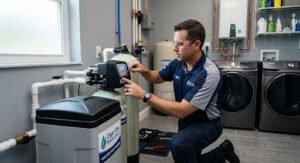
Biscayne Water was built around removing that friction. Our team handles everything from initial water testing to custom system sizing, ensuring the setup matches your household’s actual usage rather than a one-size-fits-all estimate. Installation is typically completed in a single visit, and our technicians walk you through maintenance expectations so there are no surprises down the line.
We also prioritize transparency in pricing and performance. Before any work begins, you’ll know exactly what contaminants your current water contains and how our system addresses them. No vague promises, just clear results you can verify.
Is Reverse Osmosis Worth It for Your Household?
This is the question most homeowners are really asking, and the answer depends on a few factors: your current water quality, your household size, and what you value most in your daily water use.
Choose reverse osmosis if you’re dealing with hard water, inconsistent taste, or known contaminants in your local water report. It’s also a strong choice for families with young children or anyone managing a health condition where water purity matters more than convenience. On the other hand, if your municipal water already tests clean and your main concern is minor taste preference, a simpler carbon filter might suffice.
For most households, though, the long-term value outweighs the upfront investment. Between reduced bottled water spending, appliance longevity, and the simple comfort of trusting your tap, reverse osmosis tends to pay for itself over time.
Experience the Difference of Truly Clean Water
A noticeably fresher glass of water starts with the right filtration system, and that’s exactly what reverse osmosis delivers for homes across every neighborhood. It’s not a trend or a passing upgrade. It’s a dependable, proven way to take control of what flows through your faucet every single day.
Biscayne Water’s approach combines this proven filtration science with service that actually fits your life. From the first consultation to ongoing system checkups, our focus stays on making clean water effortless rather than complicated. If you’ve been putting off this upgrade because it seemed like a hassle, now’s the time to reconsider.
Reach out to Biscayne Water today to schedule a water quality assessment and see what a true reverse osmosis system can do for your home.
Frequently Asked Questions
How long does a reverse osmosis system last?
With proper maintenance, most systems perform reliably for 10 to 15 years, though filter cartridges typically need replacement every 6 to 12 months depending on usage.
Does reverse osmosis remove beneficial minerals from water?
Yes, to some extent. Many systems include a remineralization stage afterward to restore trace minerals like calcium and magnesium for better taste and nutritional balance.
Will a reverse osmosis system waste a lot of water?
Older systems were less efficient, but modern units, including those installed by Biscayne Water, use advanced designs that significantly reduce water waste compared to older models.
Is professional installation necessary?
While some systems are marketed as DIY-friendly, professional installation ensures proper pressure calibration, leak prevention, and system longevity, which is why most homeowners choose expert setup.