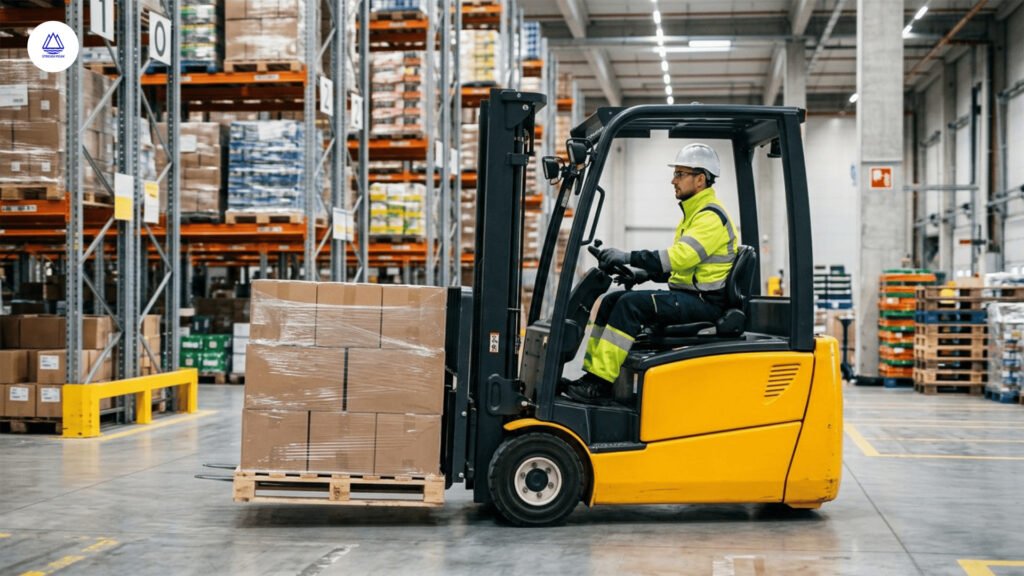
Introduction
Forklifts are essential machines in warehouses, manufacturing facilities, distribution operations, construction environments, and many other workplaces where heavy materials need to be lifted, transported, and positioned efficiently. Because these machines often operate for long hours while carrying substantial loads, their condition can have a direct impact on productivity and workplace safety. Regular forklift service helps businesses keep their equipment in reliable working condition by identifying mechanical problems, worn components, hydraulic issues, electrical faults, and other concerns before they become serious. Preventive maintenance is not simply about repairing a machine after it breaks down; it is about creating a structured approach that keeps equipment operating safely and efficiently throughout its useful life. When forklifts are properly maintained, businesses can reduce unexpected downtime, improve operator confidence, protect valuable inventory, and control long-term maintenance expenses. A consistent maintenance strategy also helps organizations make informed decisions about repairs, replacement parts, equipment upgrades, and eventual machine replacement.
Understanding the Importance of Forklift Maintenance
Forklifts are made up of numerous mechanical, hydraulic, electrical, and structural components that must work together correctly. Steering systems, brakes, tires, forks, chains, hydraulic cylinders, batteries, engines, transmissions, warning devices, and safety controls all contribute to overall performance. Continuous use can naturally cause these components to experience wear, especially when equipment operates under demanding conditions or handles heavy loads. Regular maintenance gives businesses an opportunity to identify early signs of deterioration before they develop into major problems. A professional forklift service program can include inspections, lubrication, fluid checks, component adjustments, testing, troubleshooting, and replacement of damaged parts. Following a planned schedule is generally more effective than waiting for a breakdown because maintenance can be performed before the equipment becomes a serious operational problem. Businesses should consider factors such as operating hours, workload, equipment age, manufacturer recommendations, and working conditions when developing maintenance intervals.
Common Forklift Problems
Forklifts can develop a wide range of problems throughout their operating life, and some issues may initially appear minor. Worn tires can affect traction and stability, while damaged forks can create risks when lifting heavy materials. Hydraulic leaks may reduce lifting performance and leave slippery substances on the floor, creating an additional workplace hazard. Brake problems can affect stopping ability, while steering issues can make maneuvering more difficult in crowded work areas. Electric forklifts may experience battery degradation, charging problems, damaged cables, or electrical connection issues. Internal combustion forklifts may develop engine, cooling, transmission, fuel, or exhaust problems. Regular forklift service allows trained technicians to inspect these systems and identify issues that may not be immediately obvious to operators. Businesses should encourage employees to report unusual noises, vibrations, leaks, warning lights, reduced lifting performance, or changes in handling. Early reporting can help maintenance teams address problems before they cause equipment failure or create unnecessary safety risks.
Benefits of Regular Forklift Service
A planned maintenance program offers several important benefits for businesses that depend on forklifts. One of the most significant advantages is improved reliability because regularly inspected equipment is less likely to experience unexpected failures. Preventive maintenance can also help identify worn components before they damage other parts of the machine. This can reduce repair expenses and make maintenance costs easier to predict. Another major benefit is improved safety because properly maintained brakes, steering systems, forks, hydraulic components, tires, and warning devices help support safer operation. Regular forklift service can also contribute to better equipment performance by ensuring that mechanical and hydraulic systems operate as intended. Well-maintained machines may consume resources more efficiently and experience less unnecessary wear. Over time, these benefits can contribute to improved productivity, lower downtime, longer equipment life, and a better return on the original equipment investment.
Improving Workplace Safety
Safety should always be a priority when operating forklifts because these machines can carry heavy loads and work in areas where pedestrians, storage systems, vehicles, and other equipment may be present. Mechanical failures can increase the possibility of collisions, falling loads, uncontrolled movement, or other dangerous incidents. Regular forklift service helps ensure that safety-critical components are inspected and maintained appropriately. Brakes should provide dependable stopping performance, steering should respond correctly, forks should remain structurally sound, and hydraulic systems should operate predictably. Warning alarms, lights, horns, safety switches, and other protective systems should also be checked as required. Operators should complete appropriate pre-use inspections and immediately report any problem they notice. Maintenance personnel can then assess the issue and determine whether the machine is safe to continue operating. Combining operator inspections with scheduled professional maintenance creates a stronger safety system and helps establish a workplace culture in which equipment condition is treated as an important responsibility.
Preventing Unexpected Breakdowns
Unexpected breakdowns can have a significant effect on productivity, particularly in operations where forklifts are responsible for moving raw materials, inventory, pallets, components, or finished products. When a forklift suddenly stops working, employees may have to wait for repairs or find alternative equipment, which can interrupt established workflows. In some situations, one equipment failure can affect several connected processes because materials cannot reach the required location on time. Preventive forklift service helps reduce this risk by identifying developing problems before they result in complete equipment failure. Maintenance teams can schedule repairs according to operating requirements rather than responding to emergencies at inconvenient times. Businesses can also maintain spare parts for commonly replaced components and keep detailed service records to improve planning. Reducing unexpected downtime allows employees to work more consistently and helps managers maintain better control over daily operations.
Extending Forklift Equipment Life
Forklifts represent a significant investment, so businesses naturally want to maximize the useful life of their equipment. Proper maintenance can help protect that investment by reducing unnecessary wear and allowing components to function under suitable conditions. Neglecting basic maintenance can accelerate deterioration and cause relatively small problems to become expensive repairs. Regular forklift service helps technicians identify components that are approaching the end of their useful life and determine whether they should be repaired, adjusted, or replaced. Proper lubrication can reduce friction, while timely fluid replacement can help protect important mechanical and hydraulic components. Tires, brakes, chains, forks, batteries, and other wear components can also be monitored more effectively when maintenance is performed consistently. Keeping accurate records allows businesses to track equipment history and determine whether a machine continues to provide good value or whether replacement should eventually be considered.
Importance of Hydraulic System Maintenance
Hydraulic systems are critical to forklift operation because they provide the power needed to raise, lower, and position loads. A hydraulic system that is leaking, contaminated, or damaged may not provide the required lifting performance and could create safety concerns. Hoses, fittings, cylinders, seals, valves, and hydraulic fluid should be checked according to appropriate maintenance procedures. Unusual lifting behavior can be an important warning sign. If the forks move more slowly than normal, lower unexpectedly, lift unevenly, or produce unusual sounds, the machine should be inspected. During forklift service, qualified technicians can examine hydraulic components for leaks, wear, contamination, and other potential problems. Correct fluid levels and suitable hydraulic fluid are also important for reliable operation. Addressing hydraulic problems early can prevent additional component damage and help maintain consistent lifting performance. Because forklifts frequently handle heavy loads at elevated heights, maintaining the hydraulic system is essential for safe and dependable operation.
Checking Forks, Tires, and Brakes
Forks are among the most important structural components of a forklift because they directly support the loads being transported. Forks can become worn, bent, cracked, or otherwise damaged through improper use, overloading, or prolonged operation. They should be inspected regularly, and damaged forks should not be used until their condition has been properly evaluated. Tires and wheels also require attention because they influence traction, stability, steering, and ride quality. Excessively worn or damaged tires can make maneuvering more difficult and may reduce the machine’s ability to operate safely. Braking systems must also be capable of bringing the forklift to a controlled stop when required. Professional forklift service should include appropriate inspection of these important components. Operators should report unusual vibration, difficulty steering, reduced braking performance, visible tire damage, or other changes in equipment behavior. Prompt attention to these concerns can help maintain reliable performance and reduce workplace risks.
Battery and Electrical System Maintenance
Electric forklifts depend on batteries, electrical connections, charging systems, and electronic controls for reliable operation. Battery condition can affect operating time, lifting performance, and overall equipment availability. Improper charging practices, corrosion, damaged cables, loose connections, and poor battery maintenance can reduce efficiency and shorten battery life. Charging equipment should be appropriate for the battery system, and operators should follow established procedures. During forklift service, technicians can inspect battery connections, charging components, electrical wiring, controllers, warning indicators, and other relevant systems. Modern electric forklifts may include sophisticated electronic controls that require specialized diagnostic tools and technical knowledge. Identifying electrical problems early can prevent unexpected equipment interruptions and reduce the possibility of more extensive repairs. Proper battery maintenance is also important for maintaining predictable operating schedules, especially in workplaces where electric forklifts are used continuously throughout the day.
Role of Operator Training
Maintenance alone cannot guarantee safe forklift operation. Operators must also understand how to use the equipment correctly and recognize conditions that may require attention. Proper training should cover load capacity, safe travel practices, lifting procedures, stability principles, inspection routines, parking procedures, and workplace safety rules. Operators should never exceed the rated capacity of a machine or use it for tasks outside its intended purpose. They should also understand the importance of reporting mechanical problems immediately. Operators are often the first people to notice unusual sounds, vibrations, steering changes, hydraulic problems, warning lights, or reduced performance. Their observations can provide valuable information to maintenance personnel. When operator training is combined with professional forklift service, businesses can create a more comprehensive equipment management strategy. Employees should also understand that defective equipment should not be used until appropriate inspections and repairs have been completed.
Preventive Maintenance Practices
Preventive maintenance involves taking planned steps to keep equipment in good working condition instead of waiting for failures to occur. A useful maintenance program may include daily operator inspections, scheduled technical inspections, lubrication, fluid checks, tire inspections, battery maintenance, hydraulic system checks, brake testing, and replacement of worn components. Maintenance intervals should be based on manufacturer recommendations, operating hours, equipment age, and the intensity of use. Detailed records should be maintained for each machine so that managers can track completed inspections, repairs, replacement parts, and upcoming maintenance requirements. Regular forklift service can help businesses identify patterns in equipment performance and determine whether recurring issues need additional attention. Preventive maintenance also makes it easier to plan downtime because servicing can be scheduled during periods that have less impact on operations. This organized approach can improve equipment availability while reducing the uncertainty associated with emergency repairs.
When to Choose Professional Service
While operators can perform basic inspections, more complicated maintenance and repairs should be handled by qualified technicians. Hydraulic repairs, electrical diagnostics, structural inspections, braking-system work, and other specialized tasks may require appropriate tools, technical knowledge, and replacement components. Professional forklift service can provide a more detailed evaluation of equipment condition and identify problems that may not be visible during a routine operator check. Businesses should follow manufacturer recommendations and arrange professional inspections at appropriate intervals. Additional service may be necessary when a machine develops unusual symptoms, reaches a specific operating-hour milestone, or is subjected to unusually demanding working conditions. Professional inspections can also be valuable when purchasing used equipment because hidden mechanical problems may not be obvious through a basic visual inspection. Choosing qualified technicians for specialized work can help ensure that repairs are performed correctly and safety-critical systems receive appropriate attention.
Building an Effective Forklift Maintenance Program
A successful maintenance program should be organized, documented, and easy for employees to follow. Businesses can begin by creating inspection checklists that identify the components operators and technicians need to examine. These checklists may include tires, forks, chains, hydraulics, brakes, steering, lights, alarms, fluid levels, batteries, and other relevant systems. Managers should establish service intervals and ensure that maintenance activities are completed according to schedule. Records should include inspection dates, identified problems, repairs performed, replacement components, and future maintenance requirements. Regular forklift service should be treated as part of normal operational planning instead of an activity that happens only after a machine breaks down. Managers should also review maintenance records periodically to identify recurring problems and evaluate overall equipment performance. If a particular forklift requires frequent expensive repairs, the accumulated data can help determine whether continued maintenance or replacement would be the better financial decision.
Reducing Long-Term Operating Costs
Maintenance costs should be viewed as an investment in equipment reliability rather than simply an unavoidable expense. Delaying necessary maintenance may appear to save money temporarily, but a small problem can eventually develop into a major failure requiring expensive repairs and extended downtime. Regular servicing allows businesses to identify issues earlier and address them before they affect multiple components. It can also improve the predictability of equipment-related expenses because planned repairs are easier to budget than unexpected breakdowns. Businesses can use maintenance records to monitor repair frequency, component life, downtime, and overall operating costs. When combined with proper operator training and responsible equipment use, regular maintenance can help organizations achieve better value from their forklifts. A well-managed program also reduces the likelihood of productivity losses caused by equipment that performs inconsistently or requires frequent emergency attention.
Conclusion
Forklifts are valuable pieces of equipment that support the movement of heavy materials across many types of operations. Their performance, reliability, and safety depend heavily on proper maintenance and responsible operation. Regular inspections, preventive maintenance, operator training, timely repairs, and professional servicing can help businesses reduce equipment failures and protect their investment. A structured forklift service strategy allows potential problems to be identified before they become serious, helping businesses improve productivity while maintaining a safer working environment. Maintenance records can further support better planning by showing equipment history, recurring issues, repair costs, and future service requirements. Businesses that treat maintenance as an essential part of daily operations are better positioned to extend equipment life, reduce downtime, control operating costs, and maintain consistent performance. Ultimately, proper forklift care is about more than keeping a machine operational; it is about creating a dependable system where equipment, operators, maintenance teams, and workplace procedures work together to support safe and efficient operations.