
If you’ve ever paused while writing and wondered “Is it ware, wear, or where?”—you’re not alone. The confusion around Ware vs Wear vs Where is one of the most common spelling challenges in English, especially for learners and even native speakers.
These three words sound almost identical, but their meanings are completely different. In this guide, we’ll break them down in a simple, practical way so you never mix them up again.
Understanding Ware vs Wear vs Where
Before diving into examples, let’s quickly understand what each word means:
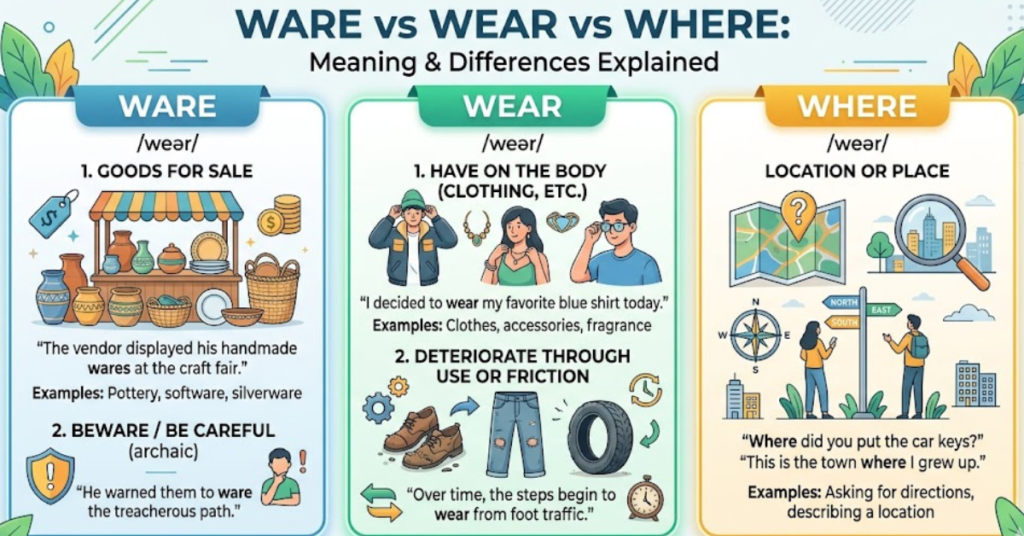
- Ware → Products, goods, or items for sale
- Wear → To put on clothing or to damage over time
- Where → Refers to a place or location
Even though they sound the same when spoken, their spelling and usage are distinct.
What Does “Ware” Mean? (Goods & Products)
The word ware is usually related to items, products, or merchandise. You’ll often see it in compound words.
Common examples of “ware”:
- Hardware (tools, machines, equipment)
- Software (computer programs)
- Kitchenware (plates, pots, utensils)
- Software updates or digital ware products
Simple usage:
- The shop sells handmade wares from local artisans.
- Online ware includes apps, games, and digital tools.
Think of ware as “things you can buy or sell.”
What Does “Wear” Mean? Clothing & Usage Over Time
The word wear has two main meanings: clothing and gradual damage.
1. Wearing clothes
- I wear a jacket in winter.
- She likes to wear traditional outfits.
2. Tear and damage over time
- The shoes started to wear out after a year.
- Constant use will wear the fabric.
Memory trick:
“Wear = what you put on or what gets worn down.”
What Does “Where” Mean? Location or Place
The word where is used when asking or talking about location.
Examples of “where”:
- Where are you going?
- Do you know where she lives?
- This is the place where we met.
Easy trick:
If you’re talking about a place or position, use where.
Ware vs Wear vs Where: Quick Comparison Table
| Word | Meaning | Example Sentence |
| Ware | Goods or products | The store sells glassware. |
| Wear | Clothing or damage | I wear jeans every day. |
| Where | Location or place | Where is your house? |
Common Mistakes People Make
Many errors happen because the words sound identical. Here are frequent mistakes:
- Where my shoes? → Where are my shoes?
- I ware a watch → I wear a watch
- Kitchen wear → Kitchenware
Tip: Always check meaning first, not sound.
Easy Tricks to Remember the Difference
Here are simple memory shortcuts:
- Ware = Warehouse storage of goods
- Wear = Clothing you wear
- Where = Where? question word for place
You can also think:
- Ware = things
- Wear = action (put on)
- Where = place
Why This Confusion Happens
The main reason Ware vs Wear vs Where is confusing is because they are:
- Homophones (sound the same)
- Used frequently in everyday English
- Easy to mix up when typing quickly
Understanding context is the key to using them correctly.
FAQs: Ware vs Wear vs Where
1. What is the difference between ware, wear, and where?
Ware means goods, wear means clothing or damage, and where refers to location.
2. Why do ware, wear, and where sound the same?
They are homophones in English, meaning they share pronunciation but differ in spelling and meaning.
3. How can I remember ware vs wear vs where easily?
Link each word to a keyword: ware = goods, wear = clothing, where = place.
4. Is “ware” still commonly used?
Yes, especially in words like hardware, software, and kitchenware.
5. What is the most common mistake with these words?
Mixing “wear” and “where” in sentences because of their identical pronunciation.
Conclusion: Mastering Ware vs Wear vs Where
Understanding Ware vs Wear vs Where becomes easy once you connect each word with its meaning—goods, clothing/damage, and location. These small differences can greatly improve your writing clarity and prevent common grammar mistakes.
The next time you hesitate, just pause and ask: Am I talking about things, clothing, or a place? That simple check will guide you to the right word every time.
If you want to improve your English further, exploring more homophones like there/their/they’re or your/you’re can be a great next step.