
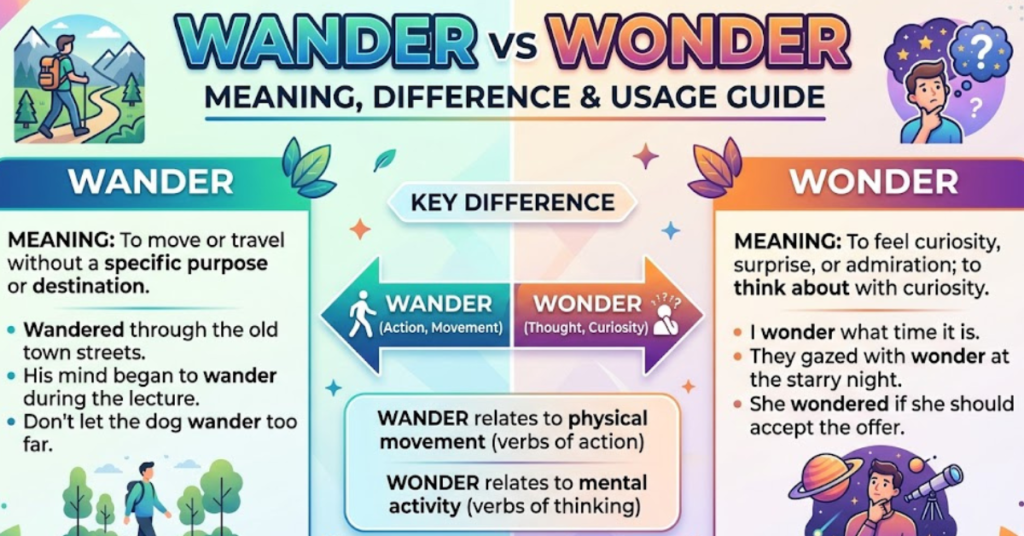
The confusion between wander vs wonder is more common than you might think. These two words sound similar, but their meanings are completely different, which often leads to mistakes in writing and speech. If you’ve ever paused mid-sentence wondering which one to use, you’re not alone.
In simple terms, wander vs wonder meaning comes down to action versus thought—wander is about moving aimlessly, while wonder is about curiosity or amazement. In this guide, we’ll break down the wander vs wonder definition, usage examples, and tricks to remember the difference easily.
What Does Wander Mean? Wander Definition Explained
The word wander refers to moving around without a fixed direction or purpose. It often describes physical movement, but it can also be used metaphorically.
Wander Meaning in Simple Words:
To walk or move slowly without a clear destination.
Examples of “Wander”:
- I like to wander through the old streets of the city.
- The children wandered around the park after school.
- His thoughts began to wander during the lecture.
Common LSI Keywords:
- roam
- stroll
- drift
- move aimlessly
- travel without direction
What Does Wonder Mean? (Wonder Definition Explained)
The word wonder is related to curiosity, surprise, or admiration. It is often used when something makes you think deeply or feel amazed.
Wonder Meaning in Simple Words:
To feel curious or amazed about something.
Examples of “Wonder”:
- I wonder what life will be like in 50 years.
- She looked at the stars in wonder.
- They wondered why the machine stopped working.
Common LSI Keywords:
- curiosity
- amazement
- question
- think about
- be curious
Wander vs Wonder: Key Differences Explained
Understanding wander vs wonder meaning becomes easier when you compare them side by side.
| Feature | Wander | Wonder |
| Part of Speech | Verb | Verb / Noun |
| Meaning | To move without direction | To feel curiosity or amazement |
| Usage Focus | Physical or mental movement | Thoughts and emotions |
| Example | Wander in the park | Wonder about the future |
Simple Trick to Remember:
- Wander = Walk (movement)
- Wonder = Why (thinking)
Common Mistakes with Wander vs Wonder
Many English learners confuse these words due to their similar pronunciation. Here are some frequent mistakes:
- I like to wonder around the city
I like to wander around the city - I wander if she is coming
I wonder if she is coming
Paying attention to context helps avoid these errors.
Why People Confuse Wander and Wonder
The confusion mainly happens because:
- They sound almost identical in spoken English
- Both are common in everyday conversation
- Fast writing or texting leads to spelling mistakes
Understanding the wander vs wonder definition clearly helps eliminate this confusion permanently.
Quick Usage Tips for Wander vs Wonder
Here are some easy tips to use the words correctly:
- If it involves movement → use wander
- If it involves thinking or curiosity → use wonder
- Try replacing the word in a sentence:
- If “move” fits → wander
- If “think/ask” fits → wonder
FAQs: Wander vs Wonder
1. What is the difference between wander vs wonder?
Wander means to move without direction, while wonder means to feel curious or amazed.
2. What is the wander vs wonder meaning in simple words?
Wander = moving around aimlessly.
Wonder = thinking or being curious about something.
3. Can wander and wonder be used in the same sentence?
Yes, but they will have different meanings. Example:
“I wander through the forest and wonder about its mysteries.”
4. What is the easiest way to remember wander vs wonder?
Remember: wander = walk, wonder = why.
5. Is wonder only used as a verb?
No, wonder can also be used as a noun meaning amazement (e.g., “a sense of wonder”).
Conclusion
Understanding wander vs wonder is all about recognizing the difference between movement and thought. While wander refers to physically moving without a clear path, wonder is all about curiosity, imagination, and questioning.
By remembering the simple trick—wander is walking, wonder is thinking—you can avoid common mistakes and use both words confidently in your writing and speech.
If you want to improve your English further, exploring similar word pairs can make a huge difference in fluency and accuracy.