
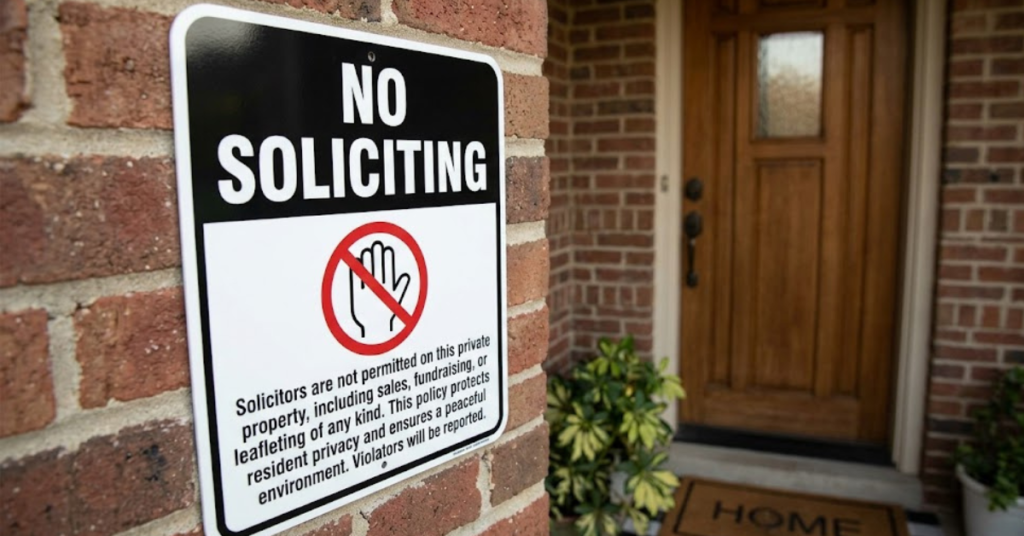
Have you ever walked up to a home or business and noticed a “No Soliciting” sign on the door? You might wonder what exactly it means and whether it applies to everyone. The no soliciting meaning is straightforward, but there are many details about who it affects, why people use these signs, and what happens if someone ignores them.
In simple terms, a no soliciting sign is a request from a property owner that visitors do not approach them for sales, advertising, fundraising, or other unsolicited requests. These signs help protect privacy and reduce unwanted interruptions.
What Does No Soliciting Mean?
The no soliciting meaning refers to a property owner’s instruction that they do not wish to receive uninvited requests or offers. The word “soliciting” generally means asking someone for something, especially money, business, support, or donations.
A “No Soliciting” sign usually tells people not to:
- Sell products or services door-to-door
- Promote businesses or marketing campaigns
- Request donations for organizations
- Distribute flyers or advertisements
- Ask homeowners to sign up for services
For example, a salesperson offering a new internet plan or a company handing out promotional materials may be considered solicitors.
Where Are No Soliciting Signs Commonly Found?
No soliciting signs can be seen in many places where owners want to limit interruptions.
Common locations include:
- Private homes
- Apartment buildings
- Gated communities
- Offices
- Retail stores
- Professional buildings
Homeowners often place these signs near their front doors, gates, or doorbells to clearly communicate their preference for privacy.
Does No Soliciting Mean No Visitors at All?
A common misunderstanding is that a no soliciting sign means nobody is allowed to knock on the door. However, that is usually not the case.
People who are typically not considered solicitors include:
- Friends and family
- Neighbors
- Package delivery workers
- Emergency responders
- Utility workers performing official duties
However, the exact interpretation can vary depending on local laws and the specific wording of the sign.
No Soliciting vs No Trespassing: What’s the Difference?
Although they are often confused, no soliciting and no trespassing have different meanings.
No Soliciting
A no soliciting sign specifically prohibits unwanted sales, marketing, fundraising, or commercial approaches.
No Trespassing
A no trespassing sign is broader and indicates that people are not allowed to enter private property without permission.
In some areas, violating a no trespassing notice may carry legal consequences, while no soliciting rules may depend on local regulations and circumstances.
Is Ignoring a No Soliciting Sign Illegal?
Whether ignoring a no soliciting sign is illegal depends on the country, state, or local municipality. Some cities and neighborhoods have ordinances that regulate door-to-door sales and require solicitors to respect posted signs.
In other areas, the sign may function mainly as a clear request from the property owner rather than an automatic legal restriction.
If you are a salesperson or canvasser, it is always wise to check local laws and respect posted notices.
Why Do People Put Up No Soliciting Signs?
There are several reasons why homeowners and businesses choose to display no soliciting signs.
1. Protecting Privacy
Many people prefer not to be disturbed by unexpected sales pitches or promotions.
2. Reducing Unwanted Marketing
Door-to-door advertisements can become frustrating, especially in neighborhoods with frequent solicitors.
3. Improving Security
Some property owners use these signs to discourage strangers from approaching their homes.
4. Saving Time
A no soliciting sign helps avoid unnecessary conversations and interruptions.
Different Types of No Soliciting Signs
No soliciting notices come in various styles and messages, including:
- “No Soliciting Please”
- “No Salespeople or Advertisements”
- “No Door-to-Door Sales”
- “No Soliciting: Do Not Knock or Ring Bell”
- “No Solicitors, Fundraisers, or Religious Visits”
Some signs are polite and simple, while others are direct and firm.
What Should You Do If You See a No Soliciting Sign?
If you are visiting a property for sales, fundraising, or promotional purposes, the best action is to respect the sign and avoid knocking.
Following no soliciting notices demonstrates professionalism, respects personal boundaries, and helps maintain positive community relationships.
FAQs
What is the simple no soliciting meaning?
The simple no soliciting meaning is that the property owner does not want uninvited sales pitches, advertisements, donation requests, or similar approaches.
Does no soliciting include religious groups?
In some situations, religious or political canvassing may be treated differently from commercial solicitation under local laws. The rules vary by location.
Can delivery drivers ignore a no soliciting sign?
Yes, delivery drivers, postal workers, and emergency personnel are generally not considered solicitors because they are providing a requested or official service.
Does no soliciting mean no knocking?
Not always. It mainly applies to sales and promotional visits. However, some signs specifically state “Do Not Knock,” which indicates a broader request.
Are no soliciting signs legally enforceable?
Their legal force depends on local laws. In some areas, solicitors who ignore these signs may violate local ordinances or licensing rules.
Conclusion
Understanding the no soliciting meaning helps both property owners and visitors respect personal boundaries. A no soliciting sign is generally a clear request to avoid uninvited sales, advertising, and fundraising activities. While legal enforcement varies by location, respecting these signs is considered courteous and professional.
If you’re interested in learning more about property rights, privacy signs, or neighborhood regulations, explore related resources to better understand the rules that apply in your area.