
Mark Umbers Biography: Early Life, Career, Movies, TV Shows, Net Worth and Personal Life
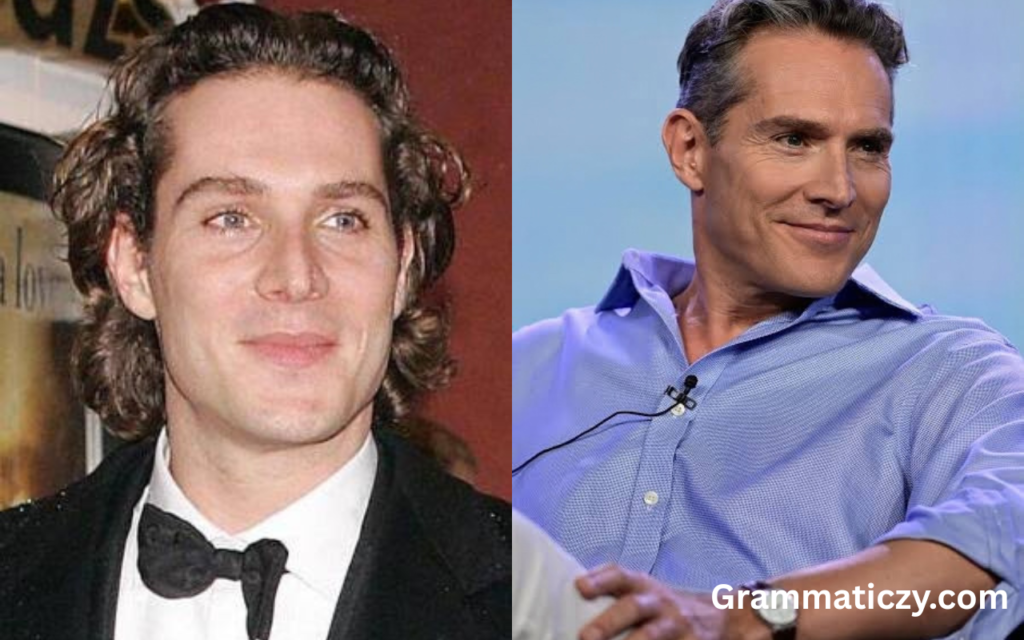
Mark Umbers has spent more than three decades building an acting career that stretches from prestigious London theatres to international films and popular television dramas. Unlike performers who become famous through one blockbuster role, Umbers has developed his reputation gradually, taking on Shakespearean productions, musical theatre, period dramas, contemporary television and Hollywood films. His career includes work with respected directors and performers, and his credits range from My Fair Lady and Merrily We Roll Along to A Good Woman, Cassandra’s Dream, Home Fires, Hotel Portofino, Patience and Bookish.
Born in Harrogate, North Yorkshire, on June 17, 1973, Umbers grew up in Yorkshire and eventually studied Classics at Oxford University. His route into acting was not based on a conventional drama-school education. Instead, he developed his practical theatrical experience while studying at university and subsequently working his way through the ranks of professional theatre. That unusual combination of academic education and hands-on stage experience became an important characteristic of his career.
Today, Mark Umbers is recognized particularly for his work in British television and theatre, although his film career has also placed him alongside internationally known actors and directors. His role as Cecil Ainsworth in Hotel Portofino introduced him to a new generation of viewers, while his earlier stage performances, especially Franklin Shepard in Stephen Sondheim’s Merrily We Roll Along, remain among the most significant achievements of his career.
Mark Umbers Quick Facts
| Fact | Details |
|---|---|
| Full Name | Mark Jonathan R. Umbers |
| Known As | Mark Umbers |
| Date of Birth | June 17, 1973 |
| Age in 2026 | 53 |
| Birthplace | Harrogate, England |
| Nationality | British |
| Profession | Actor and writer |
| Height | 6 ft 2 in / 1.88 m |
| Education | Oxford University; studied Classics |
| Parents | Not reliably documented in major public sources |
| Siblings | Not reliably documented in major public sources |
| Years Active | 1990s–present |
| Known For | Hotel Portofino, Home Fires, Mistresses, Merrily We Roll Along, A Good Woman |
| Estimated Net Worth | Online estimates vary; no authoritative figure has been publicly verified |
| An account under the name @markumbers has been indexed, but official verification is unclear | |
| X/Twitter | No reliably verified current official account identified |
| No reliably verified personal account identified |
Early Life and Yorkshire Childhood
Mark Umbers was born in Harrogate, a well-known town in North Yorkshire, England, and grew up in the surrounding Yorkshire area. His childhood was far removed from the celebrity culture that would later surround some of his fellow actors. In interviews, he has spoken about growing up near Harrogate and described acting as something he discovered relatively naturally during his school years. A teacher eventually encouraged him to consider acting more seriously.
That early encouragement appears to have been significant because Umbers did not immediately enter a professional acting school. Instead, he went to Oxford University. His studies focused on Classics, giving him a grounding in Latin, Greek literature and philosophy. The academic environment exposed him to many of the literary traditions that would later complement his work in classical theatre and adaptations of major works.
Umbers has explained that although Oxford delayed his direct entry into the acting profession, he spent much of his university life acting. In his own account, acting was already becoming an important part of his life while he was studying. This is an interesting detail because it shows that his professional career was not the result of abandoning one path for another; theatre was developing alongside his academic interests before eventually becoming his full-time profession.
Education and the Beginning of Acting
After completing his Oxford education, Umbers did not follow the conventional route of attending drama school. He has explained that after spending several years as a student, he was ready to move into professional life. His first substantial experience came through theatre work, where he initially took relatively small roles and gradually progressed toward more significant parts.
One of the most revealing descriptions of his early career comes from Umbers himself. He recalled beginning at the National Theatre as a “spear carrier” and spending about two years there before progressing to more substantial roles. Rather than viewing this period as insignificant, he has described it as effectively becoming his drama school. The experience gave him the opportunity to observe professional actors, directors and productions from inside one of Britain’s leading theatrical institutions.
That practical education helped establish the foundation for the rest of his career. Theatre demanded discipline, memorization, physical awareness and the ability to work closely with directors and fellow performers. Those skills later translated into his television and film work, where Umbers became known for handling both period dialogue and more contemporary dramatic material.
Mark Umbers and His Theatre Career
Theatre has always remained one of the most important parts of Mark Umbers’ professional identity. His stage credits include productions at the Royal National Theatre, Donmar Warehouse, Harold Pinter Theatre, Apollo Theatre and other respected venues. His roles have covered classical drama, musical theatre and modern revivals, demonstrating a range that has helped him avoid being defined by a single genre.
One of his early major theatre opportunities came through productions associated with Trevor Nunn. Umbers appeared in The Merchant of Venice and Candide at the Royal National Theatre. His work with Nunn was particularly influential because Nunn was known for moving comfortably between straight drama, Shakespeare and large-scale musical theatre. Umbers later reflected positively on this philosophy, saying that Nunn made no distinction between a musical and a play in terms of how actors should approach their work.
Umbers subsequently appeared in a series of demanding productions. His stage credits include The Vortex, The Glass Menagerie, The Browning Version, Sweet Charity, She Loves Me and Merrily We Roll Along. The breadth of this work illustrates why his career is difficult to categorize simply as film acting or television acting. Theatre has provided the central thread connecting many different periods of his professional life.
The Glass Menagerie and Jessica Lange
One of the stage productions Umbers has personally identified as a career highlight was Rupert Goold’s production of Tennessee Williams’ The Glass Menagerie. He played the Gentleman Caller, Jim O’Connor, opposite Jessica Lange. The production took place at the Apollo Theatre in London and became an important moment in his theatrical career.
In an interview about his career, Umbers said that he had never expected to perform Tennessee Williams on Shaftesbury Avenue, particularly opposite an actress of Lange’s stature. His comments reveal the significance he attached to the production, not simply because of its prestigious cast but because of his appreciation for the writing itself. He described discovering a type of writing that he had not previously encountered and said that he loved the play.
The production also demonstrated Umbers’ ability to hold his own within a high-profile ensemble. Working opposite an internationally recognized film actress while performing a major American theatrical classic required a different kind of discipline from television acting. It reinforced the reputation he had already been building as a stage performer capable of working within demanding dramatic material.
Merrily We Roll Along and Franklin Shepard
Perhaps the most celebrated stage performance of Mark Umbers’ career came when he played Franklin Shepard in Stephen Sondheim’s Merrily We Roll Along. The production was directed by Maria Friedman and became one of the most important theatre projects associated with his name. Umbers played the central character in the acclaimed revival that began at the Menier Chocolate Factory and later transferred to the Harold Pinter Theatre.
The role attracted exceptional critical attention. His professional biography records praise from publications including The New York Times, The Boston Globe, The Independent and The Guardian. Critics particularly highlighted the emotional dimension of his performance and his ability to portray Franklin’s complicated journey. The production was subsequently filmed and released in cinemas, allowing audiences outside the theatre world to experience the performance.
Umbers later returned to the role for a production at the Huntington Theatre Company in Boston. The fact that he played Franklin Shepard in both the London and American productions illustrates how strongly the character became associated with his theatrical career. Merrily We Roll Along remains an important reference point whenever his stage work is discussed.
Transition to Film
While theatre established his professional credentials, Mark Umbers gradually expanded into film. One of his best-known early cinematic roles came in A Good Woman, the 2004 adaptation of Oscar Wilde’s Lady Windermere’s Fan. He played Robert Windermere opposite Scarlett Johansson and Helen Hunt. The film gave him an opportunity to bring his experience with literary and period material to an international feature-film audience.
Umbers subsequently worked on a number of feature films representing very different genres and creative approaches. His credits include Colour Me Kubrick, Cassandra’s Dream, These Foolish Things and Che: Part Two. His role in Cassandra’s Dream connected him with filmmaker Woody Allen, while Che: Part Two placed him within Steven Soderbergh’s historical drama about revolutionary figure Che Guevara.
His later film credits included King Arthur: Legend of the Sword and Dolittle. These productions broadened his résumé into large-scale commercial filmmaking. In Dolittle, he appeared in a Universal Pictures production directed by Stephen Gaghan, while King Arthur: Legend of the Sword was directed by Guy Ritchie.
Television Career and Mistresses
British television became another major part of Umbers’ career. He appeared in productions including Foyle’s War, Midsomer Murders, The Turn of the Screw, Blackbeard, Princes in the Tower and Eternal Law. These roles gave him experience across mystery, historical drama and television adaptations.
One of his most recognizable television roles was Dan Tate in the BBC series Mistresses. The show allowed Umbers to work in a contemporary relationship drama rather than the historical and literary material that had characterized some of his earlier work. His performance helped establish him with television audiences beyond those who followed British theatre.
His television career continued to expand with appearances in Father Brown, Grantchester, Collateral, Brave New World and My Dinner with Hervé. The variety of these projects demonstrates that Umbers has consistently moved between traditional British television drama and more modern international productions distributed through major networks and streaming platforms.
Home Fires and Period Television Drama
Umbers took on another significant television role in ITV’s Home Fires, playing Nick Lucas. The series was set during the Second World War and focused on a group of women in a rural English community dealing with the impact of the war. Umbers appeared across both series, becoming part of the show’s central ensemble.
The role continued an important pattern in his career: Umbers has repeatedly been cast in stories where historical circumstances place pressure on personal relationships. From wartime Britain in Home Fires to interwar Italy in Hotel Portofino, he has frequently appeared in productions where social change and private relationships are closely connected.
His experience with period dialogue and historical settings was particularly useful in this area. His earlier stage work in Shakespeare, Oscar Wilde adaptations and other classical productions had already required an understanding of formal language and historical context. Home Fires therefore became another natural extension of skills he had developed throughout his career.
Hotel Portofino and Cecil Ainsworth
For a newer generation of viewers, Mark Umbers is perhaps most closely associated with Cecil Ainsworth in Hotel Portofino. The PBS period drama stars Natascha McElhone as Bella Ainsworth and Umbers as her husband, Cecil. The story follows a British family operating a luxury hotel on the Italian Riviera during the 1920s, against the increasingly threatening political atmosphere of Fascist Italy.
Cecil is one of the central characters in the series, and Umbers remained with the production across its first three seasons. His agency lists him as the lead performer playing Cecil Ainsworth in Seasons 1, 2 and 3. The show therefore represents one of his most substantial continuing television roles.
The third season pushed Cecil and Bella’s relationship into particularly dramatic territory. PBS describes Bella as being shocked when Cecil returns unexpectedly and asks for a divorce, while the story also incorporates the Wall Street Crash and Cecil’s financial losses. These developments give Umbers considerable dramatic material and place his character at the center of the series’ family and financial conflicts.
Recent Work: Patience and Bookish
Umbers has continued working on television beyond Hotel Portofino. His more recent credits include Patience, where he played Raymond Starr. The series premiered in 2025, with Umbers appearing in the episode “The Missing Link.” His talent agency lists the production as a Channel 4 project directed by Maarten Moerkerke.
He also appeared in Bookish, playing Victor Orr. TVMaze records Umbers in two episodes of the series, both released in July 2025. His involvement in the program shows that he has continued taking television roles even after establishing himself as Cecil Ainsworth in Hotel Portofino.
His IMDb profile currently carries a 2026 showreel, indicating that his professional acting profile remains active. While specific future projects should be confirmed through official production or representation announcements, his recent credits show that he continues to work across television rather than treating earlier successes as the conclusion of his career.
Mark Umbers’ Acting Style and Professional Approach
A major strength of Umbers’ career is his versatility. He has moved from Shakespeare and Tennessee Williams to Sondheim musicals, contemporary British television and large-scale Hollywood films. His résumé does not suggest an actor who has built his career around one narrow character type. Instead, he has repeatedly accepted different kinds of material and worked with directors operating in very different styles.
His academic background may also help explain his comfort with literary and classical material. Studying Classics at Oxford meant spending years engaging with texts, language and ideas that have influenced Western literature and theatre. His later work in productions such as The Merchant of Venice, A Good Woman and Merrily We Roll Along demonstrates how that intellectual foundation could complement professional performance.
Umbers has also expressed an attitude toward acting that emphasizes the work itself rather than celebrity. In his IMDb biography, he is quoted as saying that becoming a celebrity has never particularly interested him and that he has been comfortable with remaining less prominent in the public spotlight as long as interesting acting work continues to arrive.
Personal Life and Privacy
Mark Umbers has generally kept his private life away from the level of public exposure associated with many actors. His interviews tend to concentrate on theatre, acting and individual productions rather than relationships, family life or celebrity culture. As a result, reliable public information about his parents, siblings and current relationship status is limited.
That privacy makes it important to distinguish documented facts from claims repeated on biography websites. There are online pages that publish detailed information about Umbers’ family, relationships and finances, but these claims are not consistently supported by strong primary or professional sources. A careful biography should therefore avoid treating every internet claim as established fact.
One useful glimpse into his personality comes from his interviews about acting. Umbers has discussed writing screenplays for his own enjoyment and adapting plays, including Shakespeare, describing the activity as something he does for relaxation. That suggests that his interest in storytelling extends beyond simply performing scripts written by others.
Mark Umbers Net Worth and Income
Mark Umbers’ exact net worth is not publicly verified. Various entertainment and celebrity websites publish estimates, often placing his wealth in the multi-million-dollar range, but there is no authoritative financial statement from Umbers or his representatives confirming a precise figure. Consequently, a specific number should be treated as an estimate rather than a confirmed fact.
His professional income is likely connected primarily to his acting career. Over the years he has worked in West End theatre, regional and international stage productions, television series and feature films. His résumé includes productions associated with the Royal National Theatre, BBC, ITV, PBS, Universal Pictures and other major entertainment organizations.
The breadth and longevity of his career are more useful indicators of his professional standing than an unverified net-worth number. Unlike actors whose income may depend on a single major franchise, Umbers has developed a diversified career involving stage acting, television and film. His continued employment across these mediums has allowed him to maintain a substantial professional presence for many years.
Social Media and Public Presence
Mark Umbers does not appear to have pursued an aggressive social-media celebrity strategy. His public identity remains centered largely on his acting work, with professional credits and theatre productions providing most of the information available about him. This is consistent with his own comments about having little interest in celebrity for its own sake.
An Instagram account associated with the name Mark Umbers can be found in online searches, but its official status is not sufficiently established through the strongest available sources. For that reason, it would be misleading to describe every account carrying his name as an officially verified profile.
His limited online presence does not appear to have harmed his career. In fact, his professional reputation has largely been constructed through theatre reviews, television credits, film appearances and recommendations within the entertainment industry. His career demonstrates that sustained professional work can remain more important than maintaining a highly visible social-media persona.
Awards, Recognition and Career Achievements
Although Umbers has not built his public profile around collecting major individual awards, his performances have received considerable critical praise. His work in Merrily We Roll Along is particularly well regarded, with major publications praising his performance and highlighting the emotional weight he brought to Franklin Shepard.
His collaborations also form an important part of his professional achievements. He has worked under directors such as Trevor Nunn, Rupert Goold, Michael Grandage, Maria Friedman, Steven Soderbergh, Woody Allen and Guy Ritchie. His ability to move between major theatre productions and international film projects demonstrates the level of professional trust he has earned over his career.
Perhaps his most meaningful achievement is the longevity and variety of his work. From appearing in The Merchant of Venice at the National Theatre to playing a major role in Hotel Portofino, Umbers has maintained a career that spans different generations of audiences and multiple forms of entertainment.
What Makes Mark Umbers’ Career Stand Out
Mark Umbers’ career is notable because it was built gradually rather than through an overnight breakthrough. He started with theatre, gained experience in smaller roles, progressed to major productions and eventually expanded into film and television. His own description of beginning as a spear carrier at the National Theatre and gradually moving toward larger roles illustrates how professional acting careers can develop step by step.
His academic background is another distinctive feature. Studying Classics at Oxford before establishing himself professionally gave him a foundation very different from the conventional celebrity route. It also positioned him well for literary theatre and period drama, two areas that have repeatedly appeared throughout his career.
Most importantly, Umbers has demonstrated adaptability. His career includes musical theatre, Shakespeare, Tennessee Williams, Oscar Wilde, contemporary relationship drama, wartime television, historical mystery, Hollywood fantasy and international period drama. That ability to keep changing while maintaining a recognizable professional identity has become one of the defining characteristics of his work.
Mark Umbers’ Legacy and Continuing Journey
Mark Umbers’ story is ultimately one of sustained professional development. He began in Yorkshire, discovered an interest in acting at school, studied Classics at Oxford and then learned much of the practical profession through work at the National Theatre. From those early experiences, he developed into an actor whose résumé now spans major stage productions, feature films and television dramas.
His work as Franklin Shepard in Merrily We Roll Along, Jim O’Connor in The Glass Menagerie, Robert Windermere in A Good Woman, Nick Lucas in Home Fires and Cecil Ainsworth in Hotel Portofino demonstrates the range of characters he has taken on. These roles belong to very different worlds, yet they share one quality: each requires an actor capable of understanding character, relationships and the social environment surrounding the story.
As of 2026, Umbers remains associated with recent television work including Patience and Bookish, while his IMDb profile continues to feature a current showreel. His career therefore remains a work in progress rather than a completed chapter. For audiences discovering him through Hotel Portofino or his newer television appearances, there is an extensive body of earlier theatre, film and television work waiting to be explored.
Conclusion
Mark Umbers represents a particular kind of acting career: one built not primarily around celebrity, but around craft. His journey from Yorkshire to Oxford, from the National Theatre’s smallest roles to major stage productions, and eventually to international film and television demonstrates how patience and versatility can create a lasting professional identity.
His career also illustrates the value of refusing to remain confined to one medium. Umbers has worked in classical drama, musical theatre, literary adaptations, television mysteries, wartime stories, Hollywood films and modern streaming productions. That range has allowed him to continue finding new challenges while maintaining the theatrical discipline that shaped his early career.
As Mark Umbers continues to build on decades of work, his story offers a useful reminder that an enduring career does not always require constant publicity or a single spectacular breakthrough. Sometimes it is created through preparation, persistence, curiosity and the willingness to keep taking on different roles. From Yorkshire classrooms and Oxford lecture halls to London’s great stages and international screens, Umbers’ journey demonstrates how passion for the craft can gradually become a meaningful and lasting legacy.