Cockroaches are among the most persistent household pests, and an infestation can become difficult to manage when insects find reliable sources of food, water, and shelter. These pests are highly adaptable and can survive in a wide range of indoor environments, particularly where moisture and accessible food are available. They are often active at night, which means an infestation may continue unnoticed for some time before people begin seeing insects regularly. Beyond being unpleasant to encounter, their presence can create sanitation concerns because they may move through garbage, drains, cracks, storage areas, and food-preparation spaces. Understanding their behavior, recognizing early warning signs, and maintaining effective prevention habits can help reduce the likelihood of an infestation becoming established.
Understanding Their Behavior
Cockroaches are adaptable insects that spend much of their time hiding in dark, protected spaces. During the day, they may remain inside cracks, wall voids, cabinets, appliances, plumbing areas, or other concealed locations where they are less likely to be disturbed. They generally become more active when the surrounding environment is quiet, particularly when they are searching for food and water. Their ability to move through narrow gaps makes them difficult to detect through casual observation alone. Some species can also reproduce quickly when environmental conditions are favorable, allowing a small problem to become considerably larger over time. Understanding where these insects hide and what resources attract them is therefore an important part of both prevention and control.
Why Infestations Develop
A pest infestation can develop when insects have consistent access to the basic resources they need to survive. Food crumbs, uncovered garbage, grease, pet food, standing water, leaking pipes, damp areas, and accumulated clutter can all provide opportunities for pests to remain active. Even very small amounts of food may be enough to support insects when supplies are available regularly. Buildings with numerous cracks, gaps, and concealed spaces may also provide more opportunities for pests to hide and reproduce. Poor sanitation is not the only reason an infestation can occur, because insects can enter through plumbing openings, doors, windows, packages, or other pathways. However, reducing accessible food, water, and shelter can make an environment less suitable for long-term pest activity.
Common Signs of an Infestation
Seeing a live insect is an obvious warning sign, but infestations can often be detected through other evidence as well. Small dark droppings may appear inside cabinets, along wall edges, near appliances, or in other areas where insects travel. A strong or unusual odor can sometimes develop when an infestation becomes established, although smell alone should not be considered proof. Egg cases may also be found in protected locations, while shed skins can indicate that insects are developing nearby. Grease marks or unusual spotting may appear along frequently used pathways. Finding evidence repeatedly in different areas is especially important because it can indicate that insects are not simply passing through but have established hiding places. Early investigation can help prevent a small problem from becoming more widespread.
Food and Water Management
Removing easy access to food and water is one of the most practical ways to make an indoor environment less attractive to pests. Food should be stored in sealed containers rather than left exposed overnight, while crumbs and spills should be cleaned promptly. Garbage should be kept in containers with secure lids and removed regularly. Kitchen appliances, counters, floors, and storage areas should also be cleaned thoroughly because small food residues can remain hidden beneath or behind equipment. Leaking faucets, pipes, refrigerators, and other sources of moisture should be repaired as soon as possible. Pet food and water bowls should not be left unattended for extended periods when pest activity is suspected. These simple habits can reduce the resources available to insects and make it easier to identify remaining activity during inspections.
Important Hiding Places
Pests often select locations that provide darkness, warmth, moisture, and protection from disturbance. Kitchens and bathrooms can be attractive because plumbing fixtures provide potential water sources, while cabinets and appliances offer concealed spaces. Cracks around walls, floors, doors, windows, pipes, and utility openings can also provide pathways and shelter. Cardboard boxes, paper stacks, cluttered storage areas, and unused equipment may create additional hiding places. Regularly organizing storage areas can therefore make inspection easier and reduce the number of protected locations available to insects. Special attention should be given to spaces that are rarely moved or cleaned because activity may continue there without being noticed. Sealing appropriate cracks and gaps can also help reduce entry points once the source of the infestation has been identified.
Health and Sanitation Concerns
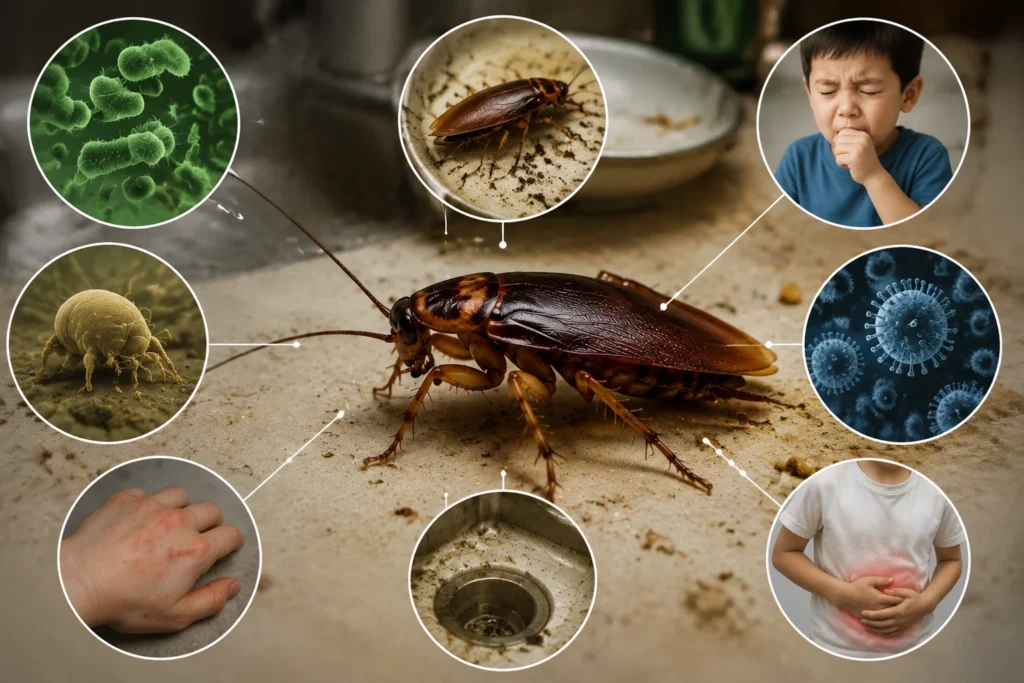
Cockroaches can contribute to sanitation problems because they may travel through contaminated materials before moving across surfaces where food is prepared or stored. Their bodies, droppings, shed material, and other residues can contribute to indoor allergens, which may be particularly concerning for sensitive individuals. Keeping food-preparation areas clean and reducing pest access can therefore support a healthier indoor environment. Food that may have been contaminated should be handled carefully rather than consumed simply because contamination is not visible. Surfaces should be cleaned using appropriate household cleaning practices, especially after pest activity has been discovered. Persistent infestations may require professional assistance because repeated cleaning alone cannot eliminate insects that continue to hide and reproduce in inaccessible locations.
Why Quick Fixes May Fail
Many people initially attempt to control an infestation by spraying insects whenever they are seen. While direct application may kill exposed insects, it may have little effect on individuals hidden behind walls, inside cabinets, beneath appliances, or in other protected spaces. Repeatedly treating only visible areas can therefore create the impression of temporary improvement without addressing the larger problem. Excessive use of insecticides can also create unnecessary exposure risks if products are applied incorrectly or in areas where they are not intended to be used. Effective pest control generally requires identifying the species, locating important hiding areas, reducing food and water sources, and selecting an appropriate treatment strategy. Following product labels and seeking professional guidance when necessary can make control efforts safer and more effective.
Prevention Through Regular Cleaning
Consistent cleaning can help reduce the resources that support an infestation, although cleaning alone is not always sufficient once a population is established. Floors should be swept or vacuumed regularly, especially around appliances and furniture where crumbs can collect. Food preparation surfaces should be cleaned after meals, and spills should be addressed promptly rather than left overnight. Cabinets and storage spaces should occasionally be emptied and inspected so that droppings, egg cases, or other evidence does not remain unnoticed. Garbage containers should be cleaned when necessary, and recyclable materials should not accumulate unnecessarily indoors. Regular cleaning also makes it easier to notice new signs of activity because surfaces remain visible and accessible. Combining sanitation with exclusion and appropriate treatment provides a stronger prevention strategy than relying on any single method.
Sealing Entry Points
Physical exclusion can play an important role in preventing insects from entering or moving between areas. Cracks around walls, baseboards, doors, windows, pipes, and utility openings should be inspected for gaps that may provide access. Damaged door seals and window screens should be repaired where appropriate, while larger openings around plumbing or electrical lines can be sealed using suitable materials. Drains and other openings should also be maintained properly because plumbing systems can provide pathways into buildings. However, sealing visible gaps without investigating an existing infestation may not eliminate insects that are already inside. Exclusion works best as part of a broader management plan that combines sanitation, moisture control, inspection, monitoring, and appropriate treatment.
The Importance of Moisture Control
Water availability can strongly influence pest activity, making moisture management an important part of prevention. Leaking faucets, damaged pipes, condensation, clogged drains, and standing water should be addressed promptly. Areas beneath sinks and around appliances should be inspected regularly because small leaks can remain unnoticed for long periods. Bathrooms should have adequate ventilation to reduce persistent dampness, while drainage systems should be maintained so water does not accumulate unnecessarily. Drying wet areas quickly can also reduce available water sources. When moisture problems are combined with food and shelter, insects may find an environment capable of supporting long-term activity. Correcting leaks and improving ventilation can therefore make a meaningful difference in reducing the conditions that encourage infestations.
Professional Pest Management
Professional pest-control services can be useful when an infestation continues despite careful cleaning and prevention. A trained technician can inspect likely hiding places, identify signs of activity, determine potential entry routes, and recommend treatment based on the circumstances. Depending on the situation, professionals may use targeted insecticide applications, baiting systems, monitoring devices, exclusion methods, or combinations of these approaches. Follow-up visits can also be important because eggs or hidden individuals may survive an initial treatment. A professional can explain preparation requirements and provide guidance on cleaning, food storage, and other steps that support the treatment process. When pesticides are involved, proper application is particularly important because using more product than necessary does not necessarily improve results and can create avoidable risks.
Maintaining a Pest-Resistant Environment
Long-term prevention requires continued attention even after visible activity has stopped. Food should remain stored securely, garbage should be managed regularly, and moisture problems should be corrected rather than ignored. Storage areas should be kept organized so that walls, floors, cabinets, and other potential hiding places remain accessible for inspection. Packages, boxes, and used items brought indoors should be checked when there is a reasonable concern that pests could be transported inside. Outdoor areas should also be maintained so that excessive debris does not create additional shelter close to entrances. Regular monitoring can help identify renewed activity before an infestation becomes extensive. A consistent prevention routine is generally more effective than waiting until insects become visible again before taking action.
Final Thoughts
Cockroaches can become persistent household pests when they have reliable access to food, water, shelter, and suitable hiding places. Because they are often active at night and capable of remaining concealed in very small spaces, an infestation may continue for some time before obvious signs appear. Recognizing droppings, egg cases, unusual odors, shed material, and repeated sightings can encourage earlier investigation. Effective prevention involves more than cleaning alone and should include proper food storage, moisture control, clutter reduction, sealing of suitable entry points, and regular inspection. If an infestation persists, professional pest management can help identify hidden activity and develop an appropriate treatment plan. By combining good sanitation with careful maintenance and timely action, property owners can make indoor environments less attractive to pests and reduce the likelihood of recurring infestations.