
Eric Richard Biography: The Remarkable Life and Career of the Actor Behind Bob Cryer
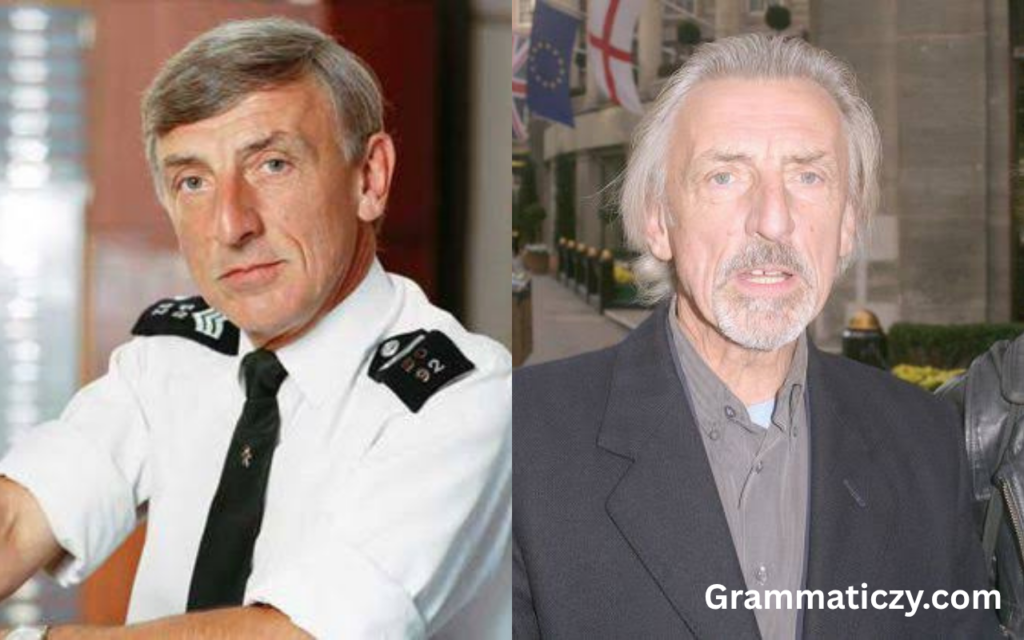
Eric Richard has enjoyed the kind of acting career that few performers manage to build: long, varied, and deeply connected with British television audiences. For millions of viewers, his name will forever be associated with Sergeant Bob Cryer, the dependable police officer he portrayed in ITV’s The Bill. Yet reducing Eric Richard to one character overlooks a career that has crossed television, film, theatre, documentary work and presenting for decades. His journey from leaving school at a young age to becoming a familiar face on British screens is a story of persistence, craft and remarkable professional longevity.
Born Eric Smith on June 27, 1940, in Margate, Kent, Richard eventually established himself as an English actor and presenter. His career includes acclaimed productions such as The Bill, Made in Britain, Little Dorrit, Dunkirk, Stutterer, EastEnders, Vera and Call the Midwife. His role in Stutterer is particularly notable because the short film went on to win the Academy Award for Best Live Action Short Film.
What makes Eric Richard’s biography particularly compelling is that his success did not arrive through an easy or conventional route. He was not a young drama-school graduate who immediately became a star. Instead, he spent years working outside the entertainment industry before discovering acting, followed by a lengthy period as a jobbing performer. Eventually, The Bill gave him the opportunity to become a household name, but his willingness to continue working across different forms of entertainment ensured that his career extended far beyond the police drama.
Eric Richard: Quick Facts and Biography
| Category | Details |
|---|---|
| Full name | Eric Smith |
| Professional name | Eric Richard |
| Date of birth | June 27, 1940 |
| Age | 86 in 2026 |
| Birthplace | Margate, Kent, England |
| Nationality | English/British |
| Profession | Actor and presenter |
| Best known for | Sergeant Bob Cryer in The Bill |
| Major television role | Bob Cryer |
| The Bill period | 1984–2004 |
| Reported The Bill credits | Around 790 episodes |
| Wife | Tina Smith |
| Previous marriage | Yes |
| Children | Public biographies report one child from his earlier marriage |
| Parents | Not reliably documented in major sources |
| Siblings | Not reliably documented |
| Education | Left school at 15 |
| Notable films | Dunkirk, Stutterer, Little Dorrit, The Final Conflict |
| Recent television | Call the Midwife, 2025 |
| Theatre | Royal Court, Stratford East, Birmingham Rep, Sheffield Crucible, Paines Plough |
| Estimated net worth | No reliably verified public figure |
| No reliably verified official account identified | |
| X/Twitter | No reliably verified official account identified |
| No reliably verified official account identified |
Some online biography pages publish specific figures for Eric Richard’s wealth or list social-media profiles, but these claims are not sufficiently supported by reliable primary sources. It is therefore more accurate to distinguish documented career information from estimates and unverified online claims. His established professional record, however, is extensive and well documented through television and film databases.
Early Life, Birthplace and Family Background
Eric Richard was born Eric Smith on June 27, 1940, in the seaside town of Margate in Kent. He later grew up in Brixton, London, and his formative years took place during a period when Britain was undergoing enormous social and economic change. Although detailed information about his childhood household is limited in major biographical sources, his early life clearly did not follow the traditional route associated with a future professional actor.
Richard left school at the age of 15, meaning that his formal education ended considerably earlier than would be expected for many modern actors. Rather than entering a drama academy or university, he moved into working life. His early employment was in the motor trade, a world far removed from television studios and theatrical stages. This background later became an interesting contrast to the career he eventually built.
The turning point came when a work colleague introduced him to amateur dramatics. What initially appears to have been an ordinary opportunity to participate in local theatre became the beginning of an entirely different professional direction. Richard discovered that he enjoyed performing, and the experience encouraged him to pursue acting more seriously. His story is therefore a useful reminder that important career opportunities can sometimes emerge unexpectedly rather than through carefully planned beginnings.
Education and the Discovery of Acting
Unlike many well-known British actors, Eric Richard did not follow a conventional drama-school pathway. His documented biography emphasizes that he left school at 15, and publicly available sources do not provide a detailed record of formal higher education or a major drama-school qualification. Instead, his acting education was largely practical, developing through amateur theatre, stage work and years of professional experience.
The amateur dramatic club was particularly significant because it allowed Richard to discover performance without first having to establish himself within the professional theatre system. That experience helped him understand that acting could be more than a hobby. It offered him a creative outlet and, eventually, a new professional identity. His early life therefore illustrates the importance of taking opportunities even when they do not initially appear to be career-defining.
Richard’s path also required patience. Before he became widely recognized, he spent approximately 15 years working as a jobbing actor. That period would have required him to accept smaller opportunities, develop his stagecraft and continue working despite the uncertainty that is common in the acting profession. His eventual breakthrough was consequently built on years of accumulated experience rather than overnight success.
Eric Richard’s Theatre Career
Theatre played an important role in shaping Eric Richard as a performer long before he became synonymous with The Bill. His stage career included work with respected British institutions and companies, including the Royal Court Theatre, Theatre Royal Stratford East, Royal Exchange Manchester, Birmingham Repertory Theatre, Sheffield Crucible Theatre and Paines Plough.
This theatrical background helped give Richard the foundation for the naturalistic acting style that would later become so effective on television. Stage performers learn to understand character, dialogue, timing and physical presence in ways that can be extremely valuable when moving into television drama. Richard’s extensive theatre experience meant that when larger television opportunities arrived, he already had decades of practical performance knowledge behind him.
His theatre work also continued after his television fame had been established. In 2001, for example, he played Ebenezer Scrooge in a production of Charles Dickens’ A Christmas Carol at the UCL Bloomsbury Theatre in London. His willingness to continue returning to theatre demonstrated that he viewed acting as a broad profession rather than something limited to television celebrity.
The Bill and Sergeant Bob Cryer
The biggest turning point in Eric Richard’s professional life arrived in 1984 when he joined The Bill as Sergeant Bob Cryer. The ITV police drama would become one of the defining British television programs of its era, and Richard remained associated with the character for approximately 20 years. His role as Bob Cryer transformed him from an experienced working actor into one of the most recognizable faces on British television.
Bob Cryer was a character audiences could easily connect with because he belonged to the working environment of the fictional police station rather than existing simply as a larger-than-life television hero. Richard’s performance brought authority and humanity to the character, allowing viewers to watch Cryer develop across years of storylines. According to IMDb’s current credit listing, Richard appeared in approximately 793 episodes of The Bill, while other databases give slightly different totals depending on how appearances are counted.
The length of his association with the show was extraordinary. Richard played Bob Cryer from 1984 until 2004, giving him roughly two decades inside the same fictional world. For an actor, that type of longevity is unusual, especially in a demanding television drama where cast members regularly come and go. The Bill became the professional chapter that defined his public identity, but it also provided the platform from which he could explore other projects.
Life After The Bill
Leaving The Bill did not bring Eric Richard’s acting career to an end. Instead, he continued taking television, film and stage roles, demonstrating that his professional identity was much broader than Bob Cryer. His subsequent credits include appearances in Holby City, Casualty, The Alan Clark Diaries, EastEnders, Vera and other productions.
His later work is particularly interesting because he continued to appear alongside new generations of British actors. In 2018, he joined EastEnders for two episodes as Maurice, a friend of Charlie Slater. Appearing in another major British soap gave Richard an opportunity to connect with a different audience while demonstrating the continued strength of his character-acting abilities.
Richard also appeared in Vera as Isaiah Thomas in 2023. The role was another example of the actor’s continuing involvement in British television drama after many decades in the industry. Rather than disappearing after his signature role ended, he remained available for carefully chosen appearances that allowed him to continue contributing his experience to television productions.
Film Career and Dunkirk
Although television became Richard’s most recognizable medium, his film credits demonstrate another dimension of his career. His filmography includes The Final Conflict, Little Dorrit, Forever Tomorrow, Stutterer, London Boulevard and Christopher Nolan’s 2017 war epic Dunkirk.
In Dunkirk, Richard appeared as the Man at Railway Window. It was a comparatively small role within a huge ensemble cast, but the film itself became one of the most significant productions of his later career. Working on a large-scale historical war film also placed him in a very different cinematic environment from the television police drama that had defined his earlier fame.
His film career demonstrates an important aspect of character acting: a performer does not need to be the central star of every production to make a valuable contribution. Richard’s ability to inhabit supporting roles allowed him to remain active across different genres and productions. Whether working on television, independent cinema or a major Hollywood-backed war film, he brought the experience of decades in front of the camera.
Stutterer and an Academy Award-Winning Film
One of the most notable achievements of Eric Richard’s later career came through the 2015 short film Stutterer. The film stars Matthew Needham as Greenwood, a lonely typographer whose difficulty communicating verbally contrasts with his rich internal life and online relationship. Richard appears as Greenwood’s father.
The film became far more successful than a typical short production. Stutterer won the Academy Award for Best Live Action Short Film at the 88th Academy Awards. Richard was part of the cast of the Oscar-winning production, adding an internationally recognized award-winning project to a career that had already included decades of British television and theatre.
What makes this achievement especially meaningful is that it came relatively late in Richard’s career. By the time Stutterer reached the Oscars, he had already spent decades working professionally. The film demonstrated that experienced performers can continue finding interesting and critically respected projects long after their best-known roles have ended.
Eric Richard’s Work Beyond Acting
Richard’s professional interests have not been restricted to scripted drama. He has also worked as a presenter and appeared in programs where he could demonstrate a more personal side of his personality. His credits include appearances connected with Top Gear, Blankety Blank, This Morning and other television programs.
One particularly memorable interest has been motorcycles. Richard reviewed motorcycles for Top Gear in 1991, reflecting a genuine enthusiasm that existed independently of his acting career. His interest in motorcycles adds an unexpected dimension to the public image of an actor who is usually remembered for playing a police sergeant.
This variety also illustrates why describing Richard simply as a soap or television actor would be incomplete. He has worked in theatre, television, film, documentary-style programming and presenting. His professional journey demonstrates a willingness to explore different forms of entertainment rather than relying entirely on the success of a single role.
Eric Richard’s Personal Life and Family
Eric Richard has generally maintained a relatively private personal life, particularly compared with modern celebrities whose relationships and daily activities are extensively documented on social media. Public biographical records identify Tina Smith as his wife, while IMDb also records an earlier marriage that ended in divorce and one child from that relationship.
One of the most difficult events associated with Richard’s family history was the death of his two-month-old grandson, Charlie Smith, during the devastating Indian Ocean tsunami in December 2004. Public biographical accounts report that the infant was swept away from his father in Sri Lanka. The tragedy occurred during the same year Richard’s long association with The Bill was coming to an end, making an already significant period of transition in his life even more painful.
Despite the tragedy and the demands of his profession, Richard continued working and developing his career. His public life has largely centered on acting rather than celebrity publicity, and there is relatively little reliable information about his everyday routine, private beliefs or personal relationships beyond what he has chosen to discuss publicly. That restraint is worth respecting when considering his biography.
Eric Richard’s Net Worth and Income
There is no authoritative public record that establishes Eric Richard’s exact current net worth. Websites sometimes publish estimated figures for actors, but such numbers are usually based on assumptions about salaries, residuals, property and investments that are not publicly disclosed. It would therefore be misleading to present a specific figure as fact without reliable financial documentation.
Richard’s principal professional income has come from his decades of acting work across television, film and theatre. His approximately twenty-year run on The Bill would have represented the most sustained period of his television career, while later appearances in productions such as EastEnders, Vera, Dunkirk, Stutterer and Call the Midwife provided additional professional opportunities.
Other forms of work, including presenting and television appearances connected with his interest in motorcycles, also contributed to his career. Rather than focusing on an unsupported net-worth estimate, the more meaningful measure of Richard’s professional success is his extraordinary longevity. Few actors manage to remain active across such a wide range of productions for multiple generations.
Eric Richard on Social Media
Eric Richard’s career began long before Instagram, Facebook, X and other social platforms became central to celebrity culture. Consequently, there is no strong evidence of a major verified social-media brand operated by him personally. Searches for an Eric Richard Instagram, Twitter or LinkedIn profile can produce accounts using his name, but those accounts should not automatically be considered authentic.
This is particularly important for biography readers because celebrity names can easily be used by unofficial fan accounts or unrelated individuals. Without clear verification or confirmation from a reliable source, it is safer to say that Richard does not have a widely documented official social-media presence rather than assigning an unverified account to him.
His relatively limited online presence also fits his broader public persona. Richard became famous through television performance rather than personal branding, and his professional reputation has been built through credits, interviews, stage appearances and the lasting affection of audiences who remember his work.
Eric Richard’s Recent Career and Call the Midwife
One of the clearest signs that Eric Richard remained active as a performer came in 2025, when he appeared in series 14 of Call the Midwife. He played Albert Butler in episode six, giving audiences another opportunity to see the veteran actor on British television.
The appearance is significant because it came more than four decades after his television career had already begun to gain major momentum. Richard’s continued participation in established British dramas shows how valuable experience can become within character acting. His screen presence carries the credibility of a performer who has spent generations working across British entertainment.
There is currently no reliable public information confirming a major new Eric Richard project beyond his documented recent television work. At 86, his career naturally has a different rhythm from the demanding schedule he maintained during the The Bill years. Nevertheless, his 2025 appearance demonstrates that his professional story has not simply stopped at his most famous role.
The Lasting Legacy of Eric Richard
Eric Richard’s legacy is much larger than the name Bob Cryer, even though Sergeant Bob Cryer remains the role that introduced him to millions of viewers. His work on The Bill created an extraordinary connection with British television audiences, while his theatre career established the foundation that made his performances believable and durable. His later work proved that an actor can remain creatively relevant long after leaving a defining television series.
His career also contains an important lesson about perseverance. Richard left school at 15, spent time working in the motor trade and discovered acting through amateur dramatics. He then endured years of professional uncertainty before finding major recognition. The journey was not quick, but it was remarkably productive. His career shows that success does not always depend on having the perfect beginning; sometimes it depends on continuing long enough for preparation and opportunity to meet.
From The Bill to Dunkirk, from theatre stages to the Oscar-winning Stutterer, and from his early professional years to his 2025 appearance in Call the Midwife, Eric Richard has built a body of work that spans generations. His story is ultimately one of resilience, adaptability and commitment to the craft of acting. As Eric Richard’s work continues to be revisited by audiences old and new, his journey stands as a reminder that a meaningful legacy is rarely created by one moment of fame—it is built through patience, persistence, experience and an enduring passion for the work.