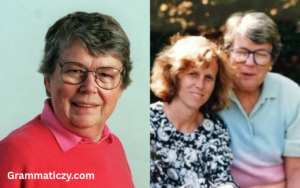
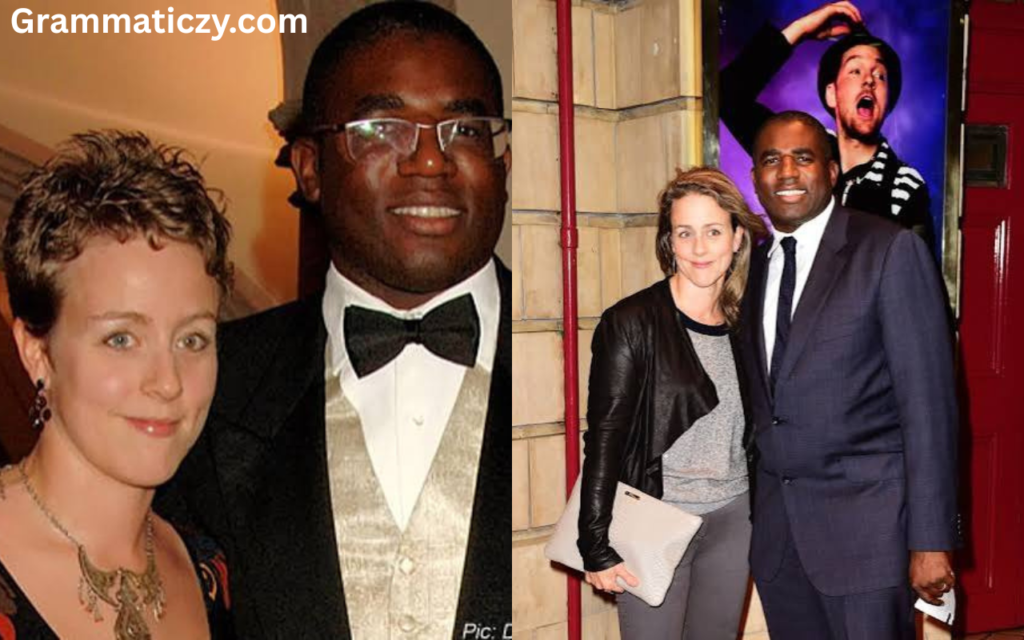
When people search for David Lammy wife, the name they are looking for is Nicola Green, but describing her only as the wife of a prominent British politician barely scratches the surface of her story. Nicola Green has established an identity of her own as a British artist, social historian and visual storyteller whose career has taken her into some of the most significant political, religious and cultural moments of recent decades. Her work has involved President Barack Obama, Pope Francis, Archbishop Desmond Tutu, Chief Rabbi Jonathan Sacks and the Dalai Lama, while her artwork is represented in major collections including the Metropolitan Museum of Art, the Library of Congress and the Smithsonian National Portrait Gallery.
What makes Green particularly interesting is the way she uses portraiture as something much larger than conventional portrait painting. Her work examines identity, power, race, religion, heritage and the preservation of important moments in history. She has described herself through her professional work as an artist and social historian who acts as a witness to major global events, using visual language to preserve experiences for future generations. That approach has resulted in ambitious projects such as In Seven Days…, documenting Barack Obama’s historic 2008 presidential campaign, and Encounters, a long-term artistic project involving leaders from different faith traditions.
Her personal life has naturally attracted attention because of her marriage to David Lammy, the long-serving Labour MP for Tottenham and a senior figure in British politics. The couple married in 2005 and have three children, but Green has generally maintained a more private profile than her husband. At the same time, she has developed an increasingly visible public role through art, education, cultural initiatives and rainforest conservation, particularly through Sophia Point Rainforest Research Centre in Guyana. Her story therefore sits at an unusual intersection of art, politics, family, history and environmental work.
Nicola Green Facts at a Glance
| Fact | Details |
|---|---|
| Full name | Nicola Green |
| Profession | Artist and social historian |
| Nationality | British |
| Education | Edinburgh College of Art |
| Known for | Portraiture, social history and visual storytelling |
| Husband | David Lammy |
| Marriage | 2005 |
| Children | Three |
| Major artwork | In Seven Days… |
| Major project | Encounters |
| Barack Obama connection | Documented his 2008 presidential campaign through art |
| Cultural work | Diaspora Pavilion, The World Reimagined, Khadija Saye Arts Programme |
| Environmental role | Co-Founder and Chair of Trustees, Sophia Point Rainforest Research Centre |
| Public collections | Metropolitan Museum of Art, Library of Congress, Smithsonian National Portrait Gallery and others |
| Recent exhibition | HENI Gallery, London, 2025 |
| Estimated net worth | Not reliably disclosed publicly |
| Professional website | NicolaGreen.com |
| @nicolagreenart is listed in her published professional CV | |
| Nicola Green Studio | |
| Public professional profile associated with her art career |
Who Is Nicola Green?
Nicola Green is a British artist and social historian whose career has been built around the relationship between art, people and history. Her official biography describes her practice as interdisciplinary, combining contemporary visual storytelling with traditional portraiture. Rather than treating a portrait simply as an image of a person’s face, Green investigates the history, identity, cultural background and social meaning surrounding her subjects. This approach has allowed her to work with internationally recognized political, religious and cultural figures while creating artworks intended to preserve moments of wider historical significance.
Green’s professional identity is especially distinctive because she often approaches her projects as a witness. Her work has taken her close to events that have had significance far beyond the individuals involved. The most famous example is her In Seven Days… project, which emerged from unprecedented access to Barack Obama’s 2008 presidential campaign. Her official biography says the resulting archive gained global recognition, while the Metropolitan Museum of Art has described the work in exceptionally strong historical and artistic terms.
Her work has also moved across subjects that include religion, race, gender, leadership, inclusion and cultural heritage. Her professional speaker profile describes her as an expert on identity, race, allyship and inclusion, while her artistic projects have included collaborations with figures from different faiths and cultures. This makes her career considerably broader than the conventional description of a portrait artist. She has used visual art as a way to ask questions about how people understand one another and how societies preserve their collective memory.
Early Life, Family and Education
Publicly available information about Nicola Green’s childhood is relatively limited, particularly compared with the amount of information available about her professional life. She has not built a public persona around revealing every aspect of her upbringing, and much of the available biographical material concentrates on her education, artistic development and later projects. This relative privacy has remained a consistent feature of her public profile, especially in comparison with her husband, whose political career naturally attracts extensive media coverage.
Her artistic education began at Edinburgh College of Art, where she studied drawing and painting. Her published curriculum vitae records a Bachelor of Arts with First Class Honours in Drawing and Painting in 1996 and a Master of Fine Arts with First Class Distinction in 1998. The same document records scholarships associated with her studies, showing that her professional artistic development was rooted in formal training rather than emerging solely from later public recognition.
That educational foundation helps explain the combination of technical skill and research that appears throughout her career. Green’s work often requires extensive preparation, historical investigation and close attention to symbolism. Her published CV says she has spent substantial time researching the stories behind her subjects and building archives around major projects. This combination of fine-art training and historical research became one of the defining characteristics of her professional identity.
Nicola Green and David Lammy’s Relationship
Nicola Green and David Lammy married in 2005 after meeting in 2004 through a mutual friend. Their relationship developed while Lammy was already pursuing his political career and Green was building her own professional reputation as an artist. Their marriage consequently brought together two very different public worlds: British politics on one side and contemporary art and cultural history on the other. Contemporary reporting has described Green as a portrait artist, while later coverage has continued to identify her through her own professional achievements.
Their marriage has lasted through major stages of Lammy’s political career. Lammy has represented Tottenham in Parliament since 2000 and has gone on to hold senior political positions, while Green has continued to work internationally on art projects. Despite their public profiles, the couple have generally kept their children away from excessive media exposure. They have three children, and Green’s professional biography refers to her mixed-heritage children and multi-faith family as an inspiration for aspects of her artistic work.
Their shared interests have become especially visible through their connection with Guyana. Lammy has family roots in Guyana, while Green has become deeply involved in rainforest conservation and research through Sophia Point. This has created an area in which their personal and professional worlds overlap. Green serves as Co-Founder and Chair of Trustees of Sophia Point Rainforest Research Centre, making environmental education and rainforest conservation an important part of her public work.
Nicola Green’s Career as an Artist
Nicola Green’s artistic career has developed around ambitious projects rather than a single conventional style. Her work combines painting, drawing, collage, silk-screen printing, photography and textile design, among other techniques. Her approach to portraiture is highly collaborative, with the artist researching the life and identity of her subjects before constructing visual narratives around them. Her official website describes these works as attempts to capture not only appearance but also personal history, heritage and legacy.
One unusual element of Green’s practice is her use of objects and visual symbolism. Family heirlooms, textiles, architecture, maps, photographs and other elements can become part of her compositions. The intention is to communicate aspects of a person’s story that might be difficult to express through conventional portraiture alone. Her website explains that she uses body language, semiotics and cultural references to build layered representations of her subjects.
Her career has also included commissions connected with important British institutions and historical locations. One example is her work for Great Scotland Yard, where she created a series of artworks exploring the history of the building and the institution associated with it. Another major commission came through the Cultural Olympiad for the 2012 London Olympic Games, when she created portraits representing the Olympic sports and Lord Sebastian Coe.
In Seven Days: Nicola Green and Barack Obama
The project that brought Nicola Green some of her greatest international recognition was In Seven Days…, a body of work created after she gained unprecedented artistic access to Barack Obama’s 2008 presidential campaign. The campaign was historically significant, and Green placed herself close to the events and people surrounding Obama’s rise to the presidency. Instead of producing a conventional collection of political portraits, she developed a visual archive intended to preserve the atmosphere and significance of the campaign.
The Metropolitan Museum of Art holds one of the works from the project in its collection. The museum identifies Green’s 2010 In Seven Days… as a group of seven large serigraphs. Green’s own collection information also identifies the Library of Congress, Smithsonian National Portrait Gallery and other institutions among the places where works from her projects are held.
The importance of In Seven Days… lies partly in the way it connects contemporary art with political history. Obama’s 2008 campaign was already a major historical event, but Green’s work sought to preserve the human and visual details surrounding it. Her role was not simply that of an observer recording photographs from a distance. She developed a body of art that interpreted the campaign through her own artistic language, creating a permanent record that could be revisited long after the election itself had passed.
Encounters and Religious Art
Another defining project in Green’s career is Encounters, a decades-long body of work exploring religious leadership and interfaith dialogue. The project includes subjects such as Pope Francis, Chief Rabbi Jonathan Sacks and Archbishop Desmond Tutu. Green developed distinctive patterned backgrounds around her subjects, incorporating visual references to faith, culture and history. This approach transforms the portrait into a broader cultural document.
The project reflects Green’s interest in how people from different religious traditions understand identity and community. Rather than placing religious figures into a single visual hierarchy, she has sought to represent multiple traditions through a common artistic framework. Her work has consequently been discussed in the context of interfaith dialogue and the preservation of religious heritage.
Green’s interest in religion is also connected to her own description of her family as multi-faith and mixed heritage. Her professional speaker profile says that these experiences influenced her approach to social and cultural heritage. Through Encounters, she transformed that interest into an international artistic project involving some of the most recognizable religious leaders of the modern era.
The Diaspora Pavilion and Cultural Representation
Green’s work has frequently addressed questions of representation, particularly within the arts. In 2017, she co-founded and directed the Diaspora Pavilion at the 57th Venice Biennale. The initiative became an important platform for artists exploring diaspora, identity and cultural experience, giving greater visibility to artists whose work addressed the complex histories of migration and belonging.
Her involvement went beyond exhibiting her own work. Green has repeatedly used her position within the art world to support other artists and create opportunities for people from communities that have historically been underrepresented in cultural institutions. Her professional biography identifies mentoring and social impact as important parts of her broader work.
She also founded the Khadija Saye Arts Programme at IntoUniversity in 2019. The programme was established in memory of artist Khadija Saye and aimed to support young people and broaden access to creative opportunities. Green’s involvement reflects a recurring theme throughout her career: the belief that art should not only document society but can also help create opportunities within it.
The World Reimagined
Green later became a Principal Artist for The World Reimagined, a national public art and education project examining the history and legacy of the transatlantic trade in enslaved Africans. The initiative used large public artworks and educational resources to encourage conversations about Britain’s history and its continuing social consequences. Green’s participation placed her artistic practice within a much broader public conversation about historical memory.
One of the project’s distinctive features was its use of large globe sculptures placed in public locations. These works were designed to tell stories that are often absent or underrepresented in conventional historical narratives. Green’s involvement included creating a globe displayed outside Westminster Abbey, connecting a contemporary artwork with one of Britain’s most recognizable historic locations.
The project also demonstrated how Green’s career had evolved beyond traditional gallery exhibitions. She was using art as a public educational tool, encouraging people to encounter historical subjects outside museums and classrooms. Her work therefore increasingly occupied the space between contemporary art, public education, social history and community engagement.
Sophia Point and Guyana Rainforest Conservation
Sophia Point Rainforest Research Centre is another major chapter in Nicola Green’s career. She is a Co-Founder and Chair of Trustees of the organization, which works to promote research, education and conservation in Guyana’s rainforest environment. The project is particularly significant because it connects scientific research with education and local capacity building.
The centre’s work focuses on the Guiana Shield, one of the world’s most important rainforest regions. Its mission includes creating opportunities for researchers and students to study biodiversity and environmental change. Green’s involvement demonstrates that her interests in heritage and preservation have expanded beyond human cultural history into the protection of natural environments.
The organization’s work has continued to develop through partnerships. In June 2025, the Iwokrama International Centre for Rain Forest Conservation and Development signed a memorandum of understanding with Sophia Point Rainforest Inc. The agreement focused on scientific research, education, knowledge sharing, biodiversity conservation and technical cooperation.
Nicola Green’s Artistic Style and Creative Process
Green’s artistic style is difficult to reduce to a single category because she deliberately combines multiple techniques. Her practice can incorporate painting, drawing, collage, photography, silk-screen printing, textiles and other materials. This mixed-media approach allows her to create portraits that function almost like visual archives, with different objects and symbols contributing to the story of the subject.
Her creative process is also unusually research-driven. According to her official website, clients and subjects can become part of a collaborative process in which Green investigates the most important aspects of their lives, identities and histories. She then translates those findings into visual elements. This makes each commission highly individual rather than simply reproducing the same portrait formula for every subject.
Green has also developed an innovative product known as the Quasar Frame. Her website describes it as a frame that can create an ambient glow through the refraction of light without requiring electricity. The technology became part of her Olympic project and demonstrates that her interest in innovation extends beyond the painted image itself.
Nicola Green’s Awards, Recognition and Public Profile
Green’s recognition has come through exhibitions, museum collections, cultural projects and invitations to speak about art and social issues. Her work has appeared at institutions and venues including the Library of Congress, Harvard University, the Jewish Museum London, Walker Art Gallery, Oxford’s Saïd Business School and other prominent locations. Her official biography lists a long sequence of solo exhibitions stretching from the late 1990s through her 2025 HENI Gallery exhibition.
Her professional CV also records research funding from the UK government between 2014 and 2019 and a series of lectures and media appearances discussing subjects such as political portraiture, religious heritage, art and history. These activities demonstrate that her reputation has extended beyond the gallery environment into education, public discussion and cultural commentary.
Her work has also received attention because of the historical importance of her subjects. Documenting Obama’s presidential campaign, portraying religious leaders and contributing to major cultural initiatives has placed Green in situations where art intersects with events that already carry significant historical meaning. Her role is therefore not simply that of an artist producing objects for display; she often acts as a curator of memory and visual history.
Nicola Green’s Personal Life and Family
Despite her connection to one of Britain’s most recognizable politicians, Nicola Green has generally kept her family life relatively private. She and David Lammy have three children, and Green’s own professional biography occasionally references her family in connection with her artistic interests rather than providing extensive details about their private lives. This has allowed her public profile to remain focused mainly on her work.
Green has described her family as mixed heritage and multi-faith, and these experiences have influenced the subjects she explores through her art. Her interest in identity, belonging, religion and cultural heritage can therefore be viewed partly through the personal experiences that inform her creative perspective. She has spoken about these themes professionally while generally avoiding excessive exposure of her children’s private lives.
Her marriage to Lammy has nevertheless generated public interest, particularly as Lammy’s political career has progressed. In 2024, The Guardian reported that the couple had been included in Tatler’s Social Power Index, highlighting how their combined public profiles had attracted attention beyond Westminster. The article also identified Green as a portrait artist whose work is represented in major international collections.
Nicola Green Net Worth and Sources of Income
There is no dependable publicly verified figure for Nicola Green’s personal net worth. Although websites sometimes publish precise estimates for the wealth of artists and public figures, those figures are often based on assumptions rather than disclosed financial records. In Green’s case, there is insufficient reliable evidence to state a specific net-worth amount as fact.
Her professional income can come from several areas associated with an established contemporary artist. These can include commissioned portraits, original artwork, limited-edition prints, exhibitions, commercial projects, licensing, speaking engagements and other creative services. Her official website confirms that she works with families, commercial clients and internationally recognized figures on bespoke legacy artworks.
It is also important not to confuse Nicola Green’s finances with those of David Lammy. Although they are married, their individual professional careers and financial interests are separate matters. A responsible biography should therefore avoid combining their assets or presenting an internet-generated estimate as Green’s personal wealth. The most accurate description is that she has an established international art career, but her personal net worth has not been publicly and reliably disclosed.
Nicola Green Social Media and Online Presence
Nicola Green maintains a professional digital presence centered primarily on her art and cultural projects. Her published CV lists @nicolagreenart and @NicolaGreenArt among her professional social-media identifiers, while her online material also references the Nicola Green Studio presence on Facebook. These accounts are primarily connected with her artistic career rather than functioning as a political communication platform.
Her official website remains one of the most useful places to follow her work because it provides information about exhibitions, projects, artwork and recent developments. The site includes extensive material about In Seven Days…, Encounters, legacy portraiture, environmental work and her wider artistic practice.
Green’s professional communication also extends to speaking engagements. Her speaker profile identifies her as someone who discusses identity, race, allyship, inclusion and the role of visual images in shaping how people understand one another. This means her online and public presence is not limited to displaying finished artwork; she also uses her experience to participate in broader conversations about culture and representation.
Recent Projects and What Comes Next
Nicola Green’s recent career suggests that her interests continue to expand rather than becoming narrower. Her official biography lists a 2025 exhibition at HENI Gallery in London, while her continuing involvement with Sophia Point keeps her connected to environmental research and conservation in Guyana. These activities show an artist whose interests now extend across culture, history, public education and environmental issues.
The Sophia Point partnership with Iwokrama in 2025 is particularly relevant to her current public work. The agreement was designed to strengthen scientific research, biodiversity conservation and knowledge sharing in Guyana. For Green, this represents another stage in a career that has repeatedly focused on preservation—first of human stories and cultural heritage, and increasingly of natural heritage as well.
Her future direction is therefore likely to remain connected to the themes that have defined her career: identity, history, representation, cultural heritage and environmental responsibility. Whether through portraiture, public art, educational initiatives or conservation, Green’s work continues to explore the relationship between what societies remember and what they choose to preserve for the future.
The Legacy of Nicola Green
Nicola Green’s legacy is already much broader than the phrase “David Lammy wife” suggests. Her marriage to Lammy is an important part of her personal biography, but her professional story has developed independently through decades of artistic research, international projects and cultural initiatives. Her work has been preserved in major museum collections and has connected her with figures whose influence extends across politics, religion and global culture.
Her greatest contribution may be the way she uses art as a form of historical witnessing. Whether documenting Obama’s 2008 presidential campaign, portraying religious leaders through Encounters, examining the legacy of slavery through The World Reimagined, or supporting rainforest research in Guyana, she repeatedly asks how important stories can be preserved and communicated visually. Her work demonstrates that portraiture can function not only as art but also as a record of people, societies and moments in time.
As Nicola Green continues to develop her artistic practice and her work in environmental conservation, her journey offers a broader lesson about building a meaningful life alongside public attention. She has transformed her skills as an artist into a platform for storytelling, cultural dialogue, education and preservation. Her story is ultimately a reminder that a lasting legacy is not created by one famous relationship or one successful project, but through years of curiosity, persistence and purposeful work—and through the stories we choose to preserve for generations that have yet to come.