Dave Bartram Biography: Early Life, Showaddywaddy Career, Songs, Family, Net Worth and Legacy
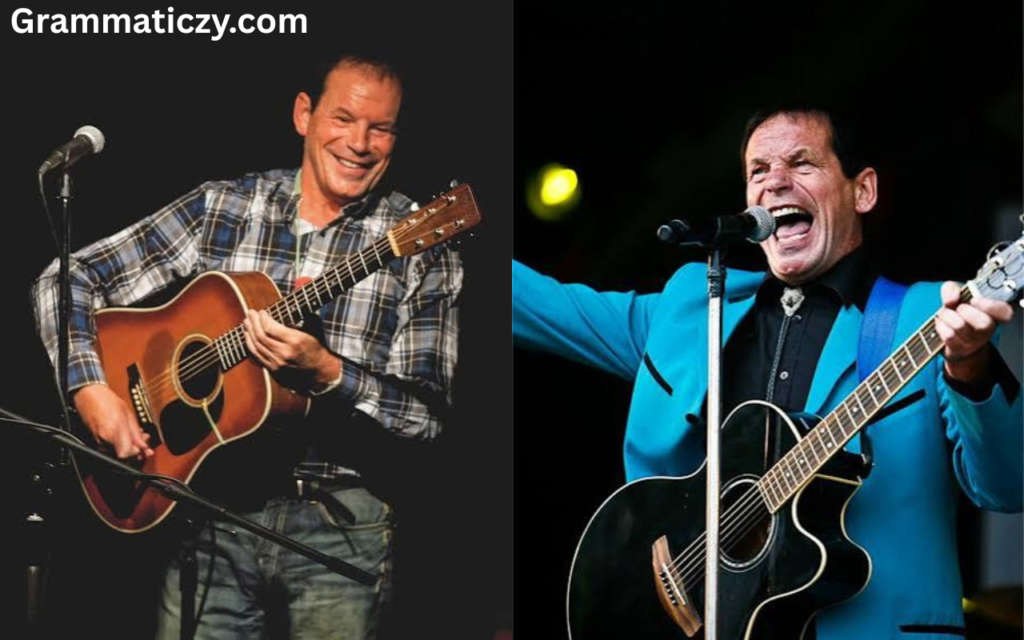
Dave Bartram is a name deeply connected with one of Britain’s most recognisable rock-and-roll revival bands. For decades, his voice, songwriting and stage presence helped define Showaddywaddy, the Leicester group that transformed 1950s and 1960s rock-and-roll influences into a hugely successful British pop phenomenon. From local performances in Leicestershire to television appearances, chart-topping singles and relentless touring, Bartram’s career became much larger than the typical story of a lead singer. He was a performer, songwriter, guitarist, manager and later an author, giving him an unusually broad role in the history of the band.
Born David Bartram on March 23, 1952, Bartram entered music at a remarkably young age. The official Showaddywaddy biography states that his first stage appearance came when he was under 10, during a local Cub Scout show, and that the experience convinced him he wanted a career in entertainment. He subsequently taught himself piano and guitar and began writing songs while still a teenager. Before Showaddywaddy became a professional act, he performed with several local groups, including Buttercup Jelly, Amarmus and Choise.
His eventual success with Showaddywaddy was built on years of preparation rather than overnight fame. When the group became professional in August 1973, Bartram and the other members gave up their regular jobs and committed themselves fully to music. What followed was a 38-year career as one of the band’s leading performers, followed by an ongoing role managing the group’s affairs. Even after leaving the stage in 2011, Bartram remained involved with Showaddywaddy and continues to contribute to the band’s activities and historical legacy.
Dave Bartram Facts at a Glance
| Category | Details |
|---|---|
| Full Name | David Bartram |
| Known As | Dave Bartram |
| Date of Birth | March 23, 1952 |
| Age | 74 in 2026 |
| Birthplace | Lutterworth, Leicestershire, according to the official Showaddywaddy biography; Official Charts lists Leicester |
| Raised In | Syston, Leicestershire |
| Nationality | British |
| Profession | Singer, songwriter, guitarist, author and band manager |
| Best Known For | Founding member and former frontman of Showaddywaddy |
| Showaddywaddy Tenure as Performer | 1973–December 2011 |
| Showaddywaddy Manager | Since 1984 |
| Major Hit | “Under the Moon of Love” |
| UK No. 1 Singles | 1 with Showaddywaddy |
| UK Top 10 Singles | 10 |
| UK Top 40 Singles | 23 |
| Last Show as Frontman | December 3, 2011, Ilkley |
| Books | The Boys of Summer, All Mapped Out |
| Parents | Not reliably documented in major public sources |
| Siblings | Not reliably documented in major public sources |
| Wife | Cathy, mentioned in official Showaddywaddy material |
| Daughter | Holly, mentioned in official Showaddywaddy material |
| Net Worth | No independently verified public figure |
| Current Role | Continues to manage Showaddywaddy’s affairs |
| Official Online Presence | Showaddywaddy’s official website and related channels |
Who Is Dave Bartram?
Dave Bartram is an English singer, songwriter and musician who became famous as one of the founding members and principal vocalists of Showaddywaddy. The band was formed in Leicester in 1973 when two local groups, Choise and the Golden Hammers, began performing together and discovered that the combined lineup created a particularly strong live show. Bartram was a member of Choise and became one of the central creative figures in the new eight-piece group.
His role in Showaddywaddy went considerably further than simply singing the band’s best-known songs. Bartram was involved in songwriting and played several instruments, including guitar, piano and harmonica. According to the band’s official biography, much of Showaddywaddy’s original material was written primarily by Bartram and Trevor Oakes, either separately or collaboratively. Songs credited to Bartram include “You Will Lose Your Love Tomorrow,” “Cutie,” “Sweet Music,” “Smiling Eyes,” “Heavenly,” “Paint Your Picture,” “Swansong,” “Lost” and “Then Came You.”
Bartram also became increasingly involved in the business side of the group. In 1984 he became Showaddywaddy’s manager, a position he has continued to hold. That means his connection to the band did not end when he stopped performing. His career therefore has two distinct but connected chapters: the decades he spent as a frontman and musician and the continuing period in which he has helped manage and preserve the Showaddywaddy legacy.
Early Life and Family Background
Dave Bartram’s early life was rooted in Leicestershire. The official Showaddywaddy biography specifically says that he was born in Lutterworth and brought up in Syston, correcting an inaccurate birthplace that had appeared in some early tour programmes. This regional background became important because the local music scene around Leicester ultimately provided the environment in which Bartram met and performed with many of the musicians who would later form Showaddywaddy.
Music entered his life unusually early. His first stage experience came before he was 10 years old, when he appeared in a local Cub Scout show. Rather than treating that performance as simply a childhood activity, Bartram later regarded it as the moment when he realised that entertainment could become his future. He went on to teach himself piano and guitar and began writing songs as a teenager, demonstrating an early interest not just in performing other people’s material but in creating music himself.
Detailed information about Bartram’s parents, siblings and wider childhood family circumstances is not extensively documented in authoritative public sources. That makes it difficult to provide a responsible account of those areas without relying on unsupported online claims. What is much better documented is the musical environment surrounding his youth: local bands, clubs, pubs and live performances gave him practical experience and eventually led him toward the musicians who would form Showaddywaddy.
Education, First Bands and Musical Development
Bartram’s formal education is not a major feature of his publicly documented biography. Instead, his development as a musician appears to have happened largely through practical experience and self-teaching. The official biography notes that he taught himself to play both piano and guitar and began songwriting during his teenage years. This hands-on approach became an important characteristic of his career because he developed as a performer through actual stage work rather than through a conventional music-school route.
Before becoming a professional musician, Bartram had to balance music with ordinary employment. The official biography says that after leaving school he worked as a trainee telephone engineer while performing during evenings. This period illustrates how different his circumstances were from the image of a successful rock-and-roll performer that would eventually emerge. During the day he had a conventional job, while at night he was developing the performance skills and musical confidence that would become the foundation of his career.
His early bands were crucial stepping stones. He played with Buttercup Jelly between 1968 and 1969, joined Amarmus from 1969 to 1970 and later became associated with other local groups. In February 1972, he replaced Don Collins as vocalist of Choise. Choise’s members were interested in original material, and this gave Bartram an early opportunity to develop songwriting alongside live performance.
How Showaddywaddy Was Formed
The origins of Showaddywaddy can be traced to the interaction between two Leicester-area bands: Choise and Golden Hammers. Choise featured Bartram alongside Trevor Oakes, Geoff Betts and Romeo Challenger, while Golden Hammers included Buddy Gask, Russ Field, Rod Deas and Malcolm Allured. The two groups began performing together at the Fosseway pub in Leicester, where their combined rock-and-roll performances received a particularly strong reaction from audiences.
The success of those joint performances led the musicians to recognise that the eight-member combination could work as a complete act. Rather than simply continuing as two separate groups, they developed the Showaddywaddy format. Initially, the two original bands sometimes appeared as support acts before the larger Showaddywaddy lineup took the stage, but the potential of the combined group soon became obvious.
For Bartram, this was the defining turning point of his early career. The group eventually became professional in August 1973, with its members leaving their regular employment behind. From that point forward, the band’s success would depend on their ability to combine musicianship, songwriting, stagecraft and relentless touring. Bartram’s voice and personality made him one of its most familiar faces, while his songwriting gave him an important creative role behind the scenes.
Showaddywaddy’s Rise to Fame
Showaddywaddy quickly established itself as a distinctive presence in British popular music. The group’s energetic rock-and-roll performances, colourful presentation and large lineup made it particularly effective as a live act. Their appearance on the television talent show New Faces helped expose them to a much wider audience, and their first chart entry, “Hey Rock & Roll,” followed in 1974.
The group’s commercial success continued throughout the 1970s. Official Charts records one UK number-one single, 10 Top 10 singles and 23 Top 40 singles for Showaddywaddy. The group also spent 209 weeks on the UK Singles Chart, demonstrating that its popularity was sustained across a substantial period rather than being based on one isolated hit.
For Bartram, the period represented the fulfilment of ambitions that had begun with his childhood stage appearance. He was now performing to huge audiences, appearing on television and recording music that reached the national charts. At the same time, the workload became enormous. The official biography describes hundreds of shows each year, sometimes including seven consecutive nights in cabaret clubs, alongside recording sessions, songwriting and more than 300 television appearances.
“Under the Moon of Love” and Chart Success
The defining commercial moment arrived with “Under the Moon of Love.” Released in 1976, the song eventually reached number one on the UK Singles Chart and remained at the top for three weeks. It became the band’s signature hit and is still strongly associated with Showaddywaddy and the British rock-and-roll revival of the 1970s.
The success of the single was part of a remarkable run rather than an isolated event. Official Charts records that Showaddywaddy achieved 10 Top 10 singles and 23 Top 40 singles. Their Greatest Hits 1976–1978 album also reached number one on the UK Albums Chart in 1979. These results established Showaddywaddy as one of the major British pop acts of the era.
Bartram’s importance during this period cannot be separated from the band’s broader identity. As one of the lead vocalists and a founding member, he became one of the faces audiences associated with Showaddywaddy. His contribution was also creative, however, because the band recorded a significant amount of original material alongside its better-known interpretations of rock-and-roll classics.
Dave Bartram as a Songwriter and Musician
One of the most interesting aspects of Bartram’s career is that Showaddywaddy’s reputation as a rock-and-roll covers group can sometimes obscure his songwriting contribution. The official biography makes clear that original songwriting was important to the musicians, particularly Bartram and Trevor Oakes. Bartram’s songs became part of the band’s recorded catalogue and demonstrated a creative side that was not always visible from their television appearances.
Bartram’s songwriting credits include numerous Showaddywaddy recordings. Among them are “You Will Lose Your Love Tomorrow,” “Cutie,” “Sweet Music,” “Smiling Eyes,” “Heavenly,” “Paint Your Picture,” “In Above Your Head,” “Swansong,” “Lost,” “Then Came You,” “You Always Stand Me Up” and “I Want You To Be My Girl.” He was not merely a vocalist delivering other people’s songs; he helped create the band’s musical catalogue.
His instrumental abilities also extended beyond guitar. The official biography notes that he played guitar, piano and harmonica on recordings. This broad musical involvement helps explain why Bartram remained an important creative figure even as his responsibilities gradually expanded into management. His career combined performance, songwriting, musicianship and business in a way that few frontmen experience over such a long period.
Dave Bartram’s Role as Showaddywaddy Manager
In 1984, Bartram became the manager of Showaddywaddy. This was a significant change because management requires an entirely different set of skills from performing on stage. The position involved overseeing the practical affairs of a band whose career had already extended well beyond its original breakthrough period.
His move into management also demonstrated his long-term commitment to Showaddywaddy. Instead of viewing the band simply as a performance job, Bartram became involved in protecting its continued operation. The official website confirms that he has continued in the managerial role through the present period, even after his retirement from performing.
This behind-the-scenes contribution is particularly important when considering Showaddywaddy’s longevity. Many successful bands from the 1970s eventually disappeared from the touring circuit, but Showaddywaddy continued performing for audiences decades after its original chart peak. Bartram’s ongoing management role has therefore been part of the broader story of the group’s survival and continuing public presence.
Retirement From the Stage in 2011
After 38 years as one of Showaddywaddy’s frontmen, Bartram announced his retirement from regular live performance in 2011. His final gig took place at the Kings Hall in Ilkley, West Yorkshire, on December 3, 2011. The band’s official history records the event as the end of his long period as an active touring member.
Bartram explained at the time that he had spent considerable time thinking about the decision. In his retirement statement, he said that health difficulties involving asthma had affected his enjoyment of performing and that he had reached the point where he no longer wanted to continue with live performances. Importantly, he made clear that he was not retiring from Showaddywaddy altogether.
Instead, Bartram continued managing the restructured band. This allowed him to step away from the physical demands of constant touring while maintaining his connection to the group he had helped create nearly four decades earlier. He has also made occasional stage appearances since retiring, showing that the connection between Bartram and Showaddywaddy never completely disappeared.
Dave Bartram’s Personal Life and Family
Bartram has generally maintained a relatively private personal life compared with many modern celebrities. Although he has participated in numerous interviews and fan Q&As, detailed information about his parents, siblings and early family circumstances is not widely documented through authoritative sources. It is therefore more responsible to focus on the aspects of his personal life that have been publicly discussed rather than repeating unverified claims found on biography websites.
Official Showaddywaddy material has mentioned his wife Cathy and daughter Holly, providing some insight into his family life. However, Bartram has generally kept his family away from the centre of his public career. This relative privacy stands in contrast to the highly visible nature of his professional life, which involved television appearances, touring and decades of interaction with music fans.
His interviews occasionally provide glimpses into his personality away from music. In an official 2006 Q&A, for example, Bartram described himself humorously as something of a “country bumpkin at heart.” He also discussed his preference for traditional real ale and spoke about his interest in comedy. These comments reveal a side of his personality quite different from the energetic frontman audiences saw on stage.
Dave Bartram as an Author
Bartram eventually expanded his creative work into publishing. His books include The Boys of Summer and All Mapped Out, both non-fiction works connected to his experiences and interests. The official Showaddywaddy biography also identifies Killer Line as a planned fictional project.
The Boys of Summer is particularly connected to his life in Showaddywaddy. The book looks at a 10-week period during which the band performed at holiday camps in 2005, offering an insight into the reality of touring and performing away from the glamour often associated with successful musicians. The project gave Bartram an opportunity to preserve stories that might otherwise have remained part of the band’s private memories.
Writing also represents another stage in Bartram’s creative development. His early life was defined by learning instruments and writing songs, his middle career by recording and performing, and his later years by management and documenting experiences. The progression demonstrates how his relationship with creativity continued even after he stepped away from the microphone.
Dave Bartram’s Net Worth and Sources of Income
There is no dependable, independently verified public figure for Dave Bartram’s current net worth. Various celebrity websites may publish estimated numbers, but such estimates generally do not provide audited financial information or documentation sufficient to establish their accuracy. A responsible biography should therefore avoid presenting an exact net-worth figure as fact.
Bartram’s professional income over the decades has potentially come from several areas, including live performances, songwriting royalties, recording work, management, publishing and book sales. Showaddywaddy’s long chart history and continued live presence created a career structure very different from that of an artist who released only a few records before disappearing from the public eye.
His continued role as manager also means that his professional relationship with Showaddywaddy remains active. In 2026, the band’s official website announced new releases produced in collaboration with Bartram, including The Golden Years, a 61-track two-CD collection featuring all 23 of the group’s Top 40 hits. The site specifically states that Bartram continues to manage the band’s recording and live-performance activities.
Dave Bartram and Social Media
Dave Bartram’s digital presence is more closely associated with Showaddywaddy’s official online platforms than with a highly active personal social-media profile. Unlike many contemporary entertainers, he has not built his public identity around constantly posting personal content on Instagram, TikTok or X. For fans researching his career, the official Showaddywaddy website remains one of the most useful sources.
The website contains an extensive archive of Dave Bartram interviews and fan Q&As. The archive includes interviews dating back to the late 1990s and continuing into the 2010s, covering subjects ranging from Showaddywaddy’s music and touring experiences to Bartram’s personal interests.
This archive has become especially valuable because it provides first-hand comments from Bartram rather than relying entirely on secondary biographies. For anyone interested in his career, the band’s official website offers historical material, photographs, interviews and current information about Showaddywaddy, making it a more dependable reference point than unverified celebrity-profile pages.
Dave Bartram’s Recent Activities in 2026
Dave Bartram remains involved with Showaddywaddy in 2026. The band’s official website currently highlights a June 2026 interview in which Bartram discusses the group’s commercial peak between 1977 and 1979. The interview examines the singles and albums released during those years and includes Bartram’s memories of people he met and experiences from the road.
The June 2026 interview was published online on June 22, 2026, and focuses specifically on one of the most important periods in Showaddywaddy’s history. It provides a contemporary opportunity for Bartram to reflect on the years when the group was enjoying its greatest commercial success.
The band’s official website also lists major 2026 releases connected with its legacy. The Golden Years, a two-CD collection containing 61 tracks and all 23 of Showaddywaddy’s Top 40 hits, is scheduled for October 16, 2026. A limited-edition yellow-vinyl release of “Under the Moon of Love” is also scheduled for that date to mark the 50th anniversary of the million-selling single. The website says both releases were produced in collaboration with Bartram.
Showaddywaddy’s Continuing Legacy
Showaddywaddy’s longevity is one of the most remarkable aspects of Bartram’s career. The group celebrated its 50th anniversary across 2023 and 2024, decades after its original formation at the Fosseway pub. Although the lineup changed significantly over the years, the band continued touring and performing for audiences interested in classic rock and roll.
The band’s commercial statistics remain impressive. According to Official Charts, Showaddywaddy achieved one number-one single, 10 Top 10 singles and 23 Top 40 singles. Their music spent 209 weeks within the UK Singles Chart, while their Greatest Hits 1976–1978 album reached number one on the UK Albums Chart.
Bartram’s continued involvement gives him a unique place in that history. He is not simply a former member whose name survives in old record credits. He helped establish the group, performed with it for 38 years, wrote songs for its catalogue, managed its affairs from 1984 onward and continues to contribute to recordings and retrospective projects. That continuity makes his story particularly significant within British popular music.
The Lasting Influence of Dave Bartram
Dave Bartram’s career demonstrates how a musician can evolve without abandoning the foundations of his original passion. He began as a young performer in local Leicester bands, developed as a songwriter and instrumentalist, became the frontman of a major chart act and eventually moved into management and writing. Each stage built upon the previous one rather than replacing it entirely.
His story is also a reminder that successful music careers are rarely created by one hit. “Under the Moon of Love” may be the song most people immediately associate with Showaddywaddy, but the group’s success was built on years of touring, television work, recording, songwriting and audience engagement. The band’s 23 Top 40 singles and 209 weeks on the UK Singles Chart show the scale of that sustained achievement.
Perhaps most importantly, Bartram’s journey illustrates the value of adaptation. When performing eventually became something he no longer wanted to continue, he did not abandon the world he had spent decades building. Instead, he moved behind the scenes and continued managing the band. His current involvement with Showaddywaddy’s 2026 releases shows that his connection to the music remains active more than half a century after the group’s beginnings.
Conclusion
Dave Bartram’s story is ultimately a story about longevity. From his first stage appearance as a child to his early years playing Leicester-area bands, from the formation of Showaddywaddy to the group’s extraordinary chart success, his career has unfolded over more than five decades. He became one of the most familiar faces of British rock and roll while simultaneously contributing as a songwriter, instrumentalist and creative force behind the band’s recordings.
His achievements with Showaddywaddy are documented not only through memories and nostalgia but through a substantial chart record: one UK number-one single, 10 Top 10 singles and 23 Top 40 singles. Yet the statistics tell only part of the story. Behind those numbers was an extraordinary workload involving hundreds of performances, television appearances, recording sessions, songwriting and the practical demands of maintaining a professional band over several decades.
Even after leaving the stage in 2011, Bartram continued to contribute to the band as its manager, and his involvement remains visible in 2026 through new archival releases and interviews. His journey from a young musician in Leicestershire to a central figure in one of Britain’s longest-lasting rock-and-roll acts is a powerful example of how persistence, creativity and adaptability can create a lasting body of work. As Dave Bartram continues to help preserve the Showaddywaddy story, his career remains a reminder that a meaningful musical legacy is built not only through moments of fame, but through decades of commitment, evolution and passion.