
Brian Hargrove’s career is the kind of entertainment story that becomes more fascinating the deeper you look. He has worked on stage, in television writers’ rooms, behind television cameras, and on Broadway, building a professional life around storytelling rather than around a single job title. Known as a writer, actor, producer, lyricist and creative force, Hargrove has moved comfortably between comedy and theater, combining the instincts of a performer with the discipline of a writer. His name is particularly associated with the television series Titus and the Broadway musical It Shoulda Been You, but those projects represent only part of a career that has stretched across several decades.
Born David Brian Hargrove on April 2, 1956, in Tarboro, North Carolina, Hargrove eventually traveled far beyond his Southern birthplace to establish himself in New York and Hollywood. His path was shaped by serious theatrical training, years of stage experience, television work and a willingness to explore different forms of creative expression. Rather than following the conventional route of remaining exclusively an actor or writer, he gradually expanded his responsibilities and became involved in creating, producing and shaping entertainment projects. Broadway’s Internet Broadway Database identifies his birth details and credits him as the bookwriter and lyricist of It Shoulda Been You.
What makes Brian Hargrove particularly interesting is the connection between the different chapters of his career. His early life as an actor helped him understand performance from the inside, while his writing career gave him control over character, structure and dialogue. His television experience later provided a foundation for musical theater, where storytelling, humor and character development must work alongside music and lyrics. The result is a career that illustrates how skills developed in one part of the entertainment industry can become the foundation for success in another.
Brian Hargrove Facts at a Glance
| Category | Details |
|---|---|
| Full name | David Brian Hargrove |
| Professional name | Brian Hargrove |
| Born | April 2, 1956 |
| Age | 70 years old in 2026 |
| Birthplace | Tarboro, North Carolina, USA |
| Nationality | American |
| Profession | Writer, actor, producer, lyricist |
| Education | University of North Carolina at Chapel Hill |
| Further training | Juilliard Theatre Center |
| Known for | Titus, Wanda at Large, Nora, It Shoulda Been You |
| Broadway role | Bookwriter and lyricist |
| Spouse | David Hyde Pierce |
| Marriage | October 24, 2008 |
| Parents | Not reliably documented in major public sources |
| Siblings | Not reliably documented in major public sources |
| Reported net worth | Approximately $5 million in some secondary estimates; not independently verified |
| Twitter/X | @BrianHargrove1 |
| No reliably verified public account identified | |
| No reliably verified personal profile identified | |
| Website | brian-hargrove.com |
Early Life and the Foundations of His Creative Personality
Brian Hargrove was born in Tarboro, North Carolina, in 1956. Although public sources provide only limited information about his childhood household and family background, his later educational choices reveal a clear commitment to the performing arts. Rather than treating acting as a casual interest, Hargrove pursued formal education and professional training, eventually establishing the foundation for a career that would take him into some of the most competitive areas of American entertainment.
He attended the University of North Carolina at Chapel Hill, where he earned a Bachelor of Fine Arts degree. After completing his university education, he continued his training at the Juilliard Theatre Center in New York. CUNY TV and Music Theatre International both identify his Juilliard background as a major part of his early professional development. He was associated with Juilliard’s Drama Division Group 10 from 1977 to 1981, placing him in an intensive environment devoted to acting and theatrical craft.
That education would prove valuable throughout his career. Formal acting training does more than teach someone how to memorize lines or stand on a stage; it develops an understanding of character motivation, timing, voice, movement and the relationship between performer and audience. For Hargrove, those skills later became useful when he moved into writing and producing. His career demonstrates that his theatrical education was not limited to his early acting years but remained part of the creative foundation behind his later television and Broadway work.
Brian Hargrove’s Early Acting Career
Hargrove began his professional career as an actor, working in New York theater during a period when stage work was an important training ground for performers. According to his biographies from CUNY TV and Music Theatre International, he appeared at the Public Theater in How It All Began and subsequently performed in Shakespeare in the Park’s Henry IV, Part I. These early credits placed him alongside established theatrical institutions and gave him practical experience in professional productions.
His work continued Off-Broadway. He appeared at the WPA in Tennessee Williams’ Vieux Carré and at Manhattan Theatre Club in The Three Sisters. These productions exposed him to dramatically different styles of theater and strengthened his experience as a character performer. He also worked extensively in regional theater, including performances in The Magistrate at Boston’s Huntington Theatre, Henry IV at Indiana Repertory Theatre and Amadeus at A.C.T. in Seattle.
Another important part of his early career was his association with the Guthrie Theater in Minneapolis, where he became a company member under artistic director Liviu Ciulei. Hargrove’s biography also notes that he appeared in a large number of television commercials during this period and served as president of Merely Players, a New York playwriting group. That combination of acting and writing-related experience is particularly revealing because it shows that the transition from performer to writer was already beginning to develop before Hollywood became his primary professional destination.
Moving From Acting Into Television Writing
Eventually, Hargrove made the major professional decision to move to Hollywood and concentrate on television writing. This transition represented a significant change in his career because television production required him to think beyond individual performances and become involved in the construction of entire stories. His experience as an actor gave him a practical understanding of dialogue and character, while his work with playwrights exposed him to story development from a different perspective.
Hargrove and his former writing partner Jack Kenny collaborated on several television series, including Dave’s World, Caroline in the City, Holding the Baby and Maggie. These credits placed Hargrove within the world of American network sitcom production during the 1990s, a period when television comedy was an enormous part of mainstream entertainment.
Working in television also required Hargrove to adapt to a much faster creative process than traditional theater. Episodes had to be developed, rewritten and produced according to demanding schedules, while characters needed to remain recognizable from one episode to the next. His experience as both actor and writer could be especially useful in that environment because he understood not only what a script looked like on paper but also how dialogue might actually function when delivered by performers.
The Titus Breakthrough
One of the most recognizable achievements in Brian Hargrove’s television career was Titus, the Fox sitcom that ran from 2000 to 2002. Hargrove created the series alongside comedian Christopher Titus and Jack Kenny. He also served as an executive producer and became involved in other aspects of the production, making the series an important example of his transition from staff writer to creator and producer.
Titus was not a conventional family sitcom. The comedy drew heavily on Christopher Titus’s distinctive personal experiences and used dark humor to explore dysfunctional family relationships, difficult personal circumstances and uncomfortable subjects. Its tone was significantly edgier than the traditional sitcom format, giving the series a recognizable identity. Hargrove’s involvement in creating and producing the show demonstrated his ability to help translate a comedian’s personal voice into a television format.
The series also showed why a creator’s role can be so important in television. Hargrove was not simply contributing individual jokes or isolated scripts; he was helping establish the structure and tone of a continuing series. His career had now moved well beyond acting. He had become someone who could participate in the larger creative process, helping determine how characters, stories and comedy would appear on screen.
Wanda at Large and Further Television Success
After Titus, Hargrove continued expanding his television résumé. He became executive producer of Wanda at Large, the Fox comedy starring comedian Wanda Sykes. The program gave him another opportunity to work with a strong comedic personality and helped demonstrate that his career was not dependent on a single television series. He also created Nora, a half-hour comedy for TBS.
These projects reinforced his reputation as a television creator and producer capable of working with different comedic voices. Television comedy is highly collaborative, and producers must balance writing, performance, network expectations, production requirements and audience response. Hargrove’s background in theater and acting gave him a broad creative perspective that could be applied to those challenges.
His television credits also include work connected to The Secret World of Alex Mack, in addition to his better-known sitcom writing credits. Taken together, these projects show a career that was built gradually rather than through one isolated success. Each assignment added another layer to his knowledge of television storytelling and helped him develop the skills necessary to take on increasingly significant creative responsibilities.
My Life as a Dog and Unusual Creative Projects
One of the more unusual projects associated with Hargrove was My Life as a Dog, which he wrote with Moose, the dog who played Eddie on the television series Frasier. The project was sold to NBC as a television movie, according to CUNY TV and Music Theatre International. The idea itself demonstrates Hargrove’s willingness to experiment with unconventional entertainment concepts.
Hargrove also collaborated with Greg Pierce on a new narration for Camille Saint-Saëns’ Carnival of the Animals. The work was performed at the Hollywood Bowl, giving him another opportunity to combine theatrical writing with classical music. Rather than staying within conventional sitcom territory, he was exploring how narration and storytelling could interact with an established musical composition.
Music Theatre International also lists other projects connected to Hargrove, including his & hers, written with composer Sam Davis, and the drama The Expat. These projects reveal an especially important characteristic of his creative personality: curiosity. His body of work shows a willingness to explore different subjects, formats and styles, even when they sit outside the mainstream television work for which he is best known.
It Shoulda Been You and the Road to Broadway
Hargrove eventually returned to the theater world in a major way with It Shoulda Been You. The musical features a book and lyrics by Hargrove, with music by Barbara Anselmi. Before Broadway, the project was presented at the National Alliance for Musical Theatre’s Festival of New Musicals in 2009 and was subsequently developed through productions including George Street Playhouse and Village Theatre.
The musical eventually reached Broadway in 2015. Broadway’s official historical database, IBDB, lists Hargrove as the author of both the book and lyrics for the original Broadway production, which ran from April 14 through August 9, 2015. The production was directed by David Hyde Pierce, making the Broadway project particularly significant in Hargrove’s personal and professional life.
It Shoulda Been You was designed as a modern wedding comedy in which two families from different backgrounds collide around a wedding, with an unexpected ex-boyfriend adding further chaos. Broadway.com identifies the production as a contemporary take on the traditional wedding comedy. The show gave Hargrove an opportunity to bring together his experience with television comedy, character-driven storytelling and theatrical performance in a single Broadway production.
Brian Hargrove and David Hyde Pierce
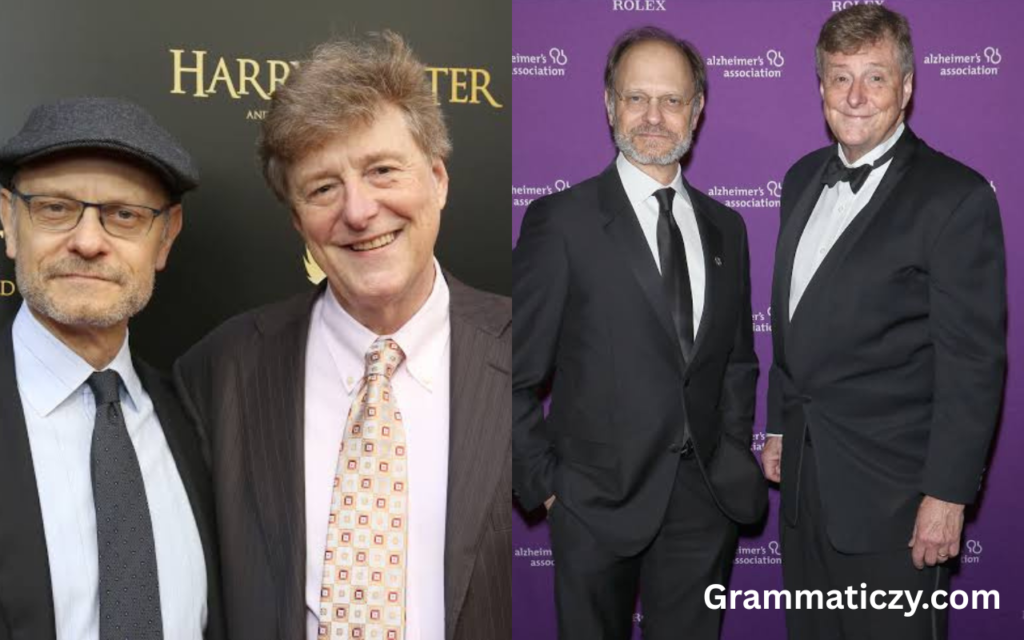
Brian Hargrove’s personal life has received considerable public interest because of his long-term relationship with actor David Hyde Pierce. Pierce is widely recognized for his television work, particularly as Niles Crane on Frasier, as well as for his extensive stage career. Public biographies identify Hargrove as Pierce’s husband and report that the couple married on October 24, 2008.
The relationship has lasted for decades, with public biographical sources reporting that the two have been together since the early 1980s. Their partnership also has a strong professional connection because both men have deep roots in theater and television. Their shared involvement in the arts has meant that Broadway and theatrical events have frequently been part of their public professional lives.
Their connection became especially visible through It Shoulda Been You, which Pierce directed for Broadway while Hargrove wrote the book and lyrics. That collaboration brought their personal and professional worlds together in a particularly meaningful way. At the same time, both have generally maintained a relatively private approach to their personal lives compared with the constant public exposure surrounding many entertainment-industry couples.
Brian Hargrove’s Net Worth and Income
Brian Hargrove’s exact financial position is not publicly documented through audited financial statements or official disclosures. Some celebrity-finance websites have circulated estimates placing his net worth at approximately $5 million, but such figures should be treated as unofficial. There is no reliable public financial document establishing that exact number, so it would be misleading to describe it as a confirmed net worth.
His career nevertheless provides several logical sources of professional income. Television writing and producing, acting, Broadway authorship, licensing and potential royalties can all contribute to an entertainment professional’s earnings. His involvement with multiple television productions and a Broadway musical means his career has included several different forms of compensation rather than depending on a single employer or role.
The most important point is that Hargrove’s financial story should be viewed through the larger context of his career. Decades of work across television and theater provide a substantial professional résumé, but private contracts and earnings are not publicly available. For that reason, any online net-worth number should be regarded as an estimate rather than a verified fact.
Social Media and Public Presence
Compared with contemporary celebrities who maintain highly active social-media profiles, Brian Hargrove has a relatively restrained online presence. CUNY TV lists the Twitter/X account @BrianHargrove1 among his online information. His public identity, however, has traditionally been more strongly connected to his professional credits than to social-media personality.
Hargrove’s official personal website identifies him simply as a writer, actor and producer. The site currently contains limited information and indicates that a fuller website is “opening soon.” This suggests that his online professional presence remains relatively understated compared with the extensive social-media branding common among contemporary entertainment personalities.
That relatively quiet online approach fits the character of his career. Hargrove has spent much of his professional life creating stories rather than turning himself into a constant media personality. His television shows, theater projects and Broadway work remain the central focus of his public identity, while social media serves more as an additional point of connection than as the primary platform through which audiences know him.
Recent Developments and Continuing Legacy
Although Hargrove is no longer associated with a regularly airing television series in the way he was during the height of his sitcom career, his theatrical work continues to have a life beyond its original Broadway production. It Shoulda Been You has continued appearing in regional theater programming, demonstrating that the musical can be revisited by new companies and audiences years after its Broadway run.
A 2026 production program for It Shoulda Been You continues to credit Hargrove as the author of the book and lyrics and recognizes the musical’s development from its 2009 National Alliance for Musical Theatre presentation through its later productions and Broadway staging.
This continued interest is important when considering Hargrove’s legacy. A Broadway production may close, but a musical can continue through regional productions, community theaters, educational organizations and revivals. In that sense, the life of It Shoulda Been You demonstrates how a writer’s work can continue reaching audiences even after the original production has ended.
What Makes Brian Hargrove’s Career Significant
Brian Hargrove’s career stands out because of its remarkable range. He did not remain confined to acting after completing his formal theater training. Instead, he used his experience as a performer as a foundation for writing, producing and creating television. His work on Titus placed him in the role of a television creator, while Wanda at Large and Nora expanded his production and development experience.
His Broadway career then brought him back to the theatrical world where his professional journey began. Writing the book and lyrics for It Shoulda Been You required him to use many of the same instincts he had developed during his years as an actor and television writer: understanding characters, building comic situations, developing emotional beats and creating dialogue that could work when spoken and sung.
Perhaps the strongest lesson from Hargrove’s professional journey is that creative careers do not have to follow a straight line. His story moves from North Carolina to university training, from Juilliard to professional theater, from theater to Hollywood television, and eventually back to Broadway. Each chapter added another skill to the next. His experience shows the value of remaining adaptable while holding onto a genuine commitment to storytelling.
Conclusion: The Legacy of Brian Hargrove
Brian Hargrove’s life and career offer a compelling example of how persistence and versatility can shape a lasting place in entertainment. He began as a professionally trained actor, developed his skills on major stages, moved into television writing and production, helped create successful comedy series, and ultimately became a Broadway bookwriter and lyricist. His achievements cannot be reduced to a single profession because his career has always existed between several creative disciplines.
His story is also a reminder that some of the most interesting entertainment careers belong to people working behind the scenes. Audiences may remember actors and performers most immediately, but writers, producers and creators determine the stories those performers bring to life. Hargrove has spent decades contributing to that creative process, often combining humor with character-driven storytelling and theatrical instincts.
As Brian Hargrove’s work continues to be revisited through television history and new productions of It Shoulda Been You, his career remains a testament to creative reinvention. His journey from Tarboro to Juilliard, from the stage to Hollywood and eventually to Broadway demonstrates that growth does not require abandoning where you started. Instead, every experience can become part of the next chapter. Hargrove’s story ultimately stands as a reminder that resilience, curiosity and a willingness to keep creating can build a meaningful legacy that extends far beyond any single performance or production.