
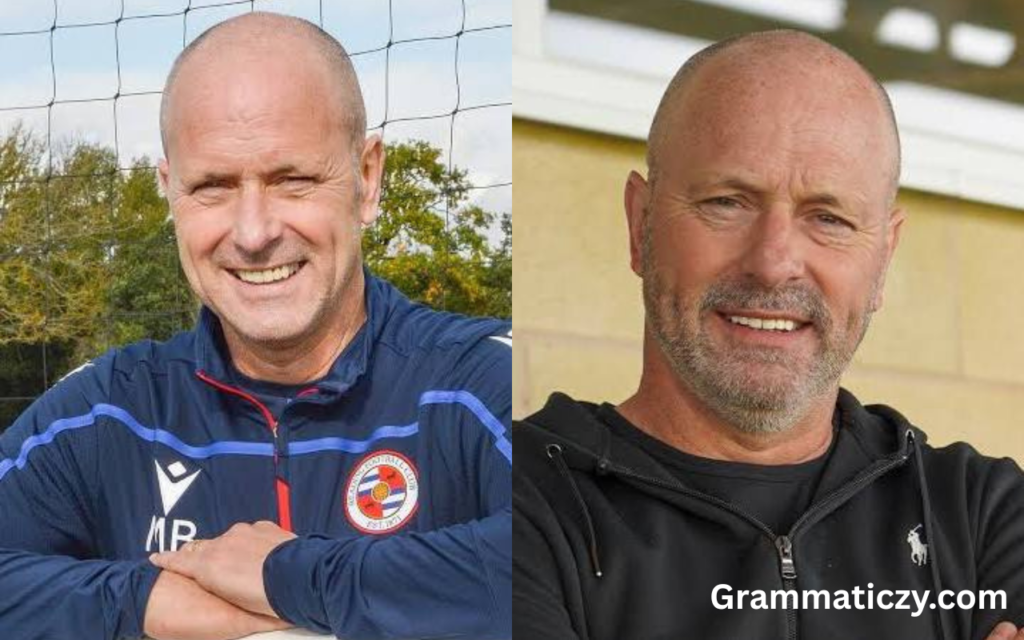
Mark Bowen has spent more than four decades inside professional football, but his story is far bigger than the statistics attached to his playing career. Born in Neath, Wales, in 1963, Bowen developed from a promising young Tottenham Hotspur trainee into a respected left-back, Wales international, coach, assistant manager, head coach and senior football executive. His career has taken him through some of the most important levels of English football, from Tottenham and Norwich City to Manchester City, Fulham, Stoke City and Reading, before another major chapter began with Forest Green Rovers in 2025.
What makes Mark Bowen particularly interesting is the way his career has evolved. He was never simply a former footballer who disappeared from the game after retirement. Instead, he gradually moved into coaching and football administration, working alongside Mark Hughes at several major clubs and eventually developing substantial experience in recruitment, squad building and sporting strategy. Forest Green Rovers appointed him director of football in June 2025, and the club continues to list him in that role in 2026.
Today, Bowen represents a generation of football professionals whose careers demonstrate how knowledge accumulated on the pitch can become valuable behind the scenes. His journey includes European success, international football, long-term coaching relationships, difficult managerial assignments and periods of considerable professional pressure. His story is therefore not simply about where he played, but about how he continually adapted as football changed around him.
Mark Bowen Facts at a Glance
| Fact | Details |
|---|---|
| Full name | Mark Rosslyn Bowen |
| Date of birth | December 7, 1963 |
| Age | 62 years old as of August 2026 |
| Birthplace | Neath, Wales |
| Nationality | Welsh |
| Profession | Football executive, coach and former professional footballer |
| Current role | Director of Football, Forest Green Rovers |
| Playing position | Left-back; also played in midfield |
| Height | 1.73 m |
| Wales appearances | 41 caps |
| Wales goals | 3 |
| Major clubs | Tottenham Hotspur, Norwich City, West Ham United, Shimizu S-Pulse, Charlton Athletic, Wigan Athletic, Reading |
| Major playing honour | UEFA Cup winner with Tottenham Hotspur |
| Managerial experience | Reading, AFC Wimbledon and caretaker role at QPR |
| Coaching qualification | UEFA Pro Licence |
| Net worth | No reliable publicly verified figure |
| Parents | Not reliably documented in major public sources |
| Siblings | Not reliably documented in major public sources |
| Marital status | Married |
| Children | Three |
| Instagram/X | No reliably verified official personal accounts identified |
| Professional profile associated with Mark Bowen | |
| Current club | Forest Green Rovers |
The basic statistics show the scale of Bowen’s football career, but they do not fully explain his importance. Transfermarkt lists him as a 62-year-old Welsh football professional born in Neath, with a UEFA Pro Licence and a career that has moved from left-back to sporting director. It also records his 41 Wales caps and three international goals.
Some personal details surrounding Bowen remain private. Reliable public sources do not provide enough information to confidently name his parents or establish a complete list of siblings, so those details should not be filled with speculation. Likewise, while he has a professional LinkedIn presence, there is not enough reliable evidence to confidently identify personal Instagram or X accounts as official.
That relative privacy is consistent with Bowen’s public image. His career has largely been defined by football rather than celebrity culture. Even during his playing days, and particularly since moving into coaching and football operations, his public identity has remained connected to teams, players, tactics, recruitment and football strategy.
Early Life and Welsh Background
Mark Rosslyn Bowen was born on December 7, 1963, in Neath, South Wales. Growing up in Wales during an era when football was deeply embedded in local communities, he developed the ambition to make the sport his profession. His route eventually took him into the Tottenham Hotspur youth system, where he began learning the technical and tactical demands of professional football.
Joining Tottenham as a young player was a major step in Bowen’s development. The club gave him an environment in which he could train alongside talented players and learn from established professionals. Tottenham’s own retrospective on Bowen recalls that he learned from several respected figures during his formative years and eventually made his first-team debut at the age of 19.
The early Tottenham experience also helped shape the characteristics that would later define his career: patience, tactical awareness and an understanding that professional football involves more than individual talent. Bowen later admitted that he may have been too eager to secure regular first-team football when he left Tottenham for Norwich, but that decision ultimately became one of the most important turning points of his career.
Tottenham Hotspur and the UEFA Cup Years
Bowen joined Tottenham’s senior setup during an exciting period for the club. He made his debut at 19 and was part of the Tottenham squad during the memorable 1983–84 campaign that culminated in UEFA Cup success. By the time he departed for Norwich City in 1987, he had made 20 first-team appearances and scored twice.
Being involved with Tottenham during that period gave Bowen something that cannot easily be replicated later in a career: early exposure to elite European football. He was surrounded by experienced players and saw first-hand the standards required to compete for major honours. Even though his individual role was not yet that of an established star, the experience became part of his football education.
Bowen later reflected that he might have benefited from staying longer at Tottenham. He explained that his hunger to play regular first-team football influenced his decision to leave, particularly after competition for places increased. Yet football careers are often shaped by such decisions, and the move to Norwich ultimately allowed him to establish himself as a major player in his own right.
Norwich City and Becoming a Fan Favourite
Norwich City became the defining club of Bowen’s playing career. He joined in 1987 and remained there until 1996, making more than 300 league appearances. Sporting Heroes records 315 league appearances plus five substitute appearances for Norwich, with 24 league goals, while other career records place his overall contribution to the club at an even higher number of appearances when cup competitions are included.
At Carrow Road, Bowen developed a reputation as a dependable and versatile left-sided player. He was primarily a left-back but could also contribute in midfield, giving managers additional tactical flexibility. His ability to combine defensive responsibility with attacking movement helped make him a valuable member of Norwich’s teams during a particularly competitive period in English football.
Norwich supporters came to regard Bowen as one of the club’s memorable players from the era. His longevity at the club was especially significant because it demonstrated consistency over time rather than relying on a short burst of form. The Norwich years transformed Bowen from a promising former Tottenham youngster into an established Premier League-era professional and Wales international.
West Ham, Japan and the Later Playing Career
After nine seasons at Norwich, Bowen moved to West Ham United in 1996. His stay in London was comparatively brief, but the transfer gave him another opportunity to compete at a high level. He then made an unusual move for a British footballer of his generation by travelling to Japan to play for Shimizu S-Pulse.
The Japanese chapter was short, but it reflected Bowen’s willingness to experience football in a different environment. Playing abroad exposed him to another football culture and another way of approaching the professional game. For a player who would later spend much of his career adapting to different coaching systems, that willingness to embrace change was valuable.
Bowen subsequently returned to England and played for Charlton Athletic, Wigan Athletic and Reading. His Charlton period included involvement in the club’s successful 1998 First Division play-off campaign, while his final playing years came at Reading before he retired around the turn of the millennium.
Wales International Career
Bowen’s club success translated into international recognition with Wales. He made his senior international debut against Canada on May 10, 1986, and his final Wales appearance came against the Republic of Ireland on February 11, 1997. Across that period, he collected 41 caps and scored three goals.
His international career lasted more than a decade, allowing him to represent Wales across multiple generations of players and managers. International football also exposed him to a different tactical environment from club football, requiring players to adapt quickly to teammates with whom they might spend only limited time together.
The 41-cap total is an important part of Bowen’s legacy because it reflects sustained international trust rather than a handful of appearances. His later return to the Welsh national setup as a coach made that connection even more meaningful, allowing him to contribute to Welsh football after his playing days had ended.
Transition From Player to Coach
Retirement did not mean the end of Bowen’s involvement in professional football. Instead, it opened a second career that eventually became almost as extensive as his playing career. He moved into coaching and began building the knowledge required to work with players from a different perspective. His experience as a defender gave him an understanding of positioning and tactical discipline, while his years in elite dressing rooms gave him insight into player management.
One of the most important professional relationships of his coaching career was with Mark Hughes. Bowen became Hughes’s long-serving assistant and worked alongside him at Blackburn Rovers, Manchester City, Fulham, Queens Park Rangers, Stoke City and Southampton. Tottenham Hotspur’s retrospective describes this period as a major part of Bowen’s post-playing career, while Transfermarkt records the various appointments across those clubs.
The assistant-manager role can sometimes be overlooked because the head coach receives most of the attention, but Bowen’s years in that position were crucial. He was exposed to recruitment discussions, training-ground planning, opposition analysis, tactical preparation and the day-to-day management of professional squads. Over time, those experiences helped prepare him for a later move into football-director work.
Working Alongside Mark Hughes
The partnership between Bowen and Hughes became one of the most consistent themes of his coaching career. At Blackburn, Manchester City, Fulham, QPR, Stoke and Southampton, Bowen repeatedly served as Hughes’s assistant. Transfermarkt’s career history shows the scale of the relationship, including 77 games at Manchester City, 43 at Fulham, 34 at QPR and 200 at Stoke in assistant-manager roles connected with Hughes.
Such a long coaching partnership would have required considerable trust. An assistant manager has to understand the head coach’s philosophy while also maintaining relationships with players and other staff. Bowen’s ability to remain part of Hughes’s staff across several appointments suggests that his contribution went beyond simply filling a conventional assistant role.
The experience also broadened his understanding of football operations. He encountered different clubs, budgets, player profiles, expectations and competitive pressures. That variety later became useful when he moved into technical-director and football-operations positions, where understanding the entire football structure is often more important than focusing on one tactical system.
Reading and the Move Into Football Management
Reading became another major chapter in Bowen’s career. Before becoming manager, he held technical and football-director responsibilities at the club, marking a clear shift toward the executive side of the game. Transfermarkt records his appointment as Reading technical director in March 2019 and then director of football in August of that year.
In October 2019, Bowen moved from the boardroom into the dugout and became Reading’s manager. His managerial tenure lasted until August 2020 and covered 40 matches according to Transfermarkt’s career record.
Managing a Championship club represented a different kind of pressure from being an assistant. Bowen now had ultimate responsibility for team selection, tactics, results and public communication. The spell was not the defining achievement of his career, but it added another important layer to his experience and reinforced his understanding of what managers need from the people working above and around them.
AFC Wimbledon and a Difficult Managerial Assignment
In March 2022, Bowen accepted another challenging management assignment when AFC Wimbledon appointed him as caretaker manager. He remained in charge until May, overseeing seven matches according to Transfermarkt. The club was in a difficult position, meaning Bowen entered an environment where immediate results mattered more than long-term experimentation.
The short spell produced four draws and three defeats, according to the recorded managerial statistics. It was not enough to transform the club’s situation, but the appointment demonstrated the trust placed in Bowen’s experience during a period of instability.
For Bowen, the AFC Wimbledon period was another reminder of the difference between being a long-term football strategist and being the person responsible for results every weekend. His career increasingly moved back toward the former, where his knowledge of recruitment, squad planning and football infrastructure could have a broader influence.
Reading Football Operations and a Difficult Period
Bowen returned to Reading in May 2022 as head of football operations. The position represented a natural fit with the direction his career had taken, combining his experience of coaching with his knowledge of recruitment, contracts, squad construction and football strategy. Transfermarkt records the appointment and his departure in September 2024.
His second major Reading spell coincided with a particularly turbulent period for the club. Reading faced financial difficulties, ownership problems and regulatory pressure, creating an environment in which football decisions were often made under circumstances beyond the control of the sporting department. Bowen was therefore operating in a setting where building a competitive squad involved significant structural challenges.
Reading’s official and media coverage during this period highlighted the club’s difficult circumstances, while Bowen remained involved in football operations. His role required balancing immediate sporting needs with longer-term squad planning, an especially demanding task when financial resources and institutional stability are uncertain.
The 2024 FA Betting Sanction
An important and unavoidable part of Mark Bowen’s recent biography is the disciplinary case involving football betting. In 2024, the Football Association announced that Bowen had admitted placing 95 bets on football matches unrelated to Reading between April 19, 2022, and January 14, 2024. An independent Regulatory Commission imposed a 12-week suspension, with eight weeks suspended until the end of the 2025–26 season, and a £7,000 fine.
The distinction that the bets were not on Reading matches is significant, but it does not remove the seriousness of the FA rules. Bowen was a senior football official at the time, and the governing body’s betting regulations apply to people working within the professional game. His case therefore became a significant professional setback after decades in football.
The episode was followed by a dispute with Reading over his departure. The Times reported in September 2024 that Bowen was taking legal action against Reading after the club terminated his contract, with the dispute linked to the betting sanction and the club’s position that he had breached contractual obligations. The legal dispute illustrates how complicated the final phase of his Reading career became.
Forest Green Rovers: A New Chapter
On June 10, 2025, Forest Green Rovers announced Mark Bowen as the club’s new director of football. The club described him as bringing more than 40 years of experience as a player, coach, manager and sporting director. It also noted that he had most recently spent around four years at Reading.
The appointment appears to have been driven partly by a shared vision. In his first interview with Forest Green, Bowen explained that he had conversations with chairman Dale Vince and executive vice-chairman Asif Rehmanwala about his career, the club’s direction and its ambitions. He said the opportunity appealed to him after researching the club and discussing where it could go.
The current Forest Green staff structure confirms Bowen as director of football in 2026. His position places him at the centre of the club’s sporting strategy, with responsibility extending beyond individual matches. The role allows him to use decades of experience across English football while helping shape recruitment and the wider football operation.
Recruitment Philosophy and Work at Forest Green
Bowen’s influence at Forest Green has already been visible through recruitment. In August 2025, the club announced the season-long loan signing of James Balagizi from Liverpool. Bowen described the midfielder as a highly talented player who could operate in several positions and praised his passing range and ability to make forward runs.
The Balagizi deal provides a useful example of what Bowen’s director-of-football role involves. Rather than simply finding experienced players, the club could attract a young prospect from a Premier League academy and provide him with an environment in which he could continue developing. That approach fits naturally with Bowen’s extensive experience of working with players at different stages of their careers.
Forest Green’s wider identity also creates an interesting backdrop. The club places sustainability at the centre of its operations and describes itself as the world’s greenest football club. Bowen therefore works within an organisation whose identity is broader than conventional football priorities, combining sporting ambitions with an established environmental philosophy.
Mark Bowen Family and Personal Life
Bowen has generally kept his private life away from the intense publicity that surrounds many former Premier League footballers. Public biographies identify him as married and a father of three, but detailed information about his day-to-day family life is limited. That privacy means that claims about his personal routines, beliefs or household should be treated carefully unless supported by reliable interviews or official sources.
The limited public information about his family is consistent with the way Bowen has approached his professional profile. He is much more visible through football institutions than through celebrity media. His career, appointments and football opinions are the areas in which he has traditionally spoken publicly.
This distinction is useful when considering his personality. Bowen’s long career suggests discipline, adaptability and a willingness to remain involved in football even when his responsibilities changed. Rather than building a personal brand around fame, he has largely built his reputation through professional relationships, football expertise and sustained service to clubs.
Mark Bowen Net Worth and Sources of Income
There is no reliable, independently verified public figure establishing Mark Bowen’s exact net worth. Online estimates may circulate, but they generally do not provide sufficient evidence about private assets, investments, property, pensions or long-term earnings. It would therefore be misleading to present a specific number as fact.
His professional income has been generated through several stages of football. During his playing career, he earned income from professional contracts with Tottenham, Norwich, West Ham, Shimizu S-Pulse, Charlton, Wigan and Reading. His later earnings came from coaching, assistant-manager positions, managerial appointments and senior football-director roles.
The length of his career is important when considering his financial position. Bowen has been involved in professional football since the early 1980s, and he has held senior positions at Premier League and Championship clubs. However, without verified salary figures and information about his private assets, the most accurate conclusion is that Mark Bowen’s net worth is not publicly established.
Social Media and Public Presence
Unlike many modern football personalities, Bowen does not appear to maintain a large personal social-media brand. His professional presence is much more closely connected to football organisations and industry networking. A LinkedIn profile identifies him as director of football at Forest Green Rovers and records his previous football roles.
This relatively understated online presence makes sense given his current job. A director of football generally operates behind the scenes, dealing with recruitment, player development, squad planning and strategic decisions rather than constantly communicating directly with supporters through personal social accounts.
For current information about Bowen, Forest Green Rovers’ official website is therefore a more reliable source than unverified personal social-media pages. The club currently lists him among its football staff and publishes updates involving his recruitment work and role within the organisation.
Major Achievements and Career Legacy
Bowen’s playing achievements include being part of Tottenham’s UEFA Cup-winning team in 1984, establishing himself as a major Norwich City player, earning 41 Wales caps and contributing to Charlton Athletic’s successful 1998 play-off campaign. His career statistics show the remarkable longevity of his playing days, while his international record demonstrates that he was trusted consistently at national level.
His coaching legacy is arguably just as significant. Working alongside Mark Hughes at Blackburn, Manchester City, Fulham, QPR, Stoke and Southampton gave Bowen exposure to multiple Premier League and Championship environments. That experience helped him understand the modern football club from several perspectives rather than from a single position.
His most distinctive achievement, however, may be the sheer range of roles he has held. Bowen has been a youth player, professional footballer, international, assistant manager, caretaker manager, head coach, technical director, director of football and sporting director. Few careers demonstrate such a broad transition from the pitch to the executive side of football.
Mark Bowen’s Current Role and Future
As of August 2026, Mark Bowen remains director of football at Forest Green Rovers. The club’s current staff information confirms his position, while its first-team page lists him alongside the coaching and playing structure.
His immediate future is likely to centre on squad construction, recruitment and helping Forest Green develop a sustainable football operation. His work on signings such as James Balagizi demonstrates how the club can use his experience and contacts to identify players with development potential.
The larger question is what Bowen can build over the coming seasons. At 62, he brings a rare combination of first-hand playing experience, international football knowledge, Premier League coaching experience and senior football-operations expertise. If Forest Green can translate that knowledge into effective recruitment and a coherent sporting strategy, Bowen’s latest chapter could become another significant part of his long football journey.
Conclusion: The Enduring Mark Bowen Story
Mark Bowen’s story is ultimately a story of reinvention. He began as a young Welsh footballer at Tottenham, became an established Norwich City defender and Wales international, experienced football in Japan, and eventually moved from playing into coaching and management. His career then evolved further into football operations, where he could influence clubs through recruitment, strategy and squad development rather than simply through performances on the pitch.
His journey has not been completely straightforward. There have been managerial challenges, difficult club environments and the serious FA disciplinary matter of 2024. Yet those setbacks are part of the complete story rather than something that should be hidden. They show that even a professional with decades of experience can face difficult consequences and have to find a way to move forward.
The latest chapter at Forest Green Rovers offers Bowen another opportunity to demonstrate the value of experience. His career illustrates that football careers do not have to end when a player stops playing. Knowledge can be transformed into coaching, coaching into leadership, and leadership into long-term football strategy.
As Mark Bowen continues to shape his career at Forest Green Rovers, his story remains a powerful reminder that longevity in sport is not simply about staying in the game. It is about learning how the game works, adapting when circumstances change and finding new ways to contribute. From the pitches of Tottenham and Norwich to the technical areas and executive offices of modern football, Bowen’s journey demonstrates how perseverance, experience and a willingness to evolve can create a legacy that extends far beyond the playing field.