
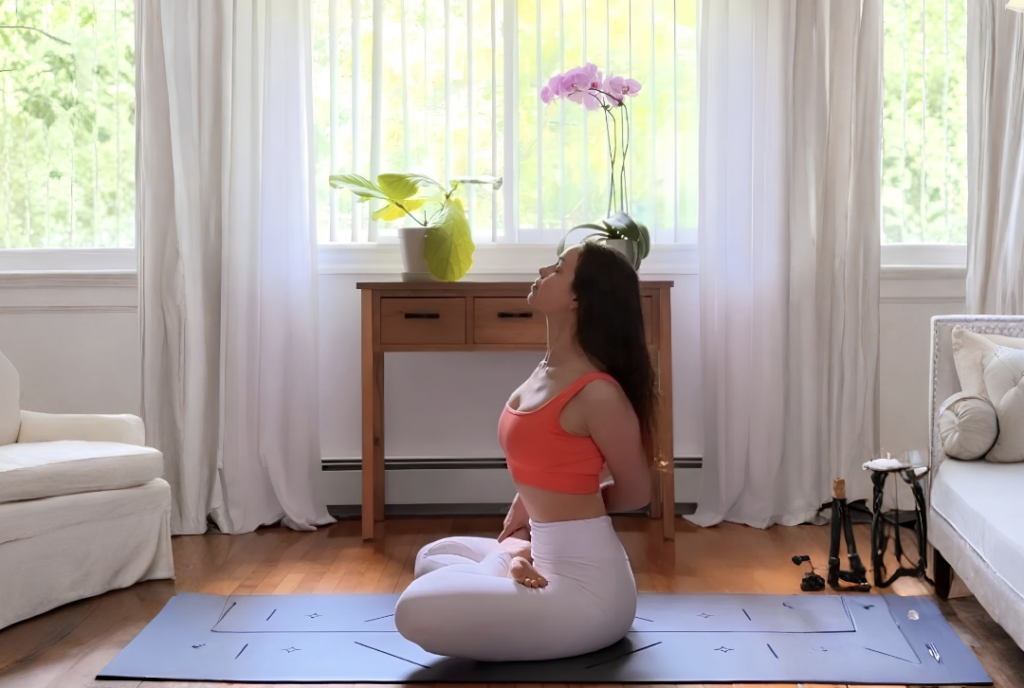
Sore knees in a low lunge. Hands creeping forward in downward dog. A mat that curls at the corners after two months. These problems rarely come from poor technique. They originate from beneath you. Thickness sits at the center of that decision, and a yoga mat 5mm thick answers it for most people who practice at home or carry a mat to class.
Here’s how to decide between two well-liked eco-friendly solutions, what that measurement affects, and which materials last.
What a Yoga Mat 5mm Actually Changes Under Your Body
Mat thickness usually runs from 1.5 mm up to 8 mm. Both ends carry a trade-off.
- Travel mats near 1.5 mm fold down small, but they punish knees and wrists.
- Standard 3 mm to 4 mm mats feel stable, yet give little padding on hardwood or tile.
- Chunky 8 mm mats feel plush, though they wobble badly in standing balances.
Five millimeters lands between those extremes. You get joint protection during kneeling work and a firm base in Tree Pose or Warrior III. Because it manages mixed-level students without complaints, studios frequently stock this depth.
Cushioning that preserves floor feel while safeguarding joints
Knees, elbows, and hip bones absorb the most pressure in floor sequences. Five millimeters of padding spreads that load. It still lets you sense the ground, which keeps your balance sharp through transitions. Restorative practitioners gain the same benefit during long holds.
Grip Matters More Than Depth Alone
Padding will not stop you sliding. Surface texture does that job. Look for a top layer that holds firm as sweat builds up rather than turning glossy. Natural rubber and cork both pass this test. Cheap foam usually fails it within weeks.
Items You Should and Should Not Pay for
Budget mats lean on PVC. It survives abuse, but it can off-gas plasticizers, and it never breaks down in a landfill. TPE treats the planet better, though it flattens fast under regular use.
Two materials dominate the sustainable shelf:
- Natural tree rubber with eco-polyurethane. Strong traction, lighter weight, springy rebound.
- Cork bonded to a rubber base. Naturally antimicrobial, quiet underfoot, grippier as it gets damp.
A non toxic cork yoga mat also suits anyone sensitive to synthetic smells, since cork needs no chemical coating to perform.
Selecting Your 5 mm Companion: Rubber or Cork
Gayo builds both styles at the same 72″ x 26″ x 5 mm footprint, so the real decision comes down to feel and sweat level.
Natural tree rubber and an EcoLock surface are combined in the Eco Balance Pro Yoga Mat. It weighs 8.4 lbs, includes built-in alignment lines, and sits at $79.90. Long-term practitioners in its 27 reviews rate the grip against brands charging two or three times more.
Based on 213 reviews, the Eco-Friendly Cork Yoga Mat weighs 9 pounds, costs $69.97, and connects natural rubber with sustainably sourced cork. Hot yoga regulars lean toward it because damp cork bites harder. Pick this non toxic cork yoga mat if you sweat heavily or dislike rubber odor.
A Quick Way to Decide:
- Vinyasa flow and travel: rubber
- Hot yoga and heavy sweating: cork
- Beginners refining posture: either one, thanks to the alignment lines
- Homes with cats: cork resists claw marks better than smooth PU
Care Habits That Keep a Yoga Mat 5mm Performing
Most mats die from neglect rather than mileage. Five habits stretch their life:
- Wipe the surface with a damp cloth and warm water after sweaty sessions, using mild soap if needed.
- Before you roll it, let it air-dry completely.
- Roll cork mats with the cork facing outward so the edges never lift.
- Store the roll out of direct sunlight, which dries rubber and cracks it.
- Skip alcohol sprays and harsh cleaners. They strip natural grip within months.
Follow those steps, and a well-built mat will retain its texture for years of daily use.
Frequently Asked Questions
Is a yoga mat 5mm too thick for balance poses?
No. Five millimeters stays firm enough for standing balances. Wobble usually starts past 6 mm, where soft foam compresses under the ball of your foot and steals your base.
Does cork really grip when you sweat?
Yes. Cork becomes tackier when it gets moisture, which is the opposite of most foam surfaces. That trait makes it a favorite for Bikram and heated vinyasa.
Can a 5 mm mat be used on carpet?
Yes. The rubber underside anchors well on low-pile carpet. On thick pile, place a firm board underneath for extra stability.
Are cork mats too heavy to carry?
They run roughly one pound heavier than rubber. Most owners notice the weight only when reading about it beforehand. A carry strap solves the problem.
Do new mats smell?
Natural rubber carries a faint earthy scent for the first week or so. Unroll it in a ventilated room, and the smell fades. Cork stays close to odorless from day one.
Conclusion:
While thickness may not fix everything, using the incorrect mat will seriously hinder your practice. Make sure your material fits your perspiration, your thickness fits your body, and you take good care of it. If you do, the mat won’t even register anymore.