
Have you ever seen the term PTSO mentioned in a school newsletter or on a campus website and wondered what it means? Understanding the PTSO meaning can help parents, teachers, and students recognize the important role these organizations play in building stronger educational communities.
A PTSO is more than just a group that organizes fundraisers or school events. It serves as a bridge between families, educators, and students, encouraging collaboration that helps create a better learning environment.
What Does PTSO Mean?
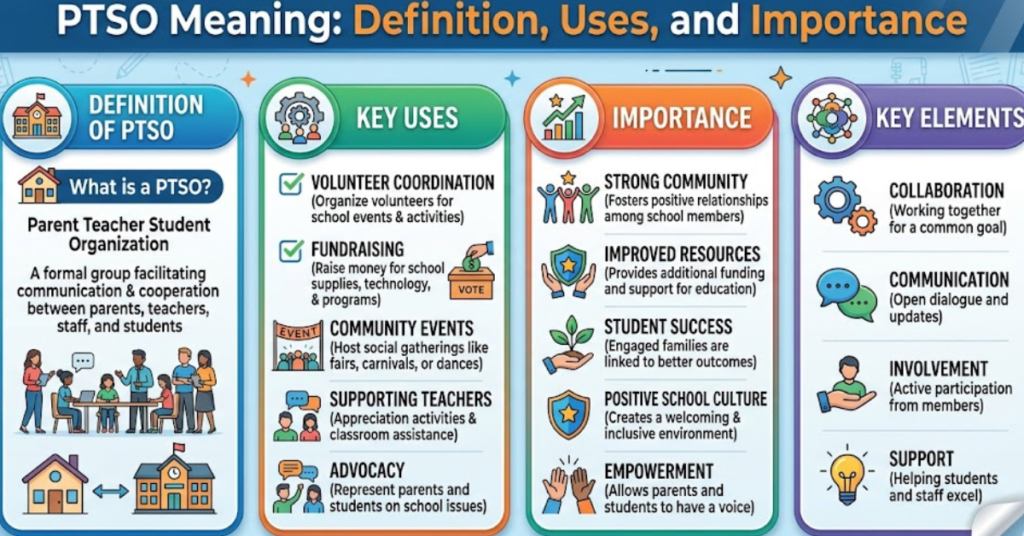
PTSO stands for Parent-Teacher-Student Organization. It is a school-based group made up of parents, teachers, school staff, and often students who work together to support educational programs, school activities, and community initiatives.
The primary purpose of a PTSO is to improve the school experience by promoting communication, teamwork, and involvement among everyone connected to the school.
The Purpose of a PTSO
The main goals of a Parent-Teacher-Student Organization include:
- Supporting students through educational programs
- Organizing fundraising events
- Improving communication between families and schools
- Recognizing teachers and school staff
- Planning social activities and community events
- Providing resources for classrooms and extracurricular activities
By bringing parents, teachers, and students together, a PTSO helps create a more connected and supportive school environment.
How Does a PTSO Work?
A PTSO usually operates through a group of elected volunteers, including positions such as:
- President: Leads meetings and oversees activities
- Vice President: Assists the president and manages projects
- Secretary: Maintains records and meeting notes
- Treasurer: Handles financial matters and budgets
Regular meetings are held to discuss school needs, upcoming events, fundraising ideas, and ways to support students.
PTSO vs PTO vs PTA: What Is the Difference?
Many people confuse PTSO with similar organizations. Although their goals are often alike, there are important differences.
PTSO (Parent-Teacher-Student Organization)
- Includes parents, teachers, and students
- Operates independently at the local school level
- Creates its own rules and programs
PTO (Parent-Teacher Organization)
- Includes parents and teachers
- Usually independent from a national organization
- Focuses on school support and fundraising
PTA (Parent-Teacher Association)
- A nationwide organization with local chapters
- Requires membership and follows national guidelines
- Advocates for broader educational issues
The biggest distinction in the PTSO meaning is the direct inclusion of students as active participants in the organization.
Why Is a PTSO Important?
A successful PTSO benefits the entire school community. Research has consistently shown that family involvement in education is linked with improved student engagement, stronger academic performance, and better communication between schools and homes.
Some key benefits include:
For Students
- More opportunities for activities and programs
- A stronger sense of school community
- Access to additional resources and support
For Parents
- Greater awareness of school events and decisions
- A chance to contribute ideas and volunteer
- Stronger relationships with teachers and administrators
For Teachers and Schools
- Extra support for classroom needs
- Increased community involvement
- Assistance with events and special projects
Common Activities Organized by a PTSO
A Parent-Teacher-Student Organization may organize many different activities throughout the school year, including:
- Fundraising campaigns
- School fairs and festivals
- Teacher appreciation events
- Student recognition programs
- Book drives and charity projects
- Family nights and community gatherings
These activities help raise funds while strengthening the relationship between students, families, and educators.
How to Join or Start a PTSO
Getting involved in a PTSO is usually simple. Parents, teachers, and students can contact their school administration to ask about membership opportunities or upcoming meetings.
If a school does not already have a PTSO, interested community members can:
- Gather a group of volunteers
- Create a mission and organizational structure
- Develop bylaws or operating guidelines
- Elect leadership positions
- Plan activities that support the school’s needs
FAQs
What is the full form of PTSO?
The full form of PTSO is Parent-Teacher-Student Organization. It is a group that brings together parents, teachers, and students to support school improvement and student success.
What does PTSO do in a school?
A PTSO organizes events, raises funds, supports teachers, promotes parent involvement, and helps improve the overall school experience.
Is a PTSO the same as a PTA?
No. A PTSO is typically an independent school organization, while a PTA is connected to a national association with established policies and membership structures.
Can students join a PTSO?
Yes. One of the defining features of a PTSO is that students can participate and have a voice in planning activities and supporting their school community.
Do all schools have a PTSO?
No. Some schools have a PTSO, while others may have a PTO, PTA, or another type of parent and community involvement group.
Conclusion
Understanding the PTSO meaning helps parents, teachers, and students appreciate the value of working together to create a positive educational environment. A Parent-Teacher-Student Organization plays an important role in supporting schools through volunteer efforts, fundraising, communication, and community-building activities.
Whether you choose to join an existing PTSO or help establish one at your school, your involvement can make a meaningful difference in students’ educational experiences. For more insights on school organizations and parental involvement, explore related educational resources and guides.