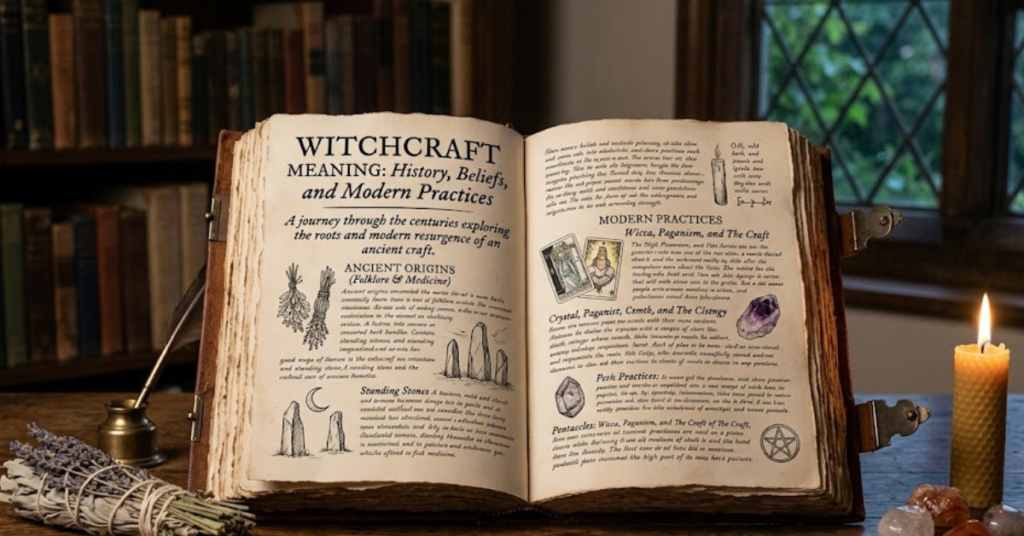
For centuries, witchcraft meaning has fascinated people across cultures, inspiring myths, fears, spiritual traditions, and modern movements. Some view witchcraft as a practice of magic and ritual, while others see it as a spiritual path connected to nature, personal growth, and ancient wisdom.
The meaning of witchcraft has changed significantly over time. From historical accusations of sorcery to contemporary practices like Wicca and modern pagan traditions, witchcraft represents a complex topic shaped by culture, religion, and personal belief. This article explores what witchcraft means, its origins, types, beliefs, and its role in today’s world.
What Is the Meaning of Witchcraft?
At its core, witchcraft refers to the practice of using rituals, spells, symbolic actions, or spiritual techniques believed to influence events, energies, or the natural world. The exact witchcraft meaning varies depending on historical period, culture, and individual beliefs.
Traditionally, witchcraft was often associated with:
- Magic and spellcasting
- Communication with spirits or supernatural forces
- Herbal knowledge and healing practices
- Divination methods, such as tarot or astrology
- Rituals intended for protection, prosperity, or personal goals
Today, many practitioners describe witchcraft as a personal spiritual practice focused on intention, self-reflection, nature, and symbolism rather than supernatural control.
The History and Origins of Witchcraft
Ancient Roots of Witchcraft
The history of witchcraft stretches back thousands of years. Many ancient societies had people such as shamans, healers, or spiritual leaders who performed rituals, used medicinal plants, and acted as intermediaries between the human and spiritual worlds.
Examples can be found in:
- Ancient Egyptian magical traditions
- Greek and Roman practices involving charms and rituals
- Indigenous spiritual traditions around the world
- European folk magic and healing customs
These practices varied greatly and should not all be considered the same form of witchcraft, but they contributed to broader ideas about magic and spirituality.
Witchcraft in the Middle Ages and Witch Hunts
During the late medieval and early modern periods, particularly in Europe and colonial America, fears about witchcraft led to widespread witch trials. Thousands of people were accused of practicing harmful magic and faced punishment or execution.
The famous Salem Witch Trials of 1692 in Massachusetts remain one of the most well-known examples of this period. Historians now understand many of these accusations as being influenced by social tensions, religious conflicts, fear, and misinformation.
Modern Witchcraft and Contemporary Beliefs
Modern witchcraft is diverse and includes many different paths and practices. It is important to understand that not all witches share the same beliefs, and many do not identify with the negative stereotypes often portrayed in popular culture.
Some modern forms include:
Wicca
Wicca is a modern pagan religion established in the mid-20th century that incorporates ritual practices, seasonal celebrations, and a strong connection with nature.
Folk Witchcraft
Folk witchcraft draws from local traditions, ancestral customs, herbal remedies, and cultural practices passed down through generations.
Eclectic Witchcraft
Eclectic witches combine elements from different spiritual systems, creating personal practices based on their own values and experiences.
Common Practices Associated With Witchcraft
Although practices vary widely, some common elements include:
1. Spellwork and Rituals
Spells often involve symbolic actions, words, or objects meant to represent a person’s intentions or desires.
2. Herbal Traditions
Many witches study herbs, plants, and their historical uses in healing, cooking, or rituals.
3. Divination
Divination practices such as tarot cards, rune reading, or astrology are used by some people for self-reflection, guidance, or spiritual exploration.
4. Nature-Based Spirituality
Many forms of modern witchcraft emphasize respect for natural cycles, the seasons, and the environment.
Witchcraft Meaning Across Different Cultures
The concept of witchcraft differs around the world. In some cultures, it may be viewed as a harmful form of supernatural activity, while in others it can refer to respected traditional spiritual practices.
Different communities have their own beliefs, rituals, and interpretations. Because of this diversity, there is no single universal definition of witchcraft.
Common Myths and Misconceptions About Witchcraft
Witchcraft has long been surrounded by misunderstandings. Some common myths include:
- Myth: All witches worship evil forces.
Fact: Many modern witches follow nature-based spiritual paths, while others may be secular and non-religious. - Myth: Witchcraft is the same everywhere.
Fact: Practices and beliefs vary widely among cultures and individuals. - Myth: Every witch performs spells.
Fact: Some people who identify as witches focus more on meditation, nature, or spiritual traditions.
The Symbolism and Spiritual Meaning of Witchcraft
For many practitioners, witchcraft is less about fantasy and more about personal meaning. It can symbolize:
- A connection with nature
- Personal empowerment
- Self-discovery
- Mindfulness and ritual
- Cultural or ancestral traditions
The spiritual meaning depends entirely on the individual’s beliefs and cultural background.
FAQs About Witchcraft Meaning
What is the simple meaning of witchcraft?
The simple meaning of witchcraft is the practice of rituals, magic, or spiritual techniques that are believed to influence events or express personal spiritual beliefs.
Is witchcraft a religion?
Witchcraft itself is not always a religion. Some forms, such as Wicca, are religious, while others are spiritual practices or cultural traditions.
What do witches believe in?
There is no single set of beliefs shared by all witches. Some believe in gods or spirits, some focus on nature and energy, and others practice witchcraft as a symbolic or psychological practice.
Is witchcraft always associated with magic?
Historically, witchcraft has been connected with magic, but modern interpretations may focus on meditation, rituals, personal growth, and connection with nature.
What is the difference between witchcraft and Wicca?
Witchcraft refers to a broad range of magical or spiritual practices. Wicca is a specific modern pagan religion that often includes witchcraft as part of its practices.
Conclusion: The True Meaning of Witchcraft
Understanding the witchcraft meaning requires looking beyond myths and stereotypes. It is a broad and evolving concept that has been interpreted differently throughout history and across cultures. For some, witchcraft represents traditional magic and rituals; for others, it is a spiritual practice centered on nature, symbolism, and personal growth.
By exploring the history, beliefs, and modern perspectives on witchcraft, readers can develop a more informed understanding of this fascinating subject. If you are interested in spirituality, ancient traditions, or cultural history, continue exploring related topics to learn how human beliefs and practices have evolved over time.