
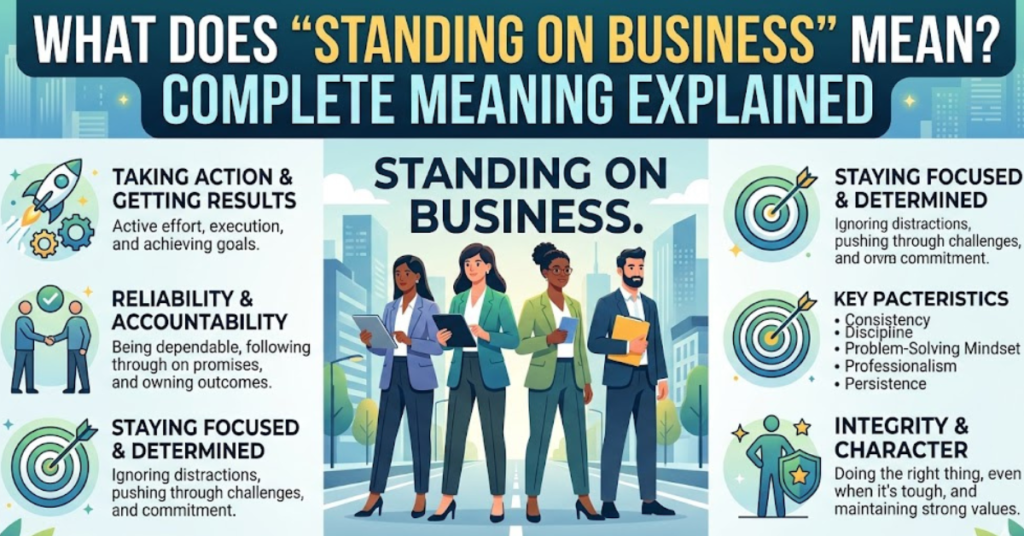
Have you ever heard someone say, “I’m standing on business” in a TikTok video, a rap song, or a casual conversation and wondered what they actually mean? You’re not alone. The phrase has exploded across social media and modern slang, leaving many people curious about its deeper message.
In simple terms, what does standing on business mean? It means staying committed to your words, actions, principles, or responsibilities. A person who is “standing on business” follows through, remains serious, and handles what needs to be done without making excuses.
In this guide, you’ll learn the meaning of the phrase, where it came from, how people use it today, examples in real life, and why it has become such a powerful expression in modern culture.
The Meaning of Standing on Business
At its core, “standing on business” is about accountability, confidence, and action.
When someone says they are standing on business, they are expressing that they are:
- Keeping their promises
- Taking responsibility
- Defending their beliefs or decisions
- Handling important matters seriously
- Backing up their words with actions
For example:
- “I said I was going to finish my project this week, and I’m standing on business.”
- “She doesn’t just talk about success—she stands on business every day.”
The phrase suggests that a person is not just making statements for attention; they are prepared to put in the effort and prove themselves.
Where Did the Phrase “Standing on Business” Come From?
The exact origin of the phrase is difficult to trace, but it has strong roots in African American Vernacular English (AAVE) and Southern hip-hop culture.
The expression became widely recognized through rap music and internet culture. Artists, influencers, and athletes began using the phrase to represent discipline, toughness, and staying true to one’s word.
A major boost in popularity came in 2023 when several viral moments on platforms like TikTok, X (formerly Twitter), Instagram, and YouTube spread the phrase to a global audience.
Today, it has become part of everyday online language among people of different backgrounds and age groups.
How “Standing on Business” Is Used in Everyday Conversation
The phrase can apply to many different situations, including work, relationships, personal goals, and conflicts.
In Professional Life
In a workplace setting, standing on business can mean being reliable and taking your responsibilities seriously.
Example:
“Our team promised the client we would deliver by Friday, so we’re standing on business and getting it done.”
It represents professionalism and commitment.
In Personal Goals
People often use the phrase when talking about self-improvement, discipline, and achieving ambitions.
Example:
“I told myself I would go to the gym every morning, and this year I’m standing on business.”
In this context, it means staying focused despite challenges.
In Arguments or Disagreements
Sometimes, the expression refers to standing firm in your position and not allowing others to dismiss your viewpoint.
Example:
“He explained his boundaries clearly and stood on business.”
However, it doesn’t necessarily mean being aggressive. It can simply mean being confident and consistent.
Standing on Business vs. Talking Big
One reason the phrase became popular is because it contrasts actions with empty words.
Someone who talks big may:
- Make promises they cannot keep
- Brag without results
- Avoid responsibility
Someone who stands on business will:
- Take action
- Stay consistent
- Accept consequences
- Prove themselves through effort
The message is simple: let your actions speak louder than your words.
Why Has “Standing on Business” Become So Popular?
Modern internet culture loves phrases that communicate powerful ideas in just a few words.
“Standing on business” resonates because it represents values many people admire:
Authenticity
People respect individuals who stay true to their commitments.
Discipline
Success in careers, sports, and personal development often requires consistency.
Confidence
The phrase reflects self-belief and the willingness to defend your choices.
Accountability
It emphasizes taking ownership rather than blaming circumstances or others.
Examples of Standing on Business in Real Life
Here are a few situations where the phrase fits naturally:
A Student
A student says they want better grades and begins studying every day rather than procrastinating.
They are standing on business.
An Entrepreneur
A business owner faces challenges but continues improving their company and honoring commitments.
They are standing on business.
An Athlete
An athlete promises to train harder and consistently shows up for practice.
They are standing on business.
A Friend
Someone keeps their promises and supports people they care about.
They are standing on business.
Is “Standing on Business” Always About Conflict?
No. Although some people use the phrase when defending themselves or confronting a problem, it is not always connected to arguments.
It can also describe positive qualities such as:
- Self-discipline
- Responsibility
- Loyalty
- Hard work
- Determination
For many people, it simply means taking life seriously and doing what they say they will do.
How to Stand on Business in Your Own Life
If you want to apply the mindset behind the phrase, focus on these habits:
1. Keep Your Word
Avoid making promises you cannot maintain. When you commit to something, follow through.
2. Be Consistent
Small daily actions often matter more than occasional big efforts.
3. Accept Responsibility
Own your successes and mistakes instead of avoiding accountability.
4. Set Clear Boundaries
Know your values and communicate them respectfully.
5. Let Results Speak
Actions usually create more trust and respect than words alone.
Key Takeaways
- “Standing on business” means being serious, responsible, and committed to your actions.
- The phrase comes from AAVE and gained mainstream popularity through hip-hop and social media.
- It represents accountability, confidence, and following through on promises.
- It can apply to work, relationships, goals, and personal values.
- The core idea is matching your words with meaningful actions.
Frequently Asked Questions
What does standing on business mean in slang?
In slang, standing on business means being serious about your words and actions. It describes someone who follows through, takes responsibility, and does not back down from their commitments.
What does “I’m standing on business” mean?
When a person says “I’m standing on business,” they mean they are committed to their decisions, goals, or responsibilities and are ready to prove it through actions.
Is standing on business a positive phrase?
Yes, in most situations it has a positive meaning. It is associated with confidence, discipline, accountability, and staying true to your commitments.
Where did standing on business become popular?
The phrase gained mainstream popularity through AAVE, Southern rap culture, and social media platforms like TikTok, Instagram, and X, where it became a viral expression.
Does standing on business mean being aggressive?
No. While it can be used during disagreements, it generally means being firm, responsible, and confident rather than being hostile.
Can you use standing on business at work?
Yes. In professional settings, it can describe someone who handles responsibilities, keeps promises, and takes their role seriously.
Conclusion
Understanding what does standing on business mean goes beyond knowing a trendy slang phrase. It represents a mindset of responsibility, confidence, and following through on what you say.
Whether it applies to your career, relationships, personal growth, or everyday commitments, standing on business is ultimately about aligning your actions with your words. The next time you hear someone use the phrase, you’ll know they are talking about showing up, staying accountable, and getting things done.