
Tino Asprilla Biography: Early Life, Football Career, Family, Net Worth and Legacy
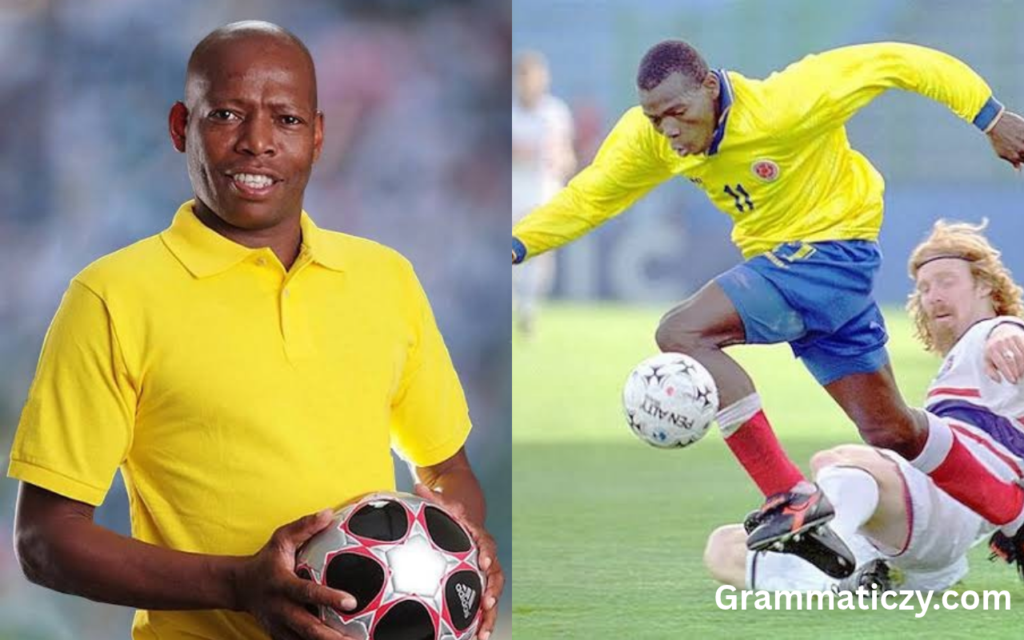
Few Colombian footballers have created a legacy as distinctive as Faustino Hernán Asprilla Hinestroza, better known simply as Tino Asprilla. Born in Tuluá, Valle del Cauca, Colombia, on November 10, 1969, Asprilla became one of the most recognizable attacking players of his generation. His career carried him from Colombian football to the elite stages of Italy and England, while his performances for the Colombian national team made him an important figure in one of the country’s most celebrated football eras.
What makes Tino Asprilla’s story particularly fascinating is that his fame was never based solely on statistics. He was a player of imagination, instinct and flair, capable of producing extraordinary moments that supporters remembered for decades. His career included major European trophies with Parma, international glory nights with Colombia and, most famously, a Champions League hat-trick against Barcelona for Newcastle United in 1997. Even years after retirement, that performance continues to define how Newcastle supporters remember him.
Tino Asprilla Quick Facts
| Category | Details |
|---|---|
| Full Name | Faustino Hernán Asprilla Hinestroza |
| Known As | Tino Asprilla / El Tino |
| Date of Birth | November 10, 1969 |
| Age | 56 years old in 2026 |
| Birthplace | Tuluá, Valle del Cauca, Colombia |
| Nationality | Colombian |
| Profession | Former professional footballer, commentator and media personality |
| Position | Forward / attacking player |
| Height | Around 1.76–1.78 m |
| Professional Debut | Cúcuta Deportivo |
| Major Clubs | Cúcuta Deportivo, Atlético Nacional, Parma, Newcastle United, Palmeiras, Fluminense, Atlante, Universidad de Chile, Estudiantes and Cortuluá |
| Colombia Caps | 57 |
| Colombia Goals | 20 |
| World Cups | 1994 and 1998 |
| Major European Achievement | UEFA Cup, European Cup Winners’ Cup and European Super Cup titles with Parma |
| Famous Match | Newcastle United 3–2 Barcelona, 1997 |
| Famous Achievement | Hat-trick against Barcelona in the UEFA Champions League |
| Former Wife | Catalina Cortés |
| Children | Santiago Asprilla Cortés and Dairon Asprilla |
| @eltinoasprilla | |
| X/Twitter | @TinoasprillaH |
| No widely documented official personal account | |
| Current Activities | Football commentary, media appearances, commercial activities and public appearances |
| Net Worth | No independently verified current figure is publicly established |
Early Life and Family Background
Tino Asprilla was born in Tuluá, a city in Colombia’s Valle del Cauca region where football played a major role in everyday life. His early environment was very different from the glamorous stadiums and European football grounds he would eventually experience. Before becoming a household name, he was simply a talented young Colombian who dreamed of making football his profession. The Banco de la República’s cultural encyclopedia identifies Tuluá as his birthplace and records his rise from youth football into the professional game.
His development was shaped by the football culture of Valle del Cauca and by the discipline required to pursue opportunities outside his immediate hometown. Asprilla trained with the Escuela Carlos Sarmiento Lora before making the transition into professional football. That early football education helped develop the characteristics that would later become trademarks of his game: quick movement, creativity, dribbling, improvisation and the confidence to challenge defenders.
The journey from promising youngster to professional footballer was not effortless. Like many South American players of his generation, Asprilla had to take opportunities when they appeared and prove himself repeatedly. His breakthrough eventually came with Cúcuta Deportivo, where his professional career began in the late 1980s. From there, his performances attracted the attention of Atlético Nacional, one of Colombia’s most important clubs, setting the stage for the international career that followed.
Education and Football Development
Asprilla’s public biography is overwhelmingly centered on football rather than university education. His formative years were spent balancing ordinary schooling with football training and competition. The football academy environment became the most important part of his professional education, teaching him how to compete, handle pressure and turn natural ability into a career.
The Escuela Carlos Sarmiento Lora was particularly important in his development. It was there that he received structured football coaching before entering professional football. Instead of following a conventional academic-to-professional career path, Asprilla’s life increasingly revolved around football, eventually allowing his sporting ability to become his profession.
His professional debut with Cúcuta Deportivo gave him the platform he needed. Career records list him with 36 league appearances and 17 goals during his Cúcuta spell, although statistics can vary depending on the competitions and records being counted. His performances were enough to attract Atlético Nacional, where his reputation expanded rapidly.
Atlético Nacional and the First Major Breakthrough
Joining Atlético Nacional was a decisive moment in Asprilla’s career. The Medellín club gave him a much larger platform and exposed him to higher levels of competition. Between 1989 and 1992, he became one of the club’s most exciting attacking players, recording 32 league goals in 75 appearances according to commonly cited career records.
His time at Nacional also brought his first major honors. The club won the Colombian championship in 1991, while Asprilla’s performances helped establish him as one of the country’s most promising young forwards. The Banco de la República biography identifies his Colombian league title as one of the important milestones in his early career.
International opportunities soon followed. Asprilla’s performances in Colombia and in international competitions attracted attention from European clubs, and Parma eventually acquired his services. That transfer represented a dramatic change in scale. He was moving from Colombian football into Serie A, at a time when Italian football was regarded as one of the most tactically demanding and competitive environments in the world.
Parma and European Football Stardom
Asprilla’s move to Parma in 1992 transformed him from a Colombian star into an internationally recognized footballer. Parma were building an ambitious side and would become one of the most successful clubs in European football during the 1990s. For Asprilla, the move represented an opportunity to test his unique attacking style against some of the best defenders and teams in Europe.
His first Parma period lasted from 1992 to 1996. During that spell, he scored 25 league goals in 84 appearances according to career records. More importantly, he became part of a team that collected significant European silverware. Parma won the European Cup Winners’ Cup in 1993, the European Super Cup and the UEFA Cup in 1995.
Asprilla’s contribution to Parma was about more than finishing chances. He offered unpredictability and movement, qualities that could disrupt organized defenses. His ability to carry the ball over long distances, change direction quickly and attack from unusual positions made him difficult to contain. His Parma years established him as one of the most exciting Colombian footballers playing in Europe.
The Famous Newcastle United Move
In 1996, Asprilla joined Newcastle United in England. His arrival came during an exciting period in Newcastle’s history, when the club was attracting major attention under Kevin Keegan and competing near the top of the Premier League. His transfer fee was reported at around £6.7 million, a significant amount at the time.
His Premier League debut immediately demonstrated his creative ability. Introduced against Middlesbrough, Asprilla contributed an assist as Newcastle turned a difficult match around. His personality also quickly became part of the Newcastle story. He was different from the conventional image of a highly controlled professional athlete, and his individuality made him particularly memorable to supporters.
Asprilla’s time at Newcastle would ultimately be remembered less for his league statistics than for his performances in European competition. His ability to rise to major occasions became one of the defining themes of his career, and nowhere was that clearer than in the extraordinary Champions League encounter against Barcelona in September 1997.
The Barcelona Hat-Trick That Made History
On September 17, 1997, Newcastle United faced Barcelona at St James’ Park in the UEFA Champions League. Barcelona arrived with an imposing squad that included major stars such as Rivaldo, Luis Figo and Luis Enrique. Newcastle, meanwhile, had to cope without Alan Shearer, creating even more uncertainty around their attacking options.
Asprilla responded by producing arguably the most famous performance of his career. He scored all three goals as Newcastle defeated Barcelona 3–2. His first came from the penalty spot, while his second and third were headers. The third goal came early in the second half and gave Newcastle a 3–0 advantage before Barcelona fought back.
The performance became legendary because of the quality of the opponent and the atmosphere inside St James’ Park. Newcastle eventually held on to win 3–2, and Asprilla’s name became permanently associated with one of the club’s greatest European nights. Newcastle’s official retrospective describes September 17, 1997, as an unforgettable occasion, while UEFA continues to record his three-goal performance as the defining feature of that fixture.
Tino Asprilla and the Colombian National Team
Asprilla’s club career was only one part of his football identity. He was also an important member of Colombia’s celebrated generation of the 1990s. Playing alongside figures such as Carlos Valderrama and René Higuita, he represented a national team renowned for technical ability, creativity and an expressive attacking philosophy.
He earned 57 international caps and scored 20 goals for Colombia according to widely cited career records. He participated in the 1994 and 1998 FIFA World Cups, while also appearing in major continental competitions.
One of the greatest moments of his international career came during Colombia’s qualification campaign for the 1994 World Cup. Colombia defeated Argentina 5–0 in Buenos Aires, with Asprilla scoring a hat-trick. The match became one of the most famous victories in Colombian football history and helped establish Asprilla as one of the country’s most important attacking players. The Banco de la República biography specifically highlights the Argentina match as one of the peaks of his career.
Playing Style and Football Personality
Tino Asprilla was never simply a traditional penalty-box striker. His game was built around movement, imagination and improvisation. He could operate as a forward or attacking player, dropping into deeper areas before accelerating toward goal. His ability to dribble and change direction made him particularly dangerous against defenders who preferred predictable attacking patterns.
The Banco de la República describes his style through elements including feints, dribbling, long runs and finishing ability. His approach was strongly associated with the expressive football culture of Colombia’s Caribbean and Pacific-influenced traditions, where creativity and individual flair were valued alongside tactical discipline.
His personality also influenced how supporters remembered him. Newcastle teammates have described him as relaxed before matches and highly entertaining away from the pitch. Keith Gillespie, one of his Newcastle teammates, recalled their close friendship and said Asprilla was hugely popular within the dressing room. Newcastle’s official account also emphasizes the connection between the two players that developed during Asprilla’s time in England.
Later Career in Brazil, Mexico, Chile and Colombia
After Newcastle, Asprilla continued his career across several countries. He returned to Parma for another spell before moving to Brazilian football, where he played for Palmeiras and Fluminense. He subsequently spent time with Atlante in Mexico and Universidad de Chile, continuing a career that had already taken him through several major football cultures.
His later career demonstrated his willingness to keep competing in different environments. Although he was no longer at the same stage of his career as during his Parma and Newcastle years, he remained a recognizable attacking player with considerable experience.
He eventually returned to Atlético Nacional and later played for Cortuluá, the club associated with his hometown. He also had a short spell with Estudiantes in Argentina. Career records list his final professional years as 2003–04, bringing an end to a journey that had included Colombia, Italy, England, Brazil, Mexico, Chile and Argentina.
Family and Personal Life
Asprilla’s personal life has often attracted public attention alongside his football career. He was married to Catalina Cortés, and the couple had a son, Santiago Asprilla Cortés. Public biographies identify their marriage as beginning in 1992 and ending several years later.
His children have remained part of the public story surrounding him. The Banco de la República’s biography identifies Santiago Asprilla Cortés and Dairon Asprilla among his children. Santiago has pursued a different professional path, including medical education, while his father’s name remains closely connected to Colombian football.
Asprilla’s life outside football has frequently been portrayed as colorful and unconventional. He has never had the reserved public image associated with some former athletes. Instead, humor, outspoken interviews and memorable anecdotes have remained important parts of his public personality. That individuality has helped him remain culturally recognizable long after his playing career ended.
Tino Asprilla’s Net Worth and Sources of Income
Determining Tino Asprilla’s exact net worth is difficult because there is no reliable public financial statement establishing his current assets, liabilities and annual income. Internet websites sometimes publish specific net-worth figures, but without audited financial information or transparent documentation, such numbers should be regarded as estimates rather than established facts.
During his football career, Asprilla earned income through contracts with clubs in Colombia and Europe, with his Parma and Newcastle periods representing particularly important stages financially. His European career placed him among the more successful Colombian footballers of his generation.
After retirement, his income has not been limited to football. Asprilla has been associated with agriculture, media work, public appearances, commercial activities and football-related projects. His continued recognition as a former Newcastle and Colombia star also provides opportunities for appearances and partnerships.
Social Media Presence
Unlike many retired footballers from his generation, Asprilla has embraced social media as a way of remaining connected with supporters. His public online presence allows him to comment on football, share memories from his career and communicate with followers directly.
His Instagram presence is associated with @eltinoasprilla, while his X/Twitter presence has been identified as @TinoasprillaH. Because social-media accounts can change and impersonation accounts can exist, readers should verify the official status of any account before assuming that a profile belongs to him.
His social-media personality generally reflects the same characteristics that defined his public image as a footballer: humor, confidence, football nostalgia and a willingness to speak openly. This has helped him remain relevant to both older fans who watched him play and younger audiences discovering his career through historical football clips.
Tino Asprilla’s Life After Professional Football
Retirement did not completely separate Asprilla from football. He moved into media and commentary work, using his experience to discuss the sport from the perspective of someone who had played at elite clubs in multiple countries.
His experience gives him a particularly broad perspective. He understands Colombian football, Italian Serie A, English football, South American competitions and international tournaments from direct experience. That background has made his appearances as a football commentator and television personality an extension of his playing career rather than a complete departure from it.
He has also remained connected with Newcastle. In recent years, the club and its supporters have repeatedly revisited the 1997 Barcelona match, demonstrating how enduring his contribution remains. Newcastle’s official history continues to feature that Champions League victory prominently, while UEFA’s records preserve the hat-trick as a defining chapter in the fixture’s history.
Tino Asprilla’s Continuing Connection With Newcastle
The relationship between Asprilla and Newcastle has proved unusually durable. Although he played for the club for a relatively short period, the emotional impact of his Barcelona performance gave him a permanent place in Newcastle’s football history.
His friendship with former teammate Keith Gillespie has also survived the passing of time. Newcastle’s retrospective described how Asprilla traveled from Colombia to attend Gillespie’s surprise 50th birthday celebration, illustrating that the relationships developed during his Newcastle years extended well beyond football.
The affection works both ways. Newcastle supporters continue to remember Asprilla not simply as a former striker but as a character who brought unpredictability and entertainment to the club. His Barcelona performance remains the clearest example of how one player can create a football memory that lasts for generations.
Recent Recognition and Public Life
Asprilla’s continued relevance is especially clear whenever Newcastle and Barcelona meet again. UEFA’s 2026 Champions League material specifically referenced his 1997 hat-trick when documenting the history between the clubs. That kind of official recognition demonstrates how deeply the performance remains embedded in the competition’s history.
Modern football audiences can also discover his career through documentaries, historical features, social media clips and retrospective interviews. For younger supporters who never saw him play live, the Barcelona match provides a natural introduction to the player and the extraordinary attacking football he represented.
His continuing media presence also shows that retirement from professional football does not necessarily mean disappearance from the sport. Asprilla has transformed from player to commentator, public personality and football ambassador, allowing his experience to remain part of conversations about Colombian and international football.
Achievements and Career Legacy
Asprilla’s trophy cabinet contains several important honors. With Atlético Nacional, he won the Colombian league and the Copa Interamericana. With Parma, he was part of teams that won the European Cup Winners’ Cup, European Super Cup, UEFA Cup and Coppa Italia. His European success is one of the major reasons he remains regarded as an important Colombian football export.
His international achievements are remembered differently. Colombia did not win the 1994 World Cup, despite entering the tournament with considerable expectations, but Asprilla was an important part of the generation that helped establish Colombian football on the world stage.
Then there are the individual moments. The 5–0 victory over Argentina and his Champions League hat-trick against Barcelona are probably the two performances most closely associated with his international reputation. Both demonstrate the same characteristic: Asprilla had a rare ability to become extraordinarily influential when the occasion was at its biggest.
Conclusion
Tino Asprilla’s journey is one of the most colorful stories in Colombian football. From Tuluá to Atlético Nacional, from Parma to Newcastle, and from the Colombian national team to a post-playing career in media and public life, his path was filled with extraordinary opportunities, challenges and unforgettable moments.
His legacy is not simply measured by 57 international appearances, 20 Colombia goals or the trophies he won with Parma. It lives in the memories of supporters who watched him produce moments of individual brilliance. His three goals against Barcelona at St James’ Park remain particularly powerful because they transformed a great player into a permanent part of Newcastle United folklore.
Ultimately, Tino Asprilla’s story demonstrates the unusual power of personality in sport. He played football with imagination, lived much of his public life with individuality and continued reinventing himself after retirement. His journey from Colombian football fields to some of Europe’s greatest stadiums remains a reminder that extraordinary careers are often built through a combination of talent, opportunity, courage and the willingness to remain true to one’s own style.