
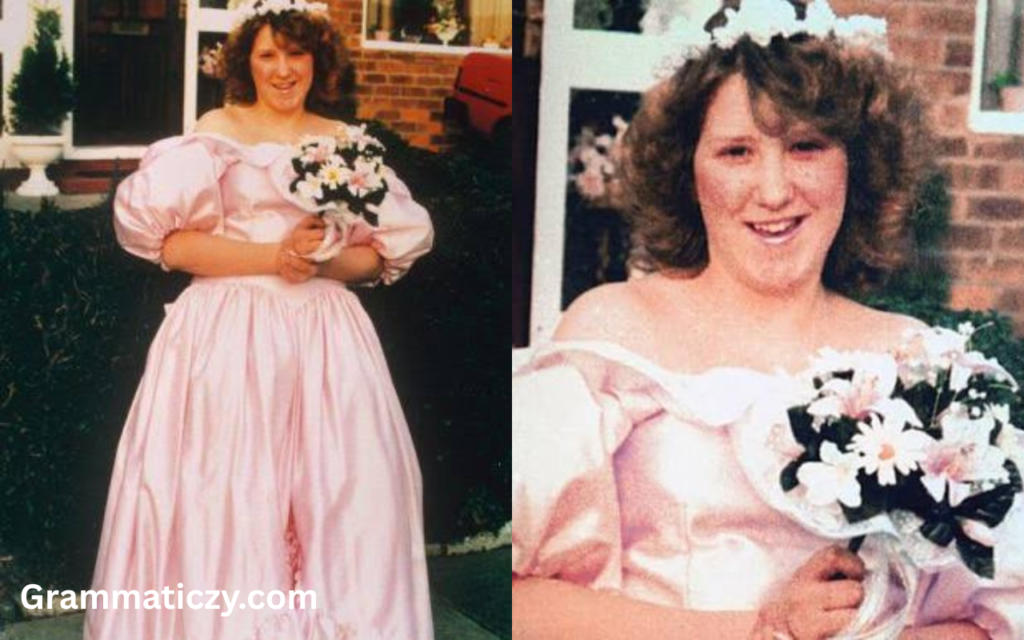
Some stories remain in the public consciousness because they reveal something deeply troubling about society, vulnerability, and the consequences of failing to recognize danger in time. The story of Suzanne Capper is one of those stories. A teenager from Moston, Manchester, Suzanne was only 16 when she became the victim of a horrific kidnapping and murder in December 1992. Her death shocked Britain, generated extensive national newspaper coverage, and eventually became one of the most notorious criminal cases associated with Manchester during the early 1990s.
Yet Suzanne Capper’s biography should not begin or end with the crime committed against her. Before her name appeared in newspapers and court records, she was a schoolgirl growing up in Manchester, a daughter, a sister, and a young person trying to find her place during a difficult period of adolescence. People who knew her described her as gentle, forgiving, and easily influenced, characteristics that later became important when investigators and journalists tried to understand how she had become increasingly connected with a dangerous group of people.
More than three decades later, Suzanne’s name continues to appear in true-crime documentaries, retrospective journalism, criminal justice discussions, and historical accounts of Manchester. Her case raises uncomfortable but important questions about vulnerable teenagers, family instability, school absence, coercion, peer influence, and the responsibility of adults to listen when a young person indicates that something is wrong. Remembering Suzanne therefore means looking beyond the shocking circumstances of her death and understanding the short life that came before it.
Suzanne Capper Quick Facts
| Fact | Details |
|---|---|
| Full name | Suzanne Jane Capper |
| Birth name | Suzanne Jane Jones |
| Born | 1976 |
| Birthplace | Manchester, England |
| Age at death | 16 |
| Date of death | 18 December 1992 |
| Place of death | Withington Hospital, Manchester |
| Profession | Schoolgirl |
| School | Moston Brook High School |
| Mother | Elizabeth Capper |
| Father | John, according to contemporary reporting |
| Sibling | Older sister, Michelle |
| Nationality | British |
| Known for | Being the victim of the 1992 Manchester murder case |
| Net worth | Not applicable; no reliable personal wealth or income record |
| Social media | No verified personal Instagram, X/Twitter, LinkedIn or other accounts |
| Burial | Blackley Cemetery, Moston |
| Cause of death | Complications resulting from extensive burns |
The facts surrounding Suzanne’s life are drawn from contemporary newspaper reporting, later investigations, court material, and historical accounts. Some online biographies contain inconsistent details, particularly regarding family names and personal background, so it is important to distinguish established information from later speculation. Contemporary reporting confirms that Suzanne was 16, lived in Moston, attended Moston Brook High School, and died at Withington Hospital after suffering catastrophic burns.
There are also several modern biography details that simply do not apply to Suzanne. She was not a celebrity, actress, entrepreneur, influencer, or professional public figure. Consequently, there is no credible celebrity-style net-worth figure, professional income history, or verified social-media presence associated with her. Any website claiming that Suzanne had an Instagram account, LinkedIn profile, career earnings, or a specific net worth should be treated with considerable caution.
Who Was Suzanne Capper?
Suzanne Jane Capper was born in 1976 in Manchester and grew up in Moston, an area in the north of the city. She attended Moston Brook High School, although her school attendance became increasingly irregular during the final part of her education. Contemporary newspaper reports described teachers and pupils as being deeply shocked by what happened to her, while later accounts explored how her increasingly unsettled circumstances had affected her relationship with school and home.
Those who knew Suzanne described her personality in notably human terms rather than simply as the victim of a famous crime. Her mother, Elizabeth, later remembered her as loving, gentle, and extremely forgiving. This description is significant because it provides a glimpse of Suzanne as an individual rather than as a name attached to a criminal investigation. She was a teenager who wanted friendship and acceptance, and the people around her became increasingly important during a period when her family circumstances were changing.
Suzanne’s life became increasingly complicated during the early 1990s. After changes within her family, she spent time away from home and increasingly around Jean Powell’s household on Langworthy Road. Powell was not initially a stranger to Suzanne; accounts state that she had babysat her from childhood. That existing familiarity helps explain why Suzanne could regard the house and the people connected to it as part of her social world even as the circumstances around her became progressively more dangerous.
Early Life, Family and School Years
Suzanne’s family background was marked by changes during her adolescence. Her mother, Elizabeth Capper, and her stepfather separated, and Suzanne and her older sister Michelle spent a period living with their stepfather. Around 1990, Suzanne also spent time in local-authority care. These circumstances did not determine what happened to her, but they formed part of the instability surrounding her teenage years and help explain why her home and social life became increasingly complicated.
Her older sister Michelle provides another important perspective on Suzanne’s teenage years. Michelle had briefly lived around Jean Powell’s household but eventually left because she was uncomfortable with the people Powell had begun associating with. Later accounts indicate that Suzanne continued returning to the house despite the increasingly troubling environment. This contrast between the sisters is important because it shows that the danger was not necessarily invisible to everyone around them, even though Suzanne herself remained drawn toward the people she considered friends.
School was another important part of Suzanne’s story. Moston Brook High School staff later recalled that her attendance had become erratic, particularly during her final years there. Contemporary reporting said that the headteacher and pupils were shocked by the attack and hoped she would recover. Her declining school attendance is particularly significant when viewed through a modern safeguarding lens because regular contact with teachers can provide one of the few opportunities for adults to notice changes in a young person’s circumstances.
The Social Environment That Shaped Her Teenage Years
Moston during the early 1990s was a working-class part of Manchester experiencing significant social and economic pressures. Later retrospective accounts have described the neighborhood as having problems involving unemployment, deprivation, drugs, and criminal activity. It would be unfair to suggest that these conditions somehow caused Suzanne’s murder, but they provide useful historical context for understanding the environment in which she was growing up.
One of the most important relationships in Suzanne’s life during this period was her connection with Jean Powell. Powell had known Suzanne since she was young and had previously babysat her. Suzanne increasingly spent time at Powell’s house on Langworthy Road, where she became familiar with a wider circle of people. According to later accounts, Suzanne continued visiting even after tensions and bullying within the group had begun to develop.
This part of Suzanne’s biography demonstrates how vulnerability can develop through relationships rather than through a single dramatic event. A teenager may continue returning to people who treat her badly because those people also provide companionship, belonging, or a sense of acceptance. Suzanne’s story has subsequently been discussed in this broader context, particularly because reports suggest that she had already experienced violence and had attempted to tell people about troubling incidents before the final attack.
Warning Signs Before the Murder
In the weeks before Suzanne’s death, there were reports of increasingly serious problems. Later accounts state that she had been assaulted and that she told people she had previously been restrained. One contemporary newspaper report described neighbors hearing such claims but said that people did not believe her because they regarded her as someone who exaggerated. Looking back, those details became one of the most painful elements of the entire case.
Suzanne’s mother also recalled seeing her daughter with an injury shortly before the murder. In a later retrospective interview, Elizabeth Dunbar said Suzanne had expressed a desire to move in with her mother, and they had discussed preparing a room for her. The account suggests that Suzanne was seeking a safer or more stable situation shortly before her life was violently taken from her.
These warning signs are important not because they prove that the tragedy could certainly have been prevented, but because they demonstrate how complicated safeguarding situations can become. A young person may simultaneously be vulnerable, frightened, attached to harmful people, and reluctant or unable to explain everything clearly. Suzanne’s story has consequently become a reminder of the importance of taking reports of abuse seriously, particularly when a child’s behavior and circumstances are visibly changing.
The Kidnapping of Suzanne Capper
The events that led directly to Suzanne’s death began in December 1992. According to the investigation and later court accounts, she was lured to the Langworthy Road house on 7 December. Once there, she was restrained and subjected to severe abuse. The reasons given by those involved for targeting her were contradictory and included accusations concerning relationships, sexually transmitted infections, and an item of clothing. None of those allegations justified the violence inflicted upon her.
Suzanne was held captive for approximately seven days. During that period, she was repeatedly assaulted and humiliated by members of the group. Contemporary reports initially emerged after she was found severely burned, while subsequent investigation and inquest evidence revealed the prolonged nature of the abuse. The details were so disturbing that the case generated intense national attention and became one of the most shocking murder investigations in Manchester during the early 1990s.
The investigation eventually established that the group decided Suzanne had to be removed from the house after they became concerned that her family might report her missing. In the early hours of 14 December 1992, she was taken away from Moston and transported toward the outskirts of Stockport. She was then abandoned after being deliberately set alight, but extraordinarily survived long enough to be found and taken for emergency medical treatment.
Suzanne’s Final Hours and Hospital Treatment
Suzanne was discovered in the Stockport area on the morning of 14 December 1992. Contemporary reporting stated that she was critically injured and was taken to Withington Hospital in Manchester. Initial newspaper reports estimated that she had suffered burns covering more than 60 percent of her body, while later medical evidence presented at the inquest placed the extent of her burns at approximately 75 to 80 percent.
Despite the severity of her condition, Suzanne survived for several days. Her survival was crucial to the police investigation because she was able to provide information about what had happened and identify people connected with the attack. The coroner later emphasized that although her injuries were ultimately fatal, she had survived long enough to provide information that helped lead to charges against those responsible.
Suzanne died at Withington Hospital on 18 December 1992. Medical evidence presented at the inquest established that she died from complications caused by her extensive burns. Her death transformed the case from an investigation into kidnapping and attempted murder into a murder prosecution, and within days six people were facing murder charges.
The Police Investigation
Greater Manchester Police launched a major investigation immediately after Suzanne was found. Officers focused on the house on Langworthy Road and arrested people connected with the location. Contemporary reporting described forensic examinations of the property and the detention of six suspects. The investigation was led by senior detectives who were confronted with evidence of a prolonged and exceptionally serious attack against a teenage girl.
Initially, those arrested denied responsibility. The investigation changed significantly when Anthony Dudson, who was 16 at the time, began providing information about what had happened. Police subsequently built a detailed account of Suzanne’s kidnapping, captivity, transportation, and fatal assault. The evidence showed that the crime involved several people rather than a single isolated offender.
On 17 December 1992, the six suspects were remanded in custody on charges connected with kidnapping and attempted murder. After Suzanne died the following day, murder charges were brought. Contemporary Independent reporting identified five adult defendants and noted that the sixth defendant was a 16-year-old boy whose identity could not legally be published at that stage.
The Murder Trial and Convictions
The eventual criminal proceedings established the responsibility of six people for Suzanne’s murder. Those convicted included Glyn Powell, Jean Powell, Bernadette McNeilly, Jeffrey Leigh, Clifford Pook, and Anthony Dudson. Their ages and roles differed, but the convictions demonstrated that Suzanne’s death had resulted from a collective criminal act rather than an isolated confrontation.
The case attracted considerable public attention because of the victim’s age and the prolonged nature of the crime. Suzanne had been 16, while some of those involved were adults and one was also a teenager. The circumstances subsequently contributed to wider discussions about youth offending, sentencing, rehabilitation, and how the justice system should respond when someone commits an exceptionally serious offence while still under 18.
Anthony Dudson’s later legal history became particularly significant. Because he had been 16 when Suzanne was murdered, questions arose concerning the minimum period he should serve before being considered for release. His case eventually reached the House of Lords and became part of the legal history surrounding sentencing for juvenile murderers. The case illustrates how the consequences of Suzanne’s murder extended beyond the original trial and into wider debates about criminal justice.
Suzanne Capper’s Mother and the Family’s Loss
For Suzanne’s mother, Elizabeth, the murder was not simply a criminal case that ended when convictions were secured. It became a lifelong loss. In later interviews, Elizabeth spoke about Suzanne’s personality, her relationship with the family, and the events leading up to her daughter’s death. Her recollections helped ensure that Suzanne remained remembered as a person rather than simply as a victim in a newspaper headline.
The family’s grief was complicated further by later parole and release proceedings. Over the years, Elizabeth continued to follow developments concerning the people convicted of Suzanne’s murder. Retrospective reporting described her as having fought repeatedly to keep those responsible in prison, demonstrating how a victim’s family can remain involved with the justice system for decades after the original crime.
Suzanne’s funeral took place in January 1993, and she was buried at Blackley Cemetery in Moston. The funeral became another painful chapter in the story of a young life that had ended only weeks before Christmas. For her family and friends, the burial was not the conclusion of the emotional impact of the crime; it marked the beginning of a lifetime of remembering a daughter and sister who had never reached adulthood.
What Happened to the Convicted Killers?
The people convicted of Suzanne’s murder eventually received different sentences and served different periods of imprisonment. Jeffrey Leigh was released early in 1998, while Clifford Pook was released on licence in 2001. Anthony Dudson was released in 2013 after his minimum term had previously been reduced, while Bernadette McNeilly was released on parole in 2015.
Jean Powell was released in 2017, and Glyn Powell was released on licence in May 2023. These later releases periodically returned Suzanne’s case to the British media, particularly because of the continuing concerns of her family. The passage of time did not eliminate the emotional consequences of the crime for those who had lost Suzanne.
The different release dates also demonstrate why notorious criminal cases can remain in the news decades after the original trial. Sentencing decisions, parole hearings, appeals, rehabilitation, and public reaction can keep a case alive long after the original investigation has concluded. In Suzanne’s case, every major development has also been inseparable from the continuing grief experienced by her family.
Media Coverage and True-Crime Interest
Suzanne Capper’s murder became national news almost immediately. Contemporary newspapers followed the investigation from the moment she was discovered in Stockport through the arrests, court proceedings, and inquest. The Independent reported on the case throughout December 1992 and into the following year, providing a valuable contemporary record of how the events unfolded in real time.
Decades later, journalists returned to the case to examine how Manchester had changed and how Suzanne’s family had continued living with the consequences. A major retrospective published around the twentieth anniversary revisited the Langworthy Road area, spoke about Elizabeth’s memories, and examined the continuing impact of the murder. Such retrospective reporting has helped keep Suzanne’s story accessible to new generations who were not alive when the crime occurred.
The case has also entered the true-crime documentary landscape. Its unusual circumstances, multiple offenders, teenage victim, and subsequent legal history have made it a recurring subject for crime-focused television and online historical investigations. However, responsible coverage should avoid turning Suzanne’s suffering into mere entertainment. The strongest accounts place the victim, her family, and the wider safeguarding lessons at the center of the story.
Suzanne Capper’s Legacy
Suzanne Capper did not leave behind a professional career, published books, business, music catalog, or social-media audience. Her legacy is instead connected to memory, criminal justice, journalism, and the continuing conversations generated by her case. She is remembered in Manchester and beyond because of the extraordinary circumstances surrounding her death, but her importance should not be reduced to the notoriety of the people who killed her.
One of the strongest lessons from Suzanne’s story concerns the importance of listening to vulnerable young people. Accounts from the period indicate that she had experienced earlier violence and had spoken about being restrained, yet some people around her did not take her claims seriously. While nobody can say with certainty what would have happened under different circumstances, those details demonstrate why reports of abuse or coercion deserve careful attention rather than dismissal.
Her story also highlights the importance of maintaining contact with children who become disengaged from school or family life. Suzanne’s attendance at Moston Brook High School had become erratic, and she was increasingly spending time away from stable support networks. Modern safeguarding practice places much greater emphasis on identifying such changes, although the lessons from Suzanne’s case remain painfully relevant because vulnerable young people can still fall through gaps in protection.
Suzanne Capper Net Worth, Career and Social Media
Searches for Suzanne Capper’s net worth sometimes produce the kind of information normally associated with celebrity biographies, but there is no reliable basis for assigning her a financial value. Suzanne was a 16-year-old schoolgirl when she died and did not have a documented professional career or substantial independent income. A specific net-worth figure would therefore be invented rather than factual.
The same principle applies to social media. Instagram, Facebook, X/Twitter, LinkedIn, TikTok, and similar platforms either did not exist or were not available during Suzanne’s lifetime. There are no verified personal profiles that can responsibly be attributed to her. Modern accounts, memorial pages, or true-crime profiles using her name should not be confused with Suzanne’s own social-media presence.
From an SEO perspective, phrases such as “Suzanne Capper net worth,” “Suzanne Capper Instagram,” and “Suzanne Capper social media” may appear frequently in online searches, but factual biography writing should not sacrifice accuracy to satisfy those search terms. In Suzanne’s case, the correct answer is that no verified net worth or personal social-media accounts are known. Her historical importance comes from her life and the criminal case surrounding her death, not from celebrity status.
Where Is Suzanne Capper’s Story Today?
More than thirty years after Suzanne’s death, her story remains part of the historical record of Manchester’s criminal justice history. All six people convicted in connection with her murder have now been released from prison, with Glyn Powell’s release on licence in 2023 marking the latest major development reported in relation to the offenders.
There is no “current career” or new personal chapter in Suzanne’s own life because her life ended in 1992. Contemporary updates about her therefore concern documentaries, retrospective journalism, legal history, parole developments, and discussions surrounding her legacy. This distinction matters because some modern biography websites can misleadingly present historical crime victims as if they were living public figures.
What has remained remarkably consistent is public interest in understanding who Suzanne was and what happened to her. Every new generation that encounters the case has the opportunity to look at it differently—not simply as a notorious murder, but as a story about a vulnerable teenager whose warning signs were not adequately understood and whose family endured consequences that extended far beyond the courtroom.
Why Suzanne Capper Is Still Remembered
Suzanne’s story continues to matter because it touches on issues that remain relevant today. Teenagers can become vulnerable through family disruption, social isolation, harmful relationships, peer pressure, substance misuse in their surroundings, and exposure to adults who exploit their trust. None of these factors inevitably leads to tragedy, but Suzanne’s case demonstrates how dangerous circumstances can become when several vulnerabilities overlap.
Her biography also challenges readers to think carefully about how crime victims are represented. It is easy for the shocking details of a notorious murder to dominate the narrative, particularly in the age of true-crime podcasts and documentaries. But Suzanne was more than the victim of a horrific crime. She was a young woman with relationships, family connections, hopes, fears, and a personality remembered fondly by people who knew her.
Perhaps the most enduring lesson is that remembering a victim requires more than remembering how they died. It requires remembering that they lived. Suzanne’s school years, family relationships, friendships, and desire for belonging all form part of the story. Keeping those elements visible helps prevent her memory from being completely overshadowed by the actions of the people who caused her death.
Conclusion: Remembering Suzanne Capper Beyond the Headlines
Suzanne Capper was only 16 when her life came to a tragic end, but the story of her short life has remained in public memory for more than three decades. Born and raised in Manchester, she experienced a difficult adolescence marked by changes in her family circumstances, disrupted education, and increasingly dangerous social relationships. Her final weeks culminated in a crime that horrified Britain and resulted in six convictions for murder.
For her family, however, Suzanne was never simply a notorious name from a true-crime case. She was a daughter and sister whose future was taken away. Her mother Elizabeth’s later efforts to remember Suzanne and follow developments concerning the people responsible demonstrate how the consequences of violent crime can continue across generations. The passage of time can change a neighborhood, alter the criminal justice landscape, and move public attention elsewhere, but it cannot restore the person who was lost.
Suzanne Capper’s legacy ultimately lies in the questions her story continues to raise. How can society better recognize vulnerable young people? What should adults do when a teenager reports abuse? How can schools, families, and communities respond when a child’s behavior suddenly changes? And how can true-crime storytelling preserve the dignity of victims rather than allowing their suffering to become entertainment? Suzanne’s story cannot change what happened in December 1992, but it can encourage greater awareness, compassion, and vigilance. Her life was tragically brief, yet remembering her with humanity ensures that she remains more than a headline—and that the lessons of her story are not forgotten.