
Have you ever received a smiling face emoji and wondered what the sender really meant? A simple emoji can carry different emotions depending on the context, relationship, and platform where it’s used.
Understanding the Smiling Face Emoji Meaning is more important than ever in today’s digital communication. Whether you’re texting friends, chatting on social media, or sending professional messages, emojis help convey emotions that words sometimes can’t. In this guide, you’ll learn what the smiling face emoji means, how it’s commonly used, its different interpretations, and when to use it effectively.
What Is the Smiling Face Emoji?
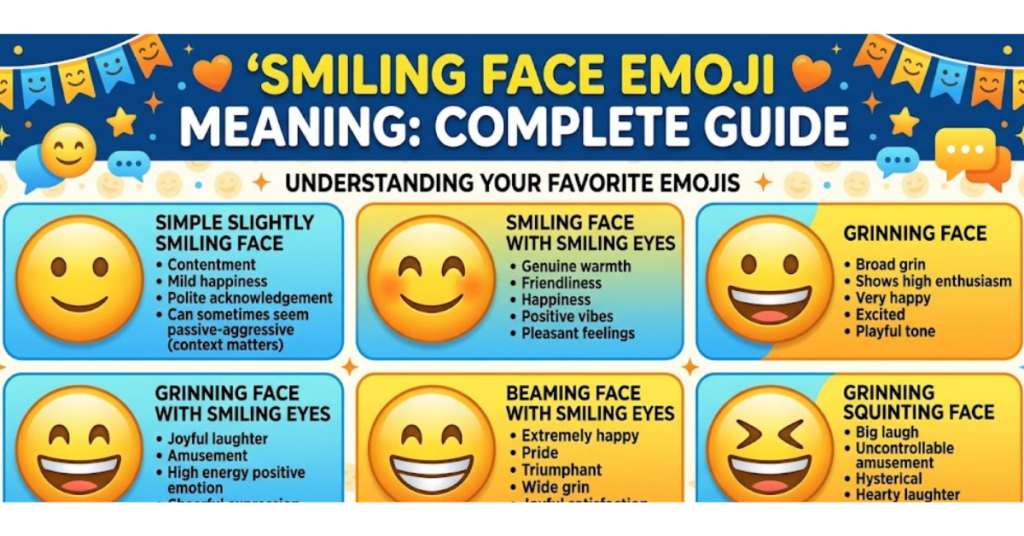
The smiling face emoji is one of the most recognized symbols in digital communication. It generally represents happiness, friendliness, positivity, and warmth.
The most common smiling face emojis include:
- Smiling Face with Smiling Eyes
- Slightly Smiling Face
- Grinning Face with Smiling Eyes
- Grinning Face with Big Eyes
- Beaming Face with Smiling Eyes
Although these emojis look similar, each carries subtle differences in tone and emotional expression.
Official Unicode Definition
The smiling face emoji was standardized by the Unicode Consortium, the organization responsible for emoji standards across devices and platforms.
Most smiling face emojis are designed to express:
- Happiness
- Kindness
- Appreciation
- Friendliness
- Satisfaction
However, real-world usage often adds layers of meaning beyond official definitions.
Smiling Face Emoji Meaning in Everyday Conversations
The primary Smiling Face Emoji Meaning revolves around positive emotions. It helps soften messages and make conversations feel more personal.
Expressing Happiness
One of the most common uses is showing joy or excitement.
Example:
“I got the job!”
Here, the emoji reinforces genuine happiness and celebration.
Showing Friendliness
People often add a smiling face emoji to create a warm and welcoming tone.
Example:
“Thanks for your help”
The emoji makes the message feel more sincere and appreciative.
Indicating Politeness
Sometimes the smiling face is used simply to sound polite.
Example:
“Please let me know when you’re available”
In this context, it adds friendliness without appearing overly emotional.
Different Smiling Face Emojis and Their Meanings
Not all smiling face emojis communicate the same feeling.
Smiling Face with Smiling Eyes
This emoji conveys genuine warmth, gratitude, and happiness.
Common uses:
- Thanking someone
- Showing appreciation
- Friendly conversations
- Positive feedback
Slightly Smiling Face
The slightly smiling face can be more nuanced.
Possible meanings:
- Polite friendliness
- Mild happiness
- Subtle sarcasm (depending on context)
- A neutral but pleasant tone
Many internet users interpret this emoji differently than older generations, making context especially important.
Grinning Face with Smiling Eyes
This emoji represents excitement and enthusiastic happiness.
Examples:
- Celebrating achievements
- Sharing good news
- Responding to funny messages
Beaming Face with Smiling Eyes
This emoji often indicates excitement, pride, or extreme happiness.
It’s commonly used when:
- Someone feels accomplished
- A joke lands well
- Positive emotions are strong
Hidden Meanings Behind the Smiling Face Emoji
Digital communication isn’t always straightforward.
Passive-Aggressive Interpretation
In some situations, a smiling emoji can be interpreted as passive-aggressive.
Example:
“Sure, do whatever you want”
Although the emoji appears friendly, the message itself may suggest frustration or annoyance.
Softening Criticism
People sometimes use a smile emoji to make criticism sound less harsh.
Example:
“Just a reminder to submit your report today”
The emoji helps maintain a friendly tone.
Ending Conversations Politely
A smiling emoji can signal that a conversation is ending on good terms.
Example:
“Talk later!”
This communicates friendliness while naturally closing the discussion.
Smiling Face Emoji Meaning on Social Media
Social media platforms have influenced how emojis are interpreted.
On Instagram, smiling face emojis are often used to:
- Engage with followers
- Respond positively to comments
- Show gratitude
Facebook users frequently use smiling emojis to express:
- Agreement
- Support
- Positive reactions
X (Formerly Twitter)
On X, smiling emojis can:
- Indicate humor
- Show friendliness
- Add emotional context to short posts
TikTok
TikTok users often combine smiling emojis with trends, jokes, and reactions. Context heavily influences interpretation.
Smiling Face Emoji Meaning in Text Messages
Text messaging lacks facial expressions and body language, making emojis especially valuable.
Between Friends
The emoji usually signals:
- Happiness
- Appreciation
- Casual friendliness
Between Family Members
Family conversations often use smiling emojis to express:
- Affection
- Encouragement
- Support
In Dating and Relationships
In romantic contexts, smiling face emojis may indicate:
- Interest
- Comfort
- Emotional warmth
However, they are generally less flirtatious than emojis like or.
Generational Differences in Emoji Usage
One fascinating aspect of emoji communication is how age groups interpret emojis differently.
Younger Users
Gen Z often analyzes emojis more deeply and may view some smiling emojis as:
- Awkward
- Sarcastic
- Passive-aggressive
Older Users
Millennials and older generations typically interpret smiling emojis more literally as signs of friendliness and positivity.
This difference can occasionally create misunderstandings.
Cultural Differences in Smiling Face Emoji Meaning
Emoji interpretation can vary across cultures.
Western Countries
The emoji usually represents:
- Happiness
- Kindness
- Positivity
Asian Cultures
In some Asian countries, smiling emojis may emphasize politeness, respect, and social harmony.
Cultural context can subtly influence how messages are perceived.
When Should You Use a Smiling Face Emoji?
Using emojis effectively improves communication.
Best Situations
Use a smiling face emoji when:
- Thanking someone
- Sharing good news
- Offering encouragement
- Ending conversations positively
- Building rapport
Situations to Avoid
Consider avoiding it when:
- Delivering serious news
- Discussing sensitive topics
- Addressing formal legal matters
- Communicating during emergencies
Professional judgment remains important.
Common Mistakes People Make
Assuming Everyone Interprets It the Same Way
Emoji meanings can vary by age, culture, and relationship.
Overusing Emojis
Too many smiling faces may make messages seem less authentic.
Ignoring Context
The surrounding text often determines the true meaning more than the emoji itself.
Practical Tips for Using Smiling Face Emojis
To communicate clearly:
- Match the emoji to the tone of your message.
- Consider your audience.
- Use emojis sparingly in professional settings.
- Pay attention to context.
- Avoid relying solely on emojis to express complex emotions.
These simple habits reduce misunderstandings.
Key Takeaways
- The Smiling Face Emoji Meaning generally represents happiness, friendliness, and positivity.
- Different smiling face emojis communicate slightly different emotions.
- Context plays a major role in interpretation.
- Generational and cultural differences can affect meaning.
- Smiling emojis help create warmth and emotional clarity in digital communication.
- Professional and personal conversations may require different emoji usage styles.
Frequently Asked Questions
What does the smiling face emoji mean in texting?
The smiling face emoji usually represents happiness, friendliness, gratitude, or a positive attitude. Its exact meaning depends on the context of the conversation.
Is the smiling face emoji flirtatious?
Sometimes. While it often signals friendliness, it can also express romantic interest when used consistently in personal conversations.
Why do some people think the smiling emoji is passive-aggressive?
Certain emojis, especially, may appear insincere when paired with negative or sarcastic statements. Context largely determines whether it’s perceived that way.
What’s the difference between and?
typically conveys warmth, sincerity, and genuine happiness, while can feel more neutral, polite, or subtly sarcastic depending on the situation.
Is the smiling face emoji professional?
Yes, in moderation. It can help create a friendly tone in workplace communication, but excessive emoji use may appear unprofessional.
Does the smiling face emoji mean the same thing everywhere?
Not always. Cultural norms, age groups, and social contexts can influence how people interpret smiling emojis.
Conclusion
The Smiling Face Emoji Meaning goes far beyond a simple expression of happiness. While it generally symbolizes positivity, friendliness, and warmth, its interpretation can change depending on context, culture, platform, and relationship dynamics.
Understanding these nuances helps you communicate more effectively and avoid misunderstandings in digital conversations. Whether you’re texting friends, interacting on social media, or sending professional messages, using smiling face emojis thoughtfully can make your communication feel more authentic, engaging, and emotionally clear. Keep these insights in mind the next time you tap that smiley face, and you’ll be better equipped to express exactly what you mean.