Samantha Brick Biography: Early Life, Career, Husband, Writing Journey and More
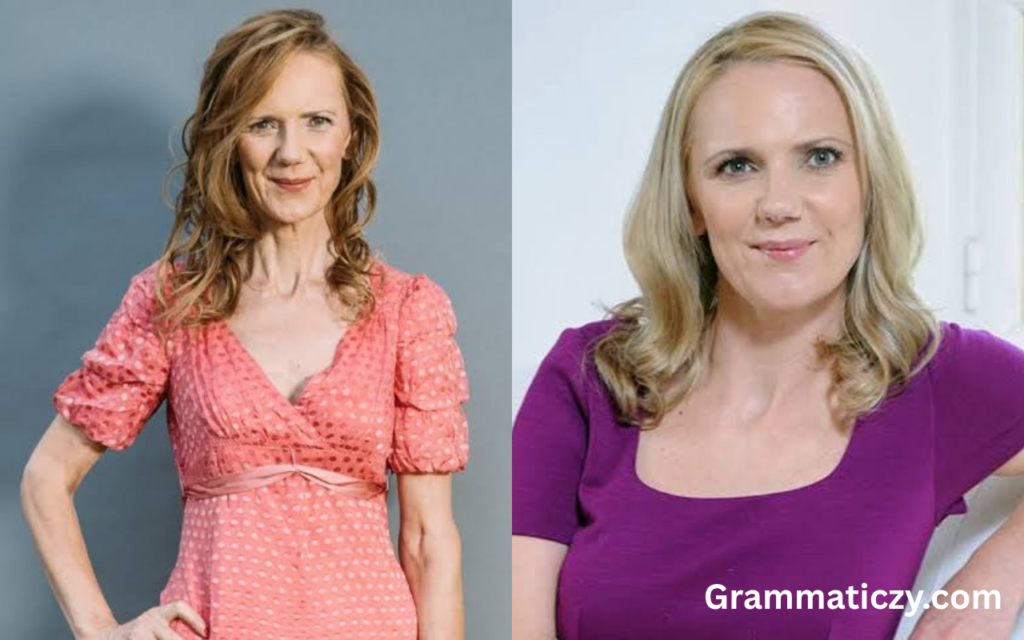
Samantha Brick’s story is far more complicated than the controversial newspaper headline that first made her a household name. Long before she became one of Britain’s most discussed media personalities, Brick had already built an impressive career behind the scenes in television, working across Britain and the United States as a producer and programming executive. Her professional journey took her from Birmingham to London, from British television to Los Angeles, and eventually to rural France, where she began a very different chapter of her life as a writer, wife and expatriate.
For millions of people, however, Samantha Brick became known because of one extraordinary moment in 2012. Her Daily Mail article about being disliked by other women because of her appearance exploded across the internet, generating enormous attention, criticism and debate. The article reportedly attracted around 1.5 million online views and thousands of comments, turning Brick from an established television professional into an international media phenomenon almost overnight.
Yet the viral controversy represented only one chapter of her life. Behind it was a woman who had experienced professional success, entrepreneurial ambition, financial disaster, depression, relocation, romance and reinvention. Her memoir, Head Over Heels in France: Falling in Love in the Lot, later offered readers a much broader picture of the events that shaped her. Brick’s biography is therefore not simply the story of a controversial journalist; it is a story about career ambition, personal setbacks, self-confidence and the determination to construct a new life after everything familiar has disappeared.
Samantha Brick’s Early Life and Family Background
Samantha Brick was born on February 10, 1971, in Kings Heath, Birmingham, England. She was the eldest of three daughters in a Catholic family, and both of her parents worked in mental-health nursing. Her upbringing in Birmingham gave her a distinctly Midlands background, something that remained noticeable even after she later spent significant periods in London, America and France. Her childhood environment was therefore quite different from the glamorous entertainment world she would eventually enter.
Her parents divorced when Brick was 16, marking an important change during her teenage years. Her father later remarried and had two more daughters. Brick has spoken positively about the confidence her father gave her, particularly regarding her appearance. That early encouragement became an interesting part of her later public identity because confidence, beauty and the way women perceive themselves would eventually become recurring subjects in her writing and media appearances.
Brick’s family background also helped shape her straightforward personality. Rather than growing up inside an entertainment-industry environment, she came from a family connected to ordinary working life and caring professions. Her later career consequently represented a significant transformation. She left Birmingham, pursued media studies and entered an industry that would eventually take her into television production, international programming and celebrity culture. That transition from Midlands upbringing to international media executive became one of the defining arcs of her professional life.
Education and Beginning of Her Media Career
After leaving Birmingham, Brick moved south and studied media. Her education gave her a foundation for entering television, but her earliest professional experiences were not glamorous celebrity assignments. She recalled working on The London Programme, where she went door-to-door on south London council estates while gathering material for current-affairs television. That experience gave her exposure to ordinary people and real-world stories at the beginning of her career.
Brick later explained that she enjoyed the current-affairs environment, but changing television trends encouraged her to move toward factual and makeover programming. The transition proved important because it introduced her to the more entertainment-oriented side of television production. Rather than remaining limited to one genre, she gradually developed experience across factual entertainment, reality television and popular programming.
Her early television career eventually included work connected with London Weekend Television and programs such as Ibiza Uncovered, Dinner Dates and Baby School. These opportunities helped establish Brick as a television producer rather than an on-screen personality. For much of her early career, she was the person developing, organizing and producing television rather than the person viewers recognized from the screen.
Building a Successful Television Career
Brick’s career expanded considerably as she moved into entertainment and factual programming for BSkyB. Her work included programs such as Temptation Island, Vegas Uncovered, The Villa and Single Girls. Working in this part of television required an understanding of audience behavior, production logistics and the increasingly popular reality-TV format. It was a period when British television was becoming more comfortable with unscripted entertainment, and Brick gained valuable experience within that changing industry.
Her career then progressed to September Films, where she became head of programming in January 2002. She subsequently moved to the company’s Los Angeles office, taking on the position of executive vice president of programming and development. The move represented a substantial professional achievement because it placed Brick within the international television business and gave her responsibility connected to programming and development in the United States.
Brick has described those years as professionally rewarding but personally demanding. The television lifestyle brought financial comfort and career status, yet it also required long hours and intense commitment. She later recalled missing weddings, family occasions and other personal events because her career dominated much of her twenties and thirties. In hindsight, those years helped her understand the difference between professional achievement and personal fulfillment.
Launching Sam Brick Entertainment
In October 2005, Brick took another major step by establishing her own independent production company, Sam Brick Entertainment. After spending years working within larger television organizations, creating her own company gave her greater independence and the opportunity to develop projects under her own name. It was a bold entrepreneurial decision that reflected the confidence she had developed through years in television production.
The company worked on television projects including Chubby Children for LivingTV. At one stage, the company was also associated with an exclusive arrangement involving Sarah, Duchess of York for a proposed reality television diet program. From the outside, these developments suggested that Brick’s independent production business might become a significant next step in her career.
Instead, the company collapsed in 2006, producing one of the most painful turning points in Brick’s life. Her own account of the period describes the consequences as devastating. She lost her home, car and savings, and the professional identity she had spent years building suddenly disappeared. The experience later became central to Head Over Heels in France, in which she wrote openly about financial collapse and rebuilding her life.
The Financial Collapse That Changed Her Life
The collapse of Brick’s company was not simply a business setback. According to accounts she later gave about the period, it left her homeless and without the financial security she had previously enjoyed. She has described becoming deeply depressed and struggling with basic daily routines. At one point, she said she could barely bring herself to wash her hair, illustrating just how profoundly the collapse affected her sense of identity.
What made the experience especially difficult was the contrast between her previous lifestyle and her sudden circumstances. Brick had once enjoyed the rewards associated with a successful television career, including property and expensive cars. Losing those things meant more than losing possessions; it forced her to reconsider how much of her identity had been connected to professional success and material security.
The crisis eventually became the foundation for her reinvention. Rather than returning immediately to the same television career, Brick began exploring a new life outside Britain. A holiday in France introduced her to Pascal, a French carpenter who would become her husband. What initially looked like an escape from a devastating period eventually developed into a permanent relocation and an entirely new personal and professional chapter.
Samantha Brick and Her Life in France
Brick moved to France in 2007 after spending many years working in the British and American television industries. The change was dramatic. The fast-paced worlds of London and Los Angeles were replaced by rural life in south-west France, where she became immersed in a much slower lifestyle. Her eventual experiences there would become the subject of her memoir and much of her later journalism.
Her relationship with Pascal played a major role in the transformation. Brick met him during a holiday in south-west France in 2007, and their relationship developed despite the obvious differences between their lifestyles and backgrounds. Pascal was a French artisan carpenter, while Brick had spent years working in international television. Their relationship became an example of the unexpected direction her life had taken.
The couple married in May 2008, according to IMDb’s biographical record. Brick had previously been married to Damon Pettitt, a relationship that ended after disagreements surrounding children. Her second marriage to Pascal became a central part of her public story, particularly because their relationship was intertwined with her decision to build a permanent life in France.
Her Marriage to Pascal Rubinat
Samantha Brick’s marriage to Pascal Rubinat has been one of the most enduring elements of her personal story. She has written about their relationship with remarkable openness, discussing everything from cultural differences and food to marriage, family life and the challenges of living together. Their relationship provided her with a sense of stability during a period when many other parts of her life had been transformed.
Brick has often described the cultural differences between herself and Pascal with humor. Their relationship began across national and cultural boundaries, and she has written about French attitudes toward romance, communication and relationships. In an article about French dating, she explained how directly Pascal communicated his feelings during their early relationship, contrasting his approach with what she considered more reserved British dating habits.
Her marriage has also become part of her broader philosophy about personal choice. Brick has defended her decision to cook, clean and look after her husband, arguing that feminism should allow women to choose the lifestyle that suits them. Her perspective has sometimes attracted criticism, but she has consistently presented it as a matter of individual freedom rather than a universal prescription for how women should live.
Head Over Heels in France and Her Writing Career
Brick transformed her experiences into a book titled Head Over Heels in France: Falling in Love in the Lot. The memoir tells the story of her move to France, her relationship with Pascal and the extraordinary financial and emotional collapse that preceded her new life. Publisher information describes her as having worked full-time in television for 16 years before moving to France in 2007.
The book allowed Brick to move beyond short-form newspaper commentary and tell a much broader story. Readers could see how her seemingly glamorous television career had ended in a devastating business failure and how an unexpected relationship in France helped her find a different sense of purpose. The result was part memoir, part travel writing and part personal reinvention story.
Writing also gave Brick a new professional identity. She became a regular contributor to publications including the Daily Mail, Daily Express, You Magazine and Grazia, while also appearing on television and radio. Her journalism has covered relationships, lifestyle, social issues and personal experiences, allowing her to continue working in media without necessarily returning to the demanding television-production world that had once defined her career.
The 2012 Article That Made Samantha Brick Famous
The event that permanently changed Brick’s public image came on April 3, 2012, when the Daily Mail published her article titled “Why do women hate me for being beautiful?” The provocative headline immediately attracted attention, but the reaction went far beyond what anyone could reasonably expect from an ordinary newspaper column. The piece became a major internet story and turned Brick into a global subject of discussion.
The article described Brick’s belief that her appearance had sometimes caused negative reactions from other women. She wrote about experiences in which she believed women had treated her differently because of her looks, while men had sometimes behaved particularly generously toward her. The claims triggered an enormous response, with many readers criticizing her confidence and others debating whether women are encouraged to practice excessive modesty about their appearance.
The scale of the reaction was extraordinary. The Guardian later reported that the article generated approximately 1.5 million online hits and almost 6,000 website comments, while Brick became the subject of widespread social-media discussion. What had begun as a personal essay became a larger cultural debate about beauty, female friendship, confidence, jealousy, self-image and the expectations placed on women.
The Backlash and Her Response
Brick received enormous criticism following the publication. Some reactions were humorous and dismissive, while others became deeply personal and abusive. The intensity of the backlash illustrated the darker side of viral internet culture, particularly when an individual becomes the focus of a story that millions of people feel entitled to comment on. Brick later recalled how deeply some of the online abuse affected her.
Despite the criticism, Brick did not completely retreat from her position. In later interviews, she continued to argue that the experiences she described were genuine and that the public reaction revealed something interesting about society’s discomfort with women expressing confidence about their appearance. She also said that women contacted her privately to describe their own experiences of bullying, insecurity and exclusion.
The controversy also demonstrated Brick’s willingness to stand behind her work. Whether readers agreed with her or not, she refused to allow one viral article to completely erase the rest of her professional history. She has repeatedly emphasized that she was already an experienced television producer and journalist before the article appeared, and that her career should not be reduced to one headline.
Celebrity Big Brother and Television Fame
The publicity generated by the 2012 controversy brought Brick into a new phase of television exposure. She appeared on programs including ITV’s This Morning and RTÉ’s The Late Late Show, discussing the article, the public reaction and her personal views. For someone who had spent much of her career behind the scenes, the sudden transformation into an on-screen media personality was remarkable.
Later that year, Brick entered Celebrity Big Brother 10. Reality television placed her in a completely different environment from professional television production because viewers were able to observe her personality directly rather than encountering her through a carefully produced newspaper article. Her participation made her even more recognizable to British television audiences.
Brick became the fourth person evicted from the series on August 31, 2012. Although her stay in the house was relatively short, her participation became another important part of her unusual media biography. Within the space of only a few months, she had moved from freelance newspaper writer to viral internet celebrity, television guest and reality-show contestant.
Her Personality, Beliefs and Interests
Away from the controversies that have surrounded her, Brick’s professional profile reveals a number of personal interests. She describes herself as a dog lover, vegetarian, yogi and someone interested in nature and spirituality. Her love of animals has also featured prominently in her public writing and interviews, suggesting that her life in rural France has become deeply connected to animals and the natural environment.
Dogs appear to hold a particularly important place in Brick’s life. In an interview about her book, she described her dogs as having played a major role during her darkest period. Her affection for animals is therefore not simply a lifestyle preference; she has connected it with emotional companionship and the process of recovering from a difficult period in her life.
Brick also continues to be outspoken about women’s choices. She has described herself as a feminist while simultaneously rejecting the idea that feminism should dictate whether a woman works, cooks, cares for her family or chooses a more traditional domestic arrangement. That combination of independence and traditional domestic preference has become one of the recurring themes in her public commentary.
Samantha Brick’s Recent Writing and Media Work
Brick has continued working as a freelance journalist after her earlier television career. Her professional profile lists publications and platforms including the Daily Mail, Daily Mail Femail, Fabulous, Irish Daily Mail, MSN and other international editions. This demonstrates that writing remains an important part of her professional identity.
Her recent work has continued to draw on personal experience. In a 2024 article, for example, Brick wrote about her husband Pascal taking Ozempic and claimed that the changes surrounding his weight and lifestyle placed unexpected pressure on their marriage. The piece reflects the style that has become associated with her journalism: highly personal, candid and willing to use private experiences as a way of discussing broader social and relationship issues.
Her official website currently displays a message stating that a new website is coming soon, suggesting that her online presence may be undergoing development. While there is no reliably documented announcement of a major new television project or book in 2026, her continued freelance journalism indicates that Brick remains active in the media world.
Samantha Brick’s Net Worth and Income
There is no trustworthy public source establishing Samantha Brick’s exact current net worth. Various celebrity-information websites may publish precise estimates, but without financial records, verified earnings or credible disclosures, such figures should not be treated as established facts. A responsible biography should therefore distinguish between documented career history and speculation about private wealth.
Brick’s professional income has historically come from several different areas. Her television career included production and programming positions in Britain and the United States, while her entrepreneurial period involved running Sam Brick Entertainment. After moving to France, she developed additional income streams through journalism, book publishing, television appearances and freelance media work.
Her financial story is especially interesting because it includes both considerable professional success and a major business failure. She has openly discussed losing her home, car and savings after her production company collapsed. That experience means her financial journey cannot fairly be described simply through a modern net-worth estimate; it is better understood as a story of earning, losing and rebuilding financial stability through a completely different career path.
Samantha Brick on Social Media
Social media has played an unusual role in Brick’s career. Her 2012 article became one of the early examples of a newspaper opinion piece being amplified dramatically through social platforms. The debate moved beyond the original publication and spread across Twitter, Facebook, blogs and television, transforming Brick into a viral media figure.
Today, her journalist profile identifies her Instagram handle as @sammy_brick and her X/Twitter presence as @SamanthaBrick. Her online identity reflects both sides of her career: the writer who discusses relationships and social issues and the rural French expatriate who shares an interest in animals, wellness and countryside life.
Her experience also appears to have changed how she approaches online criticism. Following the severe trolling that accompanied her 2012 article, Brick has spoken about the emotional impact of online abuse and the importance of maintaining self-confidence. Her later public comments suggest that she has become more selective about engaging with people who deliberately attempt to provoke her.
What Makes Samantha Brick’s Story Different
Samantha Brick’s biography stands out because her career contains several dramatic reinventions. She was first a television researcher and producer, then an international programming executive, then a production-company founder, then a financially devastated entrepreneur, then an expatriate in rural France, an author and finally a viral media personality. Each stage could almost be considered a separate career.
Her greatest professional lesson may therefore be adaptability. When her production company failed, she could have regarded the experience as the end of her career. Instead, she eventually transformed the experience into writing material, moved abroad and built a new professional identity. Her memoir gave readers access to a side of her life that could never have been captured by the viral newspaper controversy alone.
Brick’s story also demonstrates how public identity can become disconnected from reality. Millions of people knew her because of a single controversial article, while comparatively few knew about the sixteen years she had spent producing television in Britain and America. Her career illustrates the power of modern media to reduce complicated people to one memorable headline—and the challenge of continuing to define yourself beyond that headline.
Conclusion
Samantha Brick’s journey from Birmingham to international television, from entrepreneurial success to financial collapse, and from Britain to rural France is an extraordinary example of personal reinvention. She has experienced the rewards of a successful media career as well as the uncertainty that comes when a carefully built professional life suddenly disappears. Rather than allowing that collapse to define her permanently, she found another path through writing, publishing and personal storytelling.
Her controversial 2012 article will probably remain the chapter most associated with her name, but it should not overshadow everything else she accomplished. Brick had already worked for major television organizations, held senior programming responsibilities, created her own production company and developed an international career before becoming a viral sensation. Her later writing shows that she was capable of turning both difficult experiences and everyday life into material that attracted readers.
Ultimately, Samantha Brick’s biography is a story about resilience, reinvention and refusing to remain trapped inside someone else’s definition of you. Her life shows that success can disappear, public opinion can change overnight and careers can take unexpected turns, yet a person can still build something meaningful from the pieces left behind. As she continues writing and living her life in France, her journey remains a reminder that the most important chapter of a person’s story is not necessarily the one that made them famous—it may be the chapter they write after the spotlight moves on.