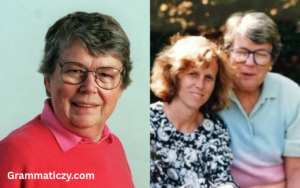
Rosalind Hicks was born into literary history, but her own life was much more than simply being the daughter of Agatha Christie. Born on 5 August 1919 at Ashfield, her grandmother’s home in Torquay, Devon, Rosalind was the only child of Agatha Christie and Archibald Christie. By the time she entered the world, her mother was beginning the literary career that would eventually make her one of the most famous mystery writers of all time. Rosalind would grow up surrounded by books, travel, family upheaval and, later, archaeology and the international world of her mother’s second husband, Max Mallowan.
What makes Rosalind Hicks particularly fascinating is the role she eventually played after Agatha Christie’s death in 1976. She did not become a novelist or seek a conventional public career. Instead, she became one of the principal guardians of her mother’s literary legacy. She inherited a 36 percent interest in Agatha Christie Limited and took a strong personal interest in protecting the integrity of the stories, characters and adaptations associated with her mother. Her influence was therefore largely behind the scenes, but it was enormously important to the way Agatha Christie’s work continued into later generations.
Rosalind’s life also contained considerable personal hardship. She experienced the breakdown of her parents’ marriage, the death of her first husband during the Second World War, the responsibilities of raising a young son and the unusual pressure of protecting the legacy of one of Britain’s most recognizable writers. Yet she also found a lasting home at Greenway in Devon, the beautiful estate purchased by Agatha Christie and Max Mallowan in 1938. Today, Greenway remains one of the strongest physical reminders of the Christie family, and Rosalind’s years there form an important part of her enduring story.
Rosalind Hicks at a Glance
| Fact | Details |
|---|---|
| Full name | Rosalind Margaret Clarissa Hicks |
| Birth date | 5 August 1919 |
| Birthplace | Ashfield, Torquay, Devon, England |
| Death date | 28 October 2004 |
| Age at death | 85 |
| Nationality | British |
| Parents | Agatha Christie and Archibald Christie |
| Siblings | No full siblings; one younger half-brother, Archibald Christie Jr. |
| Education | Benenden School; further education in Switzerland and France |
| First husband | Major Hubert de Burr Prichard |
| Second husband | Anthony Hicks |
| Son | Mathew Prichard |
| Best known for | Protecting and managing Agatha Christie’s literary legacy |
| Estate connection | Major beneficiary and 36% shareholder in Agatha Christie Limited |
| Greenway connection | Long-term family home in Devon |
| Social media | None; she died before modern social-media platforms became established |
| Net worth | No reliable public figure is available |
| Date of death | 28 October 2004 |
Biographical records identify Rosalind as Agatha Christie’s only child and confirm that she was educated at Benenden School before continuing her education in Switzerland and France. Her adult life became closely associated with Greenway, the Devon home that her mother purchased with Max Mallowan.
Because Rosalind lived from 1919 to 2004, modern social-media information does not apply to her biography. There are no authentic Instagram, X/Twitter or LinkedIn profiles that can reasonably be presented as her personal accounts. Likewise, there is no dependable public source establishing a precise personal net worth, so online estimates should be treated carefully rather than presented as established fact.
Early Life and Family Background
Rosalind Margaret Clarissa Christie was born on 5 August 1919 at Ashfield in Torquay, Devon. Her father, Archibald Christie, had a military background and had previously served in the Royal Flying Corps, while her mother was the aspiring writer who would soon establish herself as a major figure in detective fiction. Rosalind therefore entered a household at the beginning of a remarkable transformation: Agatha Christie was moving from being an ambitious young writer toward becoming a published novelist.
Her childhood was affected by the breakdown of her parents’ marriage. Agatha and Archie eventually divorced, and Archie later remarried Nancy Neele. Rosalind subsequently became part of a more complicated family structure, while her mother began a new chapter with archaeologist Max Mallowan. The changes in the family were significant because Max introduced Rosalind to a world of archaeology, travel and the Middle East that was very different from the environment of an ordinary English childhood.
Rosalind’s relationship with Max Mallowan was particularly important to her formative years. The Guardian obituary described him as a kindly scholar who introduced his stepdaughter to archaeology and the Near East. Expeditions, travel and social events became part of Rosalind’s young adulthood, giving her exposure to cultures, landscapes and historical discoveries beyond Britain. This background helps explain why her life was connected not only to literature but also to the archaeological world that became an important part of Agatha Christie’s second marriage.
Education and the Influence of Agatha Christie
Rosalind was educated at Benenden School and later continued her education in Switzerland and France. Her education reflected the opportunities available to a child growing up in a financially secure and increasingly internationally connected family. Rather than remaining entirely within the world of her famous mother, she developed experiences of her own through schooling and travel.
Her relationship with Agatha Christie also had a literary dimension from an early age. When Rosalind was 11, Agatha dedicated The Murder at the Vicarage to her daughter. The dedication is especially meaningful because the novel introduced Miss Marple, one of Christie’s most famous detectives. Rosalind therefore became personally connected to one of the key milestones in her mother’s literary career long before she would later become responsible for protecting that career’s legacy.
Growing up around a successful novelist also meant that books and storytelling were naturally part of family life. At Greenway, Agatha sometimes tested ideas and plots on family members and guests. The official Agatha Christie website recalls how Christie would read portions of her latest mysteries to people gathered at the house and encourage them to try to identify the murderer. Rosalind consequently experienced the creative process from unusually close range—not as a professional writer herself, but as a member of the family in which some of the world’s best-known detective stories were being developed.
Marriage to Hubert Prichard and Family Life
Rosalind married Major Hubert de Burr Prichard in 1940, during the difficult years of the Second World War. Hubert was a professional soldier associated with the Royal Welsh Fusiliers. Their marriage began during a period when Britain and Europe were experiencing enormous social and political upheaval, and family life was inevitably influenced by the demands of wartime service.
The couple had one child, Mathew Prichard, who was born in 1943. Mathew would later become a significant figure in the preservation of the Agatha Christie family legacy. His birth also created another important connection between Agatha Christie and her daughter, because Christie was a devoted grandmother and helped care for Mathew during the difficult wartime period. The official Christie biography notes that Agatha frequently helped look after her grandson.
Rosalind’s family life was tragically disrupted when Hubert was killed during the war in 1944. She was left as a young widow with a small child, and contemporary accounts describe her as having to continue managing family responsibilities despite the loss. The experience became one of the most painful chapters of her life, but it also demonstrated the independence and resilience that later became associated with her character.
Marriage to Anthony Hicks
In 1949, Rosalind married Anthony Arthur Hicks, a lawyer with interests and training connected with Oriental studies. Their marriage lasted for the remainder of Rosalind’s life and became an important partnership in the preservation of Greenway. Unlike her first marriage, which was cut short by war, her relationship with Anthony provided a much longer period of family life, travel and shared interests.
Anthony and Rosalind eventually became deeply associated with Greenway. The Guardian reported that from 1968 they lived at a cottage at Greenway and worked on the gardens surrounding the property. Their life there was not merely about preserving a famous writer’s house; it was also about maintaining a family home filled with plants, books, objects and memories. The gardens became part of the couple’s everyday life and helped retain the personal character of the estate.
Their partnership continued until Rosalind’s death in 2004. Anthony survived her by only several months, dying in 2005. Their long association with Greenway proved important because it helped preserve the house as a genuine family environment rather than immediately turning it into a conventional literary museum. After their deaths, the property and its contents became available for preservation and public access through the National Trust.
Greenway: Rosalind Hicks and the Christie Family Home
Greenway is one of the most important locations in the story of Agatha Christie and Rosalind Hicks. Agatha Christie and Max Mallowan purchased the Georgian house in Devon in 1938 as a holiday home. The property provided the family with a private retreat where they could escape public attention, spend time together and enjoy the landscape surrounding the River Dart.
For Rosalind, Greenway eventually became much more than her mother’s holiday house. It became her own home and the place most closely associated with her later life. She and Anthony spent decades connected with the estate, cultivating its gardens and maintaining the atmosphere that had made it special to the Christie family. The house contained objects collected by Christie and Mallowan, including items brought back from archaeological excavations and pieces associated with earlier generations of the family.
Greenway also became part of Agatha Christie’s fictional landscape. The official Christie website notes that the property inspired or appeared in connection with works including Dead Man’s Folly and Five Little Pigs. The relationship between Greenway and the novels demonstrates how closely Christie’s writing was connected with the physical places she knew. Rosalind’s later preservation of the property consequently helped preserve not only a family home but also an important piece of the background behind Christie’s fiction.
Rosalind Hicks and Agatha Christie’s Literary Estate
The most important stage of Rosalind’s public legacy began after Agatha Christie’s death in 1976. Christie had created a substantial literary business around her works, and the rights associated with her novels, plays and characters represented an increasingly valuable intellectual property portfolio. Rosalind inherited her mother’s remaining 36 percent share in Agatha Christie Limited, giving her a direct role in decisions affecting the author’s literary estate.
Rosalind took this responsibility seriously. She was particularly concerned about preserving the character and spirit of her mother’s creations. Her position was not simply that of an heir receiving financial assets. She regarded herself as a guardian of Agatha Christie’s artistic reputation and was willing to challenge proposed adaptations or treatments when she believed they moved too far from the original work.
This approach helped establish Rosalind as an important figure in the posthumous history of Agatha Christie’s work. Although she rarely sought public attention, decisions made during her lifetime affected how Christie’s novels and characters were adapted, promoted and interpreted. Her contribution was therefore less visible than her mother’s literary achievements, but it played a major role in maintaining continuity between the original books and later generations of readers and viewers.
Protecting Agatha Christie’s Characters and Stories
Rosalind’s protection of her mother’s work sometimes placed her in opposition to proposed changes. She was known for objecting when adaptations appeared to depart too far from Agatha Christie’s original intentions. The Guardian described her as sending strong letters to people whom she believed were attempting to alter or exploit her mother’s work. Her approach reflected a deep personal conviction that Christie’s creations should be treated with care.
Her attitude is particularly significant because Agatha Christie’s characters had become larger than the books themselves. Hercule Poirot and Miss Marple were recognizable worldwide, and every major television, theatre or film adaptation had the potential to influence how audiences understood those characters. Rosalind therefore occupied an unusual position: she had a personal connection to the author while also holding an interest in the commercial rights surrounding the work.
At the same time, Rosalind was not opposed to every adaptation. Certain performers received her approval, including actors associated with the famous television portrayals of Poirot and Miss Marple. Her involvement suggests that her central concern was not simply preventing change but protecting what she believed made the characters recognizably Agatha Christie’s creations. This distinction is important when understanding her role as literary custodian rather than simply an heir.
The Agatha Christie Society
In 1993, Rosalind became president of the Agatha Christie Society. The organization provided another way for her to remain connected with readers, enthusiasts and people interested in her mother’s work. By this stage, Agatha Christie’s reputation had long outgrown the era in which the original books were published, and new generations were discovering Poirot, Miss Marple and Christie’s intricate murder mysteries through television and theatre.
Rosalind’s position within the society also reflected her interest in recognizing performers who respected her mother’s characters. David Suchet and Joan Hickson, both strongly associated with Poirot and Miss Marple respectively, were among those she supported. Their performances helped introduce Christie’s detectives to millions of television viewers who might never have encountered the original books first.
Her involvement with the society demonstrated another side of her legacy. Rosalind was not merely defending the past; she was also helping maintain a community around Agatha Christie’s work. Literary societies, collectors, readers, theatre audiences and television viewers all contributed to keeping the Christie tradition alive, and Rosalind’s position gave her a direct connection to that worldwide community.
Rosalind Hicks and Her Mother’s Authorized Biography
Rosalind was notably cautious about biographies of Agatha Christie. Because her mother had always been protective of her private life, Rosalind did not simply open the family’s personal history to anyone who wanted to investigate it. She rejected or resisted a number of biographical projects and ultimately commissioned Janet Morgan to write an authorized biography, which appeared in 1984.
This decision illustrates Rosalind’s broader philosophy. She understood that Agatha Christie was a public figure whose life would inevitably attract researchers and biographers, but she also believed that the family’s private experiences deserved respect. An authorized biography provided a way of documenting Christie’s life while maintaining a degree of control over how sensitive information was presented.
Rosalind’s caution also makes her biography interesting in its own right. Much of what historians know about her comes from family records, estate history and contemporary accounts rather than from a vast collection of personal interviews. Her preference for privacy meant that she remained comparatively mysterious, even while serving as one of the most important people connected to the Agatha Christie name.
Rosalind Hicks Net Worth and Income
There is no dependable public record establishing Rosalind Hicks’s exact personal net worth at the time of her death. Although many internet biographies attempt to assign precise monetary values to famous heirs, those numbers should not automatically be accepted. Rosalind’s financial position was tied partly to inheritance, family property and her interest in Agatha Christie Limited, but the publicly available historical sources do not provide a sufficiently reliable basis for calculating a precise personal fortune.
One documented component of her inheritance was her 36 percent interest in Agatha Christie Limited. Her mother had previously transferred a controlling interest in the company, and the remaining 36 percent passed to Rosalind after Agatha Christie’s death. The family interest remained significant in the governance of the literary estate and contributed to the family’s continuing connection with Christie’s intellectual property.
It is also important to distinguish between the value of Agatha Christie’s intellectual property and Rosalind’s personal wealth. Christie’s books, stage productions, television adaptations and other rights have generated substantial commercial value over decades, but that does not mean all of that revenue belonged directly to Rosalind. A responsible biography should therefore describe her inheritance and estate interests without inventing a specific net-worth number that cannot be verified.
Personal Life, Personality and Privacy
Rosalind Hicks was widely portrayed as private, independent and determined. These qualities were particularly evident in the way she handled her mother’s literary estate. Rather than using her family name primarily to create a public profile, she focused much of her energy on protecting the work and maintaining the family’s connection with Greenway. The Guardian obituary emphasized her reserved and independent personality.
Her personal life also appears to have been strongly connected to home, family, gardening, reading and travel. At Greenway, she and Anthony cultivated the gardens and welcomed friends and relatives. The Guardian described the estate as a place where Rosalind could enjoy home-grown vegetables and fruit, the gardens and the quiet atmosphere of the property.
There is relatively little evidence for a detailed day-to-day routine, private beliefs or modern-style public persona, and it is better not to fill those gaps with speculation. What can be established is that Rosalind valued family, privacy and the preservation of her mother’s work. Those characteristics are consistently reflected in the historical record surrounding her life and her role at Greenway.
Greenway and the National Trust
The preservation of Greenway became one of the most lasting outcomes of Rosalind’s connection with the Christie family. Agatha’s family gave the estate to the National Trust in 2000, while Rosalind and Anthony continued living in the house. After their deaths, the house itself and its contents were transferred into National Trust care, allowing the public to experience the environment in which the Christie family spent so much time.
The National Trust’s preservation work transformed Greenway into an important literary heritage site. The property retains furniture, books, decorative objects and collections associated with Christie, Mallowan and later members of the family. These objects provide a much more personal picture of the author than a conventional museum display might offer because they show the ordinary environment in which the family lived and entertained guests.
For Rosalind, Greenway represented a particularly meaningful inheritance. It connected her childhood, her mother, her marriages, her son and her later years in one location. Today, visitors can experience the house and gardens and see how the private world surrounding Agatha Christie contributed to the atmosphere behind some of her best-known mysteries.
Death and the Continuation of Her Legacy
Rosalind Hicks died on 28 October 2004 in Torbay, Devon, at the age of 85. Her death came after decades spent protecting her mother’s literary reputation and maintaining the family connection with Greenway. She was survived by her son, Mathew Prichard, while her husband Anthony died the following year.
After Rosalind’s death, her son Mathew became an important figure in the continuing Christie family legacy. Greenway eventually became part of the National Trust’s public heritage offering, and the contents of the house were preserved as part of the wider historical collection. The result was that Rosalind’s lifelong association with Greenway continued to benefit visitors and researchers long after her death.
The family connection to Agatha Christie’s intellectual property also continued after Rosalind. Contemporary reporting has documented that Christie’s family retained a 36 percent interest in Agatha Christie Limited, illustrating how Rosalind’s role formed part of a broader generational effort to preserve the author’s literary estate.
Rosalind Hicks’s Lasting Legacy
Rosalind Hicks never needed to become a bestselling author herself to leave a mark on literary history. Her importance came from stewardship. As Agatha Christie’s only child and a major beneficiary of the literary estate, she stood at the point where family history, intellectual property and popular culture met. Her decisions helped influence how her mother’s stories were treated long after their original publication.
Her story also demonstrates how complicated the inheritance of fame can be. Being the child of a globally recognized writer brought enormous privileges, but it also created responsibilities and expectations. Rosalind experienced family tragedy, wartime loss and the constant knowledge that her mother’s work would continue attracting public attention. Her response was largely one of protection rather than publicity.
Perhaps the most enduring symbol of Rosalind’s contribution is Greenway. The house survives as a physical reminder of Agatha Christie’s private world, but it is also part of Rosalind Hicks’s story. Her decades-long connection with the estate helped preserve a family environment that can still be experienced today. In that sense, her legacy is not simply about inheritance or literary rights; it is about ensuring that future generations could encounter the places, stories and traditions that shaped one of the world’s most famous mystery writers.
Conclusion
Rosalind Hicks lived an extraordinary life without becoming a conventional celebrity. She was born as the only child of Agatha Christie and grew up during the transformation of her mother from aspiring writer to internationally celebrated novelist. Her education, travels, family relationships and experiences during wartime shaped a woman who would eventually become one of the most important guardians of the Christie legacy.
Her life was marked by both privilege and profound personal loss. She became a young widow, raised a son and later found lasting companionship with Anthony Hicks. Through the years she remained closely connected with Greenway, where she and Anthony cultivated the property and preserved the family atmosphere surrounding Agatha Christie’s beloved Devon home.
Ultimately, Rosalind Hicks’s story is a story about stewardship, resilience and responsibility. She understood that an artistic legacy can be easily changed when it passes from one generation to another, and she devoted much of her later life to ensuring that her mother’s work retained its identity. As Agatha Christie’s novels continue to be read, adapted and rediscovered around the world, Rosalind’s quieter contribution remains part of that continuing story—a reminder that preserving a legacy can be just as meaningful as creating one.