Marilyn Chambers Biography: The Extraordinary Life, Career and Legacy of a 1970s Icon
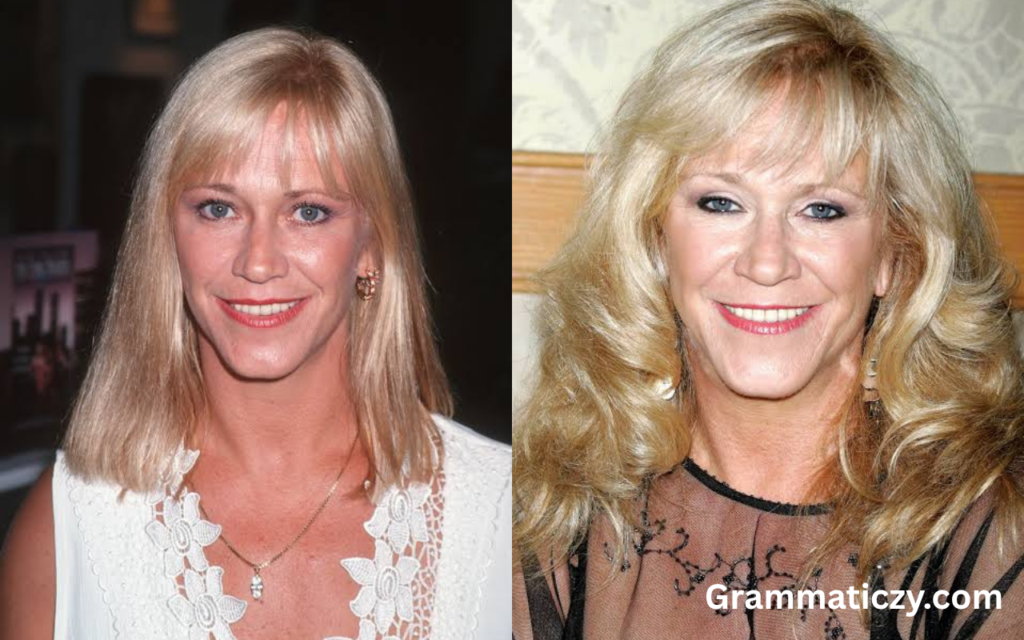
Marilyn Chambers became famous in a way few entertainers ever have. Before the world knew her as one of the most recognizable adult-film performers of the 1970s, she was an aspiring actress and model from Connecticut whose face appeared on Ivory Snow detergent packaging. The wholesome advertising image and the controversial career that followed seemed almost impossible to reconcile, yet that contradiction became one of the defining stories of her life. When Chambers appeared in Behind the Green Door in 1972, she suddenly found herself at the center of a national conversation about celebrity, sexuality, entertainment and changing American culture.
Her career, however, cannot be fairly summarized simply by calling her an adult-film star. Chambers spent more than three decades trying to establish herself as a versatile entertainer. She worked as a model, actress, singer, dancer and writer, appeared in mainstream cinema, performed on stage, participated in television projects and eventually entered politics. Her role in David Cronenberg’s 1977 horror film Rabid became particularly important because it demonstrated that she could work outside the adult-film industry and pursue the serious acting career she had originally wanted.
Even after her death in 2009, interest in Chambers has continued. The 2024 biography Pure: The Sexual Revolutions of Marilyn Chambers by Jared Stearns revisited her life through interviews with relatives, friends and colleagues, presenting a more complicated portrait of a woman whose intelligence and ambitions were often overshadowed by the public image created around her. Her story is ultimately about fame, reinvention, personal freedom and the difficulty of controlling your own identity once the world has decided what you represent.
Marilyn Chambers Facts at a Glance
| Category | Details |
|---|---|
| Full Name | Marilyn Ann Briggs |
| Professional Name | Marilyn Chambers |
| Born | April 22, 1952 |
| Birthplace | Providence, Rhode Island, USA |
| Raised In | Westport, Connecticut |
| Died | April 12, 2009 |
| Age at Death | 56 |
| Profession | Actress, model, singer, dancer, writer and adult entertainer |
| Known For | Behind the Green Door, Insatiable, Rabid |
| Daughter | McKenna |
| Marriages | Married and divorced three times |
| Political Role | Personal Choice Party vice-presidential candidate |
| Estimated Net Worth | Public estimates vary; approximately $400,000 has been reported |
| Social Media | No verified Instagram, X/Twitter or LinkedIn account |
| Death Location | Canyon Country, California |
| Legacy | One of the most recognizable crossover performers of the 1970s |
The basic facts about Chambers’ life are relatively well documented, although some details have been inconsistently reported over the years. In particular, older profiles sometimes identified Westport, Connecticut, as her birthplace, but later biographical research and contemporary reporting identify Providence, Rhode Island, where she was born before growing up in Westport. She died in 2009 at the age of 56, just ten days before what would have been her 57th birthday.
Her financial situation is considerably harder to document with certainty. Celebrity-wealth estimates have placed her net worth around several hundred thousand dollars, but these figures should not be treated as audited financial records. Chambers worked in several entertainment sectors over the course of her life, and her earnings came from movies, modeling, live performances, books, appearances and adult entertainment. The fact that she was famous does not necessarily mean that she accumulated enormous personal wealth, particularly given the business and management relationships surrounding her career.
Early Life and Family Background
Marilyn Ann Briggs was born on April 22, 1952, in Providence, Rhode Island, and spent her childhood in Westport, Connecticut. Her upbringing in an affluent suburban environment was very different from the sensational world she would eventually become associated with. She developed an interest in acting and performance during her teenage years and began looking for opportunities that could take her beyond the conventional path expected of a young woman growing up in suburban America.
Chambers was interested in modeling and acting before she became famous. She understood that the entertainment business could provide an opportunity to build a different life, and she began taking modeling assignments while still young. Her early work included commercial advertising and eventually brought her enough exposure to move closer to the professional entertainment world. These experiences were important because they established that her ambitions did not begin with adult cinema; acting and show business were already part of her plans.
Her family and friends later became important sources for understanding the woman behind the celebrity image. Jared Stearns, author of the 2024 biography Pure, interviewed people who had known Chambers personally and found that one of the recurring misconceptions about her was that she lacked intelligence. According to Stearns, people close to her remembered someone considerably more thoughtful and intelligent than the stereotype associated with her profession suggested.
Education and Teenage Ambitions
Chambers attended schools in Westport and eventually graduated from Staples High School in 1970. Her teenage years were characterized by an interest in performance, modeling and physical activities. She was not simply waiting for an opportunity to appear; she was actively looking for ways to enter entertainment and develop a professional identity. Her confidence in front of cameras became one of the characteristics that helped her stand out when she eventually moved into professional work.
Her first ambitions were much closer to conventional Hollywood acting than to the adult industry. She wanted to become an actress and reportedly viewed modeling as a potential route into movies and television. That ambition is crucial when looking back at her later career because it explains why she repeatedly attempted to cross over into mainstream entertainment. The adult-film success that eventually made her famous was not necessarily the destination she had originally imagined for herself.
One of her earliest film appearances came in the 1970 movie The Owl and the Pussycat, starring Barbra Streisand. Although her role was small and she did not immediately become a recognizable Hollywood actress, the appearance gave her an early connection to mainstream film. Two years later, however, her career would change so dramatically that this early acting experience would largely disappear beneath the publicity surrounding Behind the Green Door.
Modeling Career and the Ivory Snow Connection
Before Marilyn Chambers became a controversial celebrity, she was associated with a remarkably wholesome commercial image. She appeared as the young mother on Ivory Snow detergent packaging, a campaign built around an image of purity and domestic respectability. That commercial identity later became one of the most recognizable pieces of trivia surrounding her career because audiences discovered that the same woman had appeared in an explicit movie.
The contrast between the two images was extraordinary. On one side was the smiling model associated with a household laundry product; on the other was the actress at the center of one of the most talked-about adult films of the early 1970s. The coincidence gave newspapers, magazines and entertainment programs an irresistible story. Chambers’ face was already familiar to consumers, which meant that her transition into adult entertainment was not happening in complete anonymity.
That commercial background also contributed to her unusual cultural impact. She was not simply becoming famous inside an adult-entertainment subculture; she was becoming recognizable to people who had encountered her image in an entirely different context. The collision of those identities helped turn Chambers into a symbol of the rapidly changing social attitudes of the 1970s and made her one of the most discussed personalities of the era.
The Breakthrough of Behind the Green Door
In 1972, Chambers answered an advertisement for a movie role and encountered Jim and Artie Mitchell, the filmmakers behind Behind the Green Door. At only 19 years old, she was faced with a decision that could permanently alter the direction of her career. She understood that an explicit film could create major difficulties if she wanted to pursue mainstream acting, but she ultimately accepted the role after negotiating significant compensation and a share of the film’s earnings.
The film became a major commercial and cultural success during the period often described as the era of “porno chic.” Adult films were attracting unprecedented public attention, and productions such as Behind the Green Door were moving into conversations that extended far beyond the traditional adult-entertainment audience. Chambers became one of the central faces of this movement, and the fact that she had previously been associated with Ivory Snow made her rise even more sensational.
The success changed everything almost overnight. Chambers went from a young aspiring actress searching for opportunities to a nationally recognized celebrity whose name appeared in newspapers, magazines and television discussions. But the same success that gave her enormous visibility also created a professional label that would follow her for decades. She wanted to be taken seriously as an actress, yet the public increasingly saw her primarily through the identity created by her most controversial film.
The Struggle to Become a Mainstream Actress
One of the most important parts of Chambers’ story is her repeated effort to move beyond adult entertainment. She did not simply accept that Behind the Green Door would be the final definition of her career. Instead, she explored mainstream acting, theater, music, dance and television, looking for opportunities that would allow audiences to see her as a broader performer. Her crossover efforts made her unusual in an industry where performers were often expected to remain within clearly defined categories.
Her most famous mainstream acting opportunity came with David Cronenberg’s 1977 horror movie Rabid. Chambers played the central role of Rose, placing her in a conventional feature-film production that was completely different from the adult films that had established her reputation. The film later became an important part of her legacy because it showed that she could participate in serious genre cinema and work with a director whose reputation would grow substantially in later decades.
Yet Hollywood did not give her the career transformation she hoped for. The stigma attached to her adult-film work remained powerful, and Chambers later spoke about how difficult it was to escape that reputation. Her experience illustrates a broader problem in entertainment: an unusual breakthrough can become a permanent label, even when the performer wants to develop in another direction. For Chambers, the door to mainstream acting opened, but it never opened wide enough to replace the image that had already captured the public imagination.
Insatiable and the Return to Adult Entertainment
By the end of the 1970s, Chambers had explored several directions outside adult cinema, but the industry that had made her famous remained an important part of her professional life. In 1980, she appeared in Insatiable, another major adult production that demonstrated the continuing commercial power of her name. The film also arrived at a time when adult entertainment was increasingly moving toward home video, changing the way performers and productions reached audiences.
Her return should not necessarily be interpreted as a simple abandonment of her mainstream ambitions. Chambers had already learned that escaping the adult-film label was much harder than she had expected. She continued working in different formats and eventually became associated with productions such as Marilyn Chambers’ Private Fantasies. Rather than disappearing after her initial period of fame, she adapted to the changing entertainment market and continued earning recognition from audiences familiar with her earlier work.
Her professional life afterward became increasingly varied. She worked in adult films, soft-core productions, live appearances and other entertainment projects, with periods when she stepped away from explicit filmmaking. She later returned to the adult industry in the late 1990s, including Still Insatiable, showing that her connection to the industry remained strong even after decades had passed since her original breakthrough.
Writing, Music, Stage Work and Television
Chambers was also interested in expressing herself outside film. During her career, she wrote books and appeared in live entertainment, demonstrating that her ambitions extended beyond being filmed. Her autobiography helped provide audiences with her perspective on the extraordinary circumstances that had made her famous, while her other projects contributed to a broader creative identity.
She also worked as a singer and dancer and performed in cabaret-style entertainment. Her stage work was part of her attempt to establish herself as a complete entertainer rather than someone whose identity existed solely in movies. According to later biographical accounts, her career included dramatic theater, a Broadway musical revue and television-related work, underscoring the breadth of her ambitions.
These efforts are particularly important when considering her legacy today. Modern celebrity culture is much more comfortable with performers crossing between acting, music, online content, reality television and other forms of entertainment. Chambers was attempting a similar kind of versatility decades earlier, but she faced a much stronger cultural boundary between adult entertainment and mainstream show business. Her career therefore anticipated a type of crossover celebrity that would become far more common later.
Marriage, Relationships and Motherhood
Chambers’ personal life was complicated and included three marriages. One of the most significant relationships was her marriage to Chuck Traynor, who had previously been married to Linda Lovelace. Traynor became involved in Chambers’ professional affairs as well, making the relationship important not only personally but also in understanding how her career was managed during a particularly intense period of her fame.
Later accounts have presented the relationship with Traynor as deeply troubled, with the 2024 biography Pure examining claims of abuse and control. These details provide an important counterweight to the glamorous public image surrounding Chambers. Her celebrity did not protect her from unhealthy relationships or the pressures that could accompany fame, and some of the most difficult experiences of her life happened away from the cameras.
Chambers also became a mother to her daughter, McKenna. Motherhood represented another part of her identity that could easily disappear beneath the celebrity narrative. By the later years of her life, she was still making public appearances and maintaining connections with fans, but she was also a parent whose family relationships formed an important part of her private world. Her daughter was the person who discovered her after her death in 2009.
Political Career and the Personal Choice Party
One of the most unexpected chapters in Marilyn Chambers’ life was her decision to enter politics. In 2004, she became the Personal Choice Party’s candidate for vice president of the United States. Her candidacy reflected her interest in personal freedom and individual choice and offered another example of her willingness to challenge conventional expectations about what someone with her background could do.
Her political campaign was never positioned as a realistic path to the White House, but it attracted attention precisely because of her unusual public history. Chambers had spent decades being defined by questions surrounding sexuality and personal freedom, so a political platform built around individual choice was a natural extension of themes she had already encountered throughout her career.
She later remained connected to political activism and again sought the vice-presidential nomination in 2008. Although these campaigns did not result in electoral success, they added another dimension to her biography. Chambers was willing to use her celebrity to enter spaces where people might not have expected to find her, reinforcing the pattern of reinvention that characterized much of her life.
Marilyn Chambers’ Net Worth and Sources of Income
Determining Marilyn Chambers’ exact net worth is difficult because no comprehensive public financial statement exists. Online estimates have generally placed her wealth in the hundreds of thousands of dollars rather than in the multimillion-dollar range sometimes associated with famous entertainers. A figure of approximately $400,000 has been reported, but it is best understood as an estimate rather than a confirmed accounting of her estate.
Her income came from a remarkably broad collection of activities. These included modeling contracts, film appearances, adult entertainment, stage performances, books, personal appearances and later industry events. Her name itself had commercial value, allowing her to continue earning from appearances and projects long after her original 1970s breakthrough.
Her financial history also highlights an important distinction between fame and financial independence. Chambers became enormously recognizable, but the entertainment industry could be complicated for performers, particularly when managers, producers and contracts controlled significant portions of revenue. Her career therefore offers a useful reminder that public success does not automatically guarantee lasting financial security.
Awards, Recognition and Cultural Impact
Marilyn Chambers eventually received substantial recognition within the adult-entertainment industry. Her reputation extended well beyond the commercial success of individual films, and later rankings and honors placed her among the most influential performers associated with the industry’s golden age. Her cultural visibility also resulted in recognition from publications that treated her as an important figure in entertainment history.
Her influence was particularly significant because she helped establish a path between adult entertainment and mainstream celebrity. The 1970s were a period when explicit movies were becoming subjects of public conversation, and Chambers’ recognizable face made that transition especially visible. She was not an anonymous performer known only within specialized theaters; she became a recognizable public personality.
Perhaps the most meaningful recognition has come decades later through renewed scholarly and biographical interest. Jared Stearns’ Pure: The Sexual Revolutions of Marilyn Chambers, published in 2024, is described by its publisher as the first authorized biography of Chambers. The book uses interviews with family members, friends and colleagues to reconsider the assumptions that had surrounded her for decades.
Death of Marilyn Chambers
Marilyn Chambers died on April 12, 2009, at her home in Canyon Country, California. She was 56 years old. Her death came unexpectedly and attracted immediate media attention because of her prominent place in entertainment history and the extraordinary contrast between her early commercial image and later career.
An autopsy later determined that Chambers died from the effects of a cerebral hemorrhage caused by a ruptured cerebral artery aneurysm, with hypertrophic heart disease also identified. Toxicology testing found medications in her system at therapeutic or below-therapeutic levels, and authorities classified the death as resulting from natural causes rather than foul play.
A memorial service was held at Zuma Beach on April 22, 2009, which would have been Chambers’ 57th birthday. Her death marked the end of a career that had lasted more than three decades, but it did not end public interest in her life. Later biographies and retrospectives have continued to examine her achievements, struggles and the complicated cultural role she played during one of America’s most transformative periods.
Marilyn Chambers and Social Media
Unlike modern celebrities, Marilyn Chambers never had an opportunity to build a career around Instagram, TikTok, YouTube or X. She died in 2009, before Instagram even launched and before social media became the primary communication channel for entertainment personalities. As a result, there is no reliable reason to identify an Instagram, Twitter/X or LinkedIn account as an official personal profile belonging to Chambers.
There are websites and social-media profiles that use her name, but they should not automatically be treated as authentic accounts. Her online legacy is instead maintained through archival interviews, biographies, film databases, photographs and retrospective articles. The absence of direct social-media communication makes the historical record particularly dependent on people who knew her and on journalists and biographers who documented her career.
The 2024 publication of Pure is especially important in this regard because it gives modern readers an opportunity to encounter a more personal version of Chambers’ story. Stearns has said that he interviewed people who had never previously spoken publicly about her, including individuals from different parts of her life. That research helps shift the focus away from the simplistic celebrity stereotype and toward the person behind it.
The 2024 Biography That Reconsidered Her Story
Jared Stearns’ Pure: The Sexual Revolutions of Marilyn Chambers represents one of the most significant recent developments in how Chambers is remembered. Published in 2024, the 346-page biography examines her childhood, rise to fame, adult-film career, mainstream acting ambitions, relationships and struggles with identity. The book was published by Headpress and was presented as the first authorized biography of Chambers.
One of the biography’s central themes is that Chambers was frequently misunderstood. Stearns told Headpress that people close to her repeatedly rejected the stereotype that she was unintelligent. Their memories described someone much more complicated and thoughtful than the simplistic “porn star” image that followed her. That distinction matters because celebrity labels often become stronger than the personalities they supposedly describe.
The book also places her within the broader cultural history of the sexual revolution. Rather than treating her career as an isolated story about adult movies, it examines how changing attitudes toward sexuality, celebrity and women’s autonomy shaped the opportunities available to Chambers. In doing so, it helps explain why she became such an important figure in 1970s popular culture and why her story continues to attract attention today.
Why Marilyn Chambers Still Matters
Marilyn Chambers remains culturally significant because her career captured a moment when American society was changing rapidly. The early 1970s brought new conversations about sexuality, censorship, women’s liberation, entertainment and personal freedom. Chambers became one of the most visible personalities associated with that transformation, whether or not she intended to become a symbol of it.
Her career also demonstrates the complicated relationship between opportunity and reputation. Behind the Green Door gave her fame that most aspiring actresses could only dream about, yet that fame simultaneously narrowed the range of roles that mainstream Hollywood was willing to offer her. She repeatedly attempted to redefine herself, but the public continued returning to the identity that had made her famous.
Perhaps that is the most enduring lesson from her story. Chambers was never simply one thing. She was an ambitious young actress, a commercial model, a controversial film performer, a mainstream horror actress, a singer, dancer, writer, mother and political candidate. Her life shows how difficult it can be for a public figure to escape a single defining image—and how important it is to look beyond the label when trying to understand a human being.
Conclusion: Marilyn Chambers’ Lasting Legacy
Marilyn Chambers left behind a career that was impossible to separate from the cultural changes of her generation. She entered the entertainment world hoping to become an actress, unexpectedly became one of the biggest names of the 1970s adult-film era, and then spent decades attempting to expand her identity beyond that single achievement. Her appearance in Rabid, her stage work, writing, political activity and later appearances all demonstrated that there was considerably more to her professional life than the film that first made her famous.
Her journey was not an uncomplicated success story. Alongside fame were financial uncertainty, difficult relationships, professional stigma and the persistent challenge of being taken seriously outside the industry that had made her a celebrity. Yet she continued working and reinventing herself. That determination is one reason modern biographers have found her life worthy of renewed examination, particularly as society has become more willing to discuss the complicated boundaries between mainstream entertainment and adult performance.
Ultimately, Marilyn Chambers’ legacy is about identity, ambition and the struggle for control over one’s own story. She became famous because the world saw a contradiction in her—an Ivory Snow model becoming an adult-film celebrity—but the deeper story is about a woman who kept searching for ways to define herself on her own terms. More than a decade after her death, that search remains what makes her biography so compelling. Her life serves as a reminder that a public image can never fully contain a person, and that perseverance can sometimes be measured not by avoiding obstacles, but by continuing to reinvent yourself despite them.