
Have you ever looked at a driving license and wondered what the abbreviation LMV actually stands for? You’re not alone. Many new drivers notice the term but aren’t sure what vehicles they’re legally allowed to drive.
Understanding lmv means in driving license is essential because it determines the type of vehicle you can legally operate. Whether you’re applying for a new license, renewing an existing one, or planning to buy a car, knowing what LMV covers can help you stay compliant with traffic laws and avoid unnecessary confusion.
In this guide, you’ll learn what LMV means, which vehicles fall under this category, the eligibility requirements, licensing process, important rules, and answers to the most common questions.
What Does LMV Mean in Driving License?
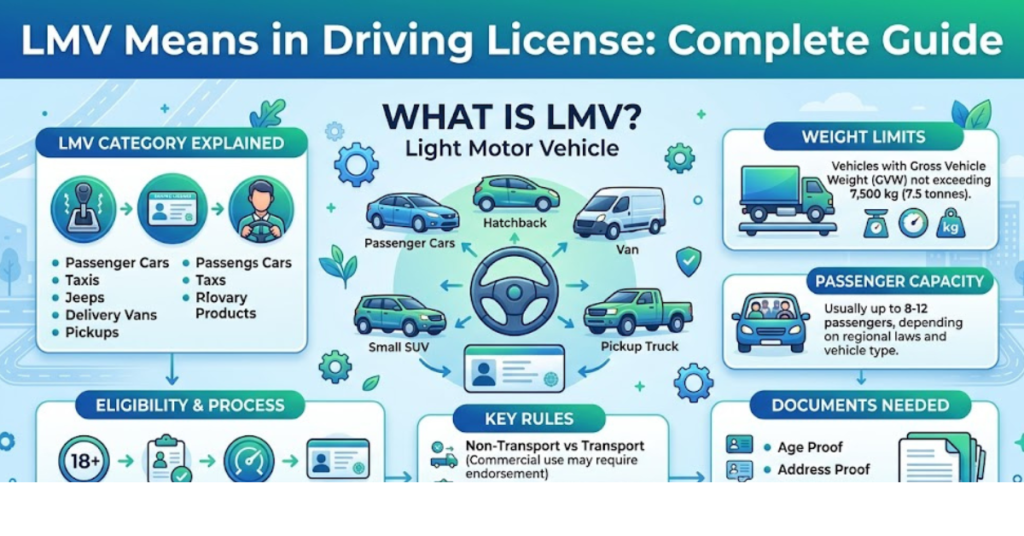
LMV stands for Light Motor Vehicle.
It is one of the most common vehicle categories mentioned on a driving license. An LMV license authorizes a person to drive certain lightweight vehicles that fall within the legally defined weight limit.
Generally, LMVs include:
- Private cars
- Hatchbacks
- Sedans
- SUVs within the prescribed weight limit
- Jeeps
- Small pickup trucks
- Light commercial vehicles (where permitted by law)
The exact definition may vary slightly depending on your country’s motor vehicle regulations, but the overall concept remains the same.
Why Is LMV Mentioned on a Driving License?
Driving licenses are divided into different vehicle categories to ensure drivers receive appropriate training and testing.
Instead of issuing one universal license for every vehicle, authorities classify licenses based on:
- Vehicle size
- Vehicle weight
- Purpose of use
- Passenger capacity
- Commercial or private use
The LMV category tells traffic authorities exactly what type of vehicle the holder is legally permitted to drive.
What Vehicles Come Under LMV?
The LMV category usually covers vehicles with a gross vehicle weight (GVW) of up to 7,500 kilograms, although regulations differ by country.
Common LMV Vehicles
These include:
- Hatchbacks
- Sedans
- SUVs
- Crossovers
- Jeeps
- Vans
- Small delivery vehicles
- Pickup trucks within weight limits
- Passenger cars
Examples include:
- Toyota Corolla
- Honda Civic
- Suzuki Alto
- Hyundai Elantra
- Kia Sportage
- Toyota Yaris
- Honda City
- Suzuki Swift
These are all typical examples of vehicles driven under an LMV license in many regions.
Types of LMV Categories
Depending on local transport laws, LMV may be divided into different classifications.
LMV (Private)
This category allows drivers to operate privately owned vehicles for personal use.
Examples include:
- Family cars
- Personal SUVs
- Personal vans
LMV Commercial
Some countries issue separate endorsements allowing drivers to operate light commercial vehicles for business purposes.
Examples include:
- Delivery vans
- Taxi vehicles
- Courier vehicles
- Small cargo vehicles
Commercial driving often requires additional permits or endorsements.
Weight Limit for LMV Vehicles
A vehicle qualifies as an LMV primarily based on its weight.
Typically:
| Vehicle Type | Usually LMV? |
| Hatchback | Yes |
| Sedan | Yes |
| SUV | Yes (within weight limit) |
| Jeep | Yes |
| Pickup Truck | Often Yes |
| Heavy Truck | No |
| Bus | No |
| Trailer Truck | No |
Always check your country’s transport authority for the exact legal definition.
Who Can Apply for an LMV License?
Eligibility requirements generally include:
- Meeting the minimum legal age
- Passing a learner’s permit test (where applicable)
- Completing driving lessons if required
- Passing a practical driving examination
- Meeting eyesight and medical requirements
The specific age limit varies from country to country.
Documents Required for an LMV Driving License
Applicants are commonly asked to provide:
- Proof of identity
- Proof of address
- Passport-sized photographs
- Age proof
- Medical certificate (if required)
- Learner’s license
- Application form
Requirements vary depending on local licensing authorities.
LMV License Test Process
Obtaining an LMV license usually involves several steps.
Step 1: Apply for a Learner’s License
Study road signs, traffic rules, and safe driving practices before taking the learner’s test.
Step 2: Practice Driving
Practice under supervision to build confidence in:
- Parking
- Lane discipline
- Turning
- Braking
- Reverse driving
Step 3: Take the Driving Test
The examiner evaluates your ability to:
- Control the vehicle
- Follow road signs
- Obey traffic rules
- Park correctly
- Drive safely in traffic
Step 4: Receive Your LMV License
Once you pass, the licensing authority issues your driving license with the LMV category.
Can You Drive an SUV with an LMV License?
In most cases, yes.
Many SUVs fall under the Light Motor Vehicle category because they remain within the prescribed weight limit.
Examples include:
- Hyundai Creta
- Kia Seltos
- Toyota Urban Cruiser
- Honda HR-V
However, very large commercial SUVs or specialized vehicles may require different licensing categories.
Can an LMV License Holder Drive Commercial Vehicles?
This depends on national regulations.
In some jurisdictions:
- Light commercial vehicles are allowed with an LMV license.
- Commercial passenger transport may require an additional endorsement or commercial authorization.
Always verify local licensing rules before driving for business purposes.
Difference Between LMV and Heavy Motor Vehicle (HMV)
Understanding the distinction helps avoid legal issues.
| LMV | HMV |
| Light Motor Vehicle | Heavy Motor Vehicle |
| Lower weight | Higher weight |
| Cars and small vans | Trucks and buses |
| Easier driving test | Specialized training required |
| Personal transportation | Commercial transport |
Heavy vehicles demand advanced driving skills due to their size, weight, and braking characteristics.
Common Misconceptions About LMV
LMV Means Only Cars
Incorrect.
LMV includes many types of light vehicles, not just passenger cars.
Every SUV Is an LMV
Not necessarily.
Weight and local regulations determine eligibility.
LMV License Allows Driving Every Vehicle
False.
Heavy trucks, buses, motorcycles, and specialized vehicles require different license categories.
Commercial Driving Is Always Included
Not always.
Some countries require additional commercial endorsements.
Why Understanding LMV Is Important
Knowing what your license permits helps you:
- Stay within legal driving limits
- Avoid traffic violations
- Choose the right vehicle
- Meet insurance requirements
- Prevent license-related penalties
- Improve road safety
Driving a vehicle outside your licensed category may result in fines, legal consequences, or insurance claim issues.
Practical Tips for LMV Drivers
If you hold an LMV license, keep these best practices in mind:
- Always carry your driving license.
- Follow speed limits and traffic rules.
- Renew your license before it expires.
- Ensure your vehicle is insured and registered.
- Never drive vehicles outside your authorized category.
- Keep learning defensive driving techniques to improve safety.
Key Takeaways
- LMV stands for Light Motor Vehicle.
- It generally includes cars, SUVs, jeeps, vans, and light pickup vehicles within the legal weight limit.
- An LMV license does not automatically permit driving heavy trucks or buses.
- Commercial driving permissions vary by country.
- Understanding your license category helps you drive legally and safely.
FAQs
What is the full form of LMV in a driving license?
LMV stands for Light Motor Vehicle. It refers to a category of vehicles that meet specific weight and legal requirements for operation with an LMV license.
Can I drive an SUV with an LMV license?
Yes, most standard SUVs fall under the LMV category if they remain within the prescribed weight limit. Always check your local transport regulations for confirmation.
Does an LMV license allow commercial driving?
Not always. While some light commercial vehicles may be covered, many countries require additional commercial endorsements or permits for business-related driving.
Is LMV different from HMV?
Yes. LMV refers to light motor vehicles such as cars and small vans, while HMV covers heavy vehicles like buses, large trucks, and trailers that require specialized licensing.
Can I drive a pickup truck with an LMV license?
In many cases, yes. Small pickup trucks that fall within the legal weight limit are generally classified as LMVs, but heavier commercial pickups may require another license category.
Why is LMV written on my driving license?
It indicates the class of vehicles you are legally authorized to drive. The notation helps law enforcement, insurers, and licensing authorities verify your driving eligibility.
Conclusion
Understanding lmv means in driving license is more than just decoding an abbreviation—it’s about knowing your legal driving privileges and responsibilities. An LMV license typically allows you to drive a wide range of light vehicles, including cars, jeeps, SUVs, and certain vans, provided they fall within the prescribed weight limits. However, it does not automatically authorize you to operate heavy commercial vehicles or all business-use vehicles.
Before getting behind the wheel, always ensure the vehicle matches the category listed on your license and follow your country’s transport regulations. A clear understanding of your license classification promotes safer driving, prevents legal complications, and gives you confidence on the road. If you’re planning to apply for a license or upgrade your driving privileges, taking the time to understand these categories is a worthwhile investment.