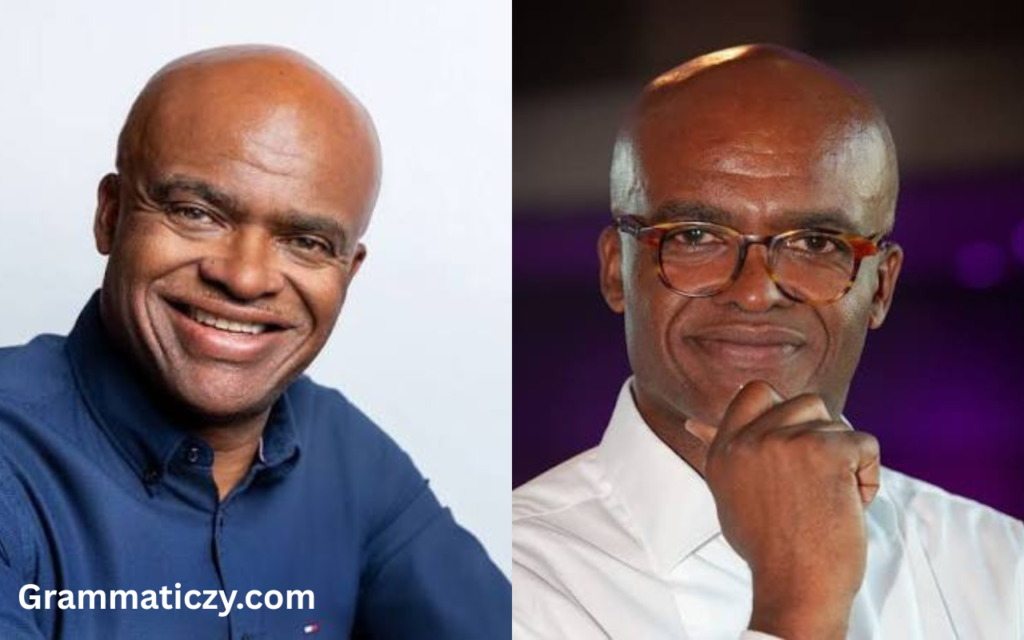
There are some sporting careers that are remembered because of medals, and then there are careers remembered because the person behind the medals becomes part of popular culture. Kriss Akabusi belongs firmly in the second category. His unmistakable laugh, energetic personality and remarkable athletic achievements made him one of Britain’s most recognisable sports personalities, but his story began far away from the Olympic podium. Born in London to Nigerian parents in 1958, Akabusi experienced a difficult childhood, spent time in a children’s home and later joined the British Army as a teenager. From those challenging beginnings, he built a career that eventually took him to three Olympic Games, World Championship glory, European Championship success, television studios and the corporate speaking stage.
What makes Kriss Akabusi’s biography particularly fascinating is the number of times his life changed direction. He was not simply a successful 400-metre hurdler who retired and disappeared from public life. Athletics became the foundation for several different chapters, including television presenting, motivational speaking, executive coaching and business. His official company says he has spent more than two decades delivering keynote speeches, workshops and coaching for businesses and organisations, while his recent work shows that he continues to discuss sport, leadership, achievement, faith and personal development.
Even decades after his competitive athletics career ended, Akabusi remains a compelling figure because his story is ultimately about transformation. His Olympic medals are important, but so are the experiences that came before them and the work he pursued afterwards. His childhood taught him independence, the Army gave him discipline and purpose, athletics taught him competition and teamwork, and television helped him develop a public voice. Today, those experiences form the foundation of his work as a speaker and mentor, giving his biography a much broader meaning than a conventional sports success story.
Kriss Akabusi Quick Facts
| Detail | Information |
|---|---|
| Full name | Kriss Kezie Uchechukwu Duru Akabusi |
| Known as | Kriss Akabusi |
| Date of birth | 28 November 1958 |
| Age | 67 years old in 2026 |
| Birthplace | Paddington, London, England |
| Nationality | British |
| Heritage | Nigerian |
| Profession | Former Olympic athlete, television presenter, motivational speaker, businessman and coach |
| Athletics events | 400m, 400m hurdles and 4 × 400m relay |
| Olympic medals | Three |
| World Championship | 4 × 400m relay gold, 1991 |
| European Championship | 400m hurdles gold, 1990 |
| Olympic Games | 1984, 1988 and 1992 |
| British 400m hurdles record | 47.82 seconds, set in 1992 |
| Military career | British Army |
| Children | Four |
| Award | MBE |
| Business | The Akabusi Company |
| Current professional focus | Motivational speaking, coaching, media and business |
| Kriss Kezie Akabusi | |
| @krissakabusi | |
| X/Twitter | @krissakabusi |
| Net worth | No independently verified public figure |
Who Is Kriss Akabusi?
Kriss Akabusi is a former British Olympic athlete who became famous for his performances in the 400m hurdles and 4 × 400m relay before establishing a second career in television and a third as a motivational speaker and business coach. His sporting career included three Olympic medals and major championship titles, while his television work included presenting The Big Breakfast and Record Breakers. His official biography describes him as an Olympian, motivational speaker and businessman, reflecting the different stages of his professional life.
Akabusi’s personality has always been an important part of his public identity. His enthusiastic delivery, distinctive laugh and ability to communicate complicated ideas in an accessible way helped him make the transition from athletics into entertainment. He was not simply appearing on television because he was a famous athlete; he developed into a presenter and communicator in his own right, eventually becoming a familiar contributor to television and radio discussions covering subjects from sport to business.
Behind that public personality, however, lies a much more reflective side. Akabusi has spoken openly about his childhood, his time in care, his decision to join the Army and the process of developing self-belief. In a 2026 profile from Azusa Pacific University, he described himself as someone who once lived in a children’s home and did not initially see himself as an achiever. His later transformation became central to the message he now shares with young people and professional audiences.
Early Life and Family Background
Kriss Akabusi was born on 28 November 1958 in Paddington, London, to Nigerian parents. His early childhood was shaped by circumstances that were very different from the glamorous public life that would eventually follow. According to his own recollections, growing up without the stable family environment many children take for granted had a lasting effect on him. His experiences during those formative years became an important part of the resilience and independence he later developed.
Akabusi has spoken about the emotional impact of his childhood in interviews, including a conversation with Times Radio in which he discussed his relationship with his mother and the loneliness he experienced while growing up. He has also described reaching a point where he understood that he needed to take responsibility for his own future. Those experiences did not disappear when he became successful; instead, they became part of the personal philosophy he would later communicate through motivational speaking.
His childhood is therefore essential to understanding the man behind the Olympic medals. In later speeches, Akabusi has repeatedly returned to the idea that the past should provide information rather than become a permanent limitation. His phrase, “The past is for reference, not for residence,” has become closely associated with his motivational message. The idea reflects a broader theme throughout his life: difficult circumstances can shape a person without necessarily determining what that person ultimately becomes.
Education and the Influence of the British Army
Formal education was not initially the area in which Akabusi expected to build his future. His later reflections indicate that he did not regard himself as an obvious academic achiever during childhood. Yet education eventually became an important part of his adult development. His story demonstrates that learning can happen through many environments, including school, military service, university, sport and professional experience.
At 16, Akabusi left his previous environment and joined the British Army. That decision became one of the great turning points of his life. The Army provided structure and discipline while also giving him opportunities to discover abilities that had previously remained underdeveloped. Akabusi has described the experience as transformational and has credited individuals within the military, including Sergeant Ian MacKenzie, with recognising his potential and helping him develop a stronger sense of pride and purpose.
The Army also introduced Akabusi to a culture in which physical performance, teamwork, discipline and commitment were highly valued. Those qualities later became essential to his athletics career. His transition from military service into international sport was therefore not an abrupt change but part of a longer process in which he gradually discovered what he was capable of achieving. The discipline he learned as a young soldier would remain visible throughout his sporting career and later professional life.
How Kriss Akabusi Started His Athletics Career
Akabusi’s international athletics career began in 1983 as part of Britain’s 4 × 400m relay squad. The relay event became a major part of his identity as an athlete, although he later established himself as a leading 400m hurdler as well. The combination of speed, endurance, rhythm and technical precision required by the hurdles suited the physical and mental discipline he had developed through his earlier experiences.
His first Olympic experience came at the 1984 Los Angeles Games, where he competed as part of Britain’s relay team and won a silver medal. The achievement represented an extraordinary transformation from his difficult childhood and early military years to competing at the highest level of international sport. For Akabusi, the Olympic experience also established that he could perform under immense pressure on a global stage.
The years that followed saw him become increasingly established in British athletics. He competed internationally, developed his 400m hurdles career and became an important member of the British relay programme. His progress was not simply the result of physical ability. Athletics demanded years of training, technical improvement, competition experience and the ability to recover from setbacks. Those lessons later became central to his motivational work because they offered real examples of how long-term achievement is built.
Kriss Akabusi’s European Championship Triumph
One of the most important moments in Akabusi’s individual athletics career came at the 1990 European Championships. He won gold in the 400m hurdles, establishing himself as one of Europe’s leading athletes in the event. The victory was particularly significant because he broke the British record previously held by David Hemery, a record that had stood for 22 years.
Breaking such a long-standing national record demonstrated how far Akabusi had progressed. He had moved from being a promising relay athlete to becoming a record-breaking individual competitor. The achievement also showed the importance of persistence in elite athletics, where fractions of a second can separate a champion from the rest of the field.
The 1990 European title became one of the defining achievements of his career. It was also evidence of the changing trajectory of his professional identity. He was no longer simply known as a member of a successful British relay team; he had become a championship-winning 400m hurdler in his own right. That distinction would become even more important during the next stage of his career.
1991 World Championship Relay Victory
The 1991 World Championships in Tokyo produced one of the most memorable performances associated with Kriss Akabusi. He was part of the British 4 × 400m relay team that defeated the powerful United States team to win gold. The victory became one of the standout moments of British athletics during the early 1990s and cemented Akabusi’s reputation as a world-class relay competitor.
Relay victories require a very different mindset from individual races. Every athlete must execute their own part of the race while also trusting teammates to perform theirs. Baton exchanges, pacing, positioning and the ability to respond to pressure can determine the outcome. Akabusi’s later motivational work frequently emphasised teamwork, making the relay experience particularly relevant to the lessons he shares with businesses and organisations.
The Tokyo victory also contributed to Akabusi’s growing popularity with the British public. Athletics fans knew him for his speed and competitive ability, but his energetic personality made him increasingly recognisable outside the sport. The combination of championship success and natural communication ability created the platform from which his later television career would emerge.
The 1992 Olympics and British Record
The 1992 Barcelona Olympics represented another extraordinary chapter in Akabusi’s career. He won bronze in the 400m hurdles and set a British record of 47.82 seconds. The record became one of the most enduring statistical markers of his career and remains closely associated with his reputation as one of Britain’s outstanding 400m hurdlers.
Akabusi also won another bronze medal as part of Britain’s 4 × 400m relay team at Barcelona. By the end of the Games, he had established himself as a three-time Olympian and three-time Olympic medallist. His journey had therefore progressed from the 1984 silver medal through the later Olympic successes to a body of work that placed him among Britain’s best-known athletics personalities of his generation.
The Barcelona Games also represented the closing phase of his elite competitive athletics career. His Olympic journey had lasted across different stages of his personal and professional development. He had entered the international sporting world as a young competitor and left it with medals, records and championship titles. In 1992, he was also awarded an MBE in recognition of his services to athletics, adding an official national honour to his sporting achievements.
Life After Athletics and Television Career
Retiring from competitive athletics did not mean retiring from public life. Akabusi moved naturally into television, where his personality proved to be as valuable as his sporting reputation. One of his earliest major broadcasting opportunities came with Channel 4’s The Big Breakfast. He later became a co-presenter of the BBC’s much-loved Record Breakers and appeared across other children’s and entertainment programmes.
Television required a different set of skills from athletics. Instead of preparing for a race, Akabusi had to communicate with viewers, work with production teams, interview guests and entertain audiences. His sporting experience gave him confidence in front of large audiences, while his naturally expressive personality helped him establish a distinctive broadcasting style.
His television career also ensured that he remained familiar to audiences who may not have followed athletics closely. The famous laugh, energetic delivery and approachable personality became part of his public image. Even after moving increasingly into business and motivational speaking, he remained available for radio and television discussions on sport, business and wider subjects. His official biography notes that he continues to contribute to television and radio programmes.
Kriss Akabusi as a Motivational Speaker
After athletics and television, Akabusi found another long-term professional direction through motivational speaking. His personal history gave him an unusually broad collection of experiences from which to draw. He could discuss childhood adversity, military discipline, Olympic competition, teamwork, leadership, failure, success and the challenge of changing careers because he had personally experienced those transitions.
Through The Akabusi Company, he has spent more than 20 years delivering keynote speeches, workshops and coaching programmes to businesses and organisations. His official company describes these services as high-energy and inspirational, with themes including teamwork, leadership, communication and developing a “can-do” attitude.
His speaking career is also closely connected to his ability to translate sporting lessons into professional environments. The pressure faced by an Olympic athlete may look different from the pressure experienced by a business leader, but themes such as preparation, accountability, resilience and teamwork can apply to both. Akabusi uses those connections to create talks and workshops designed around the specific goals of organisations.
Business Career and Executive Coaching
Akabusi’s transition into business was not simply an extension of his celebrity status. He deliberately developed his business knowledge, including completing a two-year MBA at Ashridge Business School. The decision reflected his recognition that working with companies and senior executives required an understanding of organisational and commercial environments beyond the experience of professional sport.
He also became an accredited personal coach through the Hudson Institute of Santa Barbara. His work has included coaching executives and senior managers, helping clients identify their objectives and develop strategies for personal and professional growth. This added another dimension to his post-athletics career, allowing him to work with individuals as well as larger conference audiences.
The business side of his career demonstrates one of the strongest themes in Akabusi’s biography: reinvention. Instead of treating his Olympic career as the final destination, he used the skills and credibility developed through athletics as a starting point for something new. His professional life after sport became almost as varied as his sporting career itself.
Education, Faith and Personal Beliefs
Education later became particularly meaningful to Akabusi because it represented something he had not always believed he could achieve. He studied at Azusa Pacific University in California and combined athletics with academic and spiritual development. A June 2026 profile published by the university describes his time there as an important period in which he deepened his Christian faith and developed his understanding of his personal calling.
Akabusi has explained that his experience at Azusa Pacific was different from the educational environment he had known in England. He valued opportunities to ask questions, engage with professors and explore ideas through discussion. His university experience therefore became more than an academic exercise; it became part of the personal development that influenced his later approach to service, leadership and mentoring.
Faith has remained an important part of his identity in later life. In the 2026 university interview, he described his desire to use his platform to serve others and encourage young people. His faith-based perspective exists alongside his sporting and business experiences, creating a philosophy centred on purpose, commitment and using one’s opportunities to help others.
Kriss Akabusi Wife, Children and Family Life
Family has become increasingly important in Akabusi’s reflections about his life. His official biography identifies him as the father of four children: Ashanti, Shakira, Alannam and Sakhile. While he has lived much of his adult life in the public eye, he has generally kept many details of his family relationships more private than his professional career.
His role as a father has nevertheless featured prominently in his recent discussions. In his 2026 interview with Azusa Pacific University, Akabusi described being a father as his greatest calling and said that he did not want his children simply to become copies of him. Instead, he hopes they take useful lessons from his experiences while developing their own identities and paths.
That perspective adds an important dimension to his understanding of legacy. For Akabusi, legacy is not limited to medals, television programmes or business achievements. He has spoken about the importance of the lives his children and grandchildren eventually lead. His family therefore represents a continuation of the values he has developed throughout his life: individuality, courage, service and the willingness to create one’s own future.
Kriss Akabusi Net Worth and Sources of Income
Kriss Akabusi’s exact net worth is not publicly verified, so numerical figures published on celebrity websites should be treated cautiously. There is no reliable public financial statement establishing his current personal wealth. Online estimates can vary substantially and often provide no evidence for the calculations behind their numbers.
His income over the course of his adult career has come from multiple professional areas. His athletics career created prize, sponsorship and appearance opportunities, while television provided another source of professional income. His later work has centred heavily on motivational speaking, corporate events, workshops, executive coaching, media appearances and business activities through The Akabusi Company.
The diversity of those income streams makes it difficult to reduce his financial career to one simple figure. Rather than presenting an unsupported net-worth estimate as fact, it is more accurate to say that Akabusi has built a long professional career across sport, broadcasting, speaking and business. His official company confirms that corporate speaking, workshops and coaching have remained significant parts of his work for more than two decades.
Kriss Akabusi on Social Media
Social media provides another way for Akabusi to maintain contact with audiences beyond traditional television and live events. His professional presence includes LinkedIn, where his profile has thousands of followers, while his public social accounts are associated with the name @krissakabusi. His online identity reflects the same mixture of athletics, business, motivation and personal development that defines his professional work.
His digital presence is particularly useful for his current career because motivational speaking and corporate communication increasingly depend on maintaining an audience outside physical events. Social platforms allow him to share ideas, promote appearances and remain visible to people who discovered him through athletics or television decades ago.
His official website is also an important part of his online presence. The site promotes his speaking, coaching and business services and publishes regular updates about appearances. This gives audiences a direct connection to his current professional activities rather than relying solely on old sports biographies or archived television information.
What Kriss Akabusi Is Doing in 2026
Kriss Akabusi remains professionally active in 2026. The latest updates from The Akabusi Company include a May 2026 appearance on The Brilliant Humans Podcast. The discussion looked back at his relationship with fellow British athlete Roger Black and explored changing attitudes toward winning and achievement within British athletics.
His continued speaking work also shows that he has not stepped away from professional communication. The Akabusi Company continues to offer keynote speeches, workshops, coaching and brand partnerships, describing its work as being tailored to the goals of individual organisations. This means that his post-athletics career remains an active business rather than simply a legacy project.
His most recent university profile, published in June 2026, also shows how his story continues to attract interest among younger audiences. Azusa Pacific University revisited his Olympic career, education, faith, fatherhood and commitment to helping young people. The interview presented a picture of a former athlete who continues to see personal development and service as central parts of his life’s work.
Kriss Akabusi’s Legacy and Influence
Kriss Akabusi’s legacy cannot be reduced to one race or one medal. His sporting record alone is substantial: three Olympic medals, World Championship success, European Championship gold and a British 400m hurdles record. Yet the significance of his career extends beyond those statistics because he successfully moved into entirely different professional worlds after leaving elite athletics.
His television career introduced his personality to millions of viewers, while his motivational and business work gave him a platform to discuss the experiences behind his achievements. His story has particular resonance because he does not present success as something that appeared effortlessly. Instead, his biography contains repeated examples of discipline, uncertainty, opportunity, adaptation and persistence. Those experiences allow him to speak about achievement from personal experience rather than simply theoretical knowledge.
Perhaps the most powerful part of his story is the distance between his beginnings and his later accomplishments. A child who grew up in a children’s home eventually became an Olympic medallist, world champion, television personality, businessman and motivational speaker. His 2026 reflections continue to emphasise commitment, hard work, courage and service.
Conclusion
Kriss Akabusi’s life is a story of transformation that stretches far beyond the athletics track. His journey from childhood adversity to military service, from military discipline to Olympic competition, and from Olympic success to television and business demonstrates how dramatically a person’s direction can change when opportunity meets determination. His medals provide a remarkable record of sporting achievement, but his willingness to reinvent himself after athletics is equally important to understanding his legacy.
The lessons running through his biography are remarkably consistent. Discipline can create opportunities, setbacks do not necessarily determine the future, and success can become more meaningful when it is used to encourage others. Akabusi’s transition from athlete to broadcaster, speaker and coach shows that professional reinvention is possible even after reaching the highest level in one field. His later emphasis on fatherhood and mentoring also suggests that he increasingly measures legacy through the people he influences rather than simply through the trophies he accumulated.
As Kriss Akabusi continues his work in speaking, coaching and media in 2026, his story remains a powerful example of perseverance and personal growth. His journey reminds readers that the circumstances in which a person begins are not necessarily the circumstances in which they must finish. From the Olympic track to the conference stage, Akabusi has repeatedly demonstrated the value of discovering new possibilities, embracing change and continuing to move forward. His enduring legacy is therefore not only about how fast he could run, but about how far he chose to go.