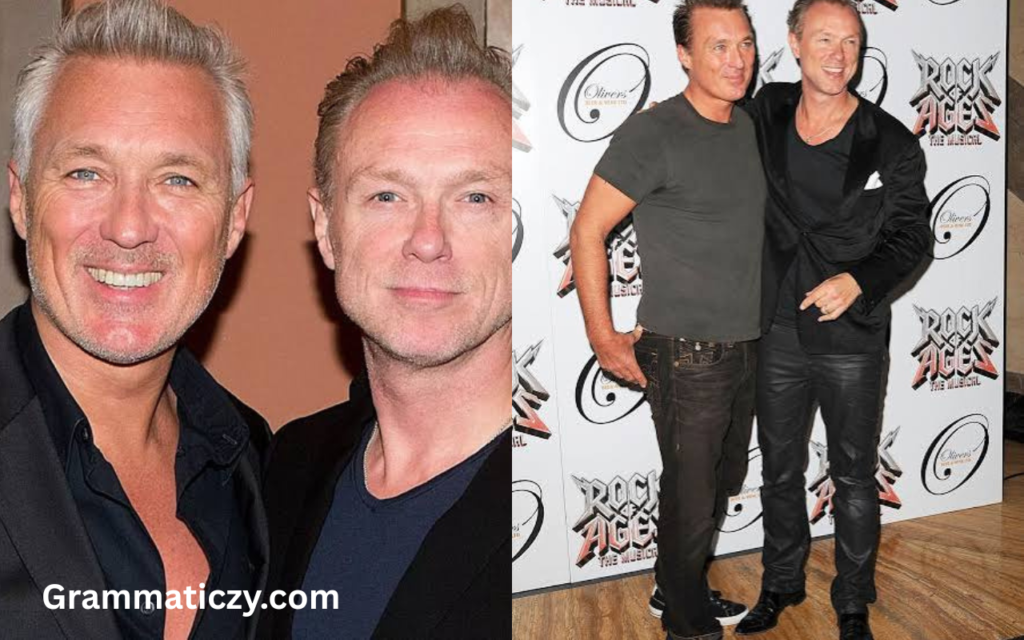
There are plenty of famous brothers in entertainment, but very few have managed to build a story as varied, enduring, and genuinely fascinating as Gary and Martin Kemp. Long before they became the faces of Spandau Ballet, before True and Gold became defining songs of the 1980s, and before they portrayed the notorious Kray twins on screen, the brothers were simply two boys growing up in Islington, north London, in a close-knit working-class family. Their lives would eventually take them from local drama classes and school bands to international pop stardom, Hollywood, British television, and several remarkable career reinventions.
What makes the Kemp brothers particularly compelling is that their success was never limited to one field. Gary Kemp became Spandau Ballet’s principal songwriter and guitarist, creating some of the band’s most enduring songs, while Martin Kemp developed his own identity as a bassist, actor, television personality, and presenter. Their shared appearance in The Krays demonstrated that they could move from music into serious acting, while Martin’s later role as Steve Owen in EastEnders gave him a second major career entirely separate from the band’s legacy. Gary, meanwhile, continued writing music, performing, acting, appearing on stage, and working on documentary and radio projects.
The story of Gary and Martin Kemp is therefore not simply an 1980s nostalgia story. It is a story about ambition, family, artistic reinvention, resilience, and the ability to remain relevant as the entertainment industry changes. From the streets of Islington to the London club scene, from international music charts to film sets and television studios, the brothers have repeatedly demonstrated that a successful career can evolve rather than remain trapped in the period that first made someone famous.
Gary and Martin Kemp’s Early Life and Family Background
Gary James Kemp was born on October 16, 1959, in London, while his younger brother Martin John Kemp was born on October 10, 1961. The brothers grew up in Islington in north London, in a family headed by Frank and Eileen Kemp. Their father worked as a printer and their mother was involved in sewing and other work. The family did not begin with the wealth or privilege that might be associated with the glamorous entertainment careers the brothers would later build. Instead, their childhood was shaped by ordinary family life, parental encouragement, and a strong sense of togetherness.
The environment in which they were raised played a surprisingly important role in their future. Both brothers became involved with Anna Scher’s children’s theatre, an influential drama environment that introduced young performers to acting and television. Their early exposure to performance meant that appearing in front of an audience was not an entirely foreign experience when music eventually became their professional path. Gary, in particular, appeared in children’s television and film productions and took a leading role in the 1972 film Hide and Seek.
Their parents also appear to have provided the kind of emotional foundation that helped the brothers navigate fame later in life. Gary has spoken about his father’s supportive and non-judgmental attitude during the early days of Spandau Ballet, when the band’s fashion and image were far removed from conventional expectations. Instead of trying to discourage his son’s unusual appearance or ambitions, his father remained supportive. That acceptance became an important part of the brothers’ understanding of family and individuality.
Gary Kemp’s Education, Music Influences and Early Ambition
Gary attended Dame Alice Owen’s grammar school, where he met several people who would eventually become central to the Spandau Ballet story. He was interested in music from a remarkably young age and began playing guitar and writing songs as a child. According to his official biography, two experiences were particularly influential: seeing David Bowie perform on television and witnessing the Sex Pistols at the Screen on the Green in Islington in 1976. Those two moments represented very different sides of British music, but together they helped shape Gary’s artistic ambition.
The guitar initially came into Gary’s life through a Christmas or birthday gift from his parents, but what might have seemed like a simple present became the beginning of an extraordinary songwriting career. Rather than merely learning popular songs, Gary became increasingly interested in writing his own material. His fascination with glam rock, progressive rock, punk, fashion, and London’s developing underground culture eventually pushed him toward creating something of his own rather than simply following established musicians.
Gary’s teenage years were therefore a period of experimentation. He formed early musical groups with schoolmates and went through several band names and musical directions before arriving at Spandau Ballet. The changing names—Roots, The Cut, The Makers and Gentry—reflected a young group searching for its identity. Eventually, that experimentation would produce one of the most distinctive bands of the British New Romantic era.
How Spandau Ballet Changed the Kemp Brothers’ Lives
Spandau Ballet began emerging from London’s underground club culture in the late 1970s. The group became closely associated with the Blitz club and the developing New Romantic movement, a scene that placed enormous importance on music, fashion, visual presentation, and nightlife. Gary, Steve Norman, John Keeble, and Tony Hadley were central to the band’s formation, while Martin eventually joined as bassist. The group played its first show as Spandau Ballet at the Blitz in December 1979.
The early Spandau Ballet sound was different from the polished pop that would later make the band internationally famous. Their initial material drew heavily on electronic music, funk, soul, new wave, and the creative atmosphere surrounding London’s clubs. Songs such as “To Cut a Long Story Short” and “Chant No. 1” helped establish the band as a major force in the emerging New Pop movement. Their style was not merely musical; their fashion and visual identity became equally important to their appeal.
For the Kemp brothers, joining the same band created a unique professional relationship. Gary was the principal songwriter and guitarist, while Martin became the bass player and an important visual presence. Martin was not originally an experienced bassist, but he learned the instrument and became an essential part of the band’s lineup. Their contrasting personalities and roles complemented one another, helping create a partnership that lasted through enormous success, disagreements, career changes, and later reunions.
The Success of “True,” “Gold” and Spandau Ballet
Spandau Ballet’s biggest transformation came when Gary’s songwriting began producing sophisticated, emotionally resonant pop songs that could reach a much broader audience. The band’s 1983 album True became a landmark release, with the title track developing into one of the most recognizable songs of the decade. “Gold” followed as another major international hit, while songs such as “Only When You Leave” and “Through the Barricades” reinforced Gary’s reputation as a songwriter capable of creating memorable melodies and emotionally distinctive lyrics.
The band’s success placed the Kemp brothers at the center of 1980s British pop culture. Spandau Ballet became one of the leading British bands of the New Romantic generation, alongside other major acts of the era. Their success extended beyond the United Kingdom, giving them an international audience and allowing them to tour extensively. Their participation in the historic Band Aid and Live Aid era further connected the group with one of the most culturally significant periods in British popular music.
Behind the glamour, however, success brought enormous pressure. Gary has spoken about experiencing intense anxiety during the height of Spandau Ballet’s popularity and worrying about whether he was good enough or whether he was fulfilling the expectations surrounding him. The band’s eventual breakdown also demonstrated that international fame does not automatically produce harmony. Although the Kemp brothers remained close, disagreements involving the wider group eventually contributed to Spandau Ballet’s separation.
The Krays: When the Kemp Brothers Became Actors
Perhaps the most extraordinary chapter in the Kemp brothers’ biography arrived when they were cast as Ronnie and Reggie Kray in the 1990 film The Krays. The casting was unusual because they were internationally recognized musicians rather than established film actors. Yet their childhood acting experience and genuine sibling relationship gave them an advantage that conventional casting could not easily reproduce.
Gary played Ronnie Kray while Martin portrayed Reggie. Their ability to understand one another’s body language and reactions became central to their performances. Because they were actual brothers, they could draw on decades of familiarity while portraying the complicated psychological relationship between the notorious twins. The brothers later explained that their real relationship gave the film an emotional dimension that might have been difficult for unrelated actors to reproduce.
The film became an important turning point because it demonstrated that the Kemps were capable of moving beyond their identity as pop musicians. Instead of being remembered solely as members of an iconic 1980s band, they could now be taken seriously as actors. The experience also opened different professional doors, particularly for Gary, who subsequently worked in American film and television, while Martin continued developing his own acting career.
Martin Kemp’s EastEnders Career and Television Success
Martin Kemp’s career took a major turn when he joined the BBC soap opera EastEnders in 1998 as Steve Owen. The character became one of the program’s best-known villains and gave Martin an entirely new audience. Instead of being known primarily as the bassist from Spandau Ballet, he became a television actor in his own right. His performance earned significant recognition, including the Most Popular Actor award at the 2000 National Television Awards and additional awards and nominations connected to British television.
The timing of the role was particularly meaningful because Martin had experienced serious health problems before joining EastEnders. He had undergone treatment for two brain tumors in the mid-1990s. His eventual return to major professional work represented much more than another acting opportunity; it marked a new phase after several difficult years. Gary later described feeling enormous pride and relief when his brother recovered and secured the EastEnders role.
Martin subsequently expanded his television career beyond scripted acting. He appeared on reality and entertainment programs, including Celebrity Big Brother, where he reached the final, and later became a judge on Let It Shine. His television career demonstrated his ability to adapt to changing formats and remain comfortable in front of the camera. In many ways, the former Spandau Ballet bassist became an all-purpose British entertainer whose career could move easily between music, drama, reality television, presenting, and family entertainment.
Gary Kemp’s Acting, Solo Music and Creative Career
While Martin established himself in British television, Gary developed a broader career encompassing music, film, stage acting, writing, and broadcasting. After The Krays, he appeared in The Bodyguard alongside Whitney Houston and Kevin Costner and later appeared in Killing Zoe. These roles gave him exposure to Hollywood filmmaking and confirmed that his artistic ambitions were not limited to Spandau Ballet.
Gary also pursued solo music. His first solo album, Little Bruises, was released in 1995, and decades later he returned with INSOLO in 2021. These projects allowed him to explore music independently of the expectations attached to Spandau Ballet. His songwriting career also continued through other collaborations and live performance projects, including his work with Nick Mason’s Saucerful of Secrets.
His creative work has also included West End theatre, documentaries, radio, journalism, and autobiography. He has written about musicians who influenced him, including David Bowie and Mick Ronson, and published I Know This Much: From Soho to Spandau. This later phase of Gary’s career reveals a performer who has gradually become not only a musician and actor but also a commentator on music, culture, memory, and his own generation.
Family, Marriage and the Brothers’ Personal Relationship
One of the most distinctive features of the Kemp brothers’ story is the strength of their relationship. The entertainment industry is filled with examples of siblings who became rivals, but Gary and Martin have generally maintained an unusually supportive relationship. Their shared upbringing appears to have given them a strong emotional connection, and they have repeatedly worked together even while pursuing separate careers.
Gary has been married to costume designer Lauren Kemp and has children from his relationships, while Martin married Shirlie Kemp, formerly associated with Wham!, in 1988. Martin and Shirlie have two children, Harley Moon and Roman Kemp. Roman subsequently developed a successful career in radio and television, meaning that the Kemp family’s connection to British entertainment has continued into another generation.
The brothers also experienced profound family loss. Their parents died within days of one another in 2009, a devastating event that Gary has discussed publicly. The family held a joint funeral, reflecting how closely the couple had lived their lives together. Gary’s reflections on his parents reveal how deeply their encouragement and unconditional support influenced both brothers, particularly during the uncertain years when their entertainment careers were beginning.
Challenges, Resilience and Reinvention
The Kemp brothers’ careers have included their share of difficult periods. Spandau Ballet’s internal tensions eventually contributed to the band’s breakup, followed by a legal dispute over songwriting royalties. The disagreement was particularly significant because Gary had written much of the band’s material, while the other members sought a share of the songwriting income. The dispute ultimately became a major chapter in the band’s history.
Martin’s health problems were another major challenge. His diagnosis with two brain tumors in the 1990s could have brought his entertainment career to an abrupt end, but successful treatment allowed him to return to professional work. His later success on EastEnders therefore carried an additional personal significance. It showed that a serious interruption did not have to become the end of a creative life.
Gary’s experience was different but also emotionally demanding. He has described the anxiety that accompanied Spandau Ballet’s enormous success and the pressure he felt because his parents had invested so much love and hope in their children. The brothers’ ability to continue working, experimenting, and reinventing themselves after difficult periods is one of the strongest reasons their careers have lasted for so many decades.
Gary and Martin Kemp’s Net Worth and Sources of Income
Exact Kemp brothers net worth figures are difficult to establish because neither Gary nor Martin has published a complete financial statement covering their property, investments, royalties, contracts, savings, and business interests. Celebrity-net-worth estimates found online should therefore be treated as approximate speculation rather than confirmed financial information. A responsible biography should distinguish between reported earnings and independently verified wealth.
Gary’s long-term income has potentially come from several areas, including songwriting royalties, Spandau Ballet recordings, live performances, solo albums, acting, theatre, broadcasting, writing, and other creative projects. The enduring popularity of songs such as “True” and “Gold” also means that songwriting and publishing remain important parts of his professional legacy. Successful compositions can generate income through recordings, broadcasting, licensing, public performance, and other uses over many years.
Martin has similarly built a diversified entertainment career. His income sources have included Spandau Ballet performances and recordings, acting, television work, presenting, reality programs, appearances, and publishing. His ability to move successfully between music and television helped create a career that did not depend entirely on the band’s original popularity. Rather than treating an exact online net-worth figure as fact, it is more accurate to describe both brothers as long-established entertainment professionals with multiple income streams accumulated over several decades.
Social Media and Public Presence
Social media has changed how established entertainers communicate with their audiences, and the Kemp brothers have adapted to that environment. Martin’s public persona is particularly well suited to social platforms because his career now encompasses music, television, family, nostalgia, and entertainment. His online presence gives fans a direct way to follow appearances, projects, family moments, and his continuing connection to the music and television audiences that have supported him for decades.
Gary’s online identity is more strongly centered around music, songwriting, interviews, performance, and his continuing creative work. His official website provides an extensive overview of his career and remains an important source for information about his professional activities. Rather than depending exclusively on nostalgia, his public profile emphasizes his continuing work as a musician, writer, actor, and broadcaster.
The brothers’ social-media appeal also benefits from the fact that they have a history spanning several generations of popular culture. Older fans may know them from Spandau Ballet, while younger viewers may recognize Martin from television or Gary from acting and music projects. Their ability to communicate across generations is an important part of their continued cultural relevance.
Recent Work and the Continuing Kemp Legacy
In recent years, Gary and Martin have continued to revisit their shared history while developing their individual careers. Their BBC Four project The Kemps: All True demonstrated that they were willing to make fun of their own celebrity identities and use their brotherly relationship as entertainment. The project showed that their appeal was no longer dependent solely on music or conventional acting; their personalities and history together had become part of their creative material.
Gary has continued his musical work, including performances and collaborations, while Martin has remained active in television and entertainment. Their careers increasingly demonstrate a balance between looking back and moving forward. They can celebrate the Spandau Ballet years without allowing those years to define everything they do. That is particularly important for artists whose greatest commercial success occurred decades earlier.
The wider Kemp family has also continued to attract public attention. Martin’s son Roman has established his own career in radio and television, creating a generational link between the original Spandau Ballet era and contemporary British broadcasting. The family’s ongoing presence in entertainment illustrates how artistic confidence, performance skills, and public communication can sometimes pass from one generation to another.
The Lasting Legacy of the Kemp Brothers
Gary and Martin Kemp have created something much more enduring than a successful 1980s music career. They helped shape the New Romantic movement, contributed songs that remain instantly recognizable, successfully transitioned into acting, and built separate television and creative careers. Their achievements are particularly impressive because each new chapter could have been dismissed as an attempt to repeat earlier success, yet they repeatedly proved capable of creating new identities for themselves.
Their story also offers an important lesson about reinvention. Gary did not remain solely the songwriter of Spandau Ballet; he became an actor, solo musician, theatre performer, author, documentary presenter, and broadcaster. Martin did not remain simply the band’s bassist; he became one of the most recognizable villains in British television and developed a long career as an entertainer and presenter. Their willingness to learn, adapt, and accept unfamiliar opportunities allowed both brothers to remain professionally relevant across changing eras.
Perhaps the most meaningful part of the Kemp brothers’ legacy is the relationship between them. Their story shows that family can be both a source of opportunity and a source of stability. They entered the entertainment world together, experienced extraordinary success together, faced difficult periods together, and continued finding ways to collaborate while building individual identities. In an industry where fame can easily produce rivalry and distance, their ability to remain brothers first is remarkable.
From a modest childhood in Islington to the bright lights of the Blitz club, the international success of Spandau Ballet, the intensity of The Krays, the drama of EastEnders, and decades of music, television, theatre, and family life, Gary and Martin Kemp have built a legacy defined by much more than celebrity. Their journey is a reminder that success is not simply about reaching the top once; it is about finding the courage to start again when one chapter ends. As the Kemp brothers continue to contribute to British popular culture, their story stands as an inspiring example of resilience, creativity, family loyalty, and the enduring power of reinvention.