
Have you ever spotted a pair of chunky shoes online and wondered whether they were flatforms or platforms? You’re not alone. Many shoppers use the terms interchangeably, but they actually describe two distinct footwear styles.
When comparing Flatform vs Platform, understanding the difference can help you choose shoes that match your comfort needs, fashion preferences, and lifestyle. While both styles add height and make a bold fashion statement, their design, feel, and functionality differ significantly.
In this guide, you’ll learn exactly what flatform and platform shoes are, how they compare, their pros and cons, and which option might be best for your wardrobe.
What Are Flatform Shoes?
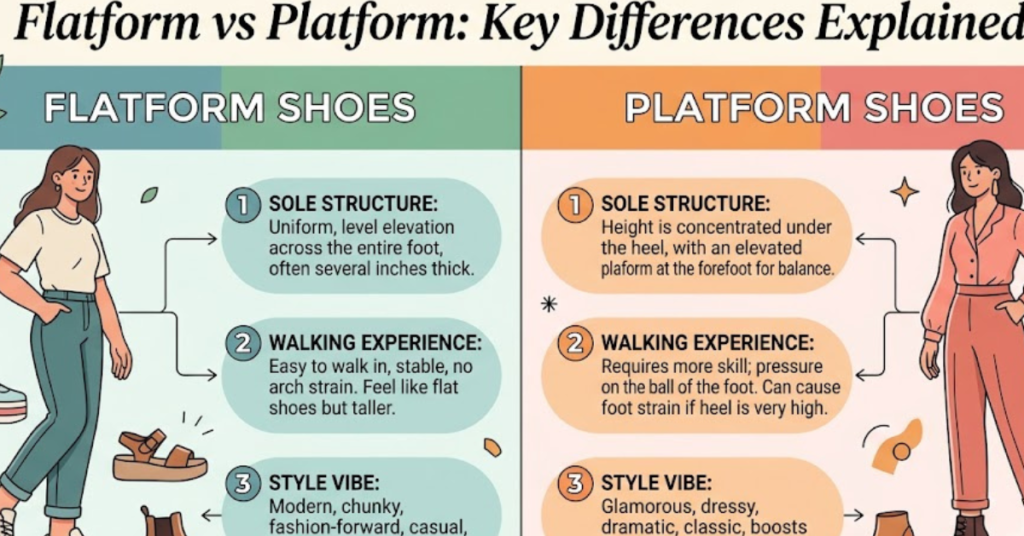
Flatform shoes feature a sole that remains nearly the same thickness from the toe to the heel. Instead of creating a raised heel like traditional high heels or some platform shoes, flatforms elevate the entire foot evenly.
The name itself combines the words “flat” and “platform.”
Characteristics of Flatform Shoes
- Uniform sole height throughout
- No significant heel-to-toe slope
- Stable walking surface
- Casual yet fashionable appearance
- Available in sandals, sneakers, boots, and loafers
Popular brands such as Steve Madden, Dr. Martens, and Prada have incorporated flatform styles into their collections over the years.
Common Flatform Styles
- Flatform sandals
- Flatform sneakers
- Flatform espadrilles
- Flatform boots
- Flatform loafers
What Are Platform Shoes?
Platform shoes feature a thick sole under the front part of the foot, combined with an elevated heel. This design reduces the angle between the heel and toe compared to traditional high heels.
Platform footwear has existed for centuries but gained major popularity during the 1970s disco era and continues to evolve in modern fashion.
Characteristics of Platform Shoes
- Elevated heel section
- Thick sole under the forefoot
- Added height without extreme foot angle
- Fashion-forward appearance
- Available in heels, boots, sandals, and sneakers
Common Platform Styles
- Platform heels
- Platform boots
- Platform sandals
- Platform sneakers
- Platform pumps
Flatform vs Platform: The Main Differences
Although both styles add height, several key distinctions set them apart.
| Feature | Flatform | Platform |
| Sole Shape | Even thickness throughout | Thick front sole with raised heel |
| Height Distribution | Uniform | Heel is higher than toe |
| Comfort | Generally more comfortable | Depends on heel height |
| Stability | Very stable | Moderate stability |
| Fashion Style | Casual and modern | Bold and dramatic |
| Walking Ease | Easier for everyday wear | May require adjustment |
Comfort Comparison: Which Is More Comfortable?
Comfort is often one of the biggest deciding factors when choosing between these two styles.
Why Flatforms Are Often More Comfortable
Because the foot remains relatively level, flatform shoes distribute body weight more evenly.
Benefits include:
- Less pressure on the ball of the foot
- Reduced arch strain
- Better balance
- Easier all-day wear
Many people find flatform sneakers and sandals suitable for long periods of walking.
Comfort Factors in Platform Shoes
Platform shoes can still be comfortable compared to traditional high heels because the thick front sole reduces the effective heel height.
However, comfort depends on:
- Heel height
- Arch support
- Foot shape
- Material quality
Higher platform heels may still place pressure on the forefoot during extended wear.
Style Comparison: Fashion and Aesthetic Appeal
Flatform Style
Flatforms offer a modern, minimalist look while adding subtle height.
They pair well with:
- Jeans
- Wide-leg pants
- Summer dresses
- Casual skirts
- Streetwear outfits
Fashion enthusiasts often choose flatforms for effortless everyday styling.
Platform Style
Platforms create a more dramatic and attention-grabbing appearance.
They complement:
- Evening outfits
- Party dresses
- Statement fashion looks
- Retro-inspired clothing
- High-fashion ensembles
Platform footwear is often associated with bold fashion trends and runway collections.
Height Boost: Which Adds More Height?
Both options increase height, but platform shoes generally provide greater elevation.
Flatform Height
Most flatforms offer:
- 1 to 3 inches of height
- Uniform elevation
- Balanced posture
Platform Height
Platforms often provide:
- 2 to 6 inches or more
- Additional heel lift
- More dramatic appearance
For those seeking maximum height, platforms are usually the preferred choice.
Stability and Safety
Flatform Stability
One major advantage of flatform shoes is stability.
The flat sole design:
- Creates a balanced walking surface
- Reduces ankle strain
- Improves overall support
This makes flatforms particularly popular among individuals who prioritize comfort and practicality.
Platform Stability
Platform shoes vary significantly in stability.
Factors affecting stability include:
- Heel width
- Platform height
- Sole construction
- Walking surface
Chunky platform shoes generally provide better stability than narrow platform heels.
When Should You Choose Flatform Shoes?
Flatforms are ideal if you:
- Walk frequently
- Want extra height without discomfort
- Prefer casual fashion
- Need versatile everyday footwear
- Prioritize stability
Best Occasions for Flatforms
- Shopping trips
- Travel
- Casual office settings
- Weekend outings
- Summer vacations
When Should You Choose Platform Shoes?
Platforms may be the better option if you:
- Want a dramatic fashion statement
- Need extra height
- Attend special events
- Enjoy trend-driven styles
- Like vintage-inspired fashion
Best Occasions for Platforms
- Parties
- Weddings
- Fashion events
- Concerts
- Nightlife activities
Pros and Cons of Flatform Shoes
Pros
- Comfortable for extended wear
- Better balance and support
- Easy to style
- Suitable for daily use
- Less foot strain
Cons
- Less dramatic appearance
- Limited formal options
- May feel bulky to some wearers
Pros and Cons of Platform Shoes
Pros
- Significant height increase
- Fashion-forward appearance
- Versatile style options
- More glamorous look
- Reduced heel angle compared to traditional heels
Cons
- Can be harder to walk in
- Increased risk of ankle instability
- Less suitable for long walks
- May cause foot fatigue
Current Fashion Trends
Both flatform and platform footwear remain highly relevant in today’s fashion landscape.
Recent trends include:
- Chunky platform sneakers
- Retro-inspired platform boots
- Minimalist flatform sandals
- Luxury designer flatform loafers
- Elevated casual footwear
Major fashion houses and athletic brands continue to introduce updated versions of both styles, reflecting growing consumer demand for height-enhancing yet comfortable shoes.
How to Choose Between Flatform and Platform Shoes
Consider the following factors before purchasing:
Choose Flatforms If:
- Comfort is your top priority
- You walk frequently
- You want subtle height
- You prefer casual fashion
Choose Platforms If:
- You want maximum height
- You enjoy bold styling
- You’re dressing for special occasions
- You like statement footwear
A good rule of thumb is to think about how long you’ll be wearing the shoes and the environment you’ll be in.
Key Takeaways
- Flatform shoes have an evenly thick sole from toe to heel.
- Platform shoes combine a thick front sole with a raised heel.
- Flatforms typically offer greater comfort and stability.
- Platforms generally provide more height and visual impact.
- Both styles remain popular in modern fashion.
- The best choice depends on your comfort needs and style preferences.
Frequently Asked Questions
What is the main difference between flatform and platform shoes?
The primary difference is the sole structure. Flatforms maintain an even sole height throughout, while platform shoes have a thicker front sole paired with an elevated heel.
Are flatform shoes better for walking?
Yes. Flatforms are generally easier to walk in because they provide a level surface and better weight distribution, making them suitable for extended wear.
Do platform shoes make you taller than flatforms?
In most cases, yes. Platform shoes often include a raised heel that adds more overall height compared to typical flatform designs.
Are flatforms still in style?
Absolutely. Flatform sandals, sneakers, and loafers continue to appear in fashion collections and streetwear trends worldwide.
Can platform shoes be comfortable?
Yes. Well-designed platform shoes can be comfortable because the thick front sole reduces the foot angle compared to traditional high heels.
Which is better: flatform vs platform?
Neither is universally better. Flatforms excel in comfort and stability, while platforms stand out for height and bold fashion appeal. The right choice depends on your personal preferences and intended use.
Conclusion
The debate over Flatform vs Platform ultimately comes down to comfort, style, and purpose. Flatforms offer a level sole that prioritizes stability and everyday wearability, while platforms provide extra height and a more dramatic fashion statement.
If you’re looking for all-day comfort and versatility, flatforms are often the smarter choice. If your goal is to elevate your look—literally and stylistically—platforms may be the better fit.
Understanding these differences makes it easier to choose footwear that complements both your wardrobe and your lifestyle. Whether you lean toward casual comfort or bold fashion, both styles offer unique advantages worth exploring.