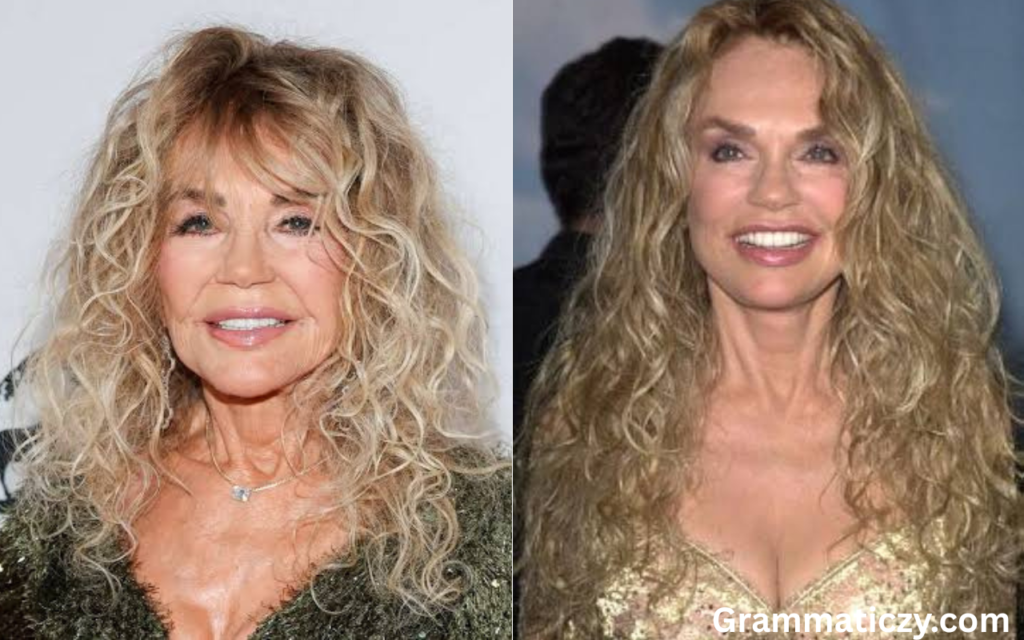
Dyan Cannon has lived the kind of Hollywood life that could easily fill several screenplays. Born Samille Diane Friesen in Tacoma, Washington, in 1937, she entered show business during the golden age of television and gradually developed into an actress, director, screenwriter, producer and editor. Her career has stretched from the late 1950s into the present, giving her an unusual perspective on the transformation of American entertainment. Along the way, she earned three Academy Award nominations, won a Golden Globe and a Saturn Award, received a star on the Hollywood Walk of Fame, and became known for films such as Bob & Carol & Ted & Alice and Heaven Can Wait.
Yet Dyan Cannon’s story is about considerably more than awards and famous movie roles. Her marriage to Cary Grant made her a constant subject of public fascination, but her own creative ambitions eventually became just as important to her identity. She worked behind the camera on the Oscar-nominated short Number One, later directed the semi-autobiographical feature The End of Innocence, wrote the bestselling memoir Dear Cary, and became an executive producer of Archie, the television miniseries inspired by her memories of Cary Grant.
In her later years, Cannon has continued to demonstrate an extraordinary appetite for life. Rather than withdrawing from the public eye, she has remained involved in entertainment, faith-based conversations, charitable causes, social media and public appearances. Recent coverage has shown her discussing relationships, friendship, faith and aging with the same lively personality that made her distinctive during her Hollywood heyday. In 2026, she remains an enduring figure whose story connects classic Hollywood with a much more modern understanding of personal reinvention.
Dyan Cannon Quick Facts
| Category | Details |
|---|---|
| Full name | Samille Diane Friesen |
| Professional name | Dyan Cannon |
| Date of birth | January 4, 1937 |
| Age | 89 years old in 2026 |
| Birthplace | Tacoma, Washington, United States |
| Profession | Actress, director, screenwriter, producer and editor |
| Parents | Ben Friesen and Claire Portnoy |
| Sibling | David Friesen, jazz musician |
| Education | West Seattle High School; University of Washington; acting studies with Sanford Meisner |
| Daughter | Jennifer Grant |
| First husband | Cary Grant |
| Second husband | Stanley Fimberg |
| Major films | Bob & Carol & Ted & Alice, Heaven Can Wait, Revenge of the Pink Panther, Deathtrap |
| Major TV role | Judge Jennifer “Whipper” Cone in Ally McBeal |
| Academy Award nominations | 3 |
| Golden Globe | 1 win |
| Hollywood Walk of Fame | Star received in 1983 |
| Memoir | Dear Cary: My Life with Cary Grant |
| Recent project | God’s Table podcast and continued public appearances |
| Reported net worth | Approximately $16 million in commonly published estimates |
| Publicly listed as @therealdyan.cannon | |
| X/Twitter | Publicly listed as @Dyan_Cannon |
Who Is Dyan Cannon?
Dyan Cannon is an American actress and filmmaker whose career has crossed several generations of Hollywood. She first became known through television appearances during the late 1950s and 1960s before making a major impression in feature films. Her performance as Alice in Paul Mazursky’s Bob & Carol & Ted & Alice established her as a serious film performer and earned her first Academy Award nomination. That success was followed by an eclectic collection of film and television roles that demonstrated her ability to move between comedy, drama, romance and more unconventional material.
Cannon’s career is particularly notable because she did not remain confined to acting. She became involved in screenwriting, directing, producing and editing, making her one of the women of her generation to establish herself both in front of and behind the camera. Her work on Number One earned an Oscar nomination for Best Live Action Short Film, while she later wrote, directed and starred in The End of Innocence. This creative expansion helped distinguish her from performers who were known primarily for their screen presence.
Her public identity has nevertheless often been linked to Cary Grant, whom she married in 1965. Their relationship ended in divorce three years later, but they remained connected through their daughter, Jennifer Grant. Cannon eventually transformed her complicated memories of that marriage into Dear Cary, a memoir that became a New York Times bestseller. Decades after the marriage ended, the memoir became the foundation for Archie, giving Cannon another opportunity to revisit that chapter of her life on her own terms.
Early Life, Parents and Family Background
Dyan Cannon was born Samille Diane Friesen on January 4, 1937, in Tacoma, Washington. Her parents were Ben Friesen and Claire Portnoy. Cannon grew up in a family environment that brought together different cultural and religious influences, and her upbringing in the Pacific Northwest preceded the glamorous Hollywood life that would eventually make her famous. She also had a brother, David Friesen, who later became an accomplished jazz musician.
Her family eventually lived in the Seattle area, where Cannon attended West Seattle High School. She developed an interest in performance at an early age and participated in activities connected with the synagogue she attended with her mother. She was also crowned Miss West Seattle in 1955, an experience that placed her in front of the public and gave her an early taste of the confidence and presentation skills that would become useful in entertainment.
Cannon later attended the University of Washington, although she did not complete a degree. Her early interests were not limited to entertainment; she studied anthropology before ultimately pursuing acting and professional opportunities in Los Angeles. That combination of academic curiosity and performance ambition became an interesting part of her personality. She was not simply seeking celebrity but was developing a broader understanding of people, relationships and the world around her.
Education and the Journey to Hollywood
After leaving university, Cannon gradually moved toward a career in entertainment. Modeling provided one of her early opportunities, and her appearance and personality helped her attract attention in Los Angeles. She eventually came under the guidance of people who encouraged her to take acting seriously, and she studied with renowned acting teacher Sanford Meisner. That training gave her a more disciplined foundation than simply relying on appearance or natural charisma.
Her professional name also emerged during this period. Born Samille Diane Friesen, she adopted Dyan Cannon as her stage name as her entertainment career developed. The change was part of the larger transformation involved in entering show business, where performers frequently created identities that were easier for audiences and studios to remember. Cannon’s new name eventually became inseparable from her distinctive screen personality.
Cannon’s first years in Hollywood were built through persistence rather than immediate superstardom. She appeared on television programs and gradually collected acting credits while learning how the industry operated. Her television debut came in 1958, and over the following decade she became a familiar face on episodic television. She also worked in theater, giving her experience beyond the film set and helping her develop the versatility that would later define her career.
Dyan Cannon’s Breakthrough in Film
The major breakthrough arrived with Bob & Carol & Ted & Alice in 1969. The film, directed by Paul Mazursky, became a defining cultural comedy of its era, and Cannon’s performance as Alice attracted considerable critical attention. She received an Academy Award nomination for Best Supporting Actress and won the New York Film Critics Circle Award for her performance. The recognition transformed her from a successful television performer into a major film actress.
The film was significant not simply because it earned Cannon an Oscar nomination but because of the type of material it represented. Bob & Carol & Ted & Alice explored changing attitudes toward relationships, sexuality and social conventions during a period when American culture was undergoing dramatic changes. Cannon’s ability to play comedy while maintaining emotional credibility made her particularly effective in the film.
Following that breakthrough, Cannon entered one of the busiest periods of her career. She appeared in films including The Love Machine, The Anderson Tapes, The Burglars and Such Good Friends. She continued working in television and theater as well, refusing to limit herself to a single medium. Her career during the 1970s therefore became a mixture of mainstream Hollywood projects and more creatively ambitious work.
Becoming a Filmmaker Behind the Camera
One of the most impressive chapters of Dyan Cannon’s career came when she moved behind the camera. In 1976, she wrote, directed, produced, edited and scored the live-action short film Number One. The project received an Academy Award nomination for Best Short Film, Live Action. This was an extraordinary accomplishment because Cannon was not simply acting in the film; she was involved in virtually every major stage of its creation.
Her work on Number One became particularly important to her professional legacy because it demonstrated that she possessed creative ambitions beyond acting. At a time when women were still underrepresented in directing and other filmmaking positions, Cannon took responsibility for multiple technical and artistic elements. The achievement helped establish her as a genuine filmmaker rather than simply an actress experimenting behind the scenes.
Cannon later expanded her filmmaking career with The End of Innocence, a 1990 semi-autobiographical drama that she wrote, directed and starred in. The project allowed her to use personal experiences as creative material while taking control over the storytelling process. Her willingness to transform difficult or intimate experiences into art became one of the recurring themes of her career.
Heaven Can Wait and Hollywood Recognition
Another major milestone arrived with Heaven Can Wait in 1978. Cannon played Julia Farnsworth in the romantic fantasy comedy, which starred Warren Beatty and became a major success. Her performance earned her another Academy Award nomination for Best Supporting Actress and a Golden Globe win. She also received the Saturn Award for Best Supporting Actress for the role.
The recognition confirmed that her earlier Oscar nomination for Bob & Carol & Ted & Alice had not been an isolated success. Cannon had developed into an actress capable of earning major industry recognition across different types of material. Her performance in Heaven Can Wait also demonstrated her ability to combine warmth, humor and emotional complexity.
Cannon continued appearing in commercially recognizable films through the following years, including Revenge of the Pink Panther and Deathtrap. She also maintained a connection with stage and television work. In 1983, she received a star on the Hollywood Walk of Fame, an honor that reflected the breadth of her entertainment career rather than one particular movie.
Cary Grant and Dyan Cannon’s Marriage
Dyan Cannon’s personal life became a major subject of public interest when she began a relationship with Cary Grant. Grant was already one of the most famous actors in the world, while Cannon was an emerging actress. They married on July 22, 1965, in Las Vegas. Their daughter, Jennifer Grant, was born on February 26, 1966, making her Cary Grant’s only child.
The marriage lasted less than three years and ended in divorce in 1968. Cannon was initially reluctant to speak publicly about the relationship in detail. Over time, however, she became more willing to explore what the marriage had meant to her, particularly as she reflected on her personal growth and the impact of becoming a mother. Her later memoir presented a far more complicated picture than the glamorous Hollywood romance suggested from the outside.
The relationship remains important to Cannon’s biography, but it does not define her entire career. She had already established herself professionally and continued building her own body of work after the divorce. Her daughter Jennifer became an actress as an adult, creating another connection between the Grant and Cannon families and Hollywood’s entertainment tradition.
Dear Cary and the Story Behind Archie
For many years after Cary Grant’s death in 1986, Cannon resisted pressure to tell the full story of their marriage. She was approached about writing a book but felt that she needed more time before revisiting the relationship publicly. Eventually, she wrote Dear Cary: My Life with Cary Grant, which was published in 2011 and became a New York Times bestseller.
The memoir was not simply a celebrity tell-all. It explored Cannon’s emotional experiences, her marriage, motherhood and the complicated relationship she had with one of Hollywood’s most celebrated men. The book gave Cannon a voice separate from the public mythology surrounding Cary Grant and allowed her to examine the difference between the charming screen legend and the private person she knew.
That story later became Archie, a four-part television miniseries that premiered in 2023. Jason Isaacs portrayed Cary Grant, while Laura Aikman portrayed Cannon. Cannon and Jennifer Grant served as executive producers, making the project a deeply personal continuation of the memoir. The series offered audiences another interpretation of Grant’s life while preserving Cannon’s perspective as someone who had known him intimately.
Television Career and Ally McBeal
Although Cannon achieved major recognition through movies, television remained an important part of her career. She had appeared in numerous television productions from the beginning of her professional life, gaining experience at a time when episodic television was becoming an increasingly important part of American entertainment. Those early appearances helped establish her as a recognizable performer before her film career reached its peak.
One of her most memorable later television roles came on Ally McBeal. From 1997 to 2000, she played Judge Jennifer “Whipper” Cone, bringing her distinctive comic timing and personality to the popular legal comedy-drama. The role introduced Cannon to a younger television audience and demonstrated that she could remain relevant even as the entertainment industry changed around her.
Her television career illustrates an important characteristic of Cannon’s professional life: adaptability. Instead of relying entirely on the fame she had established in 1970s cinema, she continued accepting opportunities across television, film and other formats. That willingness to adapt helped extend her career across generations and prevented her from becoming defined solely by her earlier movie roles.
Personal Life, Faith and Relationships
Dyan Cannon’s personal life has continued to attract attention, partly because she has become increasingly open about aging, relationships and the lessons she has learned. After Cary Grant, she married real-estate investor Stanley Fimberg in 1985. That marriage ended in divorce in 1991, and Cannon has remained publicly independent in the decades since.
In 2025, Cannon attracted renewed attention after discussing her romantic life at age 88. She said she was still open to companionship and relationships, challenging assumptions about romance and aging. Later reporting also noted that she clarified comments about the phrase “friends with benefits,” explaining that she had misunderstood the modern popular meaning of the expression. The episode ultimately became another example of Cannon’s willingness to laugh at life’s unexpected moments rather than retreat from public conversation.
Faith has also become an increasingly visible part of Cannon’s public identity. In 2025, she began co-hosting God’s Table, a podcast with Tracey E. Bregman, Kym Douglas and Christine Avanti-Fischer. The conversations combine faith, personal experiences, relationships and everyday life. This newer chapter shows Cannon using her voice in a different way—less as a traditional movie star and more as an experienced storyteller sharing reflections from a long and unusual life.
Philanthropy and Interests
Cannon has devoted substantial attention to charitable causes, particularly organizations involving children. Her experience as a mother and single parent influenced her connection with Big Brothers Big Sisters of America, where she served as a national spokesperson. She has also supported organizations associated with children’s welfare and missing or exploited children.
Her charitable involvement has extended beyond children’s organizations. She has supported the Special Olympics and has been associated with causes involving animal welfare and rehabilitation. Her philanthropic work provides another dimension to her public identity because it shows how she has used her celebrity beyond entertainment.
Cannon is also well known as a passionate Los Angeles Lakers fan. Her enthusiasm for basketball has been mentioned repeatedly in biographical profiles, with sources describing her as a familiar presence at Lakers games. This lighter interest fits naturally with the energetic personality she has displayed throughout her career and helps explain why she remains socially active even decades after her first Hollywood successes.
Dyan Cannon Net Worth and Sources of Income
Dyan Cannon’s exact net worth is not publicly verified through audited financial statements. Celebrity-finance websites have commonly estimated her wealth at around $16 million, but such numbers should be understood as estimates rather than confirmed financial disclosures. A responsible biography therefore should avoid presenting the figure as an exact fact.
Her long career provides several plausible sources of income. Acting has been the foundation of her professional earnings, covering feature films, television appearances and stage work. Her activities as a director, producer, writer and editor created additional professional opportunities, while her extensive catalog of entertainment work may also generate residual or related income.
Cannon’s financial story is therefore best understood through the longevity of her career rather than one headline number. She has worked consistently across multiple entertainment formats for more than six decades. Her ability to move from acting into filmmaking, writing, producing, memoir publishing and newer media projects has allowed her professional identity to evolve as the entertainment business itself has changed.
Dyan Cannon on Social Media
Cannon belongs to a generation of entertainers who became famous long before social media existed, yet she has embraced the ability to communicate directly with audiences online. Publicly indexed information has associated her with Instagram under @therealdyan.cannon and with an X/Twitter presence under @Dyan_Cannon. Because social-media usernames can change, readers should verify the account before treating any particular handle as permanent.
Her online presence gives fans a different perspective from traditional Hollywood publicity. Instead of presenting only carefully controlled movie-star images, social media allows Cannon to share personal moments, friendships, appearances and reflections. The result is a more immediate connection with audiences who may know her from Heaven Can Wait, Ally McBeal or Cary Grant’s story.
This direct relationship with fans is particularly meaningful for a performer whose career spans several eras. Younger audiences can discover her work through streaming platforms and social media, while longtime fans can see how she has continued to evolve. In that sense, Cannon’s digital presence has become another extension of the adaptability that has characterized her career from the beginning.
Dyan Cannon’s Recent Life and Career
Cannon has remained active in public life into her late 80s. Recent appearances have shown her attending entertainment events, spending time with longtime friends and speaking openly about her experiences. A 2026 report highlighted a reunion involving Cannon and fellow 1970s-era stars including Jaclyn Smith, Donna Mills and Alana Stewart, illustrating how strongly she remains connected to the Hollywood community.
Her involvement with God’s Table represents one of the clearest examples of her current direction. Rather than attempting to recreate the career she had decades ago, Cannon has embraced a format built around conversation, faith and personal experience. That choice reflects the way her public identity has matured from movie actress into storyteller, mentor and cultural observer.
There is also something significant about Cannon’s willingness to continue talking about life at 89. Her comments about relationships, friendship and aging have received considerable attention because they challenge the idea that older women should become invisible in popular culture. Her current career may look different from her 1970s film work, but the underlying quality remains the same: curiosity and an unwillingness to stop participating in life.
Dyan Cannon’s Legacy in Hollywood
Dyan Cannon’s Hollywood legacy is unusually broad. She is remembered as an actress, but she was also a director, screenwriter, producer and editor. Her three Academy Award nominations came from different aspects of her work, including acting performances and filmmaking. Her Golden Globe and Saturn Award wins, along with her Hollywood Walk of Fame star, further demonstrate the industry’s recognition of her career.
Her behind-the-camera accomplishments are particularly significant. Number One showed that she could take control of an entire creative production, while The End of Innocence demonstrated that she could use personal experiences to construct a feature-length story. These projects helped establish an example of an actress refusing to remain limited to performance alone.
Her influence also comes from longevity. Cannon entered professional entertainment in the late 1950s and has remained connected to the industry more than six decades later. She survived changes in studio culture, television, film genres, celebrity journalism and digital media. Her career therefore represents not just success in Hollywood but an extraordinary ability to adapt without abandoning her individuality.
Conclusion
Dyan Cannon’s journey began far from the Hollywood spotlight, with a young woman named Samille Diane Friesen growing up in Washington State and gradually discovering a passion for performance. From television appearances and acting lessons to major films, Oscar nominations and directing opportunities, she built a career through persistence and a willingness to take creative risks. Her story became even more complicated through her marriage to Cary Grant, motherhood, divorce, personal challenges and eventual transformation of those experiences into Dear Cary and Archie.
What makes Cannon’s biography especially inspiring is that she never allowed one chapter of her life to become the whole story. She was not merely Cary Grant’s wife, not merely the actress from Heaven Can Wait, and not merely the glamorous blonde remembered from 1970s cinema. She became a filmmaker, author, producer, philanthropist and later a public voice discussing faith, relationships and aging. Each stage added another dimension to her identity.
As Dyan Cannon continues to embrace life, her legacy is increasingly about resilience and reinvention rather than nostalgia. She demonstrates that a person’s most meaningful work does not necessarily belong to one decade, one marriage or one famous role. Her career reminds audiences that growth can continue long after the conventional definition of a Hollywood “prime” has passed. For future generations of performers, creators and storytellers, Dyan Cannon’s life offers a powerful lesson: talent may open the door, but curiosity, courage and the determination to keep evolving are what create a lasting legacy.