Dehenna Davison Biography: Early Life, Family, Education, Political Career, Net Worth and Life After Parliament
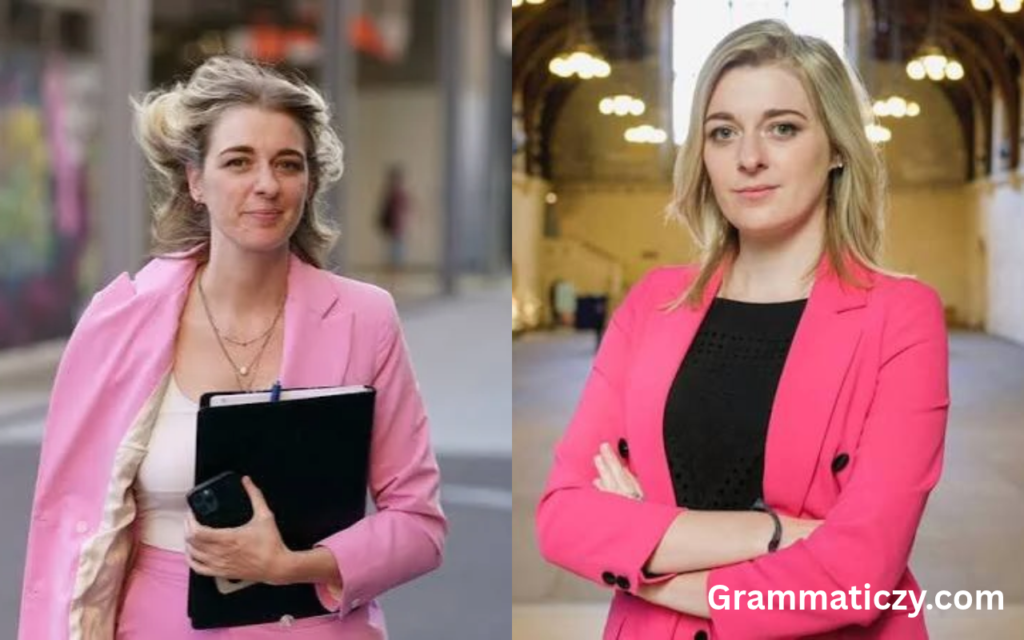
Dehenna Davison’s journey into British public life is far from an ordinary political success story. Born in Sheffield in 1993 and raised in a working-class family, she went from life on a council estate to becoming a Member of Parliament before she turned 27. Her path was shaped by education, personal tragedy, political curiosity and an ambition to influence issues that mattered to her. In 2019, she achieved a major breakthrough when she won Bishop Auckland for the Conservative Party, ending decades of Labour representation in the constituency. She subsequently served as a government minister before leaving Parliament in 2024.
What makes Dehenna Davison particularly interesting is the contrast between the different stages of her life. She has worked in ordinary customer-facing jobs, studied politics, worked inside Parliament, fought and lost elections before eventually winning one, served as a government minister, worked in broadcasting and later moved into professional activities outside elected politics. Her career has also been influenced by deeply personal experiences, particularly the death of her father when she was a teenager. Those experiences helped shape some of the causes she later pursued in Westminster.
Dehenna Davison Facts at a Glance
| Fact | Details |
|---|---|
| Full name | Dehenna Sheridan Davison |
| Date of birth | 27 July 1993 |
| Age | 33 in 2026 |
| Birthplace | Sheffield, South Yorkshire, England |
| Nationality | British |
| Profession | Former MP, former government minister, broadcaster and public affairs professional |
| Political party | Conservative Party |
| Former constituency | Bishop Auckland |
| MP | 2019–2024 |
| Government role | Parliamentary Under-Secretary of State for Levelling Up |
| Ministerial service | September 2022–September 2023 |
| Education | Sheffield High School; University of Hull |
| Degree subject | British Politics and Legislative Studies |
| Father | Dominic Davison, a stonemason |
| Mother | Nicola Davison, a nursery nurse |
| Siblings | Reported to be an only child |
| Former husband | John Fareham |
| Partner | Tony Kay |
| Known for | British politics, constituency campaigning, public policy and broadcasting |
| Current net worth | No independently verified public figure |
| X/Twitter | @DehennaDavison |
| @dehennadavison | |
| Dehenna Davison | |
| Official website | DehennaDavison.com |
Early Life and Family Background
Dehenna Sheridan Davison was born on 27 July 1993 in Sheffield, South Yorkshire. Her upbringing was firmly rooted in an ordinary working-class family rather than a political dynasty. Her father, Dominic Davison, worked as a self-employed stonemason, while her mother, Nicola, worked as a nursery nurse. Davison has spoken about her father’s strong work ethic and the importance he placed on hard work, aspiration and creating better opportunities for future generations.
She grew up on a council estate in Sheffield and later attended Sheffield High School on a scholarship. Her educational journey became an important part of the story she told about social mobility because she experienced firsthand how access to education could expand opportunities. She later described herself in Parliament as the first person in her family to attend university and the first to enter the House of Commons.
Family tragedy became another defining part of Davison’s childhood. When she was 13, her father was killed after being punched in an unprovoked attack in a pub. The incident had a profound effect on her and her family. Years later, Davison explained that she represented her family at a criminal injuries compensation tribunal when she was only 16. That experience exposed her at a young age to the justice system and contributed to her eventual interest in politics and public service.
Education and University Experience
Davison’s education began in Sheffield before she secured a scholarship to Sheffield High School. The scholarship was particularly significant given her family circumstances and later became part of her understanding of social mobility. Her own experience gave her a personal connection to discussions about educational opportunity, aspiration and whether someone’s background should determine the opportunities available to them.
She later attended the University of Hull, where she studied British Politics and Legislative Studies. Rather than simply studying politics from an academic perspective, Davison became actively involved in university politics. She served as a National Union of Students delegate and became involved in debates concerning student representation and the role of student unions.
In 2016, she led a successful campaign for the University of Hull student union to disaffiliate from the National Union of Students. The experience gave her practical campaigning experience and helped develop skills that would later become valuable in electoral politics. Her university years therefore represented an important bridge between her interest in politics and her eventual professional career in Westminster.
Jobs Before Entering Westminster
Davison’s career before Parliament was unusually varied. Her early employment included jobs in a video-game retailer, a casino, a betting shop and Pizza Hut. These positions placed her in everyday working environments that were very different from Westminster and gave her experience dealing directly with customers and people from different backgrounds. That period formed an important part of her broader working-life experience.
Her route into politics became clearer after university. She spent time working as a parliamentary aide for Jacob Rees-Mogg, who was then the Conservative MP for North East Somerset. Working inside Parliament gave Davison an opportunity to understand how MPs, ministers, researchers and political staff operate and provided her with a practical introduction to Westminster.
She subsequently worked as a research and development analyst at LUMO, a Durham-based advisory business. The job gave her experience outside politics and introduced her to business-related research and analysis. Her career before becoming an MP was therefore not a straightforward political ladder; instead, it combined service-sector employment, political work, university activism and business experience.
The Beginning of Her Political Career
Davison’s first attempt to become an MP came at the 2015 general election, when she stood for the Conservatives in Kingston upon Hull North. She did not win and finished third. Rather than ending her political ambitions, the experience provided her with another opportunity to learn how parliamentary campaigning worked and how candidates build relationships with voters.
Two years later, she contested Sedgefield at the 2017 general election. Again, she was unsuccessful, finishing second. Losing two parliamentary contests before winning one demonstrated that her eventual entry into the House of Commons was not immediate. Her political career involved several years of campaigning, learning and building a public profile before she achieved electoral success.
The breakthrough came at the 2019 general election. Davison won Bishop Auckland for the Conservative Party and defeated Labour’s incumbent representative, Helen Goodman. Her victory was historically significant because the constituency had been represented by Labour for decades, making her election one of the more notable Conservative gains of the 2019 contest. She entered Parliament at only 26 years old.
Dehenna Davison and Bishop Auckland
Davison’s victory in Bishop Auckland immediately attracted national attention. She became the first Conservative MP to represent the constituency since its creation in 1885. Her victory was part of the wider political changes seen in northern England during the 2019 general election, and her constituency became closely associated with the political realignment taking place at that time.
Her position as a young MP representing a historically Labour constituency also gave her considerable media attention. She was frequently discussed as one of the newer Conservative MPs associated with so-called “Red Wall” seats. However, her constituency work extended beyond national political narratives, with Davison focusing on local economic opportunities, employment and community concerns.
During her first years in Parliament, she also spoke extensively about social mobility. In the Commons, she connected her own background with her belief that educational and economic opportunities should not simply depend upon where a person was born. Her parliamentary speeches often reflected the importance she placed on work, aspiration and opportunity.
Campaigning Against One-Punch Assaults
One of the most personal causes associated with Davison’s parliamentary career was her campaign concerning one-punch assaults. The issue had a direct connection to the death of her father, and her experience as a teenager helped shape her interest in preventing other families from experiencing similar tragedies.
In February 2021, she established the All-Party Parliamentary Group for One-Punch Assaults and became its chair. The group focused attention on the consequences of apparently isolated acts of violence and sought to raise awareness of the serious injuries and deaths that can result from a single blow. Her involvement gave a personal dimension to an area of criminal-justice campaigning.
In her final speech in Parliament in May 2024, Davison reflected on her career and highlighted the work surrounding one-punch assaults as one of the areas of which she was particularly proud. The subject demonstrated how a traumatic personal experience had eventually developed into a sustained public-policy campaign.
Becoming a Government Minister
Davison’s political career progressed rapidly after her election to Parliament. In September 2022, she was appointed Parliamentary Under-Secretary of State at the Department for Levelling Up, Housing and Communities. She served in the department from 7 September 2022 until 18 September 2023.
Her ministerial responsibilities placed her within one of the government’s major domestic policy departments. During her time in office, government announcements associated with her portfolio included measures concerning community institutions, local economic development, pubs, traveller sites, parking charges and Local Enterprise Partnerships.
Davison’s ministerial period lasted roughly a year and covered the transition from Liz Truss’s premiership to Rishi Sunak’s government. Her appointment at a relatively young age reflected the rapid progression of her parliamentary career. However, she left ministerial office in September 2023, later explaining that chronic migraine was an important factor in her decision.
Why Dehenna Davison Left Parliament
Davison announced in 2022 that she would not stand for re-election at the next general election. The decision meant that her parliamentary career would end after one term rather than continuing into another election campaign. She spoke about wanting to experience life outside politics after devoting much of her twenties to public life.
Her decision also came against the background of the intense pressures associated with being a young, high-profile MP. In an interview published by The Guardian in 2024, Davison discussed online abuse, media attention and the personal difficulties that came with Westminster life. She also described wanting to experience aspects of ordinary adult life that she felt she had missed while concentrating on politics.
Her parliamentary membership formally ended on 30 May 2024. Her final contribution to the House of Commons came during the valedictory debate on 24 May 2024, when she reflected on the unusual experience of leaving Parliament before the age of 31. Her speech was notably personal and acknowledged both the achievements and difficulties of her time in Westminster.
Personal Life and Relationships
Davison’s personal life has occasionally attracted media attention because of her relatively high public profile. She married Hull City councillor John Fareham in 2018. Their relationship was featured on the Channel 4 programme Bride and Prejudice, but the marriage later ended.
In 2021, Davison publicly identified as bisexual. Her decision to discuss her sexuality publicly became another aspect of her public identity and was covered in British media. It also placed her within wider conversations about LGBT representation in British politics.
Davison has also been in a relationship with British diplomat Tony Kay. Her life following Parliament has therefore included an international dimension. As her professional career has moved away from elected politics, her personal and professional circumstances have changed considerably compared with her years as the MP for Bishop Auckland.
Dehenna Davison’s Broadcasting Career
Politics was not the only field in which Davison developed a public profile. She also became involved in broadcasting, most notably through GB News. The House of Commons Register of Members’ Financial Interests records that she presented a weekly television programme for GB News beginning in June 2021 and received monthly payments through Peters Fraser & Dunlop during the registered period.
Her broadcasting work demonstrated that her communication skills were not limited to parliamentary speeches. Television provided another platform through which she could discuss politics and current affairs while speaking to an audience beyond the House of Commons.
The broadcasting work also formed part of a broader professional identity that combined politics, media and communications. Her parliamentary financial register shows that her professional activities were formally declared during her time as an MP, providing a documented record of this part of her career.
Dehenna Davison’s Financial Position and Net Worth
Questions about Dehenna Davison’s net worth frequently appear online, but there is no authoritative public record establishing a precise figure for her current personal wealth. Websites sometimes publish estimated numbers, but such figures should not automatically be treated as factual because a person’s complete assets, investments, property interests, liabilities and private earnings are not necessarily publicly available.
There are, however, documented records of some of Davison’s professional earnings. While serving as an MP, she registered income from her GB News broadcasting work. The parliamentary register also recorded her shareholding of more than 15 percent in DSD 22 Limited, a public relations and communications company.
Her financial situation has naturally evolved since leaving Parliament. She has moved into professional activities outside elected politics, meaning that her current earnings cannot be accurately calculated simply by looking at her former parliamentary salary. For that reason, a precise “Dehenna Davison net worth” figure should be regarded as unverified unless supported by authoritative financial documentation.
Social Media and Public Profile
Social media has been an important part of Davison’s public communication throughout her career. Her public profiles have allowed her to communicate directly with supporters, discuss political issues and share aspects of her professional life without relying exclusively on traditional media.
During her parliamentary years, social platforms were particularly useful for constituency communication. MPs increasingly use platforms such as X, Instagram and other social networks to highlight visits, parliamentary activity, community events and political opinions, and Davison became part of that broader digital political environment.
Her public profile has also extended into more informal forms of online content. Her visibility on social media contributed to her recognition beyond Westminster and helped establish an image that combined political communication with more personal and accessible material. This online presence remains relevant as her career moves into new professional areas.
Life After Parliament
Leaving Parliament did not mean the disappearance of Davison from public life. Instead, it created an opportunity for her to use the skills developed through politics in different professional settings. Her experience in campaigning, policy, communications and media provides a foundation that can be applied to public affairs and business.
In her final parliamentary speech, Davison described leaving Westminster as a bittersweet experience. She acknowledged the significance of having served as an MP while also recognising that it was time to move into a different stage of her life. Her comments reflected the unusual fact that she was ending her parliamentary career while still relatively young.
Her post-Parliament career illustrates the increasingly diverse paths available to former politicians. Instead of remaining solely associated with electoral politics, Davison has been involved in public-interest work, communications and commercial activity. This transition gives her biography a second professional chapter that is separate from her time as a Conservative MP.
Recent Professional Direction
The most recent phase of Davison’s career shows an increasing focus on work outside Westminster. Her professional activities have included public affairs and nonprofit-related work, areas where experience in legislation, government and political communication can be particularly valuable.
This transition is significant because Davison entered politics at a very young age and spent most of her twenties working within the political system. Moving into other sectors allows her to apply the same skills in different environments, including communication, stakeholder engagement, policy understanding and organisational strategy.
Her current career should therefore be viewed as an evolving chapter rather than a conclusion. The end of her parliamentary service removed the formal title of MP, but it did not remove the professional experience and public profile accumulated during those years.
Dehenna Davison’s Legacy
Davison’s legacy is likely to be connected to several different aspects of her career rather than one single achievement. Her 2019 victory in Bishop Auckland was historically significant for the constituency, while her year as a government minister represented the highest formal position she reached in government.
Her work on one-punch assaults represents another important part of her record because it connected personal experience with public campaigning. The issue was not simply an abstract policy topic for her; it was connected to the loss of her father and the impact that event had on her family. Her decision to campaign around the subject gave that personal experience a public-policy dimension.
Perhaps the most distinctive feature of Davison’s biography, however, is the speed and variety of her career. From a Sheffield council estate to university, unsuccessful election campaigns, Parliament, government office, broadcasting and life beyond Westminster, her journey demonstrates how dramatically a professional path can change within a relatively short period.
Final Thoughts on Dehenna Davison
Dehenna Davison’s story is ultimately a biography of ambition, adversity, public service and reinvention. Her early life was marked by the loss of her father and by the challenges and opportunities associated with growing up in a working-class family. Education provided one route forward, while politics eventually became the field through which she believed she could make a difference.
Her rise to Parliament was not immediate. She lost two general-election contests before winning Bishop Auckland in 2019, and she entered the House of Commons at just 26. From there, her career developed rapidly, taking her from the back benches to government minister and into national broadcasting. Her time in Westminster also demonstrated the personal pressures that can accompany a highly visible political career.
Today, the Dehenna Davison biography is still being written. Her parliamentary chapter ended in 2024, but her professional life continues through work beyond elected politics. Her journey offers a broader lesson about adaptability: careers do not always follow a straight line, and leaving one profession can create the opportunity to build another. From Sheffield to Westminster and then into a new phase beyond Parliament, Davison’s life illustrates how personal experiences, education, determination and changing circumstances can combine to shape an unusual and evolving career.