Dave Bartram Biography: Early Life, Career, Showaddywaddy, Songs, Net Worth and Legacy
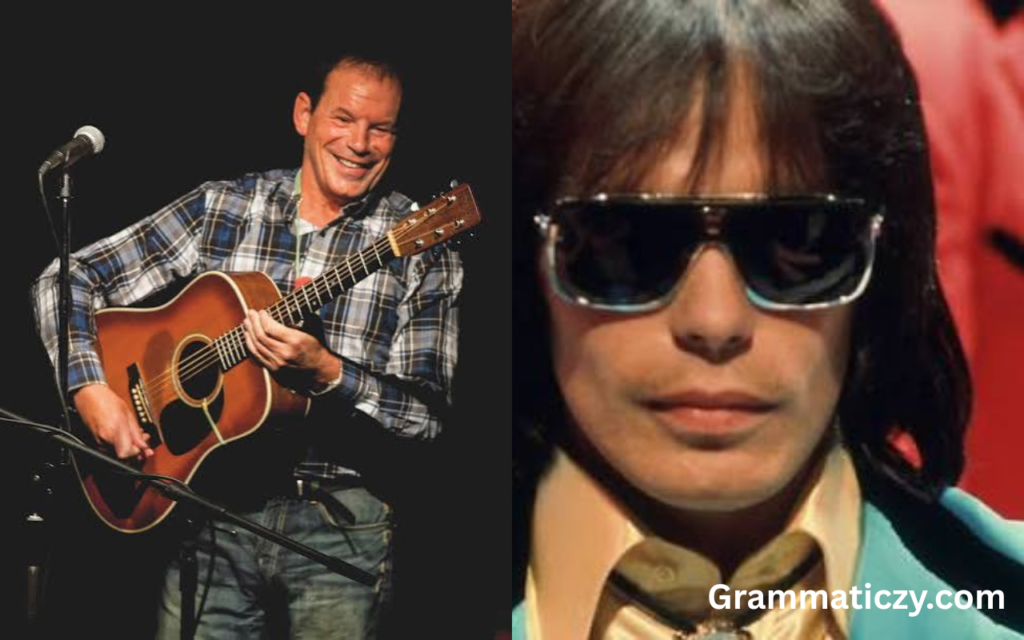
Dave Bartram is a name that has been closely connected with British rock and roll for more than five decades. Long before nostalgia became a major part of the modern entertainment industry, Bartram was helping bring the energy, style and sound of 1950s rock and roll to new generations through Showaddywaddy. As one of the band’s founding members and its most recognizable frontmen, he spent 38 years performing on stages across Britain and beyond, building a reputation for energetic live performances, songwriting and an extraordinary work ethic.
His story, however, is much bigger than simply being the former singer of a successful revival band. Bartram began performing as a child, taught himself musical instruments, wrote songs as a teenager and worked a conventional job while pursuing music at night. Eventually, he took the enormous step of leaving regular employment to become a professional musician. That decision led him into Showaddywaddy, a band that would go on to become one of Britain’s most enduring rock-and-roll acts.
Even after leaving the stage in 2011, Bartram’s connection with Showaddywaddy did not end. He had already taken on the band’s management in 1984 and continues to manage its recording and live-performance activities. In 2026, he remains actively involved in preserving the group’s catalogue, including major archival releases and the forthcoming The Golden Years collection.
Dave Bartram Quick Facts
| Category | Details |
|---|---|
| Full Name | Dave Bartram |
| Date of Birth | March 23, 1952 |
| Age in 2026 | 74 |
| Profession | Singer, musician, songwriter, author and band manager |
| Best Known For | Founding member and former frontman of Showaddywaddy |
| Birthplace | Lutterworth, Leicestershire, England |
| Raised In | Syston, Leicester |
| Nationality | British |
| Main Musical Style | Rock and roll, pop and rock |
| First Major Groups | Buttercup Jelly and Choise |
| Showaddywaddy Tenure | 1973–2011 as vocalist |
| Management Role | Showaddywaddy manager since 1984 |
| Final Show | December 3, 2011, Kings Hall, Ilkley |
| Songwriting | Wrote and co-wrote numerous Showaddywaddy songs |
| Instruments | Guitar, piano and harmonica |
| Books | The Boys Of Summer, All Mapped Out, Killer Line |
| Current Connection | Continues managing Showaddywaddy |
| Parents | Not reliably documented in authoritative public sources |
| Siblings | Not reliably documented |
| Spouse/Children | Not reliably documented in authoritative sources |
| Net Worth | No verified public figure available |
| Official Social Media | No reliably verified personal Instagram, X/Twitter or LinkedIn account identified |
The official Showaddywaddy biography provides unusually detailed information about Bartram’s early musical development and professional career. It also clarifies his birthplace, noting that he was born in Lutterworth and raised in Syston, while correcting an old claim in early tour programmes that had listed Santa Ana, California.
Dave Bartram’s Early Life and Childhood
Dave Bartram was born on March 23, 1952, in Lutterworth, Leicestershire, and grew up in Syston. His relationship with entertainment began remarkably early. According to Showaddywaddy’s official biography, his first stage appearance came when he was under ten years old, when he performed as part of a local Cub Scout group show. That early experience appears to have made a lasting impression on him because he quickly realized that performing was something he wanted to pursue seriously.
Unlike musicians who received extensive formal training from an early age, Bartram largely taught himself. He learned to play the piano and guitar and began writing songs while still in his early teenage years. This combination of performance, songwriting and instrumental ability would eventually become an important part of his contribution to Showaddywaddy. He was not simply the person standing at the front of the stage; he was also involved in creating and shaping the band’s music.
His childhood and teenage years also coincided with the extraordinary rise of rock and roll. The music of Elvis Presley, Buddy Holly, Eddie Cochran and other pioneering performers helped establish the musical language that would influence Bartram for decades. That fascination eventually became the foundation for a career built around recreating the excitement of early rock and roll while giving it a distinctive British performance style.
Discovering Music and Joining His First Bands
Before Showaddywaddy, Bartram was already gaining valuable experience in local bands. One of his earliest groups was Buttercup Jelly, which he was involved with between 1967 and 1969. The group gave him an opportunity to perform regularly and understand what it meant to entertain a live audience. Those early performances were important because they allowed him to develop stage confidence long before national fame arrived.
Bartram later joined Choise in 1972 after the departure of its original singer, Don Collins. Choise became particularly important because it brought him together with musicians who would eventually form the core of Showaddywaddy. Among those connections was guitarist Trevor Oakes, who became not only a fellow founding member but also an important songwriting partner and close friend.
At the time, Bartram was not yet a full-time professional musician. After leaving school, he worked as a trainee telephone engineer while continuing to perform in the evenings. This period says a great deal about his determination. Music was demanding his time and energy, but he continued working a regular job while pursuing his ambitions on stage, effectively building a career before he could safely depend upon it financially.
The Formation of Showaddywaddy
The creation of Showaddywaddy was the turning point that changed Bartram’s life. In early 1973, members of Choise connected with another local Leicester group, the Golden Hammers, at the Fosseway pub in Leicestershire. The musicians began jamming together and discovered that the combined performance was attracting an enthusiastic response from audiences.
The musicians initially spent time working as support acts before deciding to establish the eight-piece Showaddywaddy lineup as an act in its own right. The decision was a major gamble. Bartram and his colleagues were moving away from ordinary employment toward a career in professional entertainment, a field in which success was far from guaranteed. Yet the response from audiences suggested that they had discovered something special.
In August 1973, Showaddywaddy officially turned professional. Bartram was only 21 at the time, but he had already spent years developing his stagecraft. The decision meant leaving the security of regular employment and committing completely to music. What followed was the beginning of a 38-year professional performing career that would make him one of the most familiar faces of the British rock-and-roll revival.
Dave Bartram as Showaddywaddy’s Frontman
Bartram quickly became one of Showaddywaddy’s most recognizable personalities. The group’s large lineup, colorful appearance and energetic stage presentation made it particularly suited to live entertainment. Rather than presenting rock and roll as a historical museum piece, Showaddywaddy created an exciting performance experience that connected older musical influences with contemporary audiences.
The workload was enormous. The band’s official biography describes hundreds of performances a year, including periods when the musicians played seven consecutive nights in cabaret clubs. In addition to live work, the group recorded music and appeared on television more than 300 times. The scale of that schedule helps explain why Bartram developed such a reputation for determination and professionalism.
Showaddywaddy’s success was built partly on its ability to make familiar rock-and-roll sounds feel immediate and entertaining. Bartram’s role as vocalist placed him directly in front of audiences, but his contribution went deeper. He was also a songwriter and multi-instrumentalist, helping create original material while performing some of the band’s best-known songs.
Showaddywaddy’s Chart Success and Musical Impact
Showaddywaddy became one of the defining groups of Britain’s rock-and-roll revival era. Although audiences often associated the band with covers and 1950s nostalgia, the official biography emphasizes that a substantial amount of the band’s recorded material was original. Bartram and Trevor Oakes were particularly important songwriting contributors, either working independently or collaborating with other members.
Bartram’s songwriting credits include songs such as “You Will Lose Your Love Tomorrow,” “Cutie,” “Sweet Music,” “Smiling Eyes,” “Heavenly,” “Paint Your Picture,” “Swansong,” “Lost,” “Then Came You,” “You Always Stand Me Up” and “I Want You To Be My Girl.” He also contributed as a guitarist, pianist and harmonica player, demonstrating that his musical role was considerably broader than his public image as the band’s singer might suggest.
The band’s success was also remarkable for its longevity. Showaddywaddy built a reputation as one of Britain’s hardest-working touring bands, performing enormous numbers of concerts over the years. Its continued popularity helped establish a musical legacy that has survived well beyond the original group’s peak chart period.
Dave Bartram’s Role as a Songwriter
Songwriting was one of the most important but sometimes overlooked parts of Bartram’s career. His involvement began before Showaddywaddy, when he was writing original songs with Choise. The possibility of continuing that creative work was reportedly one of the attractions of signing with Bell Records after Showaddywaddy became established.
His writing partnership with Trevor Oakes was particularly significant. The two musicians shared musical ambitions from their early days in Leicester and became important creative figures within Showaddywaddy. Their friendship and songwriting relationship lasted for decades, making Oakes’ death in February 2026 a particularly emotional moment for Bartram.
In his tribute to Oakes, Bartram described meeting him in 1969 and credited his friend’s drive and encouragement with helping him achieve his ambition of becoming a professional musician. Their relationship is a powerful example of how creative careers are often shaped not only by individual talent but also by friendships, collaboration and people who encourage one another to take risks.
Dave Bartram Becomes Showaddywaddy’s Manager
Bartram’s career changed again in 1984 when he began managing Showaddywaddy’s affairs. This meant that he was increasingly involved in the business and organizational side of the band as well as performing on stage. Managing a successful touring group requires an understanding of bookings, recording, logistics, promotion and long-term planning, giving Bartram an entirely different set of responsibilities.
His managerial experience became particularly valuable when the band’s original lineup gradually changed. Members departed over the years, while new musicians joined and the music industry itself underwent enormous transformation. Through these changes, Bartram remained involved in keeping Showaddywaddy functioning as a professional touring and recording act.
That role also explains why his relationship with Showaddywaddy continued after his retirement as a performer. Rather than walking away from the band entirely, he remained responsible for its affairs. His career therefore evolved from frontman and songwriter into something closer to custodian of the band’s musical legacy.
Dave Bartram’s Retirement From Performing
In October 2011, Bartram announced that he was stepping down from performing with Showaddywaddy after an extraordinary 38-year career. His decision was not portrayed as a complete retirement from work. Instead, he explained that he intended to continue managing the band and supporting its future direction.
Bartram’s retirement statement revealed that the decision had involved considerable thought. He had experienced asthma-related problems that had affected his enjoyment of performing, and he eventually realized that he no longer wanted the demands of live performance. After decades of constant touring, the decision represented the end of one chapter rather than the end of his involvement with music.
His final Showaddywaddy performance took place on December 3, 2011, at the Kings Hall in Ilkley, West Yorkshire. After that show, the band continued with a new lineup, while Bartram remained behind the scenes as manager. The transition allowed Showaddywaddy to continue performing while preserving Bartram’s connection to the organization he had helped build.
Dave Bartram After Showaddywaddy’s Stage Years
Leaving the road did not mean Bartram abandoned music or public life. He continued to manage Showaddywaddy and occasionally appeared on stage. His post-performance years have also given him opportunities to explore writing and other creative interests. The official biography lists two non-fiction books, The Boys Of Summer and All Mapped Out, alongside the fictional work Killer Line.
His role gradually became more focused on preserving and developing the band’s legacy. Instead of performing hundreds of shows each year, he could concentrate on the decisions behind the scenes. This represents an important distinction between retirement from performing and retirement from the music industry. Bartram clearly chose the former.
That continuing involvement has become especially visible in recent years. Showaddywaddy continues to release material from its extensive archive, while Bartram remains involved in the management of the band’s recording and live activities. His career therefore demonstrates how an artist can remain influential even after leaving the spotlight.
Dave Bartram’s Personal Life and Interests
There is considerably less reliable public information about Bartram’s private family life than about his professional career. Authoritative Showaddywaddy sources focus overwhelmingly on his music, songwriting, touring history and management work. Consequently, details concerning his parents, siblings, marriage and children are not sufficiently documented to state confidently as biographical facts.
One detail from a 2011 fan Q&A provides a glimpse into his life outside music. At that time, Bartram said he divided his time between homes in Leicestershire and Portugal, where he also had business interests. He was also asked about his support for Leicester City, showing that football was another subject of interest to him.
His relatively private approach is perhaps consistent with the era in which his career developed. Bartram became famous decades before social media allowed celebrities to share every aspect of their personal lives. As a result, his public identity remains centered primarily around his music, Showaddywaddy, songwriting, management and writing rather than personal publicity.
Dave Bartram’s Net Worth and Sources of Income
There is no authoritative public figure establishing Dave Bartram’s current net worth. Although websites sometimes publish celebrity wealth estimates, such numbers are often unsupported by financial records and should not be presented as fact. A responsible biography should therefore distinguish between documented career success and speculative personal wealth.
Bartram’s long career has nevertheless given him multiple potential sources of professional income. These include earnings from live performances, songwriting and music-related royalties, recording activity, management work and publishing. Showaddywaddy’s extensive touring history would have provided many years of professional income, although the precise amounts received by Bartram personally are not publicly available.
His continuing management role means that he remains connected to the band’s commercial activities. In 2026, for example, the group is releasing major archival projects, including The Albums Collection and The Golden Years. The official site confirms that The Golden Years was produced in collaboration with Bartram and that he continues to manage the band’s recording and live-performance activities.
Dave Bartram and Social Media
Unlike many modern entertainers, Bartram does not appear to maintain a prominently verified personal social-media presence across platforms such as Instagram, X or LinkedIn. The main online source for current information about his professional activities is the official Showaddywaddy website, which regularly publishes updates about the band’s music, tours, archive and interviews.
This does not mean that Bartram is disconnected from modern audiences. His continued involvement in interviews and archival projects provides opportunities for fans to hear directly from him. In June 2026, Showaddywaddy published a feature-length interview in which Bartram discussed the band’s commercial peak between 1977 and 1979, including its singles, albums and stories from the road.
The interview is particularly valuable because it allows Bartram to revisit an era that helped define British popular music. Rather than relying solely on old newspaper accounts or fan memories, audiences can hear one of the people who was actually there reflect on the band’s most successful years.
Dave Bartram and Showaddywaddy’s 2026 Projects
The year 2026 has been an important one for Showaddywaddy’s catalogue. The official website announced The Albums Collection, a 13-CD box set containing 220 tracks and previously unreleased recordings including “Dot Dot Dot,” “Three Good Reasons” and “Out On The Town.” The collection was released on June 26, 2026.
Another major project is The Golden Years, scheduled for October 16, 2026. The two-CD collection contains 61 tracks, including all 23 of Showaddywaddy’s Top 40 hits. Importantly, the project was produced in collaboration with Bartram, showing that his role in the band’s history remains active rather than merely ceremonial.
The same date also marks the planned release of a limited-edition yellow-vinyl version of “Under the Moon of Love,” celebrating the 50th anniversary of the band’s million-selling hit. Originally released on October 15, 1976, the single reached number one in December 1976 and stayed at the top for three weeks. These anniversary projects demonstrate how strongly the Showaddywaddy catalogue continues to resonate with collectors and longtime fans.
Dave Bartram’s Legacy in British Rock and Roll
Bartram’s legacy is not simply that he was the singer of a successful band. He represents an entire generation of British musicians who discovered American rock and roll, absorbed its influences and transformed them into a distinctly British form of entertainment. His career helped keep the songs, sounds and visual culture of early rock and roll alive for audiences who were born long after the original records were released.
His longevity is equally significant. Many musicians experience a period of popularity before moving into obscurity, but Bartram remained connected with Showaddywaddy for decades. He evolved from performer to manager and ultimately became one of the people responsible for preserving the band’s catalogue and ensuring its continued presence on stages and in record collections.
Perhaps the most powerful part of his legacy is the work ethic behind it. The official biography describes years of hundreds of shows, extensive television appearances, songwriting and recording. That level of consistency required more than talent. It required discipline, resilience and a willingness to keep working even when musical fashions changed.
Conclusion: The Enduring Story of Dave Bartram
Dave Bartram’s life demonstrates how a childhood fascination with music can grow into a lifelong profession. His journey began with a small childhood stage appearance, developed through local bands and songwriting, and eventually led to Showaddywaddy becoming a major force in Britain’s rock-and-roll revival. Along the way, he transformed from an aspiring performer balancing music with a day job into a professional musician who spent nearly four decades on the road.
His story did not end when he performed his final Showaddywaddy concert in December 2011. Instead, he moved into another important role, continuing as the band’s manager and helping guide its recording and live activities. More than a decade later, his involvement remains visible through new releases, archival projects and interviews that revisit the band’s extraordinary history.
As Showaddywaddy continues introducing its classic music to new audiences in 2026, Dave Bartram’s career offers a valuable lesson about perseverance and reinvention. Success is not always about remaining in the spotlight forever; sometimes it is about knowing when to change roles while continuing to protect the work that defined your life. From young musician in Leicestershire to celebrated frontman, songwriter, author and longtime manager, Bartram’s journey is a reminder that passion becomes truly meaningful when it is supported by persistence, adaptability and an enduring commitment to one’s craft.