Catherine FitzGerald Biography: Early Life, Family, Career, Glin Castle, Garden Design and Personal Life
Catherine FitzGerald’s story begins in a place where history, architecture and nature have been intertwined for generations. Born into the FitzGerald family of Glin Castle in County Limerick, Ireland, she grew up surrounded by ancient trees, historic rooms, gardens and stories of the past. Yet her life has never been simply a story about aristocratic heritage. Over the years, Catherine has developed an independent professional identity as a landscape designer and gardener, working on historic estates, private gardens and public spaces across Ireland and Britain. Her approach is rooted in the character of a place rather than imposing a predetermined style upon it, and that philosophy has become one of the defining features of her career.
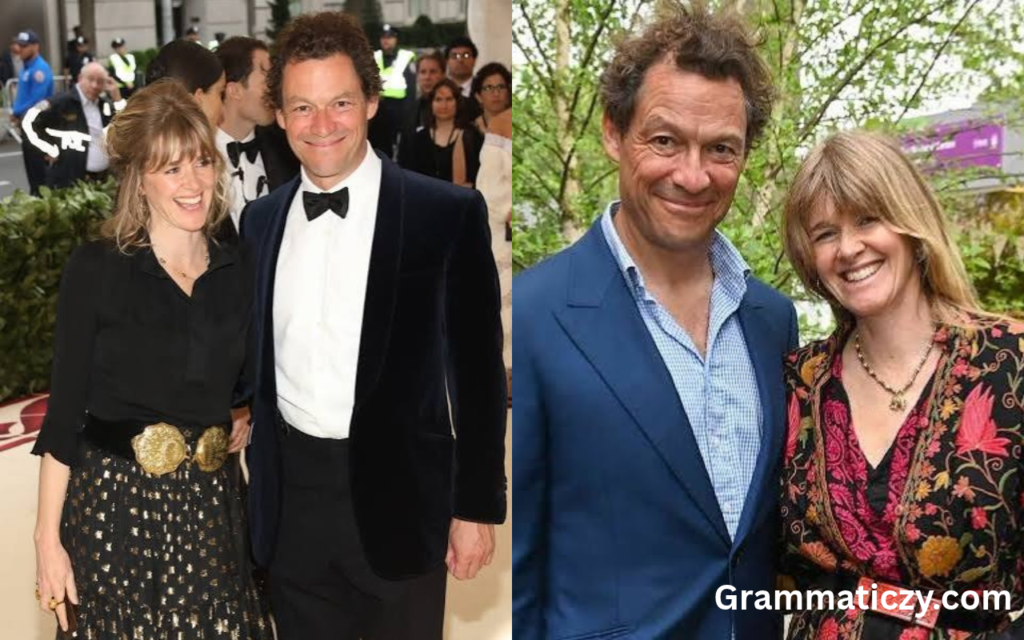
Today, Catherine FitzGerald is also widely known because of her marriage to British actor Dominic West, but describing her only as an actor’s wife misses a substantial part of her story. She has built a career in horticulture and landscape design, worked with established figures in the profession, contributed to the restoration of important historic gardens and helped transform parts of her ancestral Glin estate into a living hospitality and events destination. Her work at places including Hillsborough Castle and Glenarm Castle has connected her with some of the most significant garden-restoration projects in Ireland and the United Kingdom.
Catherine FitzGerald Quick Facts
| Detail | Information |
|---|---|
| Full Name | Catherine Celinda Leopoldine FitzGerald |
| Date of Birth | May 18, 1971 |
| Age | 55 years old in 2026 |
| Birthplace | Glin, County Limerick, Ireland |
| Profession | Landscape Designer, Gardener, Writer |
| Known For | Landscape design, historic garden restoration, Glin Castle |
| Father | Desmond FitzGerald, 29th Knight of Glin |
| Mother | Olda Ann Willes |
| Siblings | Two sisters, Honor and Nesta |
| Spouse | Dominic West |
| Marriage | 2010 |
| Children | Four — Dora, Senan, Francis and Christabel |
| Education | St Mary’s Calne; Trinity College Dublin; RHS Wisley horticultural training |
| Business | Lutyens & FitzGerald Landscape Design |
| Residence/Family Estate | Glin Castle, County Limerick, and homes in Britain |
| Nationality | Irish |
| Net Worth | No verified public figure available |
| Glin Castle: @glin_castle | |
| Professional Website | CatherineFitzgerald.co.uk |
| Current Work | Landscape design, historic garden restoration, Glin Castle and ecological projects |
Early Life and Family Background
Catherine FitzGerald was born on May 18, 1971, in Glin, County Limerick, and grew up at Glin Castle, the historic family home that would eventually become one of the central parts of her adult life. Her father was Desmond FitzGerald, the 29th and final Knight of Glin, while her mother was Olda Ann Willes. Catherine was the eldest of three daughters, growing up alongside her sisters Honor and Nesta. Her childhood environment was unusual even by the standards of historic Irish country houses because Glin was not simply an impressive building; it was a living family home surrounded by extensive gardens and a landscape that would strongly influence her future.
Her upbringing exposed her to art, architecture, literature, antiques and horticulture from an early age. Catherine later recalled spending her childhood exploring the grounds with her sisters, making dens among rhododendrons, climbing trees and playing around the streams. Her parents were also deeply involved in preserving and improving Glin and its gardens. That combination of family heritage and everyday contact with nature appears to have given Catherine an unusually intimate understanding of historic landscapes. Rather than encountering gardens simply as decorative spaces, she experienced them as places where family history, memory, architecture and the natural world interacted.
The influence of previous generations was equally important. Catherine has spoken about the gardening traditions of her family, including the work of her mother and earlier generations who planted and developed the gardens at Glin. Her grandmother, in particular, contributed plants and horticultural interests to the estate. This family connection helps explain why Catherine’s later career became closely associated with restoration and planting rather than purely architectural landscape design. Her professional philosophy grew from personal experience: understand the history of a site, respect its surroundings and allow the garden to develop a character that feels natural to its location.
Education and the Beginning of Her Career
Catherine’s education combined the humanities with her growing interest in plants and gardens. She attended St Mary’s Calne in England before studying at Trinity College Dublin, where she completed a degree involving English and art history. Her academic background is significant because her later work has consistently crossed boundaries between horticulture, architecture, history and artistic expression. Before becoming a professional garden designer, she had interests in literature and writing and once imagined that she might become a writer or journalist.
Her professional direction changed when her fascination with plants became increasingly difficult to ignore. After university, she trained in horticulture at the Royal Horticultural Society’s garden at Wisley for two years. She subsequently worked as a planting designer for the celebrated landscape architect Arabella Lennox-Boyd, whose career included numerous Chelsea Flower Show successes. This period gave Catherine practical experience beyond the gardens of her family home and introduced her to the professional standards required for major landscape projects.
That transition from interested gardener to trained professional was one of the most important turning points in Catherine’s life. Her education had given her a foundation in literature and art, while her horticultural training taught her about plants, planting schemes and garden construction. Instead of abandoning her earlier interests, she effectively brought them together. The result is a landscape-design philosophy in which gardens are treated almost like stories: they have atmosphere, rhythm, structure, seasonal changes and emotional associations. Her own professional website describes her aim as creating gardens that feel as though they belong to their setting rather than being imposed upon it.
Landscape Design Career and Professional Philosophy
Catherine FitzGerald eventually established her own landscape-design practice and developed a reputation for working sensitively with existing landscapes. She has collaborated extensively with landscape architect Mark Lutyens, and the two now lead Lutyens & FitzGerald Landscape Design. Their practice focuses on both new gardens and the restoration of historic landscapes in Britain and Ireland. Their published approach emphasizes the “spirit of place,” naturalistic planting and a balance between strong structural elements and more romantic, informal vegetation.
One of the most distinctive aspects of Catherine’s work is her emphasis on understanding a location before deciding what should happen there. She has written about the idea of genius loci, or the spirit of a particular place, drawing on Alexander Pope’s famous garden-design principle. In practical terms, this means studying local history, architecture, existing vegetation, wildlife, climate and the way people use a site. Her gardens may contain formal areas, wildflower planting, trees, shrubs and seasonal borders, but the different components are intended to feel connected rather than artificially assembled.
Her work also demonstrates that historic garden restoration does not necessarily mean freezing a landscape in the past. Catherine’s approach often involves respecting historic structure while introducing planting that feels alive and contemporary. She has described gardens as places of change, experimentation and movement, and her own gardens frequently combine traditional plants with looser naturalistic arrangements. That philosophy has allowed her to work successfully on both heritage properties and private modern landscapes, giving her career a distinctive position between historic preservation and contemporary garden design.
Hillsborough Castle and Historic Garden Restoration
Among Catherine FitzGerald’s best-known professional projects is her work connected with Hillsborough Castle in County Down, Northern Ireland. Working with Mark Lutyens, she contributed to the redesign and restoration of the gardens at the royal residence. Her involvement has been recognized by Historic Royal Palaces and the wider heritage community, reflecting the importance of the landscape surrounding the historic building.
Her connection with Hillsborough extends beyond a single planting project. The castle’s gardens contain several historic areas, including the Jubilee Parterre. Historic Royal Palaces records that Catherine redesigned the parterre in 2016. The formal garden uses symmetrical planting beds and clipped box hedges, while its current planting scheme provides a visual relationship with the wider landscape. This is a useful example of how Catherine’s career encompasses both formal garden design and more naturalistic planting.
The importance of Hillsborough to her career lies partly in the challenge of working within a historically significant environment. A garden at a major heritage property must serve multiple purposes: it has to respect the history of the site, remain visually coherent with the architecture, function for visitors and still feel like a living landscape. Catherine’s professional work has repeatedly placed her in precisely that space, where horticulture becomes part of architectural and cultural conservation rather than simply decoration.
Glenarm Castle and Award Recognition
Another important chapter in Catherine FitzGerald’s career is her contribution to the restoration of the Walled Garden at Glenarm Castle in County Antrim. The historic garden was restored and replanted over a period of years, with Catherine helping develop a series of ornamental garden “rooms.” These spaces combine fruit trees, flowers and more structured planting while maintaining the historical identity of the walled garden.
The work received significant recognition when Glenarm Castle Walled Garden won the Historic Houses Garden of the Year Award in 2023. The award was determined through a public vote and marked the first time a garden in Northern Ireland had received the title. Historic Houses specifically credited Catherine among the designers and horticultural specialists involved in transforming the garden.
The Glenarm project illustrates a central theme of Catherine’s career: restoration does not have to mean simply reproducing what once existed. The restored garden was designed around distinct spaces that offer different experiences as visitors move through the grounds. Seasonal planting provides changing displays, while the structure of the garden preserves its connection to the estate’s history. The Royal Horticultural Society likewise describes Glenarm’s restored Walled Garden as featuring new ornamental planting by Catherine Fitzgerald alongside architectural and sculptural elements.
Glin Castle and Her Family Legacy
Glin Castle remains perhaps the most personal landscape project in Catherine’s life. Unlike a commissioned garden, Glin is the place where her relationship with horticulture began. She has spent many years developing its gardens, expanding plant collections and creating new areas while preserving the character of the historic landscape. Her work has included magnolias, flowering trees, acid-loving shrubs, spring bulbs and the development of a wildflower meadow beneath mature Killarney oaks.
The castle itself also became an important part of Catherine and Dominic West’s shared life. After Catherine’s family faced the possibility of losing the property, the couple became involved in keeping Glin within the family. They have since developed the estate as a hospitality and events venue, allowing visitors to experience the historic house and grounds. Recent coverage continues to describe Catherine as living at Glin with West and their children while maintaining her professional landscape-design work.
For Catherine, Glin represents much more than inherited property. It is effectively a long-term laboratory for her ideas about gardening. The western Irish climate allows a wide variety of plants to thrive, and Catherine has experimented with exotic and tender species as well as native and naturalistic planting. Her relationship with Glin demonstrates how professional expertise and personal attachment can coexist, with the garden continuing to evolve rather than becoming a static museum of the past.
Marriage, Children and Personal Life
Catherine FitzGerald’s personal life became internationally more visible through her relationship with actor Dominic West. The couple originally met while studying at Trinity College Dublin and dated when they were young. Their relationship later went in separate directions, with Catherine marrying Edward Lambton, Viscount Lambton, in 1995. That marriage ended in divorce in 2002. Catherine and West subsequently reunited and eventually married in 2010 at the Church of the Immaculate Conception in Limerick.
Catherine and Dominic West have four children: Dora, Senan, Francis and Christabel. Their family life has been divided between Ireland and Britain, with Glin Castle serving as a major family base. Their lives combine the demands of professional careers with the responsibilities of maintaining a historic property, and Catherine has continued her own professional identity rather than becoming defined solely by her husband’s acting career.
Although Catherine is married to a globally recognized actor, she has generally maintained a comparatively private public profile. Her professional interviews tend to focus on gardens, plants, landscape philosophy and Glin rather than celebrity culture. An earlier profile reported that her personal Instagram account, @catofglin, was private, while the public Glin Castle account is used to share information and imagery connected with the estate. The public professional presence is therefore centered more heavily on her design practice and garden work than on personal social-media exposure.
Writing, Public Speaking and Love of Nature
Catherine’s career has never been restricted to physically designing gardens. She has also written about gardens and landscape for publications including House & Garden, The Garden, Interiors Magazine and The Telegraph. She has additionally lectured on Irish gardens in the United States, giving her an opportunity to explain the cultural and horticultural traditions behind the landscapes she knows so well.
Her interest in writing connects directly to the ambitions she had when she was younger. Although garden design ultimately became her principal profession, she has continued to use writing and conversation to explore the relationship between people and landscapes. In 2026, she was also involved in the Festival of Gardens and Nature at Ballintubbert, an event focused on gardening, nature, ecology, creativity and the changing relationship between people and the natural world.
Catherine’s public comments reveal a strong interest in plants as living systems rather than merely visual decorations. She has discussed her fascination with trees, wild landscapes and the ways gardens change through the seasons. Her interests range from historic Irish estates to forests and unusual plant environments around the world. This broader curiosity helps explain why her own gardens often combine structure with an element of unpredictability, allowing self-seeding, natural growth and seasonal transformation to become part of the design.
Net Worth, Income and Financial Picture
There is no reliable, publicly verified figure for Catherine FitzGerald’s personal net worth. Unlike some celebrities whose financial information is regularly reported through business filings or major media estimates, Catherine does not publicly disclose a personal balance sheet, annual salary or detailed investment portfolio. Consequently, specific figures published on low-quality celebrity websites should not be treated as confirmed facts.
Her identifiable professional income sources include landscape and planting-design commissions, collaborations through Lutyens & FitzGerald Landscape Design, writing and speaking work, and activities connected with Glin Castle. The castle itself has been developed as a hospitality and events venue, creating another business dimension around the family’s historic property. However, the financial performance of those activities and Catherine’s personal share of any income are not publicly established.
It is therefore more accurate to describe Catherine’s financial position in terms of known professional and property-related activities than to assign her an invented net-worth number. Her career has been built around specialized creative expertise, while her family background has connected her to a historic estate whose stewardship involves substantial responsibilities as well as potential commercial opportunities. Keeping those distinctions clear gives a more realistic picture than repeating unsupported online estimates.
Recent Projects and What Comes Next
Catherine remains professionally active in 2026. Lutyens & FitzGerald currently lists work in progress including new gardens at Ballyfin in the Irish Midlands, an ecologically designed retreat in the Scottish Highlands and a flower and fruit garden in Tyrol, Austria. The practice continues to combine naturalistic planting with strong structural design, reflecting the principles that have shaped Catherine’s work throughout her career.
Her ongoing relationship with Glin Castle is equally important. She continues to develop the gardens at the estate while the property operates as a hospitality and events venue. She is also associated with current landscape projects in Northern Ireland and ecological work in Scotland, demonstrating that her professional interests extend beyond traditional country-house gardening into restoration, rewilding and environmentally conscious landscape design.
The 2026 Festival of Gardens and Nature also shows another direction in Catherine’s work: bringing gardening into a wider cultural conversation about nature and sustainability. Her professional future therefore appears to encompass several connected areas rather than one narrow specialization — historic garden restoration, private landscape design, horticulture, ecological thinking, writing, public engagement and the continuing stewardship of Glin Castle.
Catherine FitzGerald’s Legacy and Influence
Catherine FitzGerald’s journey is particularly interesting because it demonstrates how inherited history can become the starting point for an independent career rather than its final definition. Growing up at Glin Castle gave her an extraordinary introduction to gardens, but she still pursued formal education, horticultural training and professional experience before establishing herself in landscape design. Her work subsequently took her beyond her family estate to historic castles, public gardens and private landscapes across several countries.
Her design philosophy is also a useful lesson in how contemporary landscape architecture can coexist with heritage. Instead of treating old gardens as frozen artifacts, her projects often allow them to evolve through new planting, ecological thinking and carefully considered interventions. At Glenarm, for example, historic walls and the original purpose of the garden remain important while new planting creates a changing visitor experience. At Hillsborough, formal design traditions exist alongside broader natural landscapes.
Ultimately, Catherine FitzGerald’s biography is a story about finding a profession that connects personal history with creative purpose. Her life has brought together literature, art history, horticulture, architecture, historic preservation, family responsibility and a deep fascination with nature. Rather than allowing Glin Castle to exist only as a reminder of the past, she has helped turn it into a living part of her family’s future while simultaneously building a professional reputation of her own. As Catherine continues to design, restore and nurture landscapes in Ireland, Britain and beyond, her journey offers a lasting reminder that meaningful work often grows from curiosity, patience and a willingness to let both people and places evolve.