
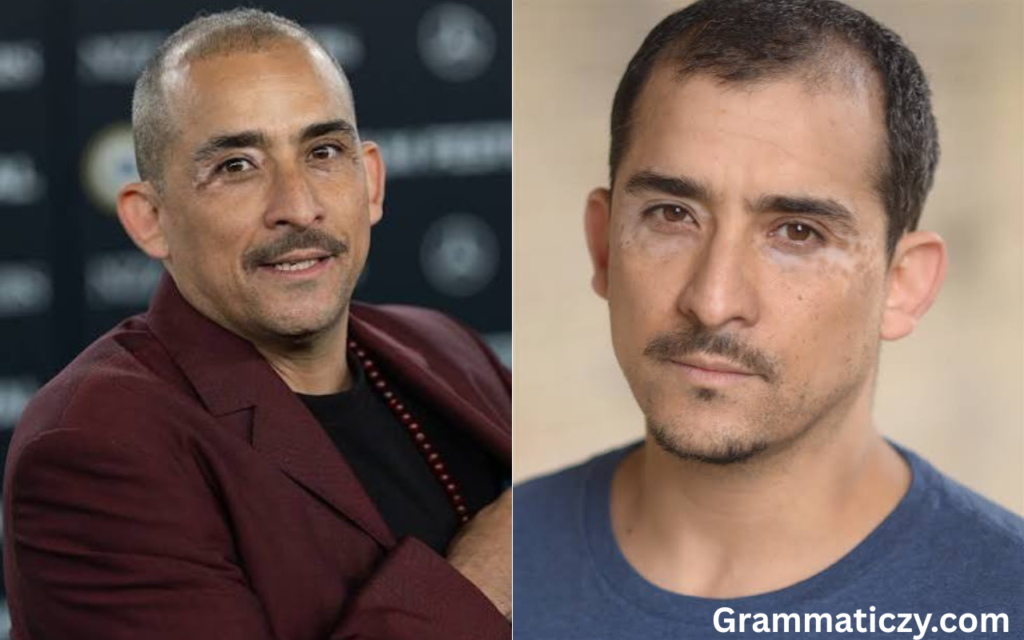
Nabil Elouahabi’s career is the kind of story that becomes more interesting the longer you look at it. He did not emerge from a famous acting dynasty or follow an obvious route into the entertainment industry. Instead, he grew up in North Kensington as the son of Moroccan immigrants, discovered theatre through school, and gradually transformed an early fascination with performance into a career spanning British television, Hollywood films, theatre, streaming dramas and international productions. More than three decades after his professional beginnings, he remains a familiar face to audiences who have watched EastEnders, Top Boy, Trigger Point, Blue Lights, Generation Kill, The Night Of, His Dark Materials and numerous feature films.
What makes Nabil Elouahabi particularly compelling is the variety of his work. He has played characters in crime dramas, military stories, thrillers, historical productions and socially conscious films, while also returning to theatre. His career demonstrates the importance of versatility for a character actor: rather than becoming permanently attached to one famous role, he has repeatedly reinvented himself for different stories and directors. His performances in productions such as The Sum of All Fears, Ali G Indahouse, Zero Dark Thirty, Blitz, Top Boy and Trigger Point have helped him establish an international profile without turning his private life into a constant part of the celebrity conversation.
There is also a deeper story behind his professional journey. Elouahabi has spoken openly about growing up in a working-class Moroccan family and about the complicated relationship between identity, heritage and the entertainment industry. His parents came from a rural village in Morocco during the 1970s, while his mother worked as a chambermaid and his father as a chef. He was the eldest of five children, and he has described his family as a regular, solid working-class household. Those experiences provide important context for understanding both his determination and his later thoughts about representation on screen.
Nabil Elouahabi Quick Facts
| Category | Details |
|---|---|
| Full Name | Nabil Elouahabi |
| Date of Birth | February 6, 1975 |
| Age | 51 years old in 2026 |
| Birthplace | England, United Kingdom |
| Nationality | British |
| Heritage | Moroccan |
| Profession | Actor and producer |
| Education | Holland Park School |
| Parents’ Background | Moroccan immigrants |
| Father’s Occupation | Chef |
| Mother’s Occupation | Chambermaid |
| Siblings | Four; Nabil is the eldest of five children |
| Breakthrough TV Role | Tariq Larousi in EastEnders |
| Other Notable Shows | Top Boy, Generation Kill, The Night Of, Trigger Point, Blue Lights |
| Notable Films | The Sum of All Fears, Ali G Indahouse, Blitz, Zero Dark Thirty, The Outrun, Desert Warrior |
| Known For | Character acting across British and international film and television |
| Estimated Net Worth | Not officially disclosed; online estimates should be treated cautiously |
| Industry Status | Active actor and producer |
Who Is Nabil Elouahabi?
Nabil Elouahabi is a British actor of Moroccan heritage whose professional career began in the 1990s. Born on February 6, 1975, he has spent years building a reputation as a versatile character performer rather than a celebrity who depends on a single signature role. IMDb identifies him as both an actor and producer and lists The Sum of All Fears, Ali G Indahouse and Blitz among his recognized film credits. His more recent credits include Trigger Point, The Outrun and Desert Warrior.
His television career has been equally broad. British audiences know him from EastEnders, where he portrayed Tariq Larousi between 2003 and 2005, while international viewers may recognize him from Generation Kill, Top Boy, The Night Of and His Dark Materials. More recently, he has appeared in Blue Lights and Trigger Point, two dramas that have given him opportunities to play mature, authoritative characters within high-pressure environments.
The breadth of his filmography is arguably one of the strongest indicators of his professional success. Elouahabi has moved between major studio films, independent projects, British television dramas and theatre without becoming confined to one genre. That adaptability is particularly valuable for character actors, because it allows them to remain relevant as audiences, platforms and storytelling styles change. His career therefore represents a different kind of acting success: sustained employment, credibility and versatility rather than constant tabloid attention.
Early Life and Moroccan Family Background
Elouahabi grew up in North Kensington, London, in a family whose story was rooted in migration and hard work. His mother and father came to Britain from a small rural village in Morocco during the 1970s as economic migrants hoping to create better opportunities for their children. Nabil was the oldest of five children, and he has described the household as working class and grounded in ordinary family life. His father worked as a chef and his mother as a chambermaid, occupations that reflected the determination of many immigrant parents building a life in a new country.
The environment around him was also culturally diverse. North Kensington exposed him to people and experiences from different backgrounds, while his education at Holland Park School gave him another important influence. Elouahabi has recalled the school as a place with a strong mixture of people and experiences. That multicultural environment would later become particularly relevant to his career because questions surrounding identity, belonging and representation became recurring themes in his professional life.
His family background also gave him a perspective that was different from the stereotypical image of an aspiring British actor. There was no famous theatrical family waiting to introduce him to casting directors or producers. Instead, the acting profession entered his world through ordinary educational experiences. That makes the eventual development of his career especially significant: a schoolchild who discovered theatre through educational trips ultimately became an actor appearing in internationally distributed films and television dramas.
Education and Discovery of Acting
Holland Park School played an important role in the beginning of Elouahabi’s artistic journey. He has explained that school trips to the theatre introduced him to live performance and helped spark his interest in acting. For someone who had not grown up inside the entertainment business, this exposure was potentially transformative because theatre offered a glimpse of a profession he may otherwise never have considered seriously.
Rather than presenting his journey as a straightforward childhood dream followed immediately by fame, the available record suggests a gradual development. His early professional credits came during the 1990s, including an appearance in the British television drama The Bill. From there, he accumulated experience in television and film before reaching the wider recognition that came with roles such as Tariq Larousi in EastEnders.
This gradual progression became an important characteristic of his career. Each production added another layer of experience, whether the project involved television drama, comedy, action, historical storytelling or theatre. That variety likely helped him develop the flexibility that later became one of his most recognizable professional strengths. Instead of being defined by a single acting style, he learned to adapt to the demands of very different productions.
Nabil Elouahabi’s Early Acting Career
Elouahabi’s professional career dates back to the mid-1990s. Early credits included The Bill, followed by appearances in productions such as London’s Burning, Attachments, Deserter, The Sum of All Fears and In This World. He also appeared in the 2002 Christmas special of Only Fools and Horses, giving him an early connection to one of Britain’s most recognizable comedy franchises.
The move between television and cinema was significant. Television allowed Elouahabi to gain experience working within established British production systems, while films introduced him to larger international audiences. His early film credits included The Sum of All Fears, the 2002 political thriller starring Ben Affleck and Morgan Freeman, and Ali G Indahouse, the comedy featuring Sacha Baron Cohen. IMDb continues to list both films among his notable credits.
These early roles were not necessarily designed to make him a household name, but they established something arguably more valuable for a working actor: credibility. Elouahabi became someone casting teams could place into demanding supporting roles, guest appearances and character parts. Over time, that professional reliability helped him work repeatedly in British drama while also entering increasingly international productions.
Breakthrough as Tariq Larousi in EastEnders
For many viewers, Nabil Elouahabi remains closely associated with EastEnders, where he played Tariq Larousi from 2003 to 2005. The role provided him with sustained exposure on one of Britain’s most watched television dramas and introduced his work to a broad domestic audience. Tariq was connected to the Ferreira family storyline, allowing Elouahabi to participate in dramatic plots involving relationships, family secrets and loyalty.
Tariq’s story became more complicated as the character’s connection to the Ferreira family emerged. His relationship with Kareena Ferreira and his eventual revelation as Dan Ferreira’s biological son added emotional stakes to the storyline. Such a role required Elouahabi to work within the fast-moving environment of a soap opera, where actors must deliver emotional scenes while keeping pace with a demanding production schedule.
The EastEnders period was an important milestone because it gave him recognition while also proving that he could sustain a television character over an extended period. Yet rather than remaining associated exclusively with soap opera, Elouahabi used the visibility of EastEnders as another stage in a much broader career. His later credits would take him into military dramas, crime series, Hollywood thrillers, streaming productions and theatre.
Hollywood Films and International Productions
Elouahabi’s film career expanded significantly during the 2000s and 2010s. His credits include The Sum of All Fears, Ali G Indahouse, Journey to Mecca, Blitz and Zero Dark Thirty. These projects placed him within productions ranging from comedy and adventure to serious political and military drama. IMDb identifies several of these films among the productions for which he is particularly known.
His appearance in Zero Dark Thirty was especially notable because the film was directed by Kathryn Bigelow and centered on the decade-long hunt for Osama bin Laden. Elouahabi’s participation in internationally recognized productions of this scale helped strengthen his reputation beyond the British television market. He was increasingly becoming the type of performer whose face could appear naturally within large international stories without requiring the character to be the central protagonist.
At the same time, his filmography demonstrates that he was not simply pursuing large-budget productions. His work has also included independent and specialist projects, which allowed him to explore different kinds of storytelling. That balance between mainstream cinema and smaller productions is a recurring feature of his career and helps explain why his body of work is much broader than the handful of titles most frequently associated with his name.
Top Boy and the Changing Face of British Television
Another important television credit came with Top Boy, the acclaimed British crime drama set around the housing estates of East London. Elouahabi played Mr. Mustapha, appearing in the show’s second series. The role placed him within a story built around crime, family pressure, poverty and social realism. IMDb’s full cast records identify Elouahabi as Mr. Mustapha in four episodes.
Top Boy was particularly significant because of the way it combined crime storytelling with social observation. Rather than presenting London’s criminal world as a simple collection of villains and heroes, the series explored the circumstances and relationships surrounding its characters. Elouahabi’s role fit into that grounded environment and demonstrated his ability to contribute naturally to a realistic ensemble cast.
His work on Top Boy also reflected the continuing evolution of British television. As British productions increasingly reached global audiences through streaming platforms, actors who had developed their careers within the UK’s television industry gained new international visibility. Elouahabi was well positioned for that change because his filmography already crossed the boundary between domestic British drama and international productions.
Trigger Point and Hassan Rahim
One of Elouahabi’s most important recent television roles has been Hassan “Hass” Rahim in ITV’s Trigger Point. The character is a long-standing member of the Metropolitan Police’s counter-terrorism specialist firearms and explosives environment and becomes an important colleague and confidant of Lana Washington, played by Vicky McClure.
Hass is portrayed as patient, committed and dependable, characteristics that make him a trusted member of the team. Elouahabi’s performance benefits from the fact that the character is not simply defined by action sequences. The role requires an understanding of teamwork, professional pressure and the emotional consequences of working in a dangerous environment. This gave him another opportunity to demonstrate the controlled, understated style that suits serious television drama.
The role also connected Elouahabi with a new generation of viewers. Trigger Point became one of the productions that introduced his work to audiences who may not have seen him during his EastEnders or earlier film years. His continuing presence across the show’s seasons is another indication of the longevity of his career.
Blue Lights and Recent Television Work
Elouahabi also appeared in the acclaimed BBC police drama Blue Lights, playing Joseph. The series follows rookie police officers working in Belfast and focuses heavily on the professional and personal pressures of frontline policing. His participation placed him in another grounded British drama where realism and character development are central to the storytelling.
The importance of Blue Lights within his recent career is that it continues a pattern visible throughout his filmography. Elouahabi repeatedly gravitates toward productions that are built around serious themes and believable characters. Whether the story involves policing, terrorism, military conflict or social inequality, his performances generally operate within the wider emotional world of the production rather than attempting to dominate it.
His recent credits also include The Chelsea Detective, The Tower, His Dark Materials, Tumanbay, The Outrun, Elyas, Desert Warrior and Heavyweight. TV Insider’s current filmography lists these projects alongside Bait, where he is credited as Imam in the 2026 series.
Nabil Elouahabi, Identity and Representation
One of the most meaningful aspects of Elouahabi’s public career is his willingness to discuss identity and representation. In an interview with The Guardian, he described himself as a British actor of Moroccan heritage and reflected on how his background shaped his understanding of the world. He explained that his parents came from Morocco but that he grew up in London, creating a complicated relationship with both sides of his heritage.
In another interview, Elouahabi discussed being born in London to Moroccan parents and described himself increasingly as a Londoner. He also spoke about the experience of being cast as the “Other” and the frustration of seeing Arab characters repeatedly associated with particular stereotypes. That issue became especially relevant because some of his earlier screen work placed him in roles connected to terrorism or political conflict.
His comments reveal an important tension in the entertainment industry. Representation can create opportunities for actors from underrepresented communities, but it can also become restrictive when casting repeatedly relies on stereotypes. Elouahabi’s later filmography illustrates his effort to move beyond narrow definitions, taking roles across crime, drama, fantasy, comedy, policing and historical storytelling.
Theatre and the Importance of Live Performance
Although television and film have made Elouahabi widely recognizable, theatre remains an important part of his artistic identity. His 2017 interview with The Guardian focused on his work in Oslo, which was moving from the National Theatre to the Harold Pinter Theatre. The production gave him an opportunity to work in a major theatrical environment while engaging with complex political and historical material.
Theatre is particularly important for an actor because the performance cannot be edited, repeated indefinitely or reshaped in post-production. Every scene unfolds in front of a live audience, requiring concentration, timing and emotional control. For someone whose career includes highly realistic television drama, theatre provides a different kind of creative challenge and helps maintain a connection with the fundamentals of performance.
Elouahabi’s movement between theatre, television and film is therefore more than a list of different jobs. It reflects a performer who has remained interested in the craft itself. His career demonstrates that an actor can move between commercial productions and serious theatre while continuing to develop professionally rather than choosing only one medium.
Personal Life, Family and Relationships
Elouahabi has traditionally kept much of his personal life away from the spotlight. Unlike celebrities whose relationships, homes and private routines are regularly documented by entertainment media, he has generally allowed his professional work to remain the main focus. Consequently, there is limited reliable public information about his private daily life, personal finances and family activities beyond the details he has chosen to discuss publicly.
One notable piece of recent relationship news came in 2023, when Entertainment Daily reported that Elouahabi had proposed to his partner during the filming of Trigger Point. The publication reported that the couple planned to marry in Morocco, connecting an important personal moment with the country that forms part of his family heritage.
His family background nevertheless remains central to understanding his public identity. Being the eldest of five children in a Moroccan immigrant household gave him experiences that have informed his views on culture, belonging and representation. Rather than treating his heritage as a marketing tool, he has discussed it in terms of the complexities that come with being British, Moroccan and London-born at the same time.
Nabil Elouahabi Net Worth and Income
There is no reliable public financial disclosure establishing Nabil Elouahabi’s exact net worth. Various celebrity websites publish estimates, sometimes placing his wealth around the million-dollar range, but these figures are not supported by audited financial statements or verified disclosures. For that reason, any precise number should be treated as speculation rather than established fact.
His professional income is likely derived from several areas of the entertainment industry. Acting fees from television series and films form the obvious foundation, while theatre, voice work and production credits can provide additional sources of professional income. IMDb identifies him as both an actor and producer, illustrating that his involvement in entertainment extends beyond simply appearing on screen.
The most important financial point about Elouahabi’s career is its longevity. A performer who has worked consistently across television, film and theatre for decades has a very different career structure from an actor who becomes famous through one blockbuster and then disappears from the screen. His extensive filmography suggests that professional consistency, rather than celebrity speculation, is the more meaningful measure of his success.
Recent Projects and Career in 2026
Nabil Elouahabi remains professionally active in 2026. His recent filmography includes Heavyweight and Desert Warrior, while television credits continue to expand. TV Insider currently lists him in Bait, where he plays an Imam, showing that his recent work continues to span different genres and formats.
His involvement with Trigger Point also continued into the later seasons of the ITV thriller. Current television coverage identifies him as Hassan Rahim and notes that the character remained part of Lana’s professional circle. This continued presence demonstrates that Elouahabi is not simply relying on earlier credits for recognition; he remains a working actor in contemporary British television.
His recent career therefore looks less like a final chapter and more like another stage in a long-running professional journey. With film, television and theatre credits continuing to appear, his future is likely to remain varied. His established reputation as a dependable character actor gives him the freedom to move between serious dramas, international films and smaller productions.
Why Nabil Elouahabi’s Career Matters
The significance of Nabil Elouahabi’s career cannot be measured only by starring roles or award nominations. His importance lies partly in his longevity and in the range of characters he has been trusted to portray. From a British soap opera to international political thrillers, from crime dramas to theatre, he has demonstrated that a character actor can build a substantial career without constantly occupying the center of the publicity machine.
His experience also reflects broader changes in British entertainment. When he began working professionally in the 1990s, opportunities for British actors of North African and Arab heritage were often narrower than they are today. Elouahabi has spoken directly about the frustration of stereotypical casting, particularly the repeated association of Arab actors with terrorism-related roles. His career consequently forms part of a larger conversation about diversity, representation and the freedom to portray people as complex individuals rather than cultural stereotypes.
At the same time, his body of work demonstrates that representation is most powerful when it becomes normal rather than exceptional. Elouahabi has played people whose cultural backgrounds are central to their stories and others where ethnicity is only one small element of the character. That range is arguably one of his most important professional achievements because it allows audiences to see a British-Moroccan actor participating naturally in many different kinds of storytelling.
Conclusion: The Lasting Legacy of Nabil Elouahabi
Nabil Elouahabi’s story is ultimately a story of persistence. From a North Kensington childhood in a Moroccan immigrant family to professional work in some of Britain’s best-known television dramas and internationally recognized films, his journey was built through years of experience rather than overnight celebrity. His parents arrived in Britain seeking better opportunities for their children, and Elouahabi eventually found his own path through a school introduction to theatre and a determination to make acting his profession.
His career also demonstrates why versatility matters in entertainment. EastEnders introduced him to a huge British television audience, while films such as The Sum of All Fears, Ali G Indahouse, Blitz and Zero Dark Thirty expanded his cinematic résumé. Later work in Top Boy, The Night Of, His Dark Materials, Trigger Point and Blue Lights kept him connected with modern audiences. His recent credits prove that his career is still evolving rather than simply resting on past achievements.
Perhaps the most inspiring lesson from Nabil Elouahabi’s journey is that a meaningful acting career does not have to be defined by one blockbuster, one award or one unforgettable character. It can be built through resilience, adaptability and the willingness to keep learning. Elouahabi’s path from the son of Moroccan immigrants to a respected British-Moroccan performer is a reminder that success often develops gradually, role by role, opportunity by opportunity. As he continues to work across film, television and theatre, his career stands as an example of how perseverance, cultural identity and artistic curiosity can combine to create a lasting legacy.