
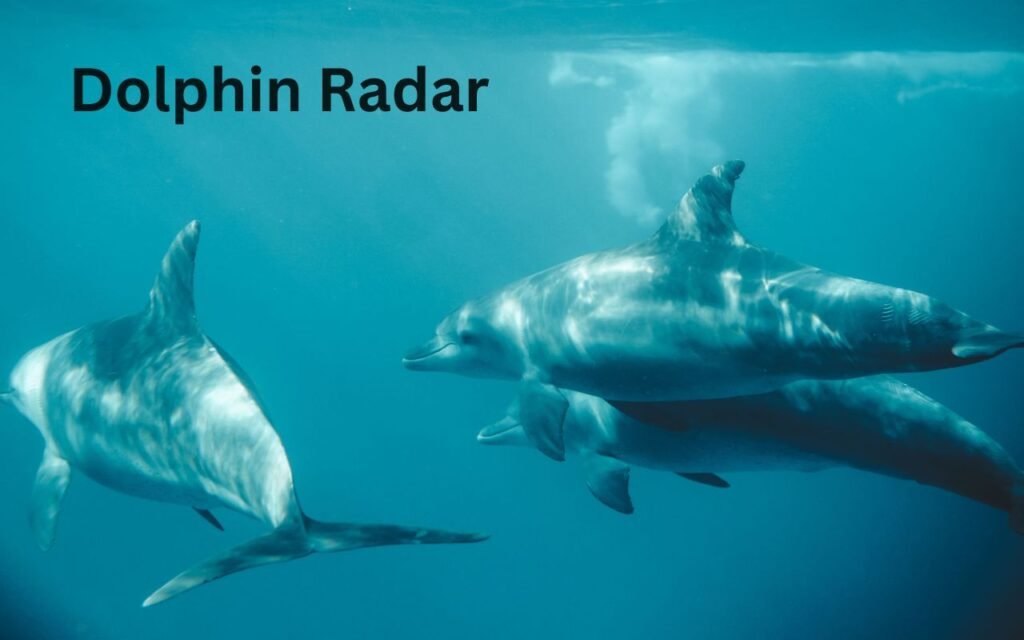
Dolphin Radar
Imagine being a marine researcher standing on a boat in the middle of the ocean. Below you is a world that humans cannot easily see. Dolphins are moving through deep water, communicating, hunting, and traveling, but traditional cameras cannot capture their every movement. The ocean is vast, dark, and unpredictable. How can we understand what is happening beneath the surface?
This challenge has encouraged scientists to study one of nature’s most advanced abilities: dolphin echolocation. The idea behind dolphin radar comes from understanding how dolphins use sound waves to sense their surroundings and how similar principles can help humans develop better underwater detection systems.
Although the term “dolphin radar” is often used to describe dolphin-inspired sensing technology, it is not the same as traditional radar used in the air or on land. Instead, it is closely connected with sonar, acoustic monitoring, artificial intelligence, and marine research. These technologies help scientists track dolphins, study ocean ecosystems, and protect marine life.
In this guide, you will learn what dolphin radar means, how dolphin echolocation inspires modern technology, the challenges of underwater detection, real-world applications, and how future innovations may improve our relationship with the ocean.
What Is Dolphin Radar and How Does It Work?
Dolphin radar refers to technology inspired by the natural echolocation abilities of dolphins. Dolphins produce high-frequency clicks that travel through water. When these sound waves hit an object, they bounce back as echoes. Dolphins analyze these returning signals to understand the location, size, distance, and movement of objects around them.
Scientists have studied this process for decades because dolphins can navigate extremely well in environments where human vision is almost useless. They can locate prey, avoid obstacles, and communicate even in dark or murky water.
Modern dolphin detection technology follows a similar concept. Instead of relying on eyesight, these systems use sound-based methods such as sonar and underwater acoustic sensors. Devices like hydrophones capture underwater sounds, while advanced software analyzes these signals to identify marine animals.
The technology does not copy dolphins completely, but it takes inspiration from their natural abilities to create better underwater monitoring solutions.
Dolphin Radar vs Radar and Sonar: Understanding the Difference
Many people confuse radar, sonar, and dolphin echolocation because all three involve detecting objects from signals. However, they work in different environments.
Traditional radar uses electromagnetic waves, usually radio waves, to detect objects in the air. It is commonly used in aviation, weather monitoring, and military systems.
Sonar, on the other hand, uses sound waves and is designed for underwater environments. Because sound travels much better through water than electromagnetic waves, sonar has become one of the most important tools for ocean exploration.
Dolphins naturally use a biological version of sonar. Their brains process returning echoes quickly, allowing them to create a detailed understanding of their surroundings.
Dolphin radar technology combines lessons from dolphin echolocation with modern tools such as:
- Underwater acoustic sensors
- Hydrophones
- Signal processing software
- Artificial intelligence systems
- Machine learning models
Understanding this difference helps explain why the term dolphin radar is more about inspiration and innovation rather than a traditional radar device.
Why Detecting Dolphins Underwater Is Difficult
Tracking dolphins may sound simple, but the ocean creates many challenges. Unlike land animals, dolphins live in an environment where visibility is limited and conditions constantly change.
One major challenge is the size of the ocean. Dolphins can travel long distances, making continuous monitoring difficult. A research team may spend hours searching an area without visually spotting a single animal.
Another challenge is underwater noise. Ships, construction activities, fishing equipment, and natural ocean sounds can interfere with dolphin communication signals. This makes it harder for scientists to identify specific dolphin calls.
Dolphins also communicate using complex sounds. Their clicks, whistles, and calls vary between species and even between different groups. Separating dolphin sounds from other underwater noises requires advanced technology and expert analysis.
These difficulties show why better dolphin monitoring systems are important for both science and conservation.
How Dolphin Echolocation Inspired Modern Technology
Dolphin echolocation is one of nature’s most impressive sensory systems. Instead of depending on light, dolphins use sound to understand their environment.
A dolphin sends out a series of clicks. These clicks move through water and return after hitting objects. The dolphin’s brain interprets tiny differences in the echoes to determine information about its surroundings.
Scientists studying this process have gained valuable insights into:
Sound-Based Navigation
Dolphins demonstrate that sound can provide detailed information even in complete darkness. This idea has influenced underwater navigation systems used in marine research.
Advanced Signal Processing
The way dolphins separate useful information from background noise has inspired researchers developing better algorithms for analyzing underwater signals.
Artificial Intelligence Detection
Modern AI systems can analyze large amounts of acoustic data much faster than humans. Machine learning models can recognize patterns in dolphin sounds and help researchers identify marine animals more efficiently.
This combination of biology and technology represents a growing field known as biomimicry, where humans learn from nature to solve complex problems.
Real-World Applications of Dolphin Radar Technology
Dolphin radar and related underwater detection systems are becoming valuable tools in several areas.
Marine Conservation
One of the most important uses is protecting dolphin populations. Scientists need accurate information about where dolphins live, how they move, and how environmental changes affect them.
Acoustic monitoring allows researchers to collect information without disturbing animals. This is especially important for endangered species that may be sensitive to human activity.
Scientific Research
Marine biologists use underwater monitoring systems to study:
- Dolphin communication
- Migration patterns
- Population changes
- Social behavior
- Habitat preferences
These studies help researchers understand marine ecosystems and make better conservation decisions.
Ocean Safety
Dolphin-inspired detection methods may also support safer ocean activities. Better underwater awareness can help reduce accidental harm caused by ships and industrial activities.
Education and Public Awareness
Technology that reveals the hidden world beneath the ocean helps people understand the importance of protecting marine environments. When people see how complex dolphin communication is, they often develop a stronger connection with ocean conservation.
The Role of Artificial Intelligence in Dolphin Detection
Artificial intelligence is changing how scientists study dolphins. In the past, researchers often had to manually review hours of underwater recordings. This process was slow and required significant expertise.
AI-powered systems can now analyze large volumes of acoustic information and identify patterns that humans may miss.
For example, machine learning tools can help detect:
- Dolphin clicks
- Communication patterns
- Species-specific sounds
- Changes in underwater activity
AI does not replace marine experts. Instead, it helps researchers work more efficiently by highlighting important information.
The future of dolphin monitoring will likely involve a combination of human expertise, artificial intelligence, and advanced underwater sensors.
Challenges and Limitations of Dolphin Radar Systems
While dolphin-inspired technology offers exciting possibilities, it is not a perfect solution.
One limitation is that underwater environments are extremely complex. Sound behaves differently depending on temperature, depth, and water conditions. These factors can affect detection accuracy.
Another challenge is cost. Advanced underwater monitoring equipment requires specialized hardware, trained professionals, and long-term research investment.
There are also ethical considerations. Technology used for studying marine animals must be designed carefully to avoid disturbing the very creatures researchers want to protect.
The goal is not simply to detect dolphins but to understand and protect them.
The Future of Dolphin Radar and Underwater Detection
The future of dolphin radar technology is connected with improvements in artificial intelligence, robotics, and marine science.
Autonomous underwater vehicles may eventually collect acoustic data across large ocean areas with minimal human involvement. Combined with AI analysis, these systems could provide researchers with faster and more accurate information about marine life.
Future developments may improve:
- Real-time dolphin tracking
- Ocean biodiversity monitoring
- Marine conservation programs
- Underwater communication systems
As technology continues to advance, learning from dolphins may help humans explore the ocean while creating safer conditions for marine animals.
The biggest lesson from dolphin-inspired technology is that nature already provides many solutions. Sometimes the best innovations come from understanding the intelligence that exists in the natural world.
Read More: Specialty Or Speciality: Which Spelling Is Correct?
Conclusion
The ocean remains one of Earth’s greatest mysteries, and dolphins show us how advanced natural systems can be. Their ability to navigate, communicate, and understand their environment through sound has inspired scientists to create new approaches to underwater detection.
While dolphin radar is not a replacement for dolphins’ natural abilities, it represents an important connection between biology and technology. By combining marine science, sonar systems, artificial intelligence, and conservation efforts, humans can better understand ocean life and protect it for future generations.
The future of underwater exploration is not only about discovering what lies beneath the waves. It is about learning from nature and using that knowledge responsibly.