The phrase buckle bunny meaning often sparks curiosity, especially among people exploring rodeo culture, country lifestyles, or Western slang. While it may sound playful or harmless at first, the term carries a specific social meaning and can sometimes be viewed as disrespectful depending on the context.
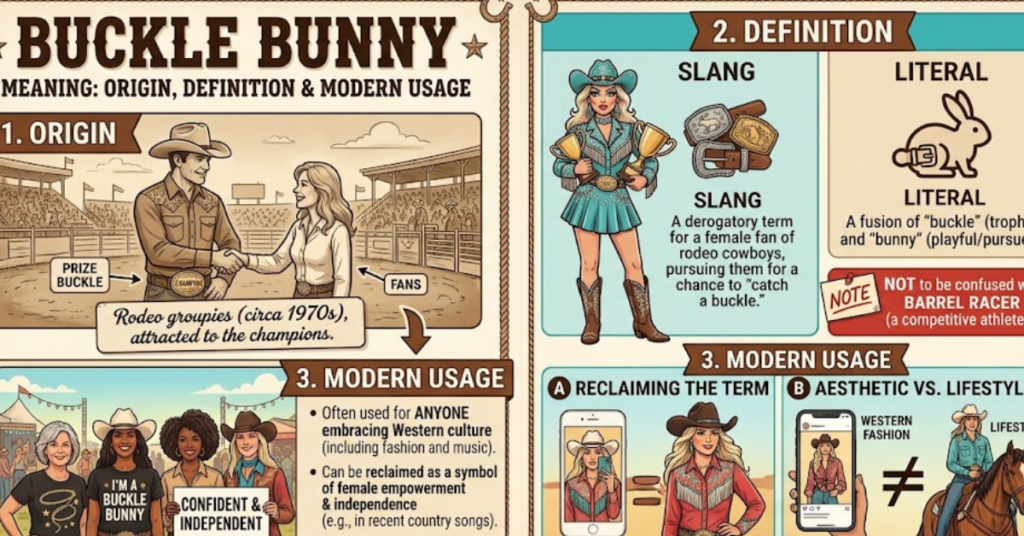
A buckle bunny is generally a slang term used in the rodeo and Western community to describe a person—usually a woman—who is perceived as pursuing rodeo competitors, particularly cowboys, because of their status, appearance, popularity, or championship belt buckles rather than genuine romantic interest.
This article explores the history, definition, cultural significance, and modern interpretation of the term buckle bunny.
What Is the Buckle Bunny Meaning?
The buckle bunny meaning refers to a person, traditionally a woman, who seeks attention or relationships with rodeo athletes, especially successful cowboys known for winning decorative belt buckles.
In rodeo competitions, belt buckles are more than accessories. They represent achievements, victories, and respect within the sport. The phrase “buckle bunny” combines:
- Buckle – referring to the large championship belt buckles earned by rodeo competitors.
- Bunny – a slang term historically used to describe a fan or groupie who follows performers, athletes, or public figures.
Together, the expression suggests someone who is attracted to the rodeo lifestyle and its successful participants.
The Origin of the Term Buckle Bunny
The exact origin of “buckle bunny” is difficult to trace, but it became popular within North American rodeo culture during the late 20th century.
Similar to terms like “groupie” in music culture, “buckle bunny” emerged as a way to describe fans who followed rodeo events and sought relationships with famous or successful competitors.
The term became especially common in:
- Professional rodeo circuits
- Country music communities
- Ranching and Western social circles
- Rural areas with strong cowboy traditions
Over time, it expanded beyond actual rodeo arenas and began appearing in movies, television, social media, and country-themed fashion communities.
Is Buckle Bunny an Insult?
Whether the term is offensive depends largely on who is using it and the situation.
Many people use “buckle bunny” jokingly among friends or as a lighthearted reference to someone who loves the cowboy lifestyle. However, it is often used negatively to imply that someone is interested in rodeo competitors only for attention, popularity, or personal gain.
Some people consider it a sexist label because it is usually applied to women and can unfairly judge their motivations or interest in Western culture.
For this reason, it is important to understand the tone and setting before using the phrase.
Buckle Bunny vs. Rodeo Fan: What Is the Difference?
Not every person who enjoys rodeos or admires cowboys is considered a buckle bunny. The key difference is the perceived intention behind the interest.
A rodeo fan:
- Enjoys the sport and its traditions
- Supports competitors and events
- Appreciates Western culture
- May or may not have personal relationships with riders
A buckle bunny according to the stereotype:
- Is seen as chasing popular or successful cowboys
- Focuses more on the status and lifestyle surrounding competitors
- Is associated with the “rodeo groupie” stereotype
It is important to remember that these are stereotypes, and real people have diverse reasons for enjoying rodeo culture.
Buckle Bunny in Modern Social Media and Pop Culture
Today, the term “buckle bunny” frequently appears on platforms like TikTok, Instagram, and country lifestyle blogs. Some people use it as a humorous self-description, embracing a love for:
- Cowboy fashion
- Boots and hats
- Rodeo events
- Country music
- Western aesthetics
Others reject the term because they believe it carries outdated stereotypes about women in the rodeo community.
As with many slang expressions, its meaning has evolved and can vary between regions and social groups.
Why Are Rodeo Belt Buckles So Important?
To fully understand the buckle bunny meaning, it helps to know why buckles matter in rodeo culture.
A championship belt buckle symbolizes:
- Skill and success in competition
- Dedication to the cowboy lifestyle
- Years of practice and hard work
- Recognition among peers
Winning a buckle is considered a major achievement, which is why it became a symbol associated with successful rodeo athletes.
Common Misconceptions About Buckle Bunnies
Several myths surround the phrase:
Myth 1: Every woman at a rodeo is a buckle bunny
Reality: Most attendees are simply fans, family members, competitors, or people who enjoy the event.
Myth 2: The term is always a compliment
Reality: It can be playful, neutral, or insulting depending on the speaker and context.
Myth 3: Buckle bunnies only exist in rodeo
Reality: The concept is similar to “groupies” found in many entertainment and sports communities.
FAQs
What does buckle bunny mean in slang?
In slang, a buckle bunny is a person—typically a woman—who is stereotypically seen as pursuing rodeo cowboys because of their fame, success, or cowboy image.
Is being called a buckle bunny a bad thing?
It depends on the context. Some people use the term jokingly or proudly, while others view it as a criticism or a dismissive stereotype.
Where did the term buckle bunny come from?
The term originated within rodeo culture, combining the championship belt buckle worn by successful cowboys with the idea of a fan or “groupie.”
Can men be called buckle bunnies?
Although the phrase is traditionally used for women, some people may use it jokingly for men who pursue rodeo personalities or the Western lifestyle.
Is a buckle bunny the same as a groupie?
They are similar concepts. A buckle bunny is essentially a rodeo-specific version of a groupie, though the meaning and tone can vary.
Conclusion
The buckle bunny meaning is rooted in rodeo culture and describes a person who is stereotypically attracted to rodeo competitors because of their status, success, or cowboy image. While some use the term humorously or as part of Western identity, others see it as a judgmental label that reinforces stereotypes.
Understanding the history and context behind the phrase helps you recognize when it is meant as a joke, a compliment, or a criticism. If you enjoy learning about Western slang, cowboy traditions, and rodeo culture, consider exploring more articles about the unique language and history of the American West.