Laura Trott Biography: Early Life, Cycling Career, Olympic Glory, Family and Life After Retirement
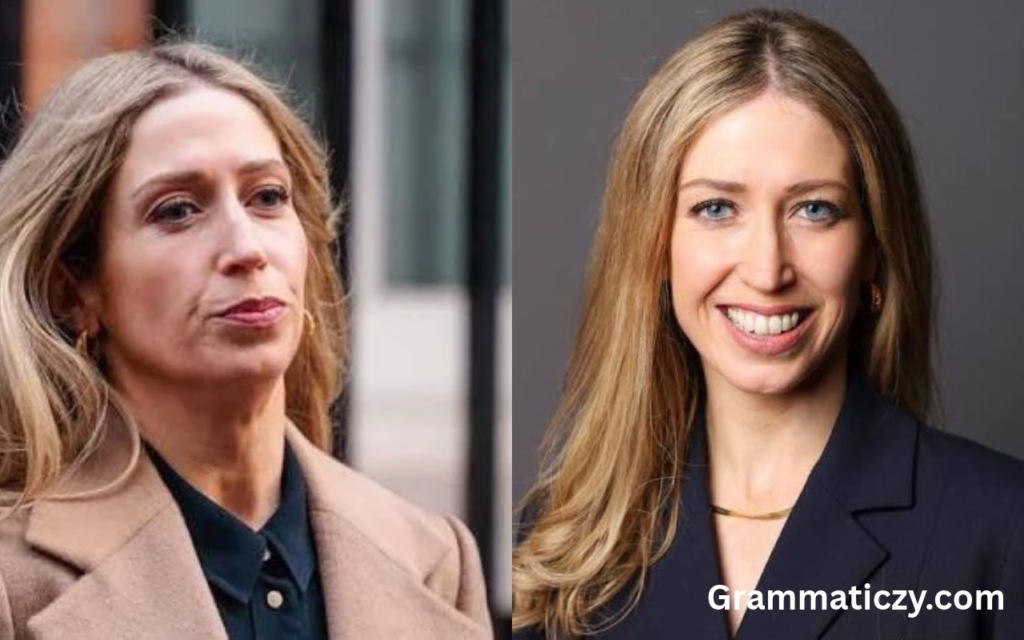
Laura Trott, now widely known as Dame Laura Kenny, is one of the most remarkable figures British cycling has ever produced. Her journey from a young girl riding at a local velodrome to becoming a five-time Olympic champion is filled with extraordinary victories, difficult setbacks, motherhood, personal challenges and an unwavering commitment to elite sport. At just 20 years old, she captured two gold medals at the London 2012 Olympics, and four years later she repeated that remarkable double at Rio 2016. By the time her Olympic career ended, she had collected five gold medals and one silver, making her one of the most decorated British female Olympians in history.
Her story, however, goes far beyond an impressive medal collection. Laura Trott grew into an athlete who helped change perceptions of women’s cycling, returned to elite competition after becoming a mother, spoke openly about difficult experiences away from the track, and eventually stepped away from professional racing to take on a leadership role in British sport. In March 2025, she became President of Commonwealth Games England, beginning a new chapter in which her experience is being used to support athletes rather than compete alongside them.
Laura Trott Facts at a Glance
| Fact | Details |
|---|---|
| Full Name | Laura Rebecca Trott-Kenny |
| Professional Name | Laura Trott / Dame Laura Kenny |
| Date of Birth | 24 April 1992 |
| Age | 34 in 2026 |
| Birthplace | Harlow, Essex, England |
| Raised In | Cheshunt, Hertfordshire |
| Nationality | British |
| Profession | Former professional track and road cyclist, sports leader and broadcaster |
| Cycling Speciality | Track endurance cycling |
| Main Events | Team pursuit, omnium, Madison, scratch race and elimination race |
| Parents | Adrian Trott and Glenda Trott |
| Sibling | Older sister Emma Trott |
| Husband | Sir Jason Kenny |
| Children | Three |
| Olympic Medals | 5 gold, 1 silver |
| World Championship Titles | 7 |
| European Championship Titles | 14 |
| Commonwealth Games Golds | 2 |
| Retirement | March 2024 |
| Current Role | President of Commonwealth Games England |
| Honour | Dame Commander of the Order of the British Empire |
| @laurakenny31 | |
| X/Twitter | @LauraKenny31 |
| Net Worth | No officially verified public figure |
Who Is Laura Trott?
Laura Trott is a former British track and road cyclist whose career was built around endurance events on the velodrome. Although she was born Laura Trott, she became Laura Kenny after marrying fellow Olympic cycling champion Jason Kenny. Her competitive speciality included the team pursuit, omnium, scratch race, elimination race and Madison, disciplines requiring a combination of endurance, speed, tactical intelligence and precise positioning.
Her rise to international prominence was remarkably quick. British Cycling records that she first attracted serious attention during the 2010 season, when she won junior world gold in the omnium and then secured her first elite European title in the team pursuit at only 18. Her breakthrough was followed by an extraordinary 2011 season in which she won seven world, World Cup and European titles across junior and elite competition.
What made Laura particularly special was her ability to perform when expectations were at their highest. The London 2012 Olympics transformed her into a national star, but she did not allow that success to become the peak of her story. Instead, she successfully defended both Olympic titles at Rio 2016 and later returned from motherhood to compete at Tokyo 2020, where she added another gold medal and a silver to her collection.
Early Life and Family Background
Laura Rebecca Trott was born on 24 April 1992 in Harlow, Essex, and grew up in Cheshunt, Hertfordshire. Cycling became part of her childhood through her family, particularly her older sister Emma, who was also involved in the sport. What began as family cycling eventually developed into competitive racing, giving Laura an early introduction to the discipline and excitement of riding on a track.
Her family environment played an important role in her development. Laura was not raised inside an Olympic training programme from birth; instead, cycling developed naturally through family participation and local competition. Her early experiences helped her understand that sport could be both enjoyable and competitive, an attitude that remained visible throughout her career.
One of the most important early milestones came when she began racing at the Welwyn velodrome as a child. British Cycling describes her as a young rider whose talent was already obvious before her international career began. Those early races provided the foundation for a progression that would eventually take her from local track competitions to world championships and Olympic finals.
Childhood Health and Discovering Cycling
Laura’s childhood was not entirely straightforward. She survived a collapsed lung as a newborn, and her early physical development was shaped partly by concerns about her health. Cycling ultimately became an activity that combined physical exercise with an environment in which she could develop confidence and competitive instincts.
As she became more involved in the sport, the velodrome became a place where her natural competitiveness could flourish. She was particularly suited to endurance-based track cycling because success depended not only on raw speed but also on positioning, anticipation and the ability to react instantly to what other riders were doing.
Her childhood experiences also contributed to the resilience that later became a defining feature of her public image. Laura’s career would contain injuries, pregnancy-related challenges, disappointing races and periods when she questioned whether she could continue. Yet the willingness to keep competing became one of the central themes of her story.
Education and Teenage Development
Laura attended school in Hertfordshire while simultaneously developing as a competitive cyclist. Balancing education with increasingly demanding training meant that her teenage years were very different from those of many young people. Her cycling ambitions began to require regular training, competition and travel.
The progression was especially rapid after she entered British Cycling’s development system. At an age when many athletes are still establishing themselves, Laura was already competing successfully at junior international level. Her performances demonstrated that she possessed the combination of physical ability and competitive temperament required for elite cycling.
By the time she reached 18, the direction of her career was becoming clear. Her first European elite gold medal in the team pursuit in 2010 was followed by her first world title in 2011. British Cycling’s official profile records this period as the beginning of her emergence as one of the world’s leading track riders.
The Breakthrough Before London 2012
The period between 2010 and 2012 was arguably the most important development phase of Laura’s early career. She progressed from junior world champion to elite European champion and then world champion, accumulating major titles at an extraordinary pace.
The team pursuit became particularly important. The event required riders to operate almost as a single unit, maintaining precise formations and speeds while completing the race against another team. Laura’s ability to perform in that environment made her a crucial part of Britain’s powerful women’s endurance programme.
The omnium also provided the perfect platform for her versatility. Rather than relying on one skill, the event required athletes to perform across several disciplines. Laura’s ability to combine tactical racing with time-trial speed and endurance eventually made her one of the event’s defining competitors.
London 2012: The Moment Laura Trott Became a Star
The London 2012 Olympics changed everything. Laura arrived at the Games as a highly promising young cyclist, but the scale of what followed turned her into a household name. At only 20 years old, she won gold in the women’s team pursuit, helping Great Britain defeat the United States while setting a world-record performance.
Her second gold came in the omnium. The event demanded extraordinary concentration because competitors had to perform consistently across multiple races. Laura demonstrated her ability to recover from setbacks and finish strongly, ultimately securing another Olympic title.
The significance of those victories extended beyond the medals themselves. London 2012 gave British cycling a new generation of stars, and Laura became one of its most recognizable faces. Her age, personality and performances helped make her particularly popular with the public, while her results established her as an athlete capable of delivering on the biggest stage.
Rio 2016 and Four Olympic Gold Medals
After London, the challenge was to prove that her success had not been a one-off. Laura entered the Rio 2016 Olympics with much greater expectations, but instead of struggling under that pressure, she delivered another extraordinary performance.
She successfully defended her team pursuit title with the British squad. The team repeatedly broke world records during the competition, and Laura became part of a pursuit squad that demonstrated Britain’s dominance in women’s track cycling.
Her second Rio gold came in the omnium, where she produced another dominant performance. Winning both events at consecutive Olympics confirmed her exceptional consistency. By the end of Rio, she had four Olympic gold medals before turning 25, an achievement that placed her among the most successful female British athletes of her generation.
Marriage to Jason Kenny
Laura’s personal life became closely linked to another extraordinary British cycling career when she married Jason Kenny in 2016. Jason was himself an Olympic champion and eventually became one of Britain’s most successful Olympians, making the couple one of the most prominent sporting families in the country.
Their relationship attracted considerable public attention because both understood the unique pressures of elite sport. Training camps, international travel, strict fitness routines and Olympic preparation were not unusual experiences for either of them. Their shared sporting background gave them an understanding of the sacrifices involved in pursuing success at the highest level.
Laura’s family life gradually became an increasingly important part of her identity. She and Jason became parents to their first son, Albie, in 2017, followed by their second son, Monty, in 2023, and daughter Lilian in 2025. Her later life therefore developed around a very different rhythm from the years when cycling dictated almost every aspect of her schedule.
Returning to Cycling After Becoming a Mother
One of Laura’s most significant achievements came after the birth of her first child. Rather than treating motherhood as the end of her elite sporting career, she returned to international competition and worked her way back toward world-class fitness.
Her return happened remarkably quickly. British Cycling records that she competed at the 2018 World Championships less than six months after Albie’s birth and won a silver medal as part of Britain’s team pursuit squad.
That return became an important part of her wider influence. Laura demonstrated that an athlete’s career does not necessarily have to follow a single uninterrupted path. Elite competition, motherhood and family life could exist within the same broader journey, even though balancing them required substantial physical and emotional effort.
Tokyo 2020 and Her Fifth Olympic Gold
The delayed Tokyo 2020 Olympics represented another extraordinary chapter. Laura entered the Games after becoming a mother and after rebuilding her career following the major transition in her personal life.
In the women’s Madison, she partnered with Katie Archibald. The pair produced an exceptional performance, becoming the first Olympic champions in the women’s Madison after the event was introduced to the Olympic programme. Laura’s victory gave her a fifth Olympic gold medal.
She also won silver in the team pursuit at Tokyo. Her five gold medals and one silver ultimately placed her among Britain’s most decorated female Olympians, while the Tokyo Madison victory made her the first British woman to win Olympic gold at three consecutive Games.
Personal Challenges and Resilience
Behind Laura’s extraordinary medal record were experiences that were considerably more difficult than the public saw. She has spoken about miscarriage and an ectopic pregnancy, experiences that affected her personally and also influenced the way she thought about her future in professional sport.
In 2022, she spoke about losing motivation and experiencing a confidence crisis before winning gold in the scratch race at the Birmingham Commonwealth Games. The victory was significant because it came after a period in which she had seriously questioned whether she still wanted to continue competing.
Those experiences add another dimension to her career. Laura’s story is not simply one of continuous victories. It includes moments when confidence disappeared, motivation became difficult to find and personal circumstances forced her to reconsider her priorities. Her eventual return to competition showed a willingness to rebuild rather than pretend that difficult periods had never happened.
Commonwealth Games Success
Laura also enjoyed a highly successful Commonwealth Games career. She represented Team England at three editions, beginning with Delhi in 2010. At Glasgow 2014, she won gold in the points race, adding another major multi-sport title to her growing collection.
Her final Commonwealth Games appearance came in Birmingham in 2022. There, she won gold in the women’s scratch race and bronze in the team pursuit. Team England records those Birmingham medals as the final medals of her competitive career.
The Commonwealth Games became particularly meaningful in retrospect because Laura later returned to the event in an entirely different capacity. Rather than preparing herself to race, she became responsible for supporting athletes and helping shape Team England’s future.
Retirement From Professional Cycling
In March 2024, Laura announced her retirement from the Great Britain Cycling Team. Her decision brought to an end a career that had produced five Olympic gold medals, one Olympic silver, seven world titles and 14 European titles.
Her retirement also came before the Paris 2024 Olympics. Instead of continuing to pursue another Olympic selection, Laura chose to close the competitive chapter of her life. In her retirement announcement, she expressed gratitude to cycling, her teammates, British Cycling, Team GB, supporters and her family.
The decision was significant because elite athletes often spend years structuring their entire lives around a four-year Olympic cycle. Walking away therefore meant more than simply stopping competition. Laura was choosing a new identity after more than a decade in which cycling had been at the center of her professional life.
Awards, Honours and Major Achievements
Laura’s achievements have been formally recognized at the highest level. She was appointed Dame Commander of the Order of the British Empire (DBE) in the 2022 New Year Honours. The honour followed a career that had already established her as one of Britain’s most successful Olympic athletes.
Her major sporting record includes five Olympic gold medals and one silver. She also won seven world titles and 14 European titles, while her Commonwealth Games record includes two gold medals and one bronze. Commonwealth Games England describes her as the most decorated British female Olympian and records the breadth of her international success.
Her career statistics are particularly remarkable because her success extended across different eras and changing cycling formats. She adapted as the omnium changed, became an Olympic champion in the Madison and remained competitive after motherhood. That adaptability was a crucial part of her longevity.
Life After Retirement
Retirement did not mean leaving sport behind. Instead, Laura moved toward broadcasting, public speaking, advocacy and sports leadership. Her experience as an athlete who had competed at three Olympic Games gives her an unusually broad understanding of elite sport.
Her new career has allowed her to speak about issues that were difficult to discuss during her active years. These include motherhood, women’s health, confidence, participation in sport and the pressures experienced by elite athletes.
Her transition also illustrates how the skills developed in professional sport can continue to have value after retirement. Leadership, communication, discipline, preparation and understanding team dynamics are useful far beyond the cycling track.
President of Commonwealth Games England
In March 2025, Laura was appointed President of Commonwealth Games England, becoming the youngest person to hold the position. She succeeded Dame Denise Lewis and became the third consecutive woman to serve as president.
The appointment represents a natural progression from her athletic career. Laura competed at three Commonwealth Games herself, so she understands the environment from the athlete’s perspective. Now, she can use that experience to support competitors from sports ranging far beyond cycling.
Commonwealth Games England says Laura’s role includes helping support athletes as they prepare for Glasgow 2026 and future Commonwealth Youth Games. She has described the Commonwealth Games as a special event because it gives athletes experience of a multi-sport environment and allows them to become part of something larger than their individual sport.
Laura Kenny’s Family and Life Away From Competition
Family is now a central part of Laura’s life. She and Jason Kenny are raising three children, and the transition from elite athlete to mother has given her a different perspective on ambition and success.
Laura has spoken about the importance of allowing children to discover sport for themselves. Her own childhood experience suggests why participation mattered: cycling gave her confidence, competitive energy and a place where she could develop her identity.
The contrast between her former lifestyle and her current one is striking. During her competitive years, every training session, meal and recovery period could be connected to Olympic performance. Today, her responsibilities include family life, public commitments and supporting athletes through her leadership position.
Laura Trott’s Social Media Presence
Laura continues to maintain a public presence through social media. Her Instagram account, @laurakenny31, is associated with her post-cycling identity as well as her continuing involvement in sport.
Her online presence allows supporters to see a side of her life that was difficult to capture during Olympic competition. Family, motherhood, fitness, sporting events and professional appearances all form part of the wider picture.
Social media has also become useful for athletes who want to communicate directly with supporters. For Laura, it provides a way of maintaining the relationship with the audience that developed during her Olympic years while allowing her public identity to evolve beyond competitive cycling.
Laura Trott’s Net Worth and Sources of Income
There is no authoritative public disclosure establishing Laura Kenny’s exact personal net worth. Consequently, precise figures published by celebrity-finance websites should be regarded as estimates rather than verified financial information.
During her professional career, her income would have included elite sport funding, sponsorship arrangements, commercial partnerships, public appearances and media opportunities. Her Olympic success and international profile made her an attractive figure for brands associated with sport, fitness and lifestyle.
Since retirement, her professional activities have expanded. Broadcasting, public speaking, ambassadorial work and sports leadership provide potential income streams, although the terms of private commercial agreements and the compensation attached to leadership roles are generally not publicly disclosed. For that reason, presenting a specific net-worth figure as fact would be misleading.
Laura Kenny’s Influence on Women’s Cycling
One of Laura’s most important contributions has been her visibility as a successful female cyclist. Her Olympic victories arrived during a period when women’s track cycling was becoming increasingly prominent internationally.
Her performances also helped demonstrate the level of athleticism and tactical complexity involved in women’s endurance cycling. Events such as the team pursuit, omnium and Madison require much more than straightforward speed; they demand teamwork, tactical awareness and the ability to make decisions under enormous pressure.
Her return to elite competition after becoming a mother added another dimension to her influence. Her experience became part of a broader conversation about women continuing professional sporting careers after having children, and her openness about difficult personal experiences helped make discussions around women’s health more visible.
Recent Career and Future Direction
As of 2026, Laura’s focus is firmly beyond professional racing. Her presidency of Commonwealth Games England has placed her in a leadership position during preparations for Glasgow 2026, giving her an opportunity to influence the next generation of Team England athletes.
Recent coverage has also shown that cycling remains an important part of her life even though she no longer competes. She continues to follow the development of women’s endurance cycling and has discussed the emergence of younger riders who are now taking on the responsibilities once carried by her generation.
Her future is therefore likely to be defined less by personal medals and more by influence. Whether through sports administration, broadcasting, public speaking or advocacy, Laura has an opportunity to turn the lessons of a remarkable competitive career into practical support for athletes coming after her.
Laura Trott’s Legacy
Laura Trott’s legacy cannot be reduced to five Olympic gold medals. Those medals are the most visible part of her career, but the deeper story is about adaptation. She went from being a promising child cyclist to an Olympic champion, from champion to mother, from returning athlete to historic Tokyo gold medallist, and finally from competitor to sports leader.
Her journey also shows that success does not always follow a straight line. There were periods of confidence loss, difficult personal experiences and uncertainty about whether she should continue. Yet she repeatedly found ways to move forward, whether that meant returning to competition after childbirth or eventually recognizing that retirement was the right next step.
Today, Dame Laura Kenny represents a different kind of sporting success. Her influence now comes from experience, leadership and the ability to inspire others rather than from another race victory. From the young Laura Trott competing at a local velodrome to the Dame Laura Kenny helping shape the future of Commonwealth sport, her story remains a powerful reminder that perseverance can create opportunities far beyond the finish line.