
Juninho Middlesbrough: The Full Story of Juninho Paulista, His Career, Family, World Cup Glory and Lasting Legacy
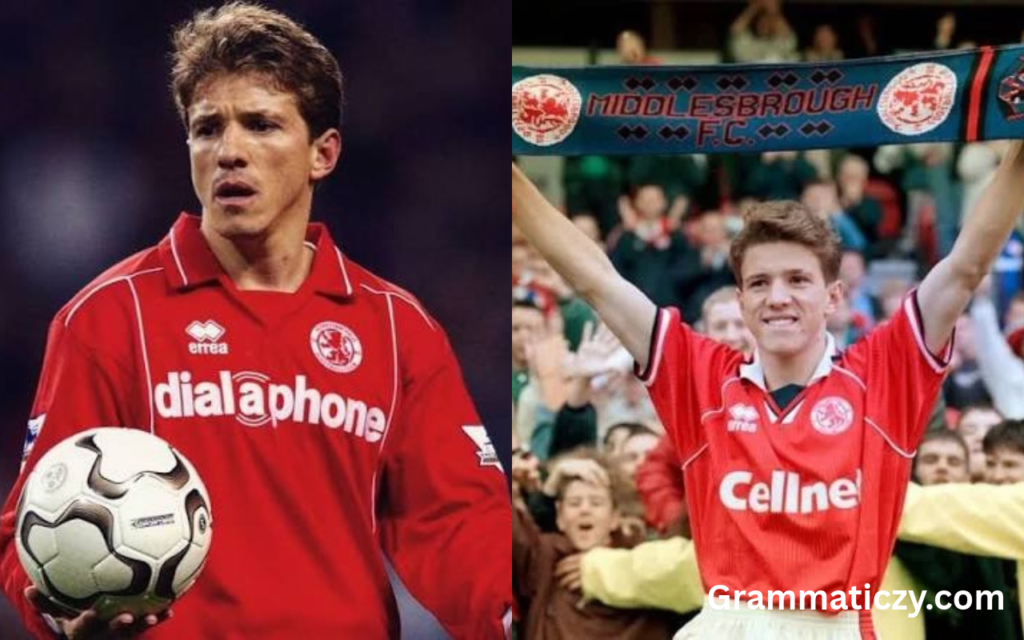
Few footballers have left such a powerful emotional mark on Middlesbrough as Juninho Paulista. When the tiny Brazilian midfielder arrived in England in 1995, he was an exciting young talent from São Paulo, but nobody could have known that he would eventually become one of the most beloved foreign players in the club’s history. His technical ability was extraordinary, but it was his personality, commitment and genuine affection for Middlesbrough that transformed him from an expensive signing into a lasting Teesside icon. UEFA later highlighted how strongly supporters connected with him, particularly after the emotional scenes surrounding Middlesbrough’s relegation in 1997.
Born Oswaldo Giroldo Júnior in São Paulo on February 22, 1973, Juninho built a remarkable career that took him from Brazilian football to the Premier League, La Liga, international football and eventually football administration. He played for São Paulo, Middlesbrough, Atlético Madrid, Vasco da Gama, Flamengo, Celtic, Palmeiras and Sydney FC, while becoming a member of Brazil’s 2002 World Cup-winning squad. His story is therefore much bigger than his Middlesbrough years, although it was England where his name became particularly treasured.
Juninho Paulista Facts at a Glance
| Fact | Details |
|---|---|
| Full Name | Oswaldo Giroldo Júnior |
| Known As | Juninho Paulista |
| Date of Birth | February 22, 1973 |
| Age | 53 years old in 2026 |
| Birthplace | São Paulo, Brazil |
| Nationality | Brazilian |
| Profession | Former footballer and football executive |
| Position | Attacking midfielder |
| Height | Approximately 1.65–1.67 m |
| Father | Oswaldo Giroldo |
| Mother | Lucia |
| Sibling | Sister, Gislene |
| Wife | Juliana Bchara |
| Children | Three reported |
| Middlesbrough Spells | 1995–1997, 1999–2000, 2002–2004 |
| Major International Honour | 2002 FIFA World Cup |
| Other International Honour | 1997 Confederations Cup |
| Olympic Honour | Bronze medal, 1996 |
| Major Middlesbrough Honour | 2004 League Cup |
| Current Football Role | Ituano football management |
| Net Worth | No independently verified current figure |
| @juninhoofficial is associated with Juninho Paulista | |
| X/Twitter | No reliably verified current personal account established |
| No reliably verified personal profile established |
Who Is Juninho Paulista?
Juninho Paulista is a former Brazilian attacking midfielder whose career was defined by technical skill, movement, creativity and an ability to play between midfield and attack. Despite standing only around 1.65 metres tall, he was capable of influencing matches against considerably larger and more physical opponents. His balance and acceleration allowed him to turn quickly, escape pressure and carry the ball into dangerous areas. FBref records his playing position as attacking midfield and lists him as the 1996–97 Premier League Player of the Season.
The name “Juninho” means “little Junior,” and the nickname suited him from childhood. His small frame never prevented him from becoming a major football personality. When he arrived in England, The Independent described him as a 22-year-old Brazilian midfield sensation who had already attracted enormous attention because of his technical ability and unusual balance.
At Middlesbrough, supporters gave him an even more affectionate identity. He became known as “The Little Fella,” a nickname that captured both his physical appearance and his enormous popularity. His career statistics show five seasons associated with Middlesbrough and 113 league appearances in the Premier League across his spells, although his importance to the club cannot be understood through numbers alone.
Early Life in São Paulo and Family Background
Juninho was born in São Paulo on February 22, 1973, into a family that would remain closely connected to his football journey. His father, Oswaldo Giroldo, worked as a sales representative for a steel manufacturer when Juninho was young, while his mother was named Lucia. His sister Gislene was his only sibling according to a contemporary Independent profile.
His grandmother Rosa Giroldo also played a major role in his childhood. Contemporary reporting described her as his biggest fan and explained that she had helped raise him. Family photographs reportedly showed Juninho playing with a football as a very young child, illustrating just how early the sport became part of his identity.
The family environment was important when Juninho eventually moved to England. His parents were involved in the transition, and his sister later planned to join them after completing her computer science studies. Moving from São Paulo to industrial north-east England was a dramatic cultural change for a young Brazilian, but Juninho adapted quickly and developed an emotional relationship with his new home.
The Unexpected Beginning at Ituano
Juninho’s route into professional football was not a straightforward journey through one of Brazil’s famous academies. According to Itu.com.br, he was playing for an amateur side in São Caetano do Sul when an opportunity unexpectedly appeared through a youth match involving Ituano and Ponte Preta. He was invited to attend a trial and eventually earned a place in the club’s system.
That opportunity changed his life. Ituano became the club where his professional journey began, and the connection would remain important decades later. Juninho would eventually return to Ituano not merely as a retired footballer but as a football administrator, helping shape the club’s structure and youth development.
His development at Ituano demonstrated one of the recurring themes of his career: opportunity mattered, but he had to make the most of it. His technical qualities were obvious enough to attract attention from São Paulo, one of Brazil’s biggest clubs. That next step took him from a promising youngster into elite professional football.
Rise at São Paulo
Juninho’s move to São Paulo was a crucial turning point. The club gave him an opportunity to compete at a much higher level and introduced him to major international competitions. During his São Paulo career, he became part of a successful team that won several significant trophies. The Brazilian Football Confederation records his honours with São Paulo as including the 1993 Intercontinental Cup, Supercopa Libertadores, Recopa Sul-Americana titles, 1994 Copa CONMEBOL and 1995 Copa dos Campeões Mundiais.
Playing for São Paulo also exposed Juninho to experienced coaches and elite teammates. His technical style developed in an environment where tactical intelligence and ball control were highly valued. He was not simply a dribbler; he learned how to receive the ball under pressure, move between lines and contribute to an attacking structure.
By the middle of the 1990s, European clubs were increasingly interested in Brazilian attacking players, and Juninho was regarded as one of the country’s exciting young talents. Middlesbrough saw an opportunity to bring him to England, and the transfer became one of the most important moves of his career.
Juninho Arrives at Middlesbrough
Juninho joined Middlesbrough in 1995, arriving from São Paulo at the age of 22. The move was significant because he was stepping into the increasingly competitive Premier League while adapting to a completely different country, culture and style of football.
His impact was immediate. His technique, acceleration and close control made him an unusual player in English football. Rather than trying to overpower opponents, Juninho could use balance and quick changes of direction to move away from challenges. That style made him exciting to watch and gave Middlesbrough a creative dimension.
The Premier League’s official career records confirm his Middlesbrough association and show his appearances during the club’s later Premier League seasons. His first major period at the club, however, came before the detailed modern Premier League statistical database, meaning historical sources are particularly useful for understanding his overall contribution.
The 1996–97 Season and Premier League Stardom
The 1996–97 campaign became the season that permanently established Juninho as a Middlesbrough legend. He was no longer simply an interesting foreign signing. He had become one of the club’s most important attacking players.
FBref records Juninho making 35 Premier League appearances that season, scoring 12 goals and providing eight assists. Those numbers illustrate why his influence was so substantial. He was creating chances for teammates while also contributing directly to the scoreline.
Middlesbrough also reached both the FA Cup and League Cup finals that season. Although the club lost both finals and eventually suffered relegation, Juninho’s individual reputation continued to rise. He was recognized as the Premier League Player of the Season for 1996–97, while his performances also earned him significant recognition from football writers.
The Relegation That Broke His Heart
The final day of the 1996–97 Premier League season remains one of the defining moments in Juninho’s relationship with Middlesbrough. The club drew 1–1 away at Leeds United, a result that contributed to relegation after a season that had also included two domestic cup final appearances.
When the final whistle sounded, Juninho was visibly devastated. UEFA’s retrospective account described him sinking to his knees and crying on the pitch. The image became iconic because it showed that the Brazilian genuinely cared about the club and the people who supported it.
That emotional moment helped transform the relationship between Juninho and Middlesbrough supporters. He had only been at the club for a relatively short period, but his reaction suggested that he felt the disappointment personally. His departure afterward was therefore bittersweet rather than hostile, and supporters understood why he needed to pursue his international ambitions elsewhere.
Atlético Madrid and a Career-Changing Injury
After his first Middlesbrough spell, Juninho transferred to Atlético Madrid in Spain. The move gave him the chance to compete in La Liga and strengthen his position in Brazil’s plans for the 1998 World Cup.
His first season in Spain showed that he could compete at the highest level, but his career was soon interrupted by a devastating injury. A challenge involving Celta Vigo defender Míchel Salgado resulted in Juninho suffering a serious leg injury. The setback threatened his participation at the 1998 World Cup and interrupted his momentum at Atlético Madrid.
The injury was particularly cruel because Juninho had moved to Europe partly to establish himself as a major international player. Yet the setback did not end his career. Instead, it became another difficult chapter that he eventually overcame, leading to his first return to Middlesbrough.
His Return to Middlesbrough
Juninho returned to Middlesbrough on loan in 1999. The move demonstrated that his relationship with the club had survived his departure to Spain and the difficulties that followed.
His return was welcomed by supporters who remembered his first spell and the emotional connection he had established. His football was again based around creativity, movement and technical quality, although injuries and the changing circumstances of his career meant that his second spell was different from the first.
According to the Brazilian Football Confederation, his Middlesbrough spells ultimately came in three periods: 1995–1997, 1999–2000 and 2002–2004. Between those periods, he returned to Brazilian football and played for clubs including Vasco da Gama and Flamengo.
Vasco da Gama and the Name “Juninho Paulista”
After leaving Middlesbrough again, Juninho joined Vasco da Gama in Brazil. It was during this period that he became widely known as Juninho Paulista, partly because another famous Juninho, Juninho Pernambucano, was also associated with the club.
His time at Vasco was successful. The Brazilian Football Confederation records that he won the Brazilian Championship and Copa Mercosul in 2000, followed by the Taça Rio in 2001.
These achievements demonstrated that Juninho’s career was not defined solely by Middlesbrough. He was a successful Brazilian club footballer in his own right, capable of contributing to championship-winning teams in his home country while maintaining his international ambitions.
The 2002 World Cup Triumph
One of the greatest achievements of Juninho Paulista’s career came in 2002 when Brazil won the FIFA World Cup in South Korea and Japan. He was part of Luiz Felipe Scolari’s famous squad, alongside players such as Ronaldo, Rivaldo and Ronaldinho.
Juninho began the tournament as a starter but later lost his place to Kleberson. Nevertheless, he remained involved and played in five of Brazil’s seven matches. He also entered the final against Germany as a substitute.
Winning the World Cup changed the status of his career. He was no longer simply a talented Brazilian midfielder who had enjoyed success in England and Spain. He was officially a World Cup champion, joining one of the most exclusive groups in international football.
A Third Middlesbrough Spell and the League Cup
In 2002, Juninho returned to Middlesbrough for a third spell. His comeback was initially disrupted by another serious injury, this time a cruciate ligament problem suffered during pre-season.
His eventual return produced an extraordinary reaction. UEFA reported that almost 19,450 spectators attended a reserve match against Bradford City to watch him play. Juninho responded with a goal and two assists during a 9–0 victory.
His third spell eventually reached its emotional peak in 2004 when Middlesbrough won the League Cup, the first major trophy in the club’s history. The Brazilian Football Confederation confirms that Juninho was part of the Middlesbrough team during that successful period.
Later Playing Career and Retirement
After Middlesbrough, Juninho continued his career with several clubs. His journey included Celtic in Scotland, Palmeiras and Flamengo in Brazil, and Sydney FC in Australia. Each experience added another chapter to a career that had already crossed multiple football cultures.
Eventually, he returned to Ituano, the club where his professional journey had begun. Rather than ending his career elsewhere, he chose to finish where the story had started. The decision carried considerable symbolic importance because Ituano had provided his original opportunity as a young player.
Juninho retired from playing in 2010. His final period as a footballer was particularly memorable because he helped Ituano avoid relegation from the Campeonato Paulista in dramatic circumstances. In 2026, ge recalled how the veteran midfielder scored during a comeback against Portuguesa in the final round and helped preserve the club’s top-flight state status.
Life After Football and the Ituano Connection
Retirement did not mean leaving football behind. In fact, Juninho moved into football administration, initially taking responsibility for Ituano’s management.
His philosophy emphasized professionalization and youth development. In an interview with Itu.com.br, Juninho explained that he considered the academy the foundation of a football club because young players represented its future. He also drew on lessons learned during his time in England, particularly the professional organization he had observed there.
His first management period at Ituano began in 2009. According to the club, he helped establish the foundations for a significant period of development, including a stronger organizational structure. He left the club in 2019 when he accepted a position with the Brazilian Football Confederation.
Work With the Brazilian Football Confederation
In 2019, Juninho joined the CBF as director of football development. Later that year, he became coordinator of Brazil’s senior men’s national team.
The position placed him on the administrative side of the national team and gave him responsibility during Brazil’s preparations for the 2022 World Cup. His experience as a former international player meant he understood the demands placed on elite footballers from both sides of the organizational structure.
His period with the CBF represented another transformation. The player who had once been running past Premier League defenders was now involved in planning, coordination and high-level football administration. It illustrated how his career had evolved from technical talent into institutional experience.
Return to Ituano and Current Football Role
After leaving the CBF, Juninho eventually returned to Ituano. The club officially announced his return in September 2023, explaining that he had initially taken a period away from football before being invited back.
His return was deeply connected to the long relationship he had developed with the club. Ituano described his earlier period in management as foundational to the club’s later development, while Juninho said he was happy to return to a place where he had spent a major part of his life.
By 2026, his role at Ituano had become even more significant. ge reported that Juninho was the club’s owner and manager, while the article also connected him with the development of players such as Gabriel Martinelli. His post-playing career has therefore become an important part of his overall football legacy.
Personal Life, Wife and Children
Juninho has generally kept his private life away from the intense public attention surrounding his football career. He married Juliana Bchara, and reports have identified him as the father of three children.
During his early Middlesbrough years, his family was closely involved with his move to England. Contemporary reporting described his parents preparing to relocate with him and his sister planning to join the family later. That detail illustrates the importance of family support during one of the biggest transitions of his life.
His family background also explains why the move to England was more than a football transfer. Juninho was leaving behind São Paulo, where his grandmother and wider family had played an important role in his upbringing. The move required cultural adjustment, but the support around him helped make the transition possible.
Juninho Paulista Net Worth and Sources of Income
There is no independently verified public figure that establishes Juninho Paulista’s current net worth. Various websites publish estimated celebrity wealth figures, but these estimates generally do not provide enough financial documentation to treat them as confirmed.
During his playing career, his income would have come primarily from professional football contracts, signing agreements, bonuses and commercial opportunities. He played at some of Europe’s most competitive clubs and represented Brazil at international level, including the 2002 World Cup-winning team.
His post-playing career introduced another source of professional income through football administration, management and ownership interests. Because current private assets, investments and contracts are not fully public, any exact net-worth figure should be treated cautiously rather than presented as established fact.
Social Media and Public Image
Juninho’s public identity remains strongly connected with football. His social-media presence allows supporters to follow aspects of his professional activities and reconnect with memories from his playing career.
An Instagram account associated with @juninhoofficial is publicly listed under his name, although social-media ownership and verification can change over time. Readers should therefore check the platform’s current verification indicators before assuming that an account is personally operated by Juninho.
Unlike some modern football personalities, Juninho’s public image has generally been built around his sporting career rather than constant online exposure. His most enduring relationship with supporters still comes from what he accomplished on the football field and from his continued involvement in football administration.
Why Middlesbrough Fans Still Remember Him
Juninho’s Middlesbrough legacy is difficult to separate from emotion. Many players have arrived at English clubs with impressive reputations, but relatively few develop the kind of relationship with supporters that survives decades.
His reaction to relegation in 1997 became particularly powerful because it appeared completely genuine. UEFA’s account emphasized that his commitment to the club and region was obvious to supporters, while his emotional reaction after the Leeds match became symbolic of that bond.
His return years later strengthened the connection. The enormous attendance for his reserve-team comeback showed that supporters were not merely interested in watching a famous footballer. They wanted to see their Juninho return to the pitch. That emotional investment is a major reason he remains such an important name in Middlesbrough history.
Juninho’s Football Legacy
Juninho’s legacy is spread across several different football worlds. In Brazil, he is remembered as a technically gifted international and World Cup winner. At São Paulo, he is associated with major trophies. At Middlesbrough, he is remembered as an attacking star and emotional club icon.
At Ituano, his legacy has developed in another direction. He became both a former player and an administrator, helping the club strengthen its football structure and youth development. His long-term involvement demonstrates that his influence did not disappear when he stopped playing.
Perhaps the most interesting part of his legacy is the way the different chapters connect. The youngster who received an unexpected opportunity at Ituano eventually became a World Cup winner, returned to the same club as an administrator and later became involved in its ownership and management. Few careers contain such a complete circle.
Conclusion
Juninho Paulista’s story is one of football’s most fascinating examples of how talent, resilience and emotional connection can combine to create a lasting legacy. From the streets of São Paulo to Ituano, São Paulo FC, Middlesbrough, Atlético Madrid and the Brazilian national team, his journey crossed continents and football cultures while repeatedly forcing him to adapt.
At Middlesbrough, he became more than a talented Brazilian midfielder. His performances, personality and visible affection for the club created a relationship that survived relegation, transfer, serious injury and years away. His three spells at the club eventually culminated in the 2004 League Cup triumph, giving him the opportunity to celebrate a major trophy with supporters who had followed his journey from the beginning.
The 2002 World Cup provided another extraordinary chapter, while his later work at Ituano and the CBF showed that his understanding of football extended beyond playing. Today, his career can be viewed not simply as the story of a gifted attacking midfielder but as a journey through virtually every level of the modern game.
Juninho’s greatest lesson may be found in the way he repeatedly reinvented himself. He began as a young player who needed an opportunity, became an international star, survived career-threatening setbacks, returned to a club that had captured his heart and eventually moved into football management. His journey is a reminder that a football career does not have to end when the playing days finish.
For Middlesbrough supporters, however, his place in history is especially personal. Juninho was the Little Fella who became a giant in the hearts of the Teesside faithful. His story continues to demonstrate how perseverance, loyalty, technical excellence and genuine passion can turn a footballer into something much greater than a name on a team sheet.