
Kenneth Cranham Biography: Early Life, Career, Movies, Family, Awards and Legacy
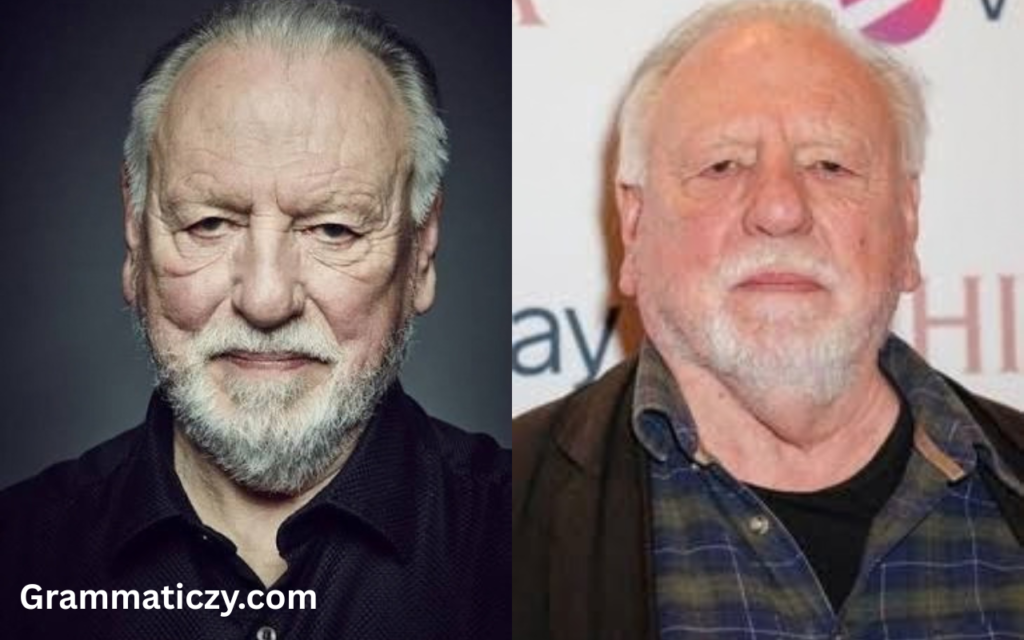
Kenneth Cranham’s career is the story of an actor who never needed to be the conventional leading man to become one of Britain’s most respected performers. Born in Dunfermline, Scotland, in 1944, Cranham developed a career spanning theatre, film, television and radio, working with some of the most important writers and directors in modern British drama. From his early association with playwright Joe Orton to memorable appearances in Oliver!, Hellbound: Hellraiser II, Gangster No. 1, Layer Cake, Hot Fuzz and Maleficent, he repeatedly demonstrated an ability to make supporting and leading characters feel authentic. His greatest theatrical recognition eventually came decades into his career, when his performance in Florian Zeller’s The Father earned him the 2016 Olivier Award for Best Actor. In 2023, his contribution to British drama was recognized again when he was appointed a CBE.
Kenneth Cranham’s Early Life and Family Background
Kenneth Cranham was born on December 12, 1944, in Dunfermline, Fife, Scotland. His father was Ronald Cranham, an English civil servant and former army staff sergeant, while his mother, Margaret McKay Cranham, was Scottish. Cranham spent his first four years in Scotland before his family moved to London, where he grew up and attended Tulse Hill Comprehensive School. His childhood experiences between Scotland and London gave him an early connection to two different cultural environments, something that later became part of the broad social range he brought to his acting.
The young Cranham developed an interest in performance and cinema at an early age. In later interviews, he recalled the powerful effect that films and actors had on his imagination. He has particularly mentioned Laurence Olivier’s Shakespeare films as an important inspiration for wanting to become an actor. His fascination with acting eventually became more than a childhood interest and began to look like a possible profession.
Cranham’s early life was not built around the conventional path toward celebrity. He was not initially presented as a future movie star, and his career developed gradually through training, theatre and small opportunities. That slow beginning became important because it encouraged him to build his reputation through the quality of his performances rather than through instant fame. His later career would show just how valuable that foundation became.
Kenneth Cranham’s Education and RADA Training
Before becoming a major professional actor, Cranham trained with the National Youth Theatre of Great Britain. He then entered the Royal Academy of Dramatic Art, one of Britain’s most prestigious institutions for actor training. RADA records confirm that he graduated with an Acting Diploma in 1966.
His time at RADA came during an especially interesting period in British theatre. The 1960s were bringing major changes to British drama, with new playwrights, experimental productions and more socially challenging stories gaining prominence. An actor entering the profession at that moment had opportunities to work in a theatrical environment that was increasingly interested in ordinary people, uncomfortable subjects and unconventional characters.
That environment suited Cranham particularly well. His later performances would often involve people who were rough around the edges, morally complicated, authoritarian or vulnerable beneath an apparently tough exterior. His distinctive voice, physical presence and ability to communicate tension made him especially effective in such roles. His formal training gave him the technical foundation, while the rapidly changing British theatre scene provided the kind of material in which his abilities could develop.
The Joe Orton Connection and Beginning of His Acting Career
One of the most fascinating stories from Cranham’s early career involves playwright Joe Orton. According to biographical accounts, Cranham was working in a bookshop when Orton discovered him and cast him in the radio play The Ruffian on the Stair. This encounter became an important early step in Cranham’s professional acting career.
His association with Orton continued with Loot, a darkly comic play that became an important part of Cranham’s early theatrical experience. Working with Orton placed Cranham in the middle of a distinctive form of British drama characterized by irreverence, black comedy and social provocation. These productions demanded actors who could deliver outrageous material while maintaining believable characters.
The opportunity also helped Cranham establish himself within London’s theatre community. Rather than moving immediately toward conventional television stardom, he developed relationships with writers, directors and theatre companies. His early work with Orton and later connections with playwrights including Harold Pinter and Edward Bond placed him within an important generation of British theatrical artists. A later account of his career describes him as having worked with Orton, Pinter and Bond during the radical changes taking place in British theatre during the 1960s and 1970s.
Kenneth Cranham’s Early Film and Television Career
Cranham’s screen career developed alongside his theatrical work. One of his earliest major film appearances was in Oliver! in 1968, where he played Noah Claypole. The film became a significant musical adaptation and provided Cranham with an early opportunity to appear before a much wider cinema audience.
During the following years, he accumulated television appearances in a wide range of British productions. His credits included programs such as Budgie, Boon and Minder. These roles helped him become familiar to television audiences while allowing him to experiment with different character types. His screen persona increasingly became associated with characters who possessed authority, toughness or an unpredictable quality.
One of his most important television opportunities arrived in 1982 with Shine on Harvey Moon. Cranham played the title character, a demobilized RAF corporal returning to post-war London. The series gave him a leading television role and a considerably broader public profile. IMDb identifies the series as his first starring television role.
Shine on Harvey Moon and Television Recognition
Shine on Harvey Moon represented an important transition in Cranham’s career. Instead of appearing only as a supporting character, he became the central figure in a television drama about family, work and post-war British life. The series followed Harvey Moon as he attempted to rebuild his life after military service, placing the character within the changing social landscape of post-war London.
The role demonstrated a side of Cranham that could sometimes be overshadowed by his tougher screen appearances. He was capable not only of playing criminals, authority figures and intimidating characters but also of carrying an emotionally grounded family drama. The warmth and humanity required by Harvey Moon broadened public understanding of what Cranham could do as an actor.
The success of the series became one of the major stages in his television career. Rather than becoming locked into one particular genre, however, Cranham continued moving between very different productions. His subsequent television work would include historical dramas, crime stories, fantasy series and internationally successful productions.
Kenneth Cranham’s Film Career and Memorable Roles
Cranham’s filmography is particularly diverse. He appeared in Hellbound: Hellraiser II, playing Dr. Philip Channard, a role that became one of his best-known performances among horror audiences. The character’s transformation into a Cenobite made the performance physically and visually demanding and gave Cranham an opportunity to explore the darker side of his acting range. A 2026 interview with the Hellraiser Codex revisited his memories of making the film and his long-standing fascination with horror cinema.
His career later included important appearances in crime films. He played Jimmy in Gangster No. 1 and Jimmy Price in Layer Cake. These films fit naturally with the tough, authoritative characters for which his voice and screen presence had become recognizable, but Cranham’s performances remained grounded rather than simply relying on physical intimidation.
He also demonstrated a talent for comedy and mainstream entertainment. In Hot Fuzz, he played farmer James Reaper, contributing to the film’s eccentric collection of British characters. He later appeared as King Henry in Disney’s Maleficent, introducing his work to another international audience. His film credits also include Film Stars Don’t Die in Liverpool, demonstrating that even late in his career he continued to work across different cinematic styles.
Kenneth Cranham’s Television Career Across Generations
Cranham’s television career continued long after Shine on Harvey Moon. He appeared in major productions including Rome, Merlin, War & Peace and The White Princess. These projects allowed him to work within historical and fantasy settings as well as large-scale international productions.
His role in Rome was particularly notable because the series attracted an international audience and featured an extensive ensemble cast. His later work in Merlin similarly placed him within a fantasy environment, while War & Peace and The White Princess demonstrated his ability to work within elaborate historical dramas.
What makes this phase of Cranham’s career interesting is its consistency. He never depended upon a single television character to define him. Instead, he continued accepting different roles and adapting his performance style to the requirements of each production. That flexibility helped him remain relevant as television itself changed dramatically.
Kenneth Cranham’s Theatre Career
Although Cranham is widely recognizable from film and television, theatre has remained central to his artistic identity. His stage résumé includes works by some of the most influential playwrights in modern British drama, including Joe Orton and Harold Pinter. His professional theatre credits include The Ruffian on the Stair, Loot, Entertaining Mr Sloane, The Birthday Party, The Caretaker, Gaslight and An Inspector Calls.
His involvement with An Inspector Calls became especially significant. Stephen Daldry’s production became one of the most successful and widely recognized modern British stage productions, and Cranham played Inspector Goole in productions at the National Theatre, West End and Broadway. His stage résumé records the production across those major venues.
Theatrical acting requires a different discipline from screen acting. An actor must sustain concentration for an entire performance and recreate the emotional journey repeatedly, often several times a week. Cranham’s extensive stage career therefore helps explain the control and precision evident in many of his screen performances. His theatre background became one of the defining foundations of his professional identity.
The Father and Kenneth Cranham’s Olivier Award
The most important theatrical achievement of Cranham’s later career came with Florian Zeller’s The Father. In the play, Cranham portrayed André, an elderly man experiencing profound confusion and uncertainty. The structure of the drama places the audience inside the character’s increasingly unreliable perception of reality, making the central performance unusually demanding.
Cranham’s work received the Critics’ Circle Theatre Award for Best Actor in 2015. He subsequently won the 2016 Olivier Award for Best Actor, his first Olivier victory. RADA confirmed that he won the award for his performance in The Father, which had played at the Tricycle Theatre before transferring to the West End.
The timing of the award made the achievement particularly striking. Cranham had already spent decades working professionally when he received his first Olivier. His success demonstrated that an actor’s most important recognition does not necessarily have to arrive early in a career. The Father became a defining late-career achievement and showed audiences a level of vulnerability and emotional complexity that contrasted sharply with some of his more intimidating screen roles.
Awards, Recognition and CBE
Cranham’s professional honors are closely connected with the quality of his acting. His Critics’ Circle Theatre Award and Olivier Award recognized his work in The Father, while his earlier Olivier nomination for An Inspector Calls reflected the strength of his stage career long before his eventual win. His professional résumé confirms the 2015 Critics’ Circle victory and 2016 Olivier Award.
His contribution to British drama received another major acknowledgment in 2023 when he was appointed Commander of the Order of the British Empire (CBE) for services to drama. This distinction recognized the broader contribution he had made throughout his career rather than one individual performance.
The CBE also provided a fitting recognition for an actor whose career had stretched across several generations. Cranham’s work has included classic theatre, modern drama, television series, radio productions, horror films, crime movies, comedy and fantasy. Few single credits can represent such a career; the breadth of his body of work is itself one of his greatest professional achievements.
Kenneth Cranham’s Personal Life and Family
Cranham has generally kept his personal life more private than many contemporary celebrities. His documented relationships include his marriage to actress Diana Quick from 1974 to 1978 and his later marriage to actress Fiona Victory. He has two daughters, Nancy Cranham and Kathleen Cranham.
His family and relationships have also had connections to the acting world. His former partners worked in the profession, meaning that theatre and performance were not simply aspects of Cranham’s professional life but were also connected with parts of his personal world.
Interviews have occasionally offered glimpses into his interests away from acting. During an interview connected with The Father, Cranham said that when he was not performing or rehearsing he tried to keep up with London through visits to art galleries and libraries. He also recalled childhood memories involving his grandparents and described Laurence Olivier’s Shakespeare films as an important inspiration.
Kenneth Cranham’s Personality and Approach to Acting
One revealing aspect of Cranham’s interviews is his continued curiosity about the world around him. His interest in art galleries, libraries, literature and theatre suggests an actor who has remained intellectually engaged with the cultural environment around him.
His advice to younger actors has also been characteristically focused on the craft. When asked what advice he would give aspiring performers, Cranham recommended finding work by good writers. That answer reflects an important part of his own career: he repeatedly gravitated toward strong scripts and playwrights rather than depending solely on celebrity-driven projects.
His career also illustrates the importance of character acting. Cranham has frequently played people who enter a story with only a limited amount of screen time but leave a strong impression. His distinctive voice, physical presence and ability to communicate complicated personalities allowed him to turn secondary characters into memorable parts of the productions in which they appeared.
Kenneth Cranham’s Net Worth and Sources of Income
There is no reliable, independently verified public figure establishing Kenneth Cranham’s exact net worth. Celebrity-net-worth websites sometimes publish estimated figures, but these should not be treated as confirmed financial information because Cranham’s contracts, investments, property holdings, royalties and other private financial details are not publicly documented in sufficient detail.
His professional income has primarily been associated with his exceptionally long acting career. That includes theatre performances, film appearances, television work and radio. A career lasting roughly six decades can involve many different forms of compensation, from individual acting fees to theatre contracts and other professional arrangements.
For that reason, it is more accurate to describe Cranham as a highly experienced and extensively employed professional actor than to attach an unsupported numerical net-worth figure to his name. His greatest measurable legacy is his body of work and the professional recognition attached to it.
Kenneth Cranham and Social Media
Cranham belongs to a generation of actors whose careers were established long before Instagram, Facebook and X became important parts of celebrity culture. There is no consistently verified major personal social-media presence that can confidently be identified as his official Instagram, X/Twitter or LinkedIn account.
This relative absence of social-media activity is not unusual for performers from his generation. His relationship with audiences has instead been built through performances, interviews, theatre productions, television broadcasts and films. His work continues to be encountered by audiences who may know him from entirely different productions.
The contrast is interesting in an era when actors can communicate directly with millions of followers. Cranham’s career demonstrates an older form of audience connection, where the performance itself remains the central means of communication between an actor and the public.
Kenneth Cranham’s Recent Work and 2026 Status
Cranham remains an important figure in British acting history, and his work continues to receive attention. A 2026 interview published by the Hellraiser Codex revisited his role as Dr. Philip Channard in Hellbound: Hellraiser II, providing a recent example of continued interest in his earlier screen work.
A recent production about his career, An Actor’s Life: Kenneth Cranham, also presents his professional journey through conversations about his six decades in acting. The project describes his career as a lens through which audiences can explore the development of British theatre and screen drama from the 1960s onward.
There is no sufficiently authoritative information establishing a major new 2026 film or television project that should be presented as confirmed. His most significant recent formal recognition remains the CBE awarded in 2023, while the continuing interest in his performances demonstrates that his existing work remains culturally relevant.
Kenneth Cranham’s Lasting Legacy
Kenneth Cranham’s legacy is built on remarkable variety. He has played Shakespearean and classical characters, criminals, authority figures, fathers, detectives, historical figures, comic characters and deeply troubled individuals. His screen work has crossed genres ranging from horror and crime to comedy, fantasy and historical drama.
Yet theatre remains perhaps the clearest thread running through his career. From his early work with Joe Orton to productions involving Pinter and other major writers, Cranham participated in some of the most significant developments in modern British theatre. His work in An Inspector Calls and The Father later demonstrated his ability to take major theatrical roles and make them his own.
His 2016 Olivier Award is especially meaningful because it came after decades of professional experience. It showed that artistic development does not necessarily stop with age and that an actor can discover new dimensions of performance many years after first entering the profession. His CBE in 2023 further underlined the scale of his contribution to British drama.
Conclusion
Kenneth Cranham’s journey from a young man in Dunfermline and London to an internationally recognized British character actor is a remarkable example of persistence and artistic development. His training at the National Youth Theatre and RADA provided the foundation, while his early encounter with Joe Orton opened the door to a theatrical world that would shape much of his career.
Over the decades, Cranham built an extraordinary résumé across stage and screen. Audiences have encountered him in Oliver!, Shine on Harvey Moon, Hellbound: Hellraiser II, Gangster No. 1, Layer Cake, Hot Fuzz, Maleficent, Rome, War & Peace and many other productions. His theatre work added another dimension, culminating in his Olivier-winning performance in The Father.
Perhaps the most inspiring part of Kenneth Cranham’s story is that his greatest theatrical recognition arrived after decades of work. His career shows that perseverance does not simply mean continuing; it can mean continuing to grow, taking on unfamiliar challenges and remaining open to meaningful roles. His CBE and enduring body of work stand as further recognition of that commitment.
As Kenneth Cranham’s performances continue to be discovered by new audiences, his story remains a powerful reminder that a meaningful acting career is built one character, one performance and one opportunity at a time. His legacy is not confined to a single famous role. It lives across generations of British theatre, television and cinema—and in the lasting impression created by an actor who spent decades treating the craft itself as the heart of his profession.