
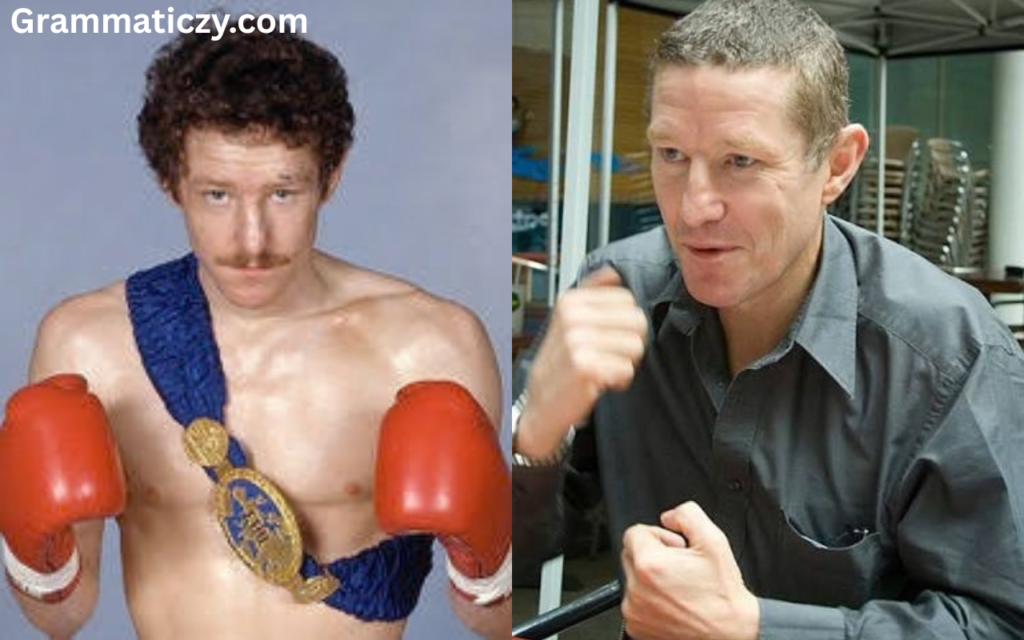
Terry Marsh is one of the most unusual figures in British boxing history. To describe him simply as an undefeated former world champion would leave out much of what makes his life so fascinating. Born in Stepney, East London, in 1958, Marsh travelled a remarkably unconventional road that took him from junior chess competitions and working-class London to the Royal Marines, the fire service and eventually the highest level of professional boxing. He became a three-time ABA senior amateur champion before winning British, European and IBF world championships as a professional. His professional record finished at 26 victories, no defeats and one draw, with 10 wins coming by knockout.
Marsh’s nickname, “The Fighting Fireman,” perfectly captures the unusual combination of careers that made him famous. He was working as a firefighter while developing his professional boxing career, meaning that becoming a world champion was not initially a conventional full-time sporting occupation for him. His story became even more remarkable after boxing when he moved into education, finance, writing and politics and later returned to competitive sport through chessboxing. His life therefore provides a rare example of a sportsman who repeatedly reinvented himself rather than allowing one achievement to define his entire identity.
Perhaps the most striking part of Marsh’s boxing story is how quickly his professional career ended after reaching its greatest height. He won the IBF light-welterweight championship from Joe Manley in March 1987 and successfully defended it against Akio Kameda four months later. That defense became his final professional contest. Marsh retired as an unbeaten world champion, a distinction that has remained one of the defining features of his legacy. Decades later, boxing publications continue to revisit his career because very few fighters have managed to leave the professional game with a world title and an untouched record.
Terry Marsh Facts at a Glance
| Category | Information |
|---|---|
| Full Name | Terry Marsh |
| Date of Birth | February 7, 1958 |
| Age | 68 in 2026 |
| Birthplace | Stepney, East London, England |
| Nationality | British / English |
| Nickname | The Fighting Fireman |
| Profession | Former professional boxer, firefighter, Royal Marine, writer and businessman |
| Boxing Division | Light-welterweight |
| Boxing Style | Orthodox |
| Professional Record | 26 wins, 0 losses, 1 draw |
| Knockout Wins | 10 |
| British Championship | British Light-Welterweight Champion |
| European Championship | European Light-Welterweight Champion |
| World Championship | IBF Light-Welterweight Champion |
| Professional Career | 1981–1987 |
| Parents | Names are not reliably documented in major public sources |
| Siblings | Three brothers are documented |
| Education | Westminster City School; later pursued further studies |
| Military Service | Royal Marines |
| Fire Service | Essex County Fire and Rescue Service |
| Autobiography | Undefeated |
| Social Media | No reliably verified official Instagram, X/Twitter or LinkedIn account located |
| Estimated Net Worth | Online estimates exist, but no independently verified public figure is available |
Early Life and Family Background
Terry Marsh was born in Stepney, East London, on February 7, 1958. His childhood was rooted in a working-class environment, and he grew up in a small terraced house with his parents and three brothers. The family later moved to Basildon in Essex, which became closely associated with Marsh’s identity and eventually served as the setting for one of the biggest victories of his boxing career. His early surroundings were a long way removed from the glamour normally associated with world championship boxing.
What makes Marsh’s childhood especially interesting is that boxing was not his only competitive passion. He became a junior chess champion, developing an interest in a game based almost entirely on concentration, calculation and strategic thinking. That early achievement offers an intriguing glimpse into the personality behind the boxer. Marsh would later become known for his intelligent, technically disciplined approach in the ring, and his childhood involvement in chess provides an interesting parallel with the careful decision-making required in elite boxing.
Marsh attended Westminster City School between 1969 and 1971, but his education did not end with his school years. In fact, learning remained an important feature of his life long after his sporting career. His later pursuit of politics and government studies demonstrated that his ambitions extended well beyond physical competition. This combination of academic curiosity and athletic discipline became one of the recurring themes of his life: Marsh repeatedly moved into environments where he had to learn something new and prove himself all over again.
Discovering Boxing and Developing a Competitive Mindset
Marsh began boxing as a youngster at St George’s Club in Stepney. The sport gave him a different outlet for the competitiveness that had already appeared through chess. Boxing demanded physical courage, but it also required timing, distance control, anticipation and the ability to make decisions while under pressure. Those qualities would eventually become central to Marsh’s professional style.
His amateur career developed rapidly. Marsh accumulated extensive experience and eventually became a three-time ABA senior champion. He won the ABA lightweight championship in 1978 before later winning the welterweight title in 1980 and again in 1981. His amateur accomplishments established him as one of Britain’s leading fighters of his generation, although his route did not lead to the Olympic Games. A change in weight within the Royal Navy team contributed to the direction his amateur career took.
One of the most revealing aspects of Marsh’s own reflections on his amateur career is that he did not portray himself as an unstoppable prodigy. His journey contained setbacks, changes of direction and uncertainty. Those experiences became useful later because Marsh learned to rely on preparation, fitness and technical ability rather than simply physical power. His approach would ultimately help him become a world champion despite openly acknowledging that knockout power was never the defining strength of his boxing.
Life in the Royal Marines
Before establishing himself as a professional boxer, Marsh served with the Royal Marines. He has recalled seeing an advertisement for the Green Berets while commuting and deciding that military service offered a more attractive challenge than his existing routine. He eventually spent approximately four years in the Marines, including periods in Cyprus and Crossmaglen, Northern Ireland.
Military service introduced Marsh to a completely different form of discipline. The Royal Marines environment demanded physical endurance, mental concentration and the ability to operate under pressure. Those characteristics were naturally transferable to boxing, where conditioning and composure can determine the outcome of a fight long before the final round. His military background therefore became another important stage in the development of the fighter audiences would later know as “The Fighting Fireman.”
His time with the Royal Marines also connected him with the Royal Navy boxing team. That relationship helped provide an important platform for his amateur achievements. Rather than following a conventional route from amateur boxing directly into professional sport, Marsh built his reputation while balancing military responsibilities and competitive boxing. This made his eventual transformation into a world champion even more unusual because his career had already passed through several demanding environments before professional boxing became his main public identity.
Becoming the Fighting Fireman
After his military service, Marsh became a firefighter with Essex County Fire and Rescue Service. He served on White Watch at Tilbury, and firefighting became an important part of his working life while he continued pursuing boxing. The contrast between the two professions was striking: one involved protecting people during emergencies, while the other involved entering a ring and deliberately exposing himself to physical punishment.
The combination quickly produced the nickname “The Fighting Fireman.” It was more than a catchy label because Marsh genuinely continued working in the fire service while building his boxing career. Contemporary reports from the period described him as Britain’s “fighting fireman,” emphasizing the unusual circumstances surrounding his challenge for the world championship. Even after winning the IBF title, Marsh intended to continue working at a Basildon fire station.
Marsh’s own recollections suggest that financial realities also influenced his decisions. Professional boxing was not initially providing the kind of financial security that modern elite fighters might expect, and at one point he effectively considered boxing finished. He had suffered a hand injury and began training for the fire service, believing that firefighting would become his career. A series of opportunities then pulled him back into championship boxing, eventually leading him to the British title and beyond.
Beginning His Professional Boxing Career
Terry Marsh turned professional in 1981. His debut took place in October that year in Bloomsbury, London, where he defeated Andrew DaCosta on points over six rounds. Unlike a fighter whose professional career immediately exploded into national attention, Marsh developed gradually, building experience and maintaining his unbeaten status while moving toward increasingly important opponents.
His progress included a Southern Area light-welterweight championship victory over Vernon Vanriel. That win was an important stepping stone because it placed Marsh firmly into the British championship picture. His style relied heavily on movement, fitness, timing and combinations, allowing him to control fights without depending upon extraordinary punching power. His ability to maintain a demanding pace became one of the characteristics that separated him from many of his opponents.
The professional record also contained one draw, which makes the eventual 26-0-1 record particularly interesting. Marsh did not simply walk through every opponent without difficulty. Instead, he gradually built a reputation through consistency. By remaining unbeaten while taking on increasingly challenging competition, he established the foundation necessary for his British and European championship opportunities.
Winning the British Light-Welterweight Championship
The next major breakthrough came on September 19, 1984, when Marsh faced Clinton McKenzie for the British light-welterweight championship. McKenzie was an experienced and established British champion, making the contest a serious examination of Marsh’s ability at the domestic level. Marsh won the 12-round contest on points and became British light-welterweight champion.
The victory was particularly meaningful because Marsh later recalled entering the contest without assuming that he would necessarily win. He described his thinking in remarkably practical terms, essentially viewing the opportunity as a chance to improve his financial situation. Instead of allowing the scale of the occasion to overwhelm him, he approached the contest as another challenge and produced one of the performances that changed the direction of his career.
Winning the British championship gave Marsh the credibility to pursue international opportunities. The title demonstrated that his unbeaten run was not simply the result of carefully selected opposition. He had now defeated an established champion over 12 rounds and shown that his technical style could work against high-level domestic competition. The next major stage was European championship boxing.
European Championship Success
In October 1985, Marsh travelled to Monte Carlo to challenge Alessandro Scapecchi for the vacant European light-welterweight championship. The fight represented another step away from his British roots and into the wider European boxing scene. Marsh stopped Scapecchi in the sixth round according to BoxRec’s historical record, earning the European title and adding another major championship belt to his collection.
The European title was not simply a trophy that Marsh collected and immediately abandoned. He successfully defended it against Tusikoleta Nkalankete and later against Francesco Prezioso. These defenses strengthened his position as a serious international contender and kept his unbeaten professional record intact. By this stage, Marsh had demonstrated that he could compete successfully at British and European levels while maintaining the technical discipline that had become his trademark.
The European championship also placed Marsh in a position where a world-title opportunity became increasingly realistic. He had already moved through the Southern Area and British levels, then conquered the European championship. The remaining major target was a world title, although the opportunity did not arrive as smoothly as he had hoped. A previous attempt to secure a world-title fight with Patrizio Oliva had fallen through, leaving Marsh understandably cautious about becoming emotionally invested in another opportunity.
Terry Marsh Becomes an IBF World Champion
The defining night of Terry Marsh’s boxing career came on March 4, 1987, in Basildon. He challenged American Joe Manley for the IBF light-welterweight championship. The circumstances were unusual: the contest took place in a circus tent erected near the hotel, creating an atmosphere far removed from the grand arenas normally associated with major world-title fights.
Marsh entered the contest unbeaten, while Manley was the reigning champion. The fight became a showcase for Marsh’s disciplined boxing. According to contemporary and retrospective accounts, Marsh built a substantial lead on the scorecards before stopping Manley in the tenth round. With that victory, he became the IBF world light-welterweight champion and reached the summit of his professional career.
For Marsh, the world title represented something close to a finishing line rather than the beginning of a long championship reign. He later explained that he had never expected to get quite that far and believed winning the title was the achievement he had been working toward. His comments reveal how differently he viewed his career from the traditional expectation that a champion should remain active for as long as possible.
Defending the World Championship Against Akio Kameda
On July 1, 1987, Marsh returned to the ring for what would become his final professional fight. His opponent was Japan’s Akio Kameda, and the venue was the Royal Albert Hall in London. The contest gave Marsh an opportunity to establish himself as more than a one-night champion and demonstrate that his victory over Joe Manley had been the product of genuine world-class ability.
The fight ended in the seventh round when Marsh stopped Kameda. Accounts of the contest describe Marsh continuing to box effectively despite suffering a cut over his right eye. His performance secured a successful world-title defense and left him with the remarkable distinction of retiring as an undefeated world champion.
Marsh had already made up his mind that the Kameda fight would be his final professional contest. Although another lucrative opportunity involving Hector Camacho was later discussed, with Marsh recalling a potential purse of around £500,000, the fight never materialized. His professional career therefore ended after just one world-title defense, leaving fans to wonder what might have happened had he remained active.
Retirement and the End of an Unbeaten Career
Terry Marsh retired from professional boxing in 1987 with a record of 26 wins, no losses and one draw, including 10 knockout victories. The numbers tell an impressive story, but the timing of his retirement makes the record even more significant. He was only 29 years old and had just successfully defended his world title. Rather than continuing until his first defeat, he stepped away while still at the highest point of his career.
The circumstances surrounding his retirement became complicated by a medical diagnosis. Marsh announced in September 1987 that he had been diagnosed with epilepsy. Contemporary reporting later documented that he questioned the diagnosis and said subsequent medical tests suggested hypoglycemia rather than epilepsy. Because the medical story has changed over time, it is important to distinguish Marsh’s later account from the diagnosis originally reported during his retirement period.
Whatever the precise medical explanation, Marsh’s retirement permanently changed the direction of his life. He was no longer training for championship fights or preparing for another opponent. Instead, he began exploring new fields and opportunities. The transition was not always easy, but it demonstrated the same willingness to start again that had characterized his journey from military service to firefighting and then to professional boxing.
The Frank Warren Shooting Case
One of the most dramatic chapters in Marsh’s post-boxing life began in 1989, when former promoter and manager Frank Warren was shot in London. Marsh was subsequently charged with attempted murder and spent around ten months on remand before being tried. He was acquitted in November 1990.
The case attracted significant public attention because Warren had been closely involved in Marsh’s boxing career. Their professional relationship had developed during Marsh’s rise from domestic contender to world champion, making the later legal conflict particularly striking. The prosecution presented its case against Marsh, but the trial ultimately ended with his acquittal.
The experience became one of the defining non-boxing episodes of Marsh’s life. He later discussed his time on remand in interviews, including how he learned Italian during that period. Rather than allowing the episode to become the sole definition of his post-boxing identity, he eventually moved into writing, education and other pursuits, adding further chapters to an already complicated biography.
Life After Boxing, Education and Writing
After leaving professional boxing, Marsh explored several different careers and interests. His post-boxing life included work in financial services, writing and publishing, alongside further education. The breadth of these activities is one reason his biography remains unusual: he did not simply become a retired boxer appearing at nostalgia events but continued developing an identity outside sport.
His experiences eventually became the basis for his autobiography, Undefeated. The title was particularly appropriate because Marsh had left professional boxing without losing a contest. The book allowed him to present his life story from his own perspective, including his sporting career, personal experiences and the controversies that followed his retirement.
Marsh also developed an interest in public speaking and continued reflecting on the unusual route his life had taken. His interviews reveal a self-deprecating sense of humor and a willingness to discuss both achievements and disappointments. Instead of presenting himself simply as a heroic sports figure, he has often acknowledged the contradictions and unexpected turns that shaped his life.
Chessboxing and an Extraordinary Return to Competition
Perhaps the most fitting chapter in Marsh’s later sporting life was his move into chessboxing. The sport combines chess and boxing, requiring competitors to alternate between physical combat and strategic play. For someone who had been both a junior chess champion and a world-class boxer, it was an almost perfect combination of his two earliest competitive interests.
Marsh returned to competitive combat sports decades after his professional boxing retirement. At the age of 56, he competed in chessboxing and won the World Chessboxing Association welterweight title against Armenia’s Dymer Agasaryan. The achievement demonstrated that his competitive instincts had not disappeared with his professional boxing career.
The chessboxing achievement also gave his biography a remarkable sense of symmetry. As a young man, Marsh had excelled at chess and boxing separately. Decades later, he became a champion in a sport that required both. Few sporting careers contain such a direct connection between childhood interests and a later-life achievement.
Politics and the “None of the Above” Campaign
Marsh later became involved in British political campaigning, pursuing an unusual cause centered on the idea of “None of the Above.” He changed his name by deed poll to “None Of The Above X” and stood as an independent candidate in the 2010 and 2015 UK general elections. His campaign focused on protesting the absence of a formal none-of-the-above voting option on British ballot papers.
His political activities represented another departure from the conventional path of a retired athlete. Rather than using his sporting fame simply for commercial opportunities, Marsh entered an arena where his views could become part of a broader public discussion. The campaign also reflected his long-established willingness to challenge established systems and take unconventional approaches to problems.
Although his political career never approached the scale of his boxing career in terms of public recognition, it demonstrated the breadth of his interests. By this stage, Terry Marsh had already been a soldier, firefighter, amateur champion, professional champion, author and financial professional. Politics became another chapter in a life defined by repeated transitions rather than a single permanent profession.
Terry Marsh’s Boxing Style and Strengths
Marsh’s boxing style was built around technique, fitness and intelligence rather than overwhelming punching power. He used an orthodox stance and developed a reputation for being exceptionally fit and difficult to outwork. His ability to maintain his performance across long fights allowed him to frustrate opponents who depended on a more straightforward pressure-based approach.
Interestingly, Marsh himself has been remarkably candid about his punching power. In a BoxingScene interview, he explained that despite having around 200 fights across his amateur and professional career, he never regarded himself as someone who could simply knock opponents out at will. That self-awareness makes his world championship achievement particularly interesting because he reached the top through skills other than raw power.
His greatest weapons were therefore his conditioning, movement, timing, ring intelligence and consistency. These qualities allowed him to accumulate points, control distance and maintain pressure. The result was a style that may not have been as spectacular as that of a classic knockout artist, but it proved highly effective across championship-level competition.
Terry Marsh Net Worth and Sources of Income
There is no independently verified public figure for Terry Marsh’s current net worth. Various websites have published estimates, sometimes placing his wealth around several million dollars, but these figures are not supported by publicly available financial statements. For that reason, any exact number should be treated as an estimate rather than a confirmed fact.
Marsh’s career has also been unusually diversified from an income perspective. His earnings have included professional boxing purses, employment with the fire service, financial-sector work, writing and publishing, public speaking and other professional activities. His boxing career itself lasted only from 1981 to 1987, meaning that it would be misleading to assume that his current financial position comes primarily from boxing.
His financial story is particularly interesting because Marsh competed during a very different era of professional boxing. Modern elite fighters can earn enormous sums through television contracts, sponsorships, social media partnerships and commercial endorsements, whereas Marsh’s generation operated in a less transparent financial environment. Consequently, claims about his present net worth should be approached cautiously.
Personal Life and Public Presence
Much of Terry Marsh’s public biography has focused on his professional achievements and controversies rather than providing extensive details about his private family life. His early family background is documented to some degree, including his parents and three brothers, but detailed information about his current private relationships is not widely established through reliable public sources. Respecting that distinction is important when discussing a public figure whose life has already received considerable media attention.
Marsh’s interests, however, are much easier to trace. Chess, boxing, education, military service, firefighting, writing and politics have all appeared at different stages of his life. These interests reveal a person who repeatedly sought intellectually or physically demanding challenges rather than remaining tied to one familiar environment.
There also does not appear to be a reliably verified official Instagram, X/Twitter or LinkedIn account that can confidently be attributed to Marsh. His public presence today is therefore primarily maintained through interviews, archival boxing coverage, his autobiography and retrospective articles. A May 2026 feature by British Boxing News shows that boxing journalists and historians continue to revisit his career and the unusual circumstances surrounding his retirement.
Terry Marsh’s Legacy in British Boxing
Terry Marsh’s legacy begins with his unbeaten professional record. He finished with 26 wins, no losses and one draw, won the British and European light-welterweight championships and became IBF world champion. He belongs to a very small group of fighters who have retired from professional boxing as undefeated world champions.
But his significance extends beyond statistics. Marsh represents an older style of British boxing in which fighters could simultaneously hold demanding jobs while building professional careers. His identity as a firefighter was not merely promotional branding; he genuinely worked in the fire service while pursuing championship boxing. That dual career helped make him one of the most recognizable British fighters of his era.
His legacy is also defined by reinvention. After boxing, he did not disappear from public life. He became a writer, pursued education, worked in finance, entered politics and eventually returned to competition through chessboxing. Each chapter added something different to his identity, making Terry Marsh’s biography much larger than the story of a fighter who happened to retire undefeated.
Recent Interest in Terry Marsh
Interest in Terry Marsh has continued well beyond the period when he held the IBF championship. Boxing publications periodically revisit his career because the combination of an undefeated world championship record, an early retirement and an extraordinary post-boxing life remains unusual. In August 2025, Boxing News published a detailed feature describing Marsh as a rare unbeaten world champion and revisiting his route from the Royal Marines and fire service to the world title.
The attention continued in May 2026 when British Boxing News published a retrospective titled “Rear View Mirror – Terry Marsh.” The feature revisited his amateur career, professional rise and complicated relationship with Frank Warren while emphasizing how distinctive his career was. Such retrospectives show that Marsh’s story continues to attract interest even though his last professional fight took place nearly four decades ago.
There is no major publicly documented new professional boxing comeback or championship campaign associated with Marsh today. Instead, his continuing relevance comes from his historical achievements and the unusual life that followed them. For boxing fans, he remains a fascinating example of what can happen when a fighter reaches the highest level and then chooses a completely different direction.
Conclusion: The Lasting Lesson of Terry Marsh’s Journey
Terry Marsh’s story is ultimately about much more than an undefeated boxing record. He began in East London, discovered chess and boxing as a young man, served in the Royal Marines, worked as a firefighter and eventually became a British, European and world champion. His rise was not built around a single extraordinary advantage but through fitness, discipline, intelligence, perseverance and an ability to adapt when circumstances changed.
His decision to retire as an undefeated world champion remains one of the most distinctive elements of his career. Rather than allowing boxing to become the entirety of his identity, Marsh moved into new fields and continued challenging himself. His later involvement in chessboxing was particularly symbolic: the young chess champion and elite boxer eventually found a sport where both sides of his personality could compete together.
That is perhaps the most enduring lesson of Terry Marsh’s life. Success does not always mean staying on the same path forever. Sometimes it means recognizing when one chapter has reached its natural conclusion and having the courage to begin another. From the boxing ring to the fire station, from military service to education and from professional boxing to chessboxing, Marsh repeatedly demonstrated that a person’s potential can extend far beyond the role for which they first become famous. His legacy remains a reminder that perseverance, curiosity and the willingness to reinvent yourself can be just as powerful as any championship belt.