Kenneth Cranham Biography: Early Life, Career, Movies, Family, Awards and Legacy
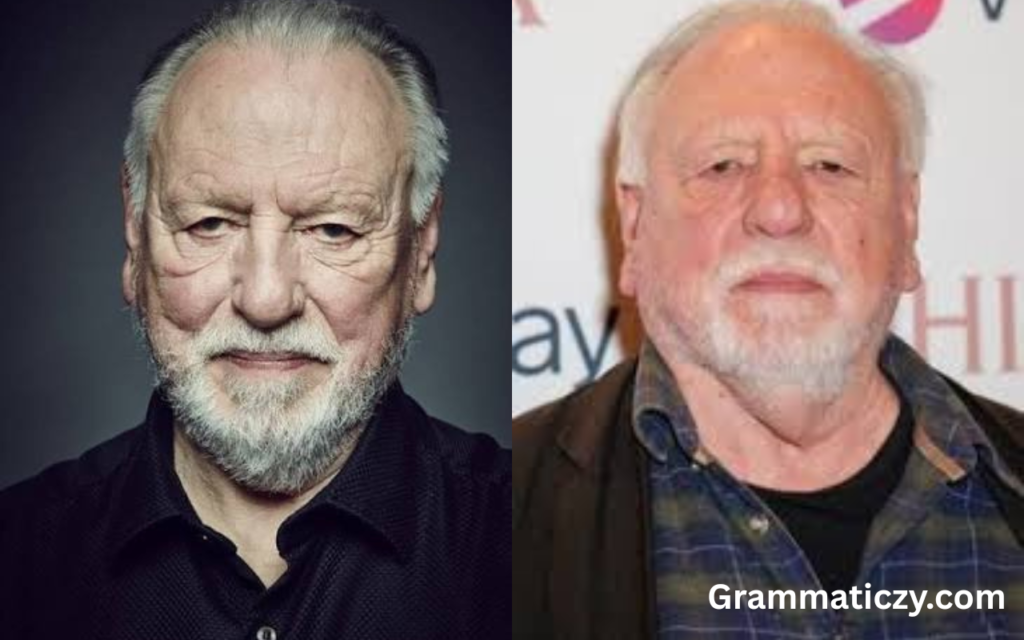
Kenneth Cranham has spent more than six decades doing something that is deceptively difficult in acting: making audiences remember the character even when the character is not the person at the center of the story. With his distinctive voice, weathered features and commanding screen presence, Cranham became one of Britain’s most recognizable character actors, moving comfortably between serious theatre, television drama, crime films, comedy, horror and historical productions. His career has included Oliver!, Hellbound: Hellraiser II, Gangster No. 1, Layer Cake, Hot Fuzz, Maleficent, Rome and many other productions.
What makes Kenneth Cranham’s story particularly compelling is that his success was not built around the traditional image of a glamorous leading man. Instead, he developed a reputation as an actor capable of bringing unusual depth to complicated, abrasive, intimidating and sometimes vulnerable characters. His career began through an unexpected meeting with playwright Joe Orton while Cranham was working in a bookshop, eventually leading him toward professional theatre and formal training at the Royal Academy of Dramatic Art.
Decades later, that early decision to pursue acting had developed into one of the longest and most respected careers in British drama. Cranham won the Laurence Olivier Award for Best Actor for The Father in 2016, after previously receiving the Critics’ Circle Theatre Award for the same performance. He was also appointed a Commander of the Order of the British Empire in 2023 for services to drama, providing an official recognition of a career that had already become an important part of British theatrical and screen history.
Kenneth Cranham Facts at a Glance
| Category | Details |
|---|---|
| Full Name | Kenneth Cranham |
| Date of Birth | December 12, 1944 |
| Age | 81 years old as of September 2026 |
| Birthplace | Dunfermline, Fife, Scotland |
| Nationality | British |
| Profession | Actor |
| Fields | Film, television, theatre and radio |
| Education | National Youth Theatre; Royal Academy of Dramatic Art |
| RADA Graduation | 1966 |
| Father | Ronald Cranham |
| Mother | Margaret McKay Cranham, née Ferguson |
| Children | Two daughters |
| Former Wife | Diana Quick |
| Partner | Charlotte Cornwell |
| Notable Films | Oliver!, Hellbound: Hellraiser II, Gangster No. 1, Layer Cake, Hot Fuzz, Maleficent |
| Notable TV Work | Shine on Harvey Moon, Rome, Merlin, War & Peace, The White Princess |
| Major Theatre Award | Laurence Olivier Award for Best Actor, 2016 |
| Other Theatre Honour | Critics’ Circle Theatre Award for Best Actor |
| National Honour | CBE, 2023 |
| Estimated Net Worth | No reliably verified public figure |
| Official Social Media | No consistently verified personal accounts publicly established |
Who Is Kenneth Cranham?
Kenneth Cranham is a British film, television, stage and radio actor whose professional career has stretched from the 1960s into the twenty-first century. Born in Dunfermline, Scotland, he eventually became particularly associated with character roles that required authority, toughness or emotional complexity. His work demonstrates the unusual longevity possible when an actor is able to adapt to changing audiences, production styles and genres.
Cranham has never been restricted to one medium. His stage career includes productions connected with major playwrights such as Joe Orton and Harold Pinter, while his screen work ranges from classic cinema and British television to large international productions. This ability to move between very different forms of storytelling has been central to his professional identity and has allowed him to remain relevant across several generations.
For audiences who know him primarily from films, Cranham may be remembered as the actor who could immediately make a supporting character feel important. His performances in Layer Cake, Hot Fuzz, Gangster No. 1, Hellbound: Hellraiser II and Maleficent demonstrate that quality particularly well. Yet his theatre achievements reveal another side of his talent, culminating in his acclaimed performance in Florian Zeller’s The Father.
Early Life and Family Background
Kenneth Cranham was born on December 12, 1944, in Dunfermline, Fife, Scotland. His mother, Margaret McKay Cranham, née Ferguson, was Scottish, while his father, Ronald Cranham, was London-born and worked as a civil servant; biographical records also describe his father as a former army staff sergeant. Cranham spent his first four years in Scotland before the family moved to London.
Growing up in London gave Cranham a different environment from his earliest Scottish childhood. He attended Tulse Hill Comprehensive School, and his eventual career suggests that his formative years were important in developing the observational qualities that later became so useful to him as an actor. Character acting often depends on noticing how people speak, move and react, and Cranham eventually became particularly effective at creating believable personalities from small details.
His route into acting was also far from conventional. According to biographical accounts, Cranham was working in a bookshop at the age of 19 when he encountered playwright Joe Orton. Orton cast him in the radio play The Ruffian on the Stair, creating an opportunity that became an important starting point for his professional acting career. That chance meeting illustrates how unexpectedly a long career can begin.
Education and RADA Training
Cranham trained with the National Youth Theatre of Great Britain before continuing his formal acting education at the Royal Academy of Dramatic Art. He graduated from RADA in 1966 with an acting diploma. RADA’s official graduate profile confirms him as an acting graduate from that year.
His training came at a particularly important stage in his development because he was already beginning to establish connections with professional theatre. His association with Joe Orton continued after his RADA years, including work on Loot at the Royal Court and subsequently at the Criterion Theatre. These early experiences placed Cranham inside an ambitious theatrical environment at a relatively young age.
Formal training also gave Cranham a foundation that would prove valuable throughout his career. He was not simply dependent on appearance or personality; he developed the technical skills needed for live theatre, classical drama and demanding dramatic material. That foundation helps explain why his career eventually became as significant on the stage as it was on screen.
The Beginning of Kenneth Cranham’s Acting Career
Cranham’s screen career began during the 1960s, but one of his earliest widely recognized film roles came in the 1968 musical Oliver!, directed by Carol Reed. He played Noah Claypole, a member of Fagin’s group of young pickpockets. The film provided him with an early opportunity to appear before a much wider cinema audience.
Rather than immediately becoming a conventional film star, Cranham developed gradually through a mixture of theatre, television and cinema. That gradual development became one of the defining characteristics of his career. He accumulated experience in different genres and learned how to adjust his performance depending on the demands of the production.
His physical appearance and naturally distinctive voice also influenced the kinds of roles directors and casting teams offered him. Cranham became particularly associated with tough characters, villains, criminals and abrasive personalities. Yet those descriptions only tell part of the story because his filmography also contains comedy, historical drama, fantasy and deeply emotional theatre.
Shine on Harvey Moon and Television Success
One of Cranham’s most important television opportunities arrived with Shine on Harvey Moon. He played the title character, Harvey Moon, a demobilized RAF corporal attempting to build a new life in post-war Britain. The series gave him a substantial leading role and demonstrated that he could carry a television drama rather than simply appear as a supporting performer.
The role was important because it showed another dimension of Cranham’s abilities. While he was increasingly known for hard-edged characters, Shine on Harvey Moon allowed audiences to spend extended time with a central character and follow his personal and social struggles. It became one of the most recognizable television credits of Cranham’s career.
His subsequent television work continued to demonstrate that versatility. He appeared in productions including Minder, Boon, Oranges Are Not the Only Fruit, Rome, Merlin, Death in Paradise, War & Peace and The White Princess. His television career therefore covered very different periods, genres and styles, from traditional British drama to international historical productions.
Kenneth Cranham’s Major Film Roles
One of Cranham’s most famous film performances came in Hellbound: Hellraiser II, the 1988 horror sequel. He played Dr. Philip Channard and the character’s terrifying Cenobite transformation. The role introduced him to horror audiences and remains one of the most distinctive performances in his filmography.
Years later, Cranham appeared in Gangster No. 1, playing a senior figure within London’s criminal world, and then in Layer Cake, where he portrayed Jimmy Price. These films suited his ability to communicate authority and danger without needing excessive dialogue or theatrical gestures. His screen presence could suggest a character’s history before the script explicitly explained it.
Cranham also showed a lighter side in Hot Fuzz, where he played farmer James Reaper, and he appeared as King Henry in Disney’s Maleficent. His other notable film credits include Valkyrie, Made in Dagenham and Film Stars Don’t Die in Liverpool. Taken together, these performances show just how widely his career travelled across British and international cinema.
Kenneth Cranham and His Theatre Career
Theatre has always been at the heart of Kenneth Cranham’s professional identity. His association with Joe Orton began early, with The Ruffian on the Stair, Loot and Entertaining Mr. Sloane. He also worked on plays by Harold Pinter, including The Birthday Party and The Caretaker. These productions established him as a serious stage actor capable of handling challenging modern drama.
One of his most important stage performances came in the National Theatre production of An Inspector Calls. Cranham played Inspector Goole, a role that earned him a Laurence Olivier Award nomination. The production subsequently transferred to Broadway, giving his theatre work an international audience and further strengthening his reputation as a leading stage performer.
Cranham’s greatest theatrical triumph came much later in his career. In Florian Zeller’s The Father, he played André, an elderly man experiencing dementia and struggling to understand an increasingly confusing world. The performance was praised widely, earning the Critics’ Circle Theatre Award for Best Actor in 2015 and the Laurence Olivier Award for Best Actor in 2016. RADA confirmed that the Olivier was Cranham’s first win at those awards.
The Father and His Olivier Award Triumph
The Father was particularly significant because it demanded a performance built around uncertainty. Instead of simply showing dementia from the outside, the play places the audience inside the character’s changing perception of reality. Cranham therefore had to balance confusion, fear, humour and emotional vulnerability while maintaining the credibility of the character.
The role represented a remarkable achievement because Cranham was already an established veteran by the time he performed it. Many actors experience their greatest recognition early in their careers, but Cranham’s Olivier-winning performance demonstrated that major artistic breakthroughs can arrive much later. His work showed that experience can deepen rather than diminish an actor’s ability to take on demanding material.
In 2016, RADA reported that Cranham won Best Actor for The Father at the Olivier Awards, competing in a category that included major performers such as Adrian Lester, Kenneth Branagh, Mark Rylance and Benedict Cumberbatch. The award transformed what had already been a distinguished stage career into one officially marked by Britain’s most prominent theatre awards.
Awards, Recognition and CBE
Cranham’s awards history is especially notable because his major recognition has centered on acting rather than celebrity status. His Critics’ Circle Theatre Award and Olivier Award for The Father recognized the quality of his stage performance, while his earlier Olivier nomination for An Inspector Calls reflected the strength of his theatrical work decades earlier.
His career received an even broader distinction when he was appointed a Commander of the Order of the British Empire (CBE) in the 2023 honours. The official government honours material lists Kenneth Cranham for services to drama. This is an important distinction because it recognizes his contribution to the wider profession rather than a single performance.
The CBE also provides an interesting conclusion to the arc of his career. The young man who encountered Joe Orton while working in a bookshop eventually became an actor recognized nationally for his contribution to drama. Few career paths illustrate the value of long-term persistence quite as clearly.
Kenneth Cranham’s Personal Life and Family
Cranham has generally kept much of his private life away from the intense celebrity spotlight. Public biographical sources identify actress Diana Quick as his first wife; they were married from 1974 until their divorce in 1978. His family life has also included relationships with other people from the acting profession, reflecting the close connections that often develop within theatre and television communities.
Cranham has two daughters, Nancy and Kathleen. Public biographies identify Nancy as his daughter with actress Charlotte Cornwell, while Kathleen is associated with his later family life. The existence of these family connections is documented, although Cranham has generally avoided turning his private relationships into a major part of his public persona.
That privacy is worth respecting when discussing his biography. Unlike many modern celebrities, Cranham’s public identity has never depended heavily on social-media updates, personal controversies or lifestyle publicity. His professional work has remained the central story, and there is comparatively little reliable information about his private routines, personal beliefs or everyday habits.
Kenneth Cranham Net Worth and Income
There is no authoritative, publicly verified figure for Kenneth Cranham’s personal net worth. Online celebrity websites sometimes publish numerical estimates, but such figures are generally difficult to verify because actors’ earnings, contracts, royalties, residuals, investments and private assets are not normally made public. For that reason, assigning a precise dollar or pound figure would create a false sense of certainty.
Cranham’s professional income has almost certainly been generated across several areas of entertainment. His work includes theatre performances, television appearances, feature films and radio, meaning that his career cannot realistically be measured through one simple source of earnings. His extensive filmography and long stage career indicate sustained professional activity rather than dependence on a single major commercial project.
The more meaningful measure of Cranham’s professional success is therefore his longevity and the quality of the productions in which he has participated. From Oliver! to The Father, he has repeatedly worked on projects that have remained culturally significant. His CBE and Olivier Award provide considerably stronger evidence of his career achievement than speculative internet estimates of his wealth.
Kenneth Cranham on Social Media
Kenneth Cranham belongs to a generation of actors whose careers were established long before social media existed. Unlike many contemporary performers, he has not built his public profile around Instagram, TikTok, X or other constantly updated platforms. There is no consistently verified personal Instagram, X/Twitter or LinkedIn account that can confidently be presented as his official personal profile.
That absence is actually revealing. Cranham’s connection with audiences has primarily been created through performance rather than direct digital communication. Viewers discover him through classic films, television repeats, streaming libraries, theatrical archives and new productions featuring members of the same generation of British actors.
For that reason, fans searching for Kenneth Cranham online should be cautious with unofficial social-media profiles. A page using an actor’s name is not automatically evidence that it belongs to the actor. In Cranham’s case, his established professional record and verified institutional information provide a far more reliable picture of his career than unverified social-media claims.
Kenneth Cranham’s Later Career
Cranham continued appearing in major television and film productions well into his later years. His credits include Rome, Merlin, War & Peace, The White Princess and Film Stars Don’t Die in Liverpool, demonstrating that his professional career remained active long after many actors of his generation had significantly reduced their screen appearances.
His later work is particularly interesting because it demonstrates that Cranham did not simply repeat the same kind of role throughout his career. He could appear in fantasy, historical drama, crime stories, comedy and emotionally serious projects. That flexibility has allowed his work to remain discoverable by audiences with very different tastes.
As of 2026, Cranham’s most important recent public recognition remains his 2023 CBE for services to drama. There is no sufficiently authoritative information establishing a major new project that should be described as a confirmed upcoming career milestone, so it is better to focus on his documented body of work rather than speculate about future roles.
What Makes Kenneth Cranham Such a Memorable Actor?
One of Cranham’s greatest strengths is his ability to establish character quickly. His voice and physical presence can communicate authority, menace, humour or vulnerability before a viewer has been given much information about the character. That quality is particularly valuable in supporting roles, where an actor may have only a limited amount of screen time to make an impression.
His career also demonstrates the importance of range. The same actor who played Noah Claypole in Oliver! later became Dr. Channard in Hellbound: Hellraiser II, Jimmy Price in Layer Cake, James Reaper in Hot Fuzz and King Henry in Maleficent. His stage career adds another layer, with performances in serious dramatic works that demanded psychological complexity.
Perhaps most importantly, Cranham has never appeared to depend on being the most famous name in a production. His strength has been his ability to make the character believable. That is why audiences can remember his performances even when they cannot immediately remember the character’s name. It is the mark of a genuine character actor.
Kenneth Cranham’s Legacy
Kenneth Cranham’s legacy is not defined by one blockbuster film or one television series. It is the cumulative result of decades of work across theatre, cinema, television and radio. His career connects several generations of British entertainment, from the experimental theatre of Joe Orton and the major stage productions of the twentieth century to internationally distributed films and television dramas.
His Olivier Award for The Father is perhaps the perfect example of that legacy because it arrived after decades of professional experience. Rather than representing a young actor’s breakthrough, it showed the continuing creative power of a veteran performer. The subsequent CBE in 2023 further confirmed that his contribution to British drama extended far beyond any single role.
Ultimately, Kenneth Cranham’s story is a reminder that a meaningful acting career does not have to follow the traditional path of fame, leading roles and constant publicity. His journey from Dunfermline and a London education, through an unexpected encounter with Joe Orton and training at RADA, to acclaimed theatre performances and international films demonstrates the power of patience, adaptability and craft. His career shows that when an actor continues learning, taking challenging roles and treating the profession seriously, recognition can arrive at any stage of life. For future generations of performers, Cranham’s enduring body of work offers a simple but powerful lesson: lasting influence is built not by chasing attention, but by giving every character a reason to be remembered.