Sarah Montague Biography: Early Life, Education, BBC Career, Family, Net Worth and More
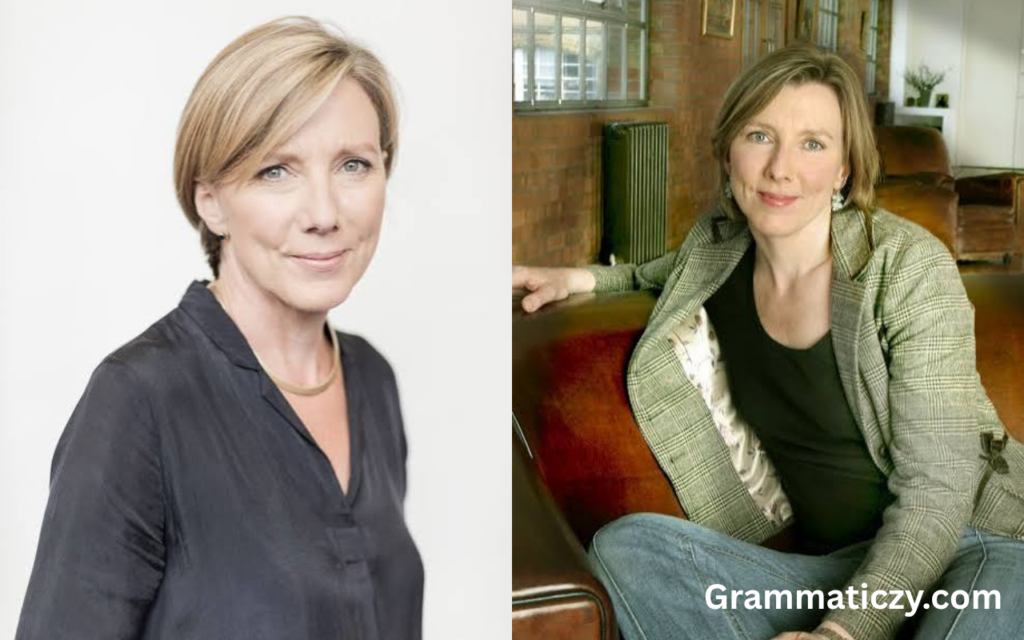
Sarah Montague is the kind of journalist whose career is built not around celebrity, but around credibility. For decades, her voice has been heard across some of the BBC’s most important news and current-affairs programmes, where she has interviewed politicians, business leaders, economists and other influential figures. Yet her route into broadcasting was far from conventional. Before becoming a familiar BBC presenter, Montague studied biology and spent time working in the City as a stockbroker. Her eventual decision to leave finance and pursue journalism became the defining turning point of her professional life.
Over the years, she developed into a respected broadcaster known for her calm delivery, serious interviewing style and ability to handle complex subjects. Her career has included Reuters, Sky News and the BBC, as well as major programmes such as Today, Newsnight, HARDtalk and The World at One. Her story is particularly compelling because it demonstrates that professional success does not always come from following a straight path. Sometimes, it comes from recognizing that the career you originally chose is not the one that truly suits you—and having the courage to start again.
Montague’s professional life has also included an important chapter in the debate over equality in British broadcasting. After discovering the scale of the BBC’s gender pay disparity, she publicly challenged the treatment she had received and later secured a £400,000 settlement and an apology from the corporation. Her experience consequently became part of the wider discussion about equal pay, transparency and women’s treatment within the media industry.
Sarah Montague Quick Facts
| Fact | Details |
|---|---|
| Full name | Sarah Anne Louise Montague |
| Born | February 8, 1966 |
| Age | 60 in 2026 |
| Birthplace | Guernsey, Channel Islands |
| Nationality | British |
| Profession | Journalist, broadcaster and presenter |
| Education | Blanchelande College; University of Bristol |
| Degree | BSc in Biology, 1987 |
| Early career | Stockbroker at NatWest |
| Journalism career began | 1991 |
| Major employers | Channel Television, Reuters, Sky News, BBC |
| Best known for | Today, The World at One, HARDtalk, Newsnight |
| BBC career began | 1997 |
| Husband | Sir Christopher Brooke |
| Children | Three daughters, according to biographical sources |
| Estimated net worth | No independently verified figure is publicly available |
| Known BBC salary | £245,000–£249,999 in the BBC’s 2020–21 published figures |
| X/Twitter | @Sarah_Montague |
| No reliably verified personal account identified | |
| No reliably verified personal profile identified |
Who Is Sarah Montague?
Sarah Montague is a British journalist and broadcaster who has spent much of her adult life working in television and radio news. She is particularly associated with BBC Radio 4, where she became one of the most recognizable presenters of Today before moving to The World at One. Her career has also included BBC television programmes and international current-affairs broadcasting through HARDtalk.
What distinguishes Montague from many broadcasters is the unusual combination of experiences behind her journalism career. Her first professional world was not broadcasting at all. After completing a biology degree at the University of Bristol in 1987, she worked as a stockbroker for NatWest and spent time in London’s financial sector. The experience gave her firsthand knowledge of markets and business, knowledge that later became particularly useful when she reported on economics and financial affairs.
Her decision to leave finance and become a journalist was therefore more than a simple career move. It was a major personal reinvention. Instead of remaining in a profession she did not enjoy, she pursued something that gave her a stronger sense of purpose. That willingness to change direction became one of the most important themes of her professional journey.
Early Life and Family Background
Sarah Montague was born in 1966 and grew up in Guernsey, in the Channel Islands. Her upbringing on the island preceded a move to England for university and eventually to London, where her professional career developed. Although she has become a highly recognizable public broadcaster, she has generally kept the details of her early family life away from the center of public attention.
Growing up outside the major British media centers may have given her a somewhat different perspective from journalists who entered broadcasting directly from London universities or journalism schools. Her later career suggests a person comfortable with adapting to unfamiliar situations, whether that meant working in financial markets, reporting from the Channel Islands or interviewing major international figures.
Education played an important role in shaping her early direction, although not in the way someone might expect. She studied biology rather than journalism at Bristol. Her academic background demonstrates that a journalism career does not necessarily require a journalism degree, especially when curiosity, communication skills and professional determination become stronger influences later in life.
Education and University Years
Montague attended the University of Bristol, where she studied biology and graduated with a BSc in 1987. The university later awarded her an honorary Doctor of Laws degree in recognition of her contribution to journalism and broadcasting.
Interestingly, her university years were not entirely focused on the conventional image of an exceptionally disciplined student. A University of Bristol profile recalled stories about her student life and early-morning habits, creating a more human picture of the broadcaster behind the polished professional image. The same profile emphasized her later realization that journalism was the work she genuinely wanted to pursue.
Her university experience ultimately became just one part of a much broader education. Finance taught her about markets and business, while journalism taught her how to research, question and communicate. The combination proved unusually useful because modern political journalism frequently intersects with economics, corporate affairs and financial policy.
From Finance to Journalism
After graduating, Montague entered the City and worked as a stockbroker at NatWest. For someone who would eventually become a major news presenter, this was an unexpected beginning. Rather than immediately pursuing broadcasting, she first experienced the competitive environment of financial services.
The City, however, did not prove to be the right long-term fit. According to the University of Bristol’s account of her career, she experienced setbacks during her time in finance, including redundancy and being dismissed from positions. Rather than allowing those disappointments to define her, she eventually recognized that journalism was the career she really wanted.
That realization became a critical turning point. Montague did not have a traditional student journalism background to fall back on, so she entered the profession by starting at a small television station. Her willingness to begin at the bottom, learn the craft and accept early mistakes would become one of the strongest foundations of her later success.
Beginning Her Journalism Career in Guernsey
Montague began her journalism career in 1991 at Channel Television in Guernsey and Jersey. It was a relatively modest beginning compared with the scale of the BBC career that would eventually follow. Yet the opportunity gave her practical experience in reporting, presenting and working under the pressures of television news.
Her early broadcasting years were not perfectly smooth. The University of Bristol has recalled that her first day on national television involved an obituary feature accompanied by the wrong photograph. Such an error might have been devastating for a new journalist, but experiences like this are part of how broadcasters learn to remain composed when live television does not go according to plan.
More importantly, those first assignments confirmed that she enjoyed journalism. Montague has spoken about the excitement she felt from her early interviews, and that enthusiasm gave her the motivation to continue. Her story shows that discovering genuine enjoyment in one’s work can be more valuable than choosing a prestigious profession simply because it appears secure.
Reuters and the Move to London
In 1994, Montague moved to London and joined Reuters Television. This was a significant step because Reuters provided exposure to a much larger international news environment. Her previous financial experience also made business reporting an area in which she could bring specialist knowledge.
The move allowed her to develop beyond the smaller regional broadcasting environment in which she had begun. London offered access to national institutions, financial markets, political developments and a much wider range of news stories. For an ambitious journalist, it was an important platform for growth.
Her career was beginning to develop a distinctive combination of skills. She understood financial markets from professional experience, but she was also learning how to translate complicated developments into understandable broadcast stories. That combination would later become especially valuable when she covered economic crises and major political events.
Career at Sky News
In January 1996, Montague became a business presenter at Sky News. By this point, she had accumulated several years of reporting experience and had already established herself within the London news industry. Her financial background made business journalism a natural area of specialization.
Working as a business presenter required more than simply knowing financial terminology. Television audiences needed complicated economic stories explained in a clear and engaging manner. Montague’s experience in the City gave her a practical understanding of the subjects she was covering, allowing her to approach financial news from the perspective of someone who had actually worked within the industry.
Her time at Sky was relatively brief but strategically important. It helped establish her as a serious television journalist and prepared the way for her move to the BBC. Within a year, she would join the corporation at a pivotal moment as it developed its 24-hour news operation.
Joining the BBC
Montague joined the BBC in 1997, initially working as a presenter on the corporation’s 24-hour news channel. Her career at the BBC subsequently expanded across a wide range of news and current-affairs programmes. She presented BBC One news bulletins, worked on Newsnight and became associated with HARDtalk, Today and other major BBC programmes.
The BBC environment provided opportunities to move beyond specialist business reporting. Political interviews, breaking news, international affairs and public policy became increasingly important parts of her professional portfolio. This broader experience helped transform her from a business presenter into an all-round current-affairs broadcaster.
Her ability to move between radio and television became another major strength. Television requires visual presentation and the ability to respond to live images, while radio depends heavily on voice, questioning technique and the ability to create a clear picture through words. Montague became experienced in both formats.
Sarah Montague and the Today Programme
One of the defining chapters of Montague’s career was her long association with BBC Radio 4’s Today. She became a regular presenter and spent roughly 18 years on the programme, becoming one of its most recognizable voices.
The Today programme is one of Britain’s most influential current-affairs broadcasts, combining breaking news, political interviews, analysis, economics and cultural reporting. Presenting it requires an ability to understand complicated subjects quickly and challenge senior figures without losing control of the conversation. Montague’s longevity on the programme reflected her ability to operate effectively in that demanding environment.
Her working routine was famously intense. Early-morning broadcasting meant extremely early starts, something the University of Bristol highlighted when describing the alarm that could ring around 3:30 a.m. for her morning shifts. After years of those schedules, the eventual move away from Today represented both a professional transition and a change in lifestyle.
Moving to The World at One
In 2018, Montague moved from Today to become the lead presenter of The World at One. The change came after years of speculation about her future on the early-morning programme and during a period of intense discussion about BBC pay inequality.
The World at One offered a different rhythm while allowing her to continue doing what she had become known for: interviewing influential people and explaining major national and international developments. Its lunchtime format also meant she could step away from the punishing early starts associated with Today.
The move proved to be an important second chapter in her BBC career. Rather than simply being remembered as a former Today presenter, Montague continued developing her identity as a leading current-affairs journalist. BBC programme listings have continued to associate her with The World at One.
HARDtalk and International Interviews
Montague’s work on HARDtalk added another important dimension to her career. The BBC programme became known for challenging interviews with influential people from politics, business, science and international affairs. Montague has been associated with the programme since the late 1990s.
Unlike a conventional news bulletin, a programme such as HARDtalk depends heavily on preparation. A presenter must understand the guest’s background, anticipate possible answers and identify areas where a claim needs to be challenged. The interviewer must also maintain enough control to keep the discussion informative rather than simply confrontational.
Montague’s experience in international and financial affairs made her particularly well suited to these conversations. Her interviews allowed audiences to hear detailed discussions about subjects that could otherwise appear remote or complicated, from global politics to public health and economic developments.
Major Career Achievements
Montague’s career achievements are impressive partly because of their breadth. She has worked for Channel Television, Reuters, Sky News and the BBC, building experience in regional, national and international broadcasting. Her BBC portfolio has included Today, The World at One, HARDtalk, Newsnight and BBC news programmes.
She has also received significant academic recognition. The University of Bristol awarded her an honorary Doctor of Laws degree in 2015. The honor reflected her contribution to journalism and her status as a prominent Bristol alumna.
Beyond her regular broadcasting, Montague has also demonstrated her skills as a moderator and event chair. Her ability to conduct structured conversations makes her valuable in professional and corporate settings, where complex topics often require an experienced interviewer who can keep discussions focused and engaging.
Sarah Montague and the BBC Pay Dispute
The BBC pay controversy became one of the most significant personal and professional episodes of Montague’s career. In 2017, the BBC published salary information showing a substantial disparity between several male and female presenters. Montague discovered that she had been paid considerably less than male colleagues on Today.
Montague publicly described the situation as deeply upsetting and professionally damaging. She explained that she had suspected there was a difference but had not realized how large the gap was. The issue was especially significant because she had spent many years as a prominent member of the programme.
In 2020, the BBC agreed to pay Montague £400,000 and issued an apology following her complaint about unequal treatment. Her case became one of the most visible examples in the broader debate about gender equality and transparency within British broadcasting.
Personal Life and Family
Away from broadcasting, Montague has generally maintained a relatively private personal life. Earlier biographical profiles identify her as married and the mother of three children. She has not built her public identity around celebrity lifestyle coverage, preferring to keep the focus on journalism and professional work.
She is married to Sir Christopher Brooke, and the couple have three daughters. Montague’s family life has occasionally appeared in profiles of her career, particularly when journalists have discussed the demanding schedule associated with Today and the challenges of combining family responsibilities with early-morning broadcasting.
Her decision to maintain boundaries around family matters is consistent with her overall public persona. She is highly visible professionally but comparatively private personally. That distinction has helped keep attention on her work rather than allowing her private life to dominate the public narrative.
Sarah Montague’s Personality and Work Ethic
Montague’s professional personality has often been described through the qualities required by serious journalism: preparation, curiosity, confidence and composure. She has worked in environments where interviews can change direction within seconds and where a presenter must understand a complicated issue while simultaneously listening to the person speaking.
Her career also suggests considerable resilience. Her first professional path in finance did not work out as planned, and her earliest broadcasting experiences included mistakes and uncertainty. Rather than treating those setbacks as evidence that she should stop, she used them as part of the process of becoming a better journalist.
One of the strongest themes in her career is therefore the importance of finding work that genuinely engages you. Her transition into journalism came after she realized that the financial world did not suit her. Once she discovered broadcasting, the excitement of reporting and interviewing gave her the motivation to continue developing.
Sarah Montague Net Worth and Income
A precise figure for Sarah Montague’s net worth cannot be responsibly stated because there is no authoritative public disclosure of her total assets, investments, property holdings and other sources of personal wealth. Numerous celebrity websites publish estimated figures, but those numbers are often unsupported and should not be treated as verified financial information.
There is more reliable information concerning her BBC earnings. The BBC’s 2020–21 annual report listed Sarah Montague among its on-air talent for The World at One, with approximately 180 presentation days and a salary in the £245,000–£249,999 range for that reporting year.
Her overall professional income may also include work beyond her BBC salary, such as conference chairing, moderation and speaking engagements. Therefore, her financial profile should be understood as that of an established senior broadcaster rather than reduced to an internet-generated net-worth estimate.
Social Media Presence
Sarah Montague has maintained a professional presence on X, formerly known as Twitter, where she has been associated with the handle @Sarah_Montague. Social media provides her with a way to connect her journalism with audiences outside traditional radio and television.
Her online presence has generally reflected her professional interests rather than becoming a lifestyle-focused celebrity account. News, interviews, BBC programmes and current-affairs topics are central to the identity associated with her public profile.
It is important to distinguish verified accounts from profiles simply using a journalist’s name. There is not enough reliable evidence to identify a personal Instagram or LinkedIn profile as definitively official, so those accounts should not be presented as hers without verification.
Recent Career and Professional Direction
Montague’s career has continued to center on serious journalism and current affairs rather than a transition into entertainment or celebrity broadcasting. Her association with The World at One represents the continuation of a career built around politics, economics, international affairs and detailed interviews.
Her background makes her particularly valuable in periods when economic and geopolitical stories dominate the news. Having worked in financial markets before becoming a journalist, she brings an unusual perspective to questions involving business, government spending, economic policy and financial institutions.
She has also developed a professional identity beyond daily broadcasting. Event moderation and conference chairing allow her to use the same skills she developed at the BBC: asking precise questions, managing conversations, understanding complex subjects and making discussions accessible to an audience.
The Legacy of Sarah Montague
Sarah Montague’s career is ultimately a story of reinvention and persistence. She did not begin as a journalism student, nor did she immediately enter broadcasting after university. Instead, she studied biology, worked in finance, experienced professional setbacks and eventually found her way into journalism. That unconventional route became one of the most interesting aspects of her career.
Her journey from a small television station in Guernsey to Reuters, Sky News and eventually the BBC demonstrates how professional experience accumulates over time. Every stage gave her something useful: finance gave her economic knowledge, regional television taught her the fundamentals of reporting, Reuters broadened her perspective, Sky developed her business journalism and the BBC gave her a platform for national and international current affairs.
Perhaps her most enduring lesson is that a career can be rebuilt when the original plan no longer feels right. Montague’s story shows that setbacks do not necessarily signal failure; sometimes they redirect a person toward work that better matches their abilities and interests. Her long broadcasting career, her role in challenging unequal pay and her continued presence in British current affairs have made her an influential figure in modern journalism.
As Sarah Montague continues to contribute to broadcasting and professional journalism, her story remains a reminder that success is rarely created by one fortunate opportunity. It is shaped through curiosity, resilience, preparation and the willingness to keep moving forward. Her journey from biology and financial markets to some of Britain’s most respected news programmes demonstrates how dramatically a career can evolve when a person has the courage to pursue work they truly believe in.