
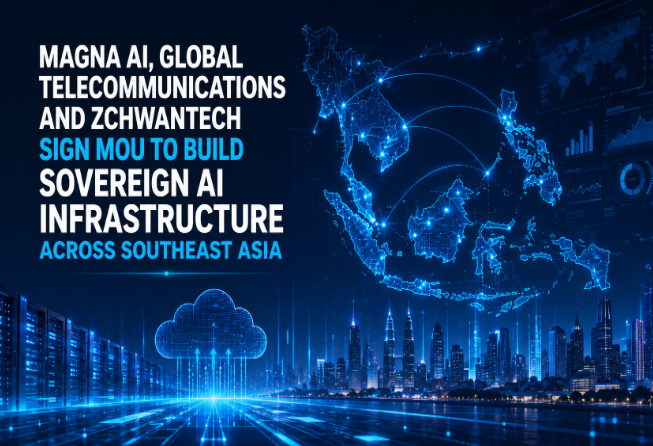
Southeast Asia is stepping into a new era of technological independence. Three major players just signed a memorandum of understanding that could reshape how the region handles artificial intelligence infrastructure. Magna AI, Global Telecommunications, and Zchwantech have joined forces to build sovereign AI infrastructure across Southeast Asia, putting data security and regional autonomy front and center.
This collaboration marks a significant shift in how Southeast Asian nations approach AI development. Instead of relying solely on foreign cloud providers, the region is taking control of its digital future.
What Sovereign AI Infrastructure Means for Southeast Asia
Sovereign AI infrastructure refers to AI systems and data centers owned, controlled, and operated within a specific country or region. The data stays local. The computing power remains under regional governance. Security follows local laws and standards.
For Malaysia and its neighbors, this partnership addresses a critical gap. Many organizations currently depend on overseas servers for AI processing. That creates potential vulnerabilities. Data sovereignty becomes murky. Latency issues slow down operations. Compliance with local regulations gets complicated.
The strategic collaboration between Magna AI, Global Telecommunications, and Zchwantech aims to solve these problems by establishing secure AI platforms right here in Southeast Asia.
How Zchwantech Contributes to Regional AI Development
Zchwantech brings specialized expertise to this partnership. The company has built a reputation for delivering enterprise IT solutions across multiple sectors. Their involvement signals a commitment to creating infrastructure that meets both international standards and regional needs.
The focus on sovereign AI infrastructure aligns with Zchwantech’s track record in handling sensitive data and complex systems. Building AI data centers requires more than just hardware. It demands sophisticated software layers, security protocols, and integration capabilities that can support diverse applications.
Southeast Asian businesses need AI platforms they can trust. Zchwantech’s participation in this MoU suggests the infrastructure will prioritize reliability and security from day one.
Southeast Asia AI Data Centers: Strategic Locations Matter
Geography plays a crucial role in AI infrastructure effectiveness. Southeast Asia AI data centers positioned strategically across the region can reduce latency, improve response times, and ensure better service availability.
Malaysia sits in an ideal position within this network. The country already hosts several major data centers and has invested heavily in digital infrastructure. Its stable regulatory environment and growing tech talent pool make it an attractive hub for sovereign AI infrastructure development.
The partnership between these three companies will likely leverage existing infrastructure while building new facilities tailored specifically for AI workloads. These aren’t ordinary data centers. AI processing demands enormous computational power, advanced cooling systems, and specialized hardware configurations.
Benefits for Malaysian Businesses and Organizations
Local companies stand to gain substantially from this initiative. Access to sovereign AI infrastructure means Malaysian enterprises can deploy AI solutions without sending sensitive data overseas. Financial institutions can run fraud detection models locally. Healthcare providers can analyze patient data while maintaining strict privacy compliance. Manufacturers can implement predictive maintenance systems with lower latency.
The economic implications extend beyond direct users. Building and maintaining Southeast Asia AI data centers creates jobs. It attracts investment. It positions the region as a serious player in the global AI landscape rather than just a consumer of foreign technology.
Secure AI Platforms: Addressing Privacy and Compliance Concerns
Security concerns drive much of the demand for sovereign AI infrastructure. When data crosses international borders, it becomes subject to foreign jurisdictions. Privacy laws vary dramatically between countries. Organizations handling Malaysian citizen data face specific obligations under local regulations.
Secure AI platforms built within Southeast Asia keep data under regional legal frameworks. This simplifies compliance. It reduces legal ambiguity. It gives organizations greater control over who can access their information.
Zchwantech’s involvement suggests these platforms will incorporate robust security measures from the ground up. The infrastructure needs to protect against both external threats and unauthorized internal access. Encryption, access controls, audit trails, and monitoring systems all become critical components.
Data Sovereignty in Practice
Data sovereignty isn’t just a buzzword. It has real implications for how businesses operate. Consider a Malaysian bank using AI for credit scoring. If that processing happens on foreign servers, the bank must navigate complex legal questions about data transfer, storage, and access rights.
With sovereign AI infrastructure, the equation changes. The data never leaves the region. Processing happens locally. Compliance becomes straightforward. The bank maintains full control over its AI operations.
This principle applies across industries. Government agencies can use AI analytics without security concerns. Educational institutions can implement AI-driven learning platforms. Retailers can personalize customer experiences while respecting privacy laws.
The Broader Impact on Southeast Asian Tech Independence
This MoU represents more than infrastructure development. It signals a strategic shift toward technological self-reliance. Southeast Asian nations have historically depended on Western or Chinese technology providers for critical digital infrastructure.
Building sovereign AI infrastructure creates alternatives. It fosters regional expertise. It encourages local innovation. Companies across Southeast Asia gain options they didn’t have before.
The partnership model itself deserves attention. By combining Magna AI’s artificial intelligence capabilities, Global Telecommunications’ network infrastructure, and Zchwantech’s IT solutions expertise, the collaboration pools complementary strengths. No single company could deliver this scope alone.
Timeline and Implementation Considerations
Memorandums of understanding outline intentions rather than final commitments. The real work begins now. Site selection, facility design, equipment procurement, and talent acquisition all take time.
Southeast Asia AI data centers require substantial capital investment. Power infrastructure, cooling systems, and specialized hardware don’t come cheap. The partnership will need to secure funding, navigate regulatory approvals, and coordinate across multiple countries.
Despite these challenges, the momentum behind sovereign AI infrastructure continues growing. Governments across the region have expressed support for data localization initiatives. The business case becomes stronger as AI adoption accelerates.
What This Means for Malaysia’s Digital Future
Malaysia has positioned itself as a digital economy leader within ASEAN. The government’s push toward Industry 4.0, smart cities, and digital transformation creates natural demand for advanced AI capabilities.
Sovereign AI infrastructure supports these ambitions. Malaysian organizations can innovate faster when they have access to cutting-edge AI platforms locally. Startups can experiment without massive cloud bills payable in foreign currency. Established enterprises can modernize operations with confidence.
The collaboration between Magna AI, Global Telecommunications, and Zchwantech to build secure AI platforms across Southeast Asia arrives at exactly the right moment. As artificial intelligence becomes essential rather than optional, having regional infrastructure becomes a competitive advantage.
The partnership promises to deliver more than just data centers. It represents a commitment to building Southeast Asia’s technological future on its own terms, with security, sovereignty, and regional prosperity as guiding principles.