
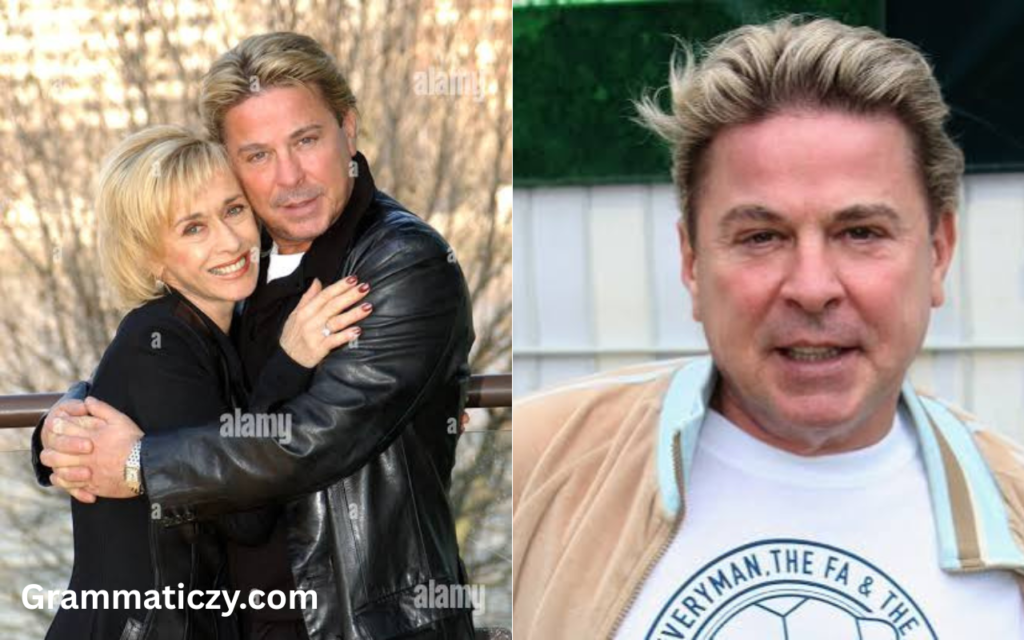
David Van Day has lived several different lives under the bright lights of British entertainment. Long before nostalgia tours and reality television brought memories of 1980s pop back to audiences, he was a young performer trying to find his place in the entertainment industry. His journey took him from early stage and commercial work to Guys ’n’ Dolls, then to Dollar, one of Britain’s most recognisable pop duos of the late 1970s and 1980s. Along the way, Van Day became a singer, songwriter, television personality, actor, touring performer, businessman and, surprisingly, a local politician.
What makes David Van Day’s story particularly interesting is not simply the number of careers he has experienced, but the way he repeatedly adapted when circumstances changed. His professional relationship with Thereza Bazar created the hugely successful Dollar partnership, while later years saw him associated with Bucks Fizz, reality television and local government. His career has included major chart success as well as controversies, professional disagreements and periods away from the centre of public attention. Dollar itself recorded ten UK Top 40 singles, including several Top 10 hits, giving Van Day a lasting place in British pop history.
David Van Day Quick Facts
| Fact | Details |
|---|---|
| Full name | David Paul Van Day |
| Known as | David Van Day |
| Date of birth | November 28, 1956/1957 |
| Age in 2026 | 68 or 69, depending on source |
| Birthplace | Brighton, East Sussex, England |
| Nationality | British |
| Profession | Singer, songwriter, actor, television personality and former councillor |
| Best known for | Dollar and Guys ’n’ Dolls |
| Musical genre | Pop |
| Education | Italia Conti Academy of Theatre Arts |
| Wife | Sue Moxley |
| Children | Amber and Olivia |
| Former wife | Maria |
| Parents | Not reliably documented in major public sources |
| Siblings | Not reliably documented in major public sources |
| Known for with Dollar | “Mirror Mirror,” “Give Me Back My Heart,” “O L’Amour” and other hits |
| Political party | Conservative Party, during his council career |
| Council seat | Aveley and Uplands, Thurrock |
| Net worth | No independently verified public figure |
| X/Twitter | @DavidVanDay |
| No reliably verified official account identified | |
| Public professional profile exists |
Public biographies do not consistently agree on Van Day’s year of birth. IMDb gives November 28, 1957, while other established biographical records commonly give 1956. For that reason, a responsible biography should acknowledge the discrepancy rather than confidently state one year as unquestionably correct.
Early Life and Childhood in Brighton
David Van Day was born in Brighton, East Sussex, and developed an interest in entertainment at a relatively young age. Brighton’s lively seaside culture provided an unusual environment for a young performer, with theatres, entertainment venues and a strong tradition of popular entertainment. Although detailed information about his childhood household is not widely available from authoritative public sources, his early involvement in performance suggests that entertainment became an important part of his ambitions long before he became a chart artist.
Van Day’s early career was not restricted to singing. According to biographical material, he was appearing in commercials by the age of 15, giving him valuable experience in front of cameras and audiences while still a teenager. His early interest was reportedly connected more strongly with acting and stage performance than with becoming a pop singer, an important detail because his eventual fame would be built primarily around music.
His education also reflected those ambitions. Van Day attended the Italia Conti Academy of Theatre Arts, an institution with a long history of training performers for Britain’s theatre, television and entertainment industries. That background helped him develop the confidence and performance skills that would later become central to his pop career. Rather than entering the music business as an unknown newcomer, he already understood the demands of being on stage and in front of a camera.
Education and Entry Into the Music Industry
The professional entertainment world of the 1970s was very different from today’s music industry. Television variety shows, record shops, radio appearances and live performances were important routes to becoming known, and young performers often had to be versatile enough to move between different forms of entertainment. Van Day’s early training gave him an advantage in this environment because he was comfortable performing rather than simply recording music.
His first major breakthrough came in 1974 when he joined Guys ’n’ Dolls. The group had been created as a mixed vocal act and included several young performers, including Van Day and Thereza Bazar. The group subsequently achieved success in Britain, with songs such as “There’s a Whole Lot of Loving” becoming associated with its early period.
Guys ’n’ Dolls was important for another reason: it brought Van Day and Bazar together. The pair became romantically involved as well as professionally connected, and their relationship would eventually lead them to leave the group and create a new act. In retrospect, the decision was one of the most important turning points of Van Day’s entire career because Dollar would become the project most strongly associated with his name.
Guys ’n’ Dolls and the Meeting With Thereza Bazar
Van Day’s time with Guys ’n’ Dolls lasted from 1974 to 1977 and provided the young singer with an introduction to the pressures of professional pop. The group operated within a competitive British music scene, where artists had to compete for radio play, television exposure and public attention. Van Day learned how a professional group functioned while gaining valuable experience that would later help him handle the much greater exposure that came with Dollar.
His partnership with Thereza Bazar gradually became the most important creative relationship of his early career. Both performers wanted to explore a different musical direction, and their decision to leave Guys ’n’ Dolls eventually led to the formation of Dollar in 1978. Their personal relationship gave the new duo an additional layer of intensity, although that same relationship would later create complications when their romance ended.
The formation of Dollar demonstrated one of Van Day’s defining characteristics: he was prepared to take a risk. Leaving an established group to start again could easily have damaged his career, particularly because the new project depended heavily on the chemistry between two young performers. Instead, Dollar quickly established itself as a commercially successful British pop act.
Dollar and the Peak of David Van Day’s Music Career
Dollar officially emerged in 1978 with David Van Day and Thereza Bazar at its centre. The duo’s accessible pop sound, strong visual presentation and male-female vocal combination made them well suited to the British pop market. Their debut single, “Shooting Star,” reached number 14 on the UK chart, immediately establishing that the pair could succeed outside their former group.
Their follow-up success was even more significant. Dollar recorded a series of popular singles, including “Love’s Gotta Hold on Me,” “I Wanna Hold Your Hand,” “Mirror Mirror,” “Give Me Back My Heart” and “O L’Amour.” Their Beatles cover “I Wanna Hold Your Hand” reached the UK Top Five, while “Mirror Mirror” and “Give Me Back My Heart” became other prominent chart successes. Across their career, Dollar achieved ten UK Top 40 singles, according to the commonly cited chart history.
Dollar also benefited from the production talent surrounding the duo. Their work with producer Trevor Horn became particularly notable during the creation of The Dollar Album. The partnership helped give the group’s recordings a polished studio sound that fitted the sophisticated production style developing in British pop at the beginning of the 1980s. Dollar’s success therefore reflected not only Van Day’s performing ability but also the songwriting, production and promotional machinery surrounding the act.
The End of His Relationship With Thereza Bazar
The personal relationship between Van Day and Bazar eventually ended in 1981. Their breakup might have been expected to end Dollar as well, but the professional partnership proved strong enough to continue for a time. This is one of the more unusual aspects of their story: they had to maintain a successful musical partnership after their romantic relationship had broken down.
For Van Day, the situation required considerable professionalism. Dollar remained commercially relevant, and the pair continued working together despite the changes in their private lives. Their ability to separate personal difficulties from professional responsibilities was an important factor in allowing the duo to continue producing music.
Eventually, however, Dollar entered another period of separation. Van Day and Bazar explored solo careers, although neither achieved the same level of commercial impact individually. Van Day recorded “Young Americans Talking,” which became a minor hit, before moving into artist management. His experience showed that life after a major pop act could require entirely different skills.
Dollar Reunion and Later Music
The story of Dollar did not end permanently with the original breakup. In 1986, Van Day and Bazar reunited professionally and returned to recording together. The reunion showed that the musical chemistry that had originally made the duo successful could still attract attention years after their first period of fame.
One of the most recognisable successes of their later period was “O L’Amour,” a cover of an Erasure song that became a Top 10 hit in the United Kingdom. The record gave Dollar another important chart moment during the second half of the 1980s and helped cement their reputation as a pop act capable of returning to the charts after an extended absence.
The reunion ultimately did not produce a permanent return to the level of their earlier success. Dollar eventually separated again, while Bazar moved away from the spotlight and Van Day continued searching for new opportunities. Nevertheless, the group’s catalogue remained influential within British nostalgia pop, and its songs continued to be rediscovered by audiences through radio, compilation albums, streaming and retro music events.
David Van Day and Bucks Fizz
Another unexpected chapter came when Van Day became involved with Bucks Fizz. The group was already famous for winning the 1981 Eurovision Song Contest with “Making Your Mind Up,” but its membership changed significantly over the years. Van Day joined a later incarnation of the group in the 1990s, adding another famous British pop name to his already unusual career history.
His association with Bucks Fizz later became complicated by disagreements surrounding the group’s name and competing line-ups. Van Day worked with Mike Nolan and became part of a version of the group that operated separately from the line-up associated with Bobby G. The dispute eventually involved legal arguments over the use of the Bucks Fizz name.
The result was that Van Day’s version ultimately became known as David Van Day’s Bucks Fizz Show. While the controversy generated considerable attention, it also demonstrated the commercial value and enduring popularity of the Bucks Fizz catalogue. Van Day remained connected with live performances and nostalgia entertainment, allowing audiences to hear songs associated with one of Britain’s best-known Eurovision acts.
Television, Acting and Reality Show Appearances
Van Day never completely abandoned his early interest in acting and television. His screen credits include the 1983 horror film Screamtime, as well as other entertainment-related appearances. His comfort in front of cameras was not surprising given that he had worked in commercials and trained for performance from a young age.
Television later introduced Van Day to audiences who may not have followed his original pop career. He appeared on programmes such as Reborn in the USA and I’m a Celebrity…Get Me Out of Here!. His participation in I’m a Celebrity was particularly notable because he finished fourth in the 2008 series, placing him back in the centre of mainstream television attention.
Reality television also allowed viewers to see a different side of Van Day. Instead of appearing only as a singer performing a carefully rehearsed song, he was placed in situations that required personality, humour, resilience and interaction with other contestants. These appearances helped extend his public identity beyond Dollar and made him recognisable to viewers from a younger generation.
David Van Day’s Personal Life, Wife and Children
Van Day’s personal life has included two significant relationships that have been publicly documented. He was previously married to Maria, and they have two daughters, Amber and Olivia. His family life has generally remained less visible than his professional career, although his children have occasionally been mentioned in biographical profiles.
He later became involved with Sue Moxley, who worked as a beauty editor for The Sun. Their relationship received public attention, including an appearance connected with The Wright Stuff. Despite difficulties in their relationship, the couple eventually reconciled and married in February 2010 in Orsett, Essex.
Van Day’s private life has therefore followed a different rhythm from the constant public exposure of his music career. While his professional history is filled with chart records, television appearances and touring commitments, his family relationships represent a more personal side of his story. The contrast between celebrity life and family life is an important part of understanding the person behind the pop image.
Business Ventures and Life Away From the Spotlight
Van Day’s willingness to explore business opportunities became especially visible during periods when he was less active in mainstream entertainment. One of the most unusual examples was his involvement in a fast-food business in Brighton. His association with a burger van became something of a humorous footnote to his career, with the nickname “Burger Van Day” becoming a memorable reference to the contrast between his pop-star past and his business activities.
The episode also illustrated an important characteristic of Van Day’s personality: he was prepared to work outside the glamorous image normally associated with an established pop singer. Instead of assuming that his earlier fame would always provide a comfortable career, he explored practical business opportunities and other ways of earning a living.
That adaptability became increasingly important as the entertainment industry changed. The traditional model of selling records and appearing on television became less dominant, while touring, nostalgia events, licensing, digital music and other forms of entertainment created new opportunities. Van Day’s ability to remain active across different areas helped him maintain a public presence long after his biggest chart successes.
David Van Day’s Political Career
One of the most surprising developments in Van Day’s later life was his decision to enter politics. He first stood as a Conservative candidate for Brighton and Hove City Council in 2007, but the attempt was unsuccessful. More than a decade later, he pursued another political opportunity in Thurrock.
In 2018, Van Day stood for Thurrock Council in the Aveley and Uplands ward as a Conservative candidate. The election was won by Tim Aker, but Aker later resigned from the council. A by-election followed in March 2019, and Van Day won the vacant seat, giving the former pop star an entirely new public role.
His political career was relatively brief compared with his decades in entertainment. Van Day eventually lost the seat to Labour by just 20 votes in May 2022. The narrow result illustrated how competitive local politics can be and marked another turning point in a career already characterised by repeated reinvention.
David Van Day’s Health and Personal Challenges
Van Day has also experienced serious personal challenges away from entertainment and politics. Public biographical accounts report that he suffered a heart attack in October 2016 and was treated in hospital, where a stent was fitted. The incident represented a significant interruption in a life that had otherwise remained remarkably active across music, television and public life.
Health difficulties can place celebrity careers into a different perspective. For a performer whose working life had involved touring, television appearances and long periods of public activity, a serious health event could have easily forced a permanent retreat from professional life.
Instead, Van Day continued to remain connected with music and entertainment. His later career demonstrates that professional identity does not necessarily disappear when a person reaches a different stage of life. The nature of the work may change, but the experience accumulated over decades can continue to provide opportunities.
David Van Day Net Worth and Sources of Income
There is no independently verified public figure that can accurately establish David Van Day’s current net worth. Various celebrity websites publish estimated figures for him, but those estimates generally do not provide audited accounts, verified property valuations or documented investment portfolios. They should therefore not be presented as confirmed financial facts.
Van Day’s historical sources of income have included record sales, live performances, touring, television appearances, acting, music-related work and business activities. His Dollar years were undoubtedly the strongest commercial period of his music career, while subsequent touring and television work allowed him to continue earning from his established public profile.
It is also important to distinguish between a performer’s commercial success and personal wealth. A successful record can generate income for record companies, publishers, producers, managers and performers, while taxes, touring expenses and other costs reduce the amount ultimately retained by an artist. For that reason, the most accurate description of David Van Day’s wealth is that his current net worth is not publicly verified rather than assigning him a precise dollar or pound figure.
Social Media and Online Presence
David Van Day has maintained an online presence, particularly through X, where an account under the handle @DavidVanDay has been publicly associated with him. His online identity reflects his unusual combination of entertainment history and later political experience, and social media gives him a direct way to remain connected with people familiar with his music and television appearances.
His professional history can also be found through platforms such as LinkedIn and music services. Spotify continues to list David Van Day as an artist, although his current streaming audience is considerably smaller than the audience he reached during his chart years. His music remains available digitally, allowing younger listeners to discover Dollar and his other recordings without relying solely on physical record collections.
There is less reliable evidence for an official Instagram account, so it would be misleading to attach a specific Instagram profile to him without stronger verification. This is particularly important for celebrity biographies because unofficial fan pages and similarly named accounts can easily be mistaken for genuine profiles. His most clearly identifiable online footprint remains connected to his professional and music history.
David Van Day’s Career and Legacy
David Van Day’s greatest contribution to British pop culture remains his work with Dollar. Alongside Thereza Bazar, he helped create a male-female pop partnership that produced a remarkable run of commercially successful singles. Their combination of catchy melodies, polished production and strong visual presentation fitted perfectly into the late-1970s and 1980s British pop landscape.
His career also demonstrates how complicated musical legacies can become when groups change members, relationships break down and performers continue using familiar catalogues. His later connection with Bucks Fizz and the resulting dispute over group identity showed that a famous name could carry enormous commercial and emotional importance for former members and audiences alike.
Perhaps his most distinctive legacy, however, is his willingness to reinvent himself. He did not remain confined to the image of an 1980s pop singer. He moved into television, acting, business, live entertainment and politics, repeatedly accepting the uncertainty that comes with starting something new. That willingness to change may ultimately be as important to his biography as the chart records that first made him famous.
What David Van Day’s Journey Teaches Us
The first lesson from Van Day’s career is the value of adaptability. Entertainment careers can change dramatically when musical tastes shift, relationships end or public attention moves elsewhere. His response was rarely to remain completely still. Instead, he repeatedly searched for another opportunity, whether that meant a new recording project, television appearance, business venture or political campaign.
The second lesson is that success is rarely a straight line. Van Day experienced major chart success with Dollar, followed by periods when his solo career did not produce the same results. He later returned to television and touring and eventually entered local politics. His career therefore shows that one unsuccessful chapter does not necessarily define the whole story.
Finally, his life demonstrates the importance of continuing to develop an identity beyond a single achievement. David Van Day will always be associated with Dollar and British pop music, but his life became much broader than those records. His story is ultimately one of persistence, reinvention and the willingness to step into unfamiliar territory.
Conclusion
David Van Day’s biography is the story of a performer who refused to let one chapter determine the rest of his life. From his early days in Brighton and professional training at Italia Conti to Guys ’n’ Dolls, the extraordinary success of Dollar, his solo work, Bucks Fizz, television appearances, business ventures and political career, he has travelled through an unusually wide range of British public life. His journey has included triumphs, disappointments, controversies and personal challenges, making it far more complex than a conventional pop-star success story.
His place in British music history is secure because of Dollar’s enduring catalogue and the important role the duo played in late-1970s and 1980s pop. Songs such as “Mirror Mirror,” “Give Me Back My Heart” and “O L’Amour” continue to connect him with audiences interested in classic British pop and nostalgia music. At the same time, his later activities demonstrate that a person’s influence does not have to end when their biggest commercial success is behind them.
As David Van Day’s story continues to be remembered by fans of British pop culture, perhaps the most meaningful part of his legacy is his determination to keep moving forward. His career is a reminder that success can take different forms at different stages of life, and that reinvention can be just as valuable as achievement. His journey encourages us to look beyond the spotlight, recognise the setbacks behind every success and understand that perseverance, curiosity and the courage to begin again can shape a lasting and meaningful legacy.