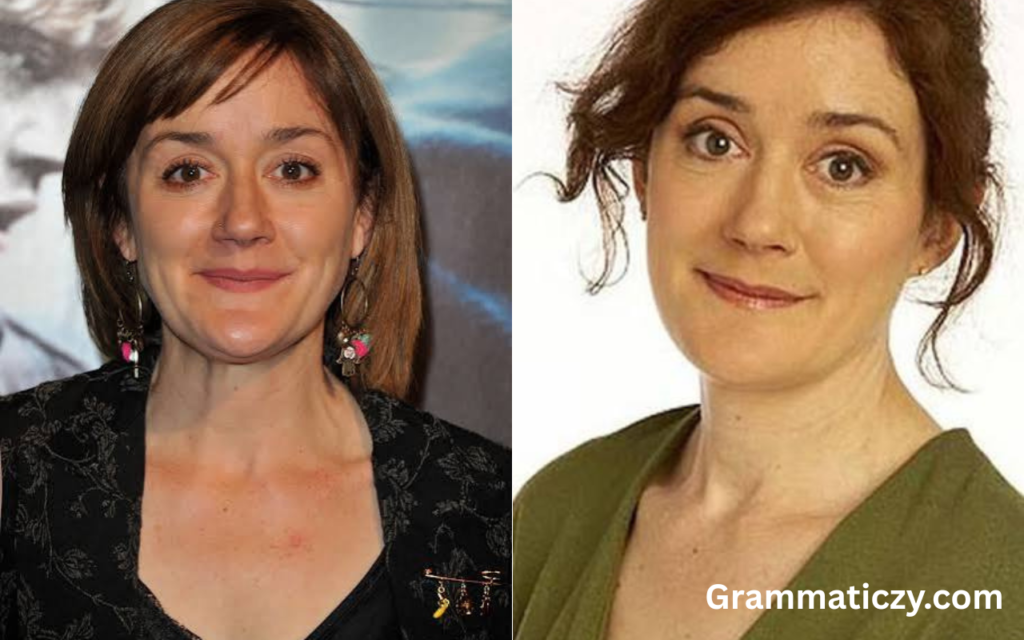
Sophie Thompson has built the kind of acting career that becomes more impressive the longer you look at it. She may be widely recognised as the younger sister of Oscar-winning actress Emma Thompson and the daughter of celebrated British actress Phyllida Law, but reducing her identity to her famous family would overlook a remarkable career that has stretched across theatre, film and television for almost five decades. From Shakespeare and musical theatre to romantic comedies, period dramas, television soaps and modern British comedy, Thompson has repeatedly demonstrated an ability to disappear into characters while maintaining a distinctive warmth and comic intelligence.
Born in London in 1962, Thompson grew up surrounded by performers, writers and stories. Her father, Eric Thompson, was the actor and writer famously associated with the English-language version of The Magic Roundabout, while her mother, Phyllida Law, developed an extensive career in British theatre, television and film. Her older sister Emma Thompson later became one of Britain’s most acclaimed actresses and screenwriters. Yet Sophie Thompson’s own professional journey followed a distinctive path. She developed a particularly strong reputation as a character actress and theatre performer, earning major critical recognition without depending on the celebrity profile of her family.
Her achievements include winning the 1999 Olivier Award for Best Actress in a Musical for Into the Woods, as well as receiving numerous further Olivier nominations throughout her career. Her screen credits include Four Weddings and a Funeral, Persuasion, Emma, Dancing at Lughnasa, Gosford Park and Harry Potter and the Deathly Hallows – Part 1. Her television work has ranged from EastEnders and Coronation Street to Feel Good, Ghosts, Everything I Know About Love and other productions. In 2026, her performance in When We Are Married brought another Olivier Award nomination, demonstrating that her stage career remains highly relevant decades after her first major successes.
Sophie Thompson Quick Facts
| Fact | Details |
|---|---|
| Full Name | Sophie Thompson |
| Date of Birth | January 20, 1962 |
| Age | 64 in 2026 |
| Birthplace | Hampstead, London, England |
| Nationality | British |
| Profession | Actress |
| Years Active | 1977–present |
| Education | Bristol Old Vic Theatre School |
| Father | Eric Thompson |
| Mother | Phyllida Law |
| Sister | Emma Thompson |
| Children | Two sons |
| Former Husband | Richard Lumsden |
| Major Award | Olivier Award for Best Actress in a Musical |
| Award-Winning Role | Into the Woods |
| Notable Films | Four Weddings and a Funeral, Persuasion, Emma, Gosford Park, Harry Potter and the Deathly Hallows – Part 1 |
| Notable Television | EastEnders, Coronation Street, Ghosts, Feel Good |
| Recent Stage Production | When We Are Married |
| 2026 Recognition | Olivier Award nomination for When We Are Married |
| Net Worth | Exact figure not publicly verified |
| Instagram/X/LinkedIn | No reliably verified personal accounts identified |
The basic details of Thompson’s life and career are consistently documented by established sources. The Bristol Old Vic Theatre School identifies her as part of its Acting Class of 1983 and describes her as an Olivier Award-winning performer. Her professional biography also confirms her extensive work across theatre, television and film.
It is worth being careful with celebrity biography websites when discussing Sophie Thompson’s finances or social-media accounts. Online estimates sometimes assign a specific net worth to her, but there is no dependable public financial disclosure supporting those figures. For that reason, a responsible biography should describe her income sources and career success without presenting an unverified number as fact.
Early Life and Famous Family Background
Sophie Thompson was born on January 20, 1962, in London and grew up in a household where creativity was not something reserved for special occasions. Her father, Eric Thompson, was an actor, writer and narrator, while her mother, Phyllida Law, became a respected actress in her own right. The family environment exposed Sophie to theatre, performance and storytelling from an early age, giving her an unusual introduction to the world that she would eventually enter professionally.
Her relationship with her older sister Emma Thompson has naturally attracted public attention over the years. Emma became internationally recognised through films such as Howards End, Sense and Sensibility and Love Actually, while Sophie developed a more character-driven career. Their professional lives have occasionally crossed, and Sophie has also shared the screen with their mother. In the 1996 adaptation of Emma, Sophie played Miss Bates while Phyllida Law portrayed Mrs Bates, creating one of the more memorable family connections in British period cinema.
Growing up in such a prominent theatrical family could have been both an advantage and a source of pressure. Sophie, however, gradually established an identity that was different from her sister’s. Rather than pursuing the same type of leading dramatic roles, she became particularly recognised for her comic timing, expressive performances and ability to give supporting characters a memorable presence. Her career ultimately shows that coming from a famous family can open a door, but maintaining a decades-long acting career requires individual talent, discipline and resilience.
Education and the Start of Sophie Thompson’s Acting Career
Thompson trained at the Bristol Old Vic Theatre School, one of Britain’s best-known drama institutions. She was part of the school’s Acting Class of 1983. The school has continued to celebrate her career and lists her among its successful alumni, alongside generations of respected British actors. Thompson has spoken fondly about her time there, recalling an era when the institution was much less elaborate physically but intensely focused on practical acting training.
Her acting career actually began before her formal drama-school training had finished. Thompson appeared on television as a teenager, with her early work including A Traveller in Time. She subsequently developed her stage experience through professional theatre, gaining the kind of practical training that can only come from rehearsals, live audiences and demanding productions. Those beginnings helped establish the foundation for the versatile performer she would become.
The theatre became particularly important to Thompson because it allowed her to explore a much wider range of characters than a typical screen career might provide. She worked in productions associated with respected British theatre companies and developed experience in classical drama, contemporary plays and musical theatre. This combination became one of her greatest professional strengths. She was not simply a comedy actress or a film supporting player; she was a trained stage performer capable of adapting her technique to very different forms of storytelling.
Sophie Thompson’s Theatre Career and Olivier Award Success
Theatre has remained the central pillar of Sophie Thompson’s professional life. Her stage career has included Shakespearean productions, contemporary drama and musical theatre, allowing her to work across an unusually broad spectrum of performance styles. Her experience with major theatrical companies helped her develop the confidence and technique needed to handle demanding material while also making audiences respond to the emotional details of individual characters.
Her first Olivier Award nominations came during the 1990s, including recognition for Wildest Dreams and Company. These nominations showed that critics and theatre audiences were already paying serious attention to her work. The major breakthrough came in 1999 when she won the Olivier Award for Best Actress in a Musical for the London revival of Stephen Sondheim’s Into the Woods. The Bristol Old Vic Theatre School continues to list her among its award-winning alumni, specifically recognising her success in Into the Woods.
Importantly, the Olivier win did not mark the end of her stage ambitions. Thompson continued appearing in significant productions and subsequently received further Olivier nominations for Clybourne Park, Guys and Dolls, Present Laughter and When We Are Married. Her repeated recognition across different decades illustrates the longevity of her theatre career. Rather than being remembered only for one award-winning performance, she has remained a recurring presence in major British stage productions.
Sophie Thompson’s Film Career and Most Famous Movies
Sophie Thompson’s film career demonstrates just how effectively she can make supporting characters memorable. One of her early major screen appearances came in the hugely successful 1994 romantic comedy Four Weddings and a Funeral. She played Lydia, appearing in a film that became an important part of modern British cinema and helped introduce her work to international audiences.
The following years brought several prominent literary and period-film productions. She appeared as Mary Musgrove in Persuasion in 1995 and played Miss Bates in the 1996 film adaptation of Jane Austen’s Emma. Her performance as Miss Bates is especially memorable because the character’s talkative, eccentric personality gave Thompson an opportunity to display her natural comic ability. Her mother, Phyllida Law, appeared in the same film as Mrs Bates, adding another unusual family connection to Thompson’s filmography.
Her later film credits include Dancing at Lughnasa, Gosford Park and Harry Potter and the Deathly Hallows – Part 1. In the Harry Potter film, Thompson played Mafalda Hopkirk, connecting her to one of the world’s most successful film franchises. Her film career has therefore covered romantic comedy, literary adaptation, ensemble drama and major fantasy entertainment, reinforcing the versatility that has defined her professional life.
Television Career and Memorable Roles
Television has provided another major platform for Thompson’s acting range. She played Stella Crawford in EastEnders, taking on a much darker character than some of her better-known comic film roles. Her work on the BBC soap demonstrated that audiences could respond to her in serious and emotionally difficult material as well as in comedy.
She also appeared in Coronation Street, playing Rosemary Piper, and continued to build an extensive television résumé through guest appearances and recurring roles. Her later credits include Feel Good, Ghosts and Everything I Know About Love, demonstrating that she has continued working with contemporary television productions rather than relying solely on the prestige of her earlier film appearances.
Her television career is particularly significant because it shows how adaptable a character actress can be. Thompson can move from a period drama to a modern sitcom and then into a long-running soap opera without allowing one role to define her. This ability to adjust her performance style has helped keep her career active across multiple generations of British television viewers.
Sophie Thompson in Harry Potter, Gosford Park and Other Notable Projects
For many international viewers, Sophie Thompson is instantly recognisable as Mafalda Hopkirk from Harry Potter and the Deathly Hallows – Part 1. Although the role is comparatively small within the enormous Harry Potter story, Thompson’s involvement gave her another connection to a globally recognised film series. Her appearance is particularly memorable to fans because of the wider connection between the Thompson sisters and the franchise, with Emma Thompson playing Professor Sybill Trelawney.
Her work in Gosford Park represents another important part of her film career. The 2001 Robert Altman ensemble film brought together a large group of acclaimed British performers, and Thompson’s participation placed her within one of the most respected ensemble casts of the period. She had already demonstrated her strength in literary adaptations and comedy, and projects such as Gosford Park reinforced her ability to operate effectively within sophisticated ensemble storytelling.
Thompson’s filmography is therefore more interesting when viewed as a whole rather than through one famous title. Four Weddings and a Funeral connected her to British romantic comedy, Emma showcased her comic character work, Gosford Park highlighted ensemble drama, and Harry Potter brought her to a huge global audience. Her ability to contribute to very different productions is one of the defining characteristics of her screen career.
Personal Life, Marriage and Family
Sophie Thompson was previously married to actor Richard Lumsden, and the couple have two sons. She has generally maintained a more private approach to her personal life than many modern celebrities. Although her famous family and professional relationships have naturally attracted public interest, she has largely allowed her acting work to remain the centre of her public identity.
Her family background remains an important part of her story, particularly her relationship with Emma Thompson and Phyllida Law. The three women represent different generations and dimensions of British acting, and their occasional professional connections have created a fascinating family legacy within the entertainment industry. Sophie, however, has consistently developed a career with its own identity rather than presenting herself primarily through those relationships.
That distinction is important when considering Thompson’s life. Her family undoubtedly provided early exposure to the arts, but her career has been shaped by her own training and professional choices. Her decision to pursue theatre seriously, her Olivier-winning performance and her continued willingness to accept varied character roles demonstrate that she has built a reputation based on craft rather than simply family recognition.
Sophie Thompson’s Personality, Acting Style and Professional Strengths
One of Thompson’s greatest strengths is her comic timing. She often plays characters whose personalities are exaggerated, eccentric or socially awkward, but she rarely treats them as simple jokes. Instead, she gives them enough emotional detail to make them feel like real people. That combination of humour and humanity has become a distinctive part of her acting style.
Her stage training is also visible in the clarity of her performances. Theatre demands that an actor communicate character, emotion and intention to a live audience, and Thompson has carried that discipline into her film and television work. Her performances frequently have a strong physical and vocal quality, allowing even relatively small roles to remain noticeable within crowded ensemble casts.
Perhaps most importantly, Thompson has demonstrated professional longevity. She has worked across several generations of British entertainment, from early television productions to modern streaming-era comedy and contemporary theatre. The Bristol Old Vic Theatre School’s current biography highlights her more recent appearances in Feel Good, Ghosts and Everything I Know About Love, while also noting her 2019 appearance in Present Laughter.
Sophie Thompson Net Worth and Income Sources
Sophie Thompson’s exact net worth is not publicly established through reliable financial records. Numerous celebrity websites publish estimated figures, but these estimates often provide no transparent evidence about how the amounts were calculated. For an accurate biography, it is therefore more appropriate to avoid assigning a specific dollar amount to her wealth.
Her career has nevertheless provided several potential income sources over many decades. These include theatre performances, television acting, film roles and other professional entertainment work. A successful Olivier-winning stage career combined with appearances in major films and popular television productions would represent a substantial professional history, but individual salaries and private investments are not publicly documented in enough detail to calculate her personal wealth.
This is an important distinction between career success and publicly verified net worth. Thompson has clearly achieved a long and respected career, but that does not mean an exact financial figure can responsibly be attached to her name. The strongest evidence available concerns her professional accomplishments rather than her private finances.
Sophie Thompson on Social Media and Public Presence
Sophie Thompson has not developed the kind of highly visible social-media brand associated with many younger actors. There are various online profiles that may use her name, but there is not enough reliable evidence to confidently identify every account as an official personal profile. For that reason, it is safer for biography publishers to avoid presenting unverified Instagram, X or LinkedIn pages as authentic accounts.
Her relatively low-key online presence fits the broader character of her public career. Thompson became established long before Instagram, TikTok and influencer culture became central to entertainment marketing. Her reputation was built through stage performances, film credits, television appearances, interviews and critical recognition rather than through follower numbers.
For fans interested in following her work, official theatre organisations, established broadcasters and reputable entertainment publications provide a more dependable source of information than unofficial social-media pages. This is particularly relevant for recent projects, where theatre companies and award organisations provide authoritative announcements about casting, performances and nominations.
Sophie Thompson’s Recent Career and 2026 Olivier Nomination
One of the most significant recent developments in Thompson’s career was her appearance as Annie Parker in J.B. Priestley’s When We Are Married at the Donmar Warehouse. The production became an important part of the London theatre season and gave Thompson another opportunity to demonstrate the comic and dramatic qualities that have characterised her stage work for decades.
Her performance received further recognition when she was nominated for the 2026 Olivier Award for Best Actress in a Supporting Role. The nomination placed her alongside performers including Isis Hainsworth, Lucy Karczewski and Hayley Squires. Julie Hesmondhalgh ultimately won the award for Punch, but Thompson’s nomination represented another significant milestone in a career that had already produced multiple Olivier recognitions.
The significance of the nomination becomes clearer when viewed against the timeline of her career. Thompson won her Olivier Award for Into the Woods in 1999, meaning that more than two decades later she was still receiving recognition at one of Britain’s most prestigious theatre awards. That kind of longevity is unusual and speaks to the durability of her reputation as a stage performer.
Sophie Thompson’s Legacy in British Acting
Sophie Thompson’s legacy is not based on one blockbuster or one iconic leading role. Instead, it has been built gradually through hundreds of performances and an extraordinary variety of characters. She has demonstrated that a character actress can have a career of enormous depth, even without constantly occupying the centre of the promotional spotlight.
Her story is also an interesting example of how someone from a famous entertainment family can establish an independent professional identity. Emma Thompson’s international success and Phyllida Law’s respected career inevitably form part of Sophie’s biography, but Sophie has created her own place in British acting through theatre, comedy, television and film. Her Olivier win and multiple nominations are evidence that the theatre world has recognised her work on its own terms.
Perhaps the most valuable lesson from her career is that longevity comes from adaptability. Thompson has continued learning, changing and accepting different kinds of roles rather than attempting to repeat one successful formula. From her early stage work and drama-school training to Four Weddings and a Funeral, Emma, Gosford Park, Harry Potter, British television and her 2026 Olivier recognition, her journey demonstrates how persistence and craftsmanship can create a meaningful career.
Conclusion: The Enduring Story of Sophie Thompson
Sophie Thompson’s life and career offer a fascinating portrait of an actress who has remained committed to performance rather than celebrity. Born into a remarkable theatrical family, she could easily have been overshadowed by the achievements of her parents or her sister. Instead, she developed a distinctive professional identity, becoming an Olivier Award-winning actress whose work has reached audiences through theatre, film and television.
Her career is particularly inspiring because of its range. She has performed Shakespeare, appeared in acclaimed literary adaptations, worked in romantic comedy, played dramatic roles in television, contributed to major film franchises and returned repeatedly to the stage. Her 2026 Olivier nomination for When We Are Married shows that her ability to connect with audiences has remained strong across decades.
As Sophie Thompson continues to add new performances to a career that has already spanned generations, her story stands as a reminder that lasting success is rarely created overnight. It is built through patience, training, versatility and the willingness to keep growing. Her journey from a theatrical childhood in London to Olivier-winning performances and internationally recognised films demonstrates that talent may open the first door, but dedication is what keeps an artist moving forward. Her legacy is therefore not simply that of a famous actress’s sister or a celebrated family’s daughter; it is the story of Sophie Thompson herself — a resilient, versatile and deeply experienced British performer who has made her own lasting contribution to the world of acting.